
Kirjahaku
Etsi kirjoja tekijän nimen, kirjan nimen tai ISBN:n perusteella.
1000 tulosta hakusanalla FREEDOM DIVIDEND
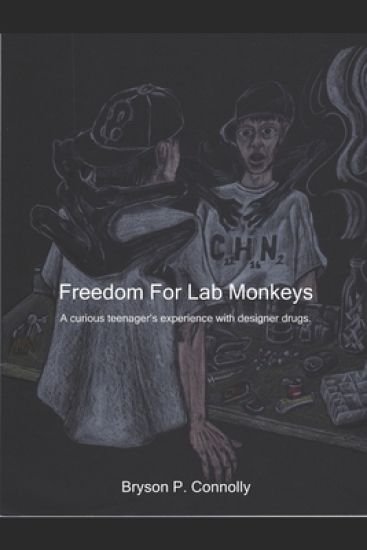
Freedom For Lab Monkeys: A curious teenager's experience with designer drugs.
Bryson P. Connolly
R. R. Bowker
2015
nidottu
Luke Baker is an adventurous drug user fresh out of high school. His life takes on a new sense of purpose upon his discovery of research chemicals. MDPV, an amphetamine-like chemical, seems to be his ticket to success. The drug proves to be extremely addictive with psychotic fear-inducing side effects. This is a story of that addiction and the struggle for recovery.
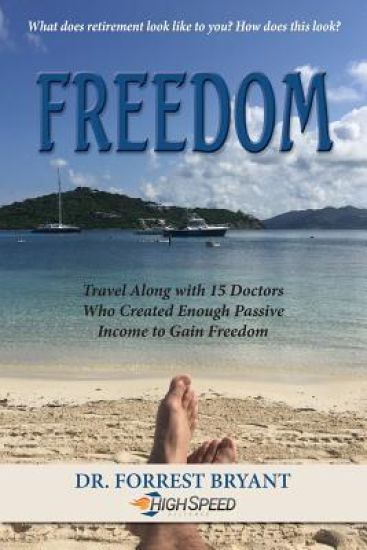
Freedom: Travel Along with 15 Doctors Who Created Enough Passive Income to Gain Freedom
Forrest Bryant
Performance Publishing Group
2017
nidottu
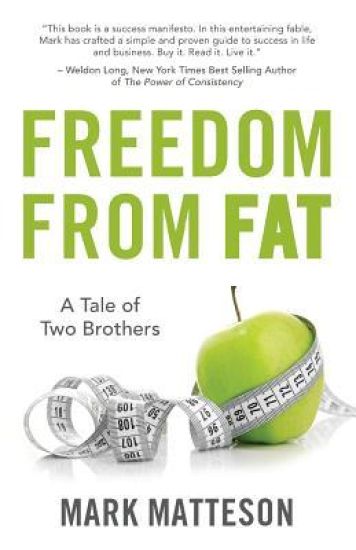
Why not you? You deserve to be fit, happy and live an abundant life.You CAN go from Fat to Fit Meet Charlie and Benji, two lifelong friends, in a story loaded with insights, ideas and strategies that will inspire you change, improve and grow. Apply the lessons learned in this book and you will indeed enjoy Freedom from Fat and add years to your life and life to your years YOU WILL DISCOVER: A poignant and inspirational story to make you laugh, cry, think and take action.That all meaningful and lasting change starts first on the inside and works its way out. BE, DO, HAVE, not the other way around.How to unlock your business and wellness potential.How to understand and apply the Power of Goal Achievement.Simple strategies to deliver lasting results in your business and personal life.Tools for change to increase your self-confidence and self-esteem.How to become fit so you can be an active and enthusiastic part of your children and grand-children's lives.Apple trees don't grow oranges. Mar Matteson's new book delivers Read this book as it offers insights, ideas and inspiration to bear the right kind of fruit. - Joel Tallman CEO, Muv Brands, Bodybuilder

In this inspiring collection of true stories, thirty African-Americans who were children or teenagers in the 1950s and 1960s talk about what it was like for them to fight segregation in the South-to sit in an all-white restaurant and demand to be served, to refuse to give up a seat at the front of the bus, to be among the first to integrate the public schools, and to face violence, arrest, and even death for the cause of freedom. Thrilling...Nothing short of wonderful.-The New York Times Awards: ( A School Library Journal Best Book of the Year( A Booklist Editors' Choice
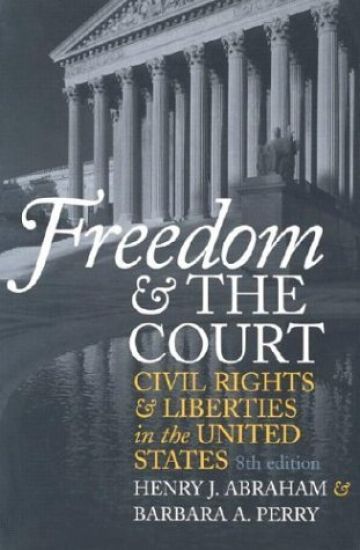
First published in 1967, ""Freedom and the Court"" has become a standard text on civil liberties law. Now updated to cover Supreme Court decisions through 2003, this eighth edition addresses essential questions of how to reconcile civil liberties with national security in the aftermath of 9/11.
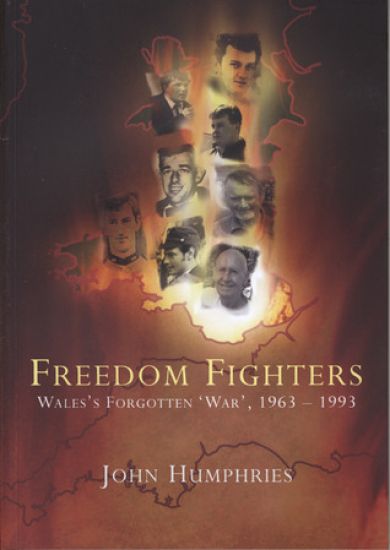
"Freedom Fighters" covers a violent episode in recent Welsh history shunned or relegated to the sidelines by more conventional historians. By drawing together various sources, the author has produced a highly compelling narrative of a period when a group of Welshmen declared war on England with gelignite and fire bombs. Two died, others were jailed in this struggle for Welsh independence. Could it happen again? Or is yesterday's Welsh patriot doomed to become tomorrow's terrorist? "Freedom Fighters" provides a fascinating insight into Welsh patriotism on the extremist fringes. The principal focus of this book is the role of the two main protagonists of Mudiad Amddiffyn Cymru (MAC), the Movement for the Defence of Wales, Owen Williams and John Jenkins.Welsh consciousness is uncomfortable with the memory of the Sixties' sabotage campaign directed by this secret, extremist organisation at water pipelines, Government offices and the Prince of Wales. No matter what the authentic voice of democratic nationalism might think of these foot soldiers in Wales' forgotten war, they cannot be ignored. This book tells the story of this remarkable campaign from its inception in 1963 up to the establishment of the Welsh Assembly and considers to what extent the direct action of the Sixties' picked up again by the holiday home arsonists a decade later, helped shape a political environment in which the governing class became more receptive to Welsh aspirations.
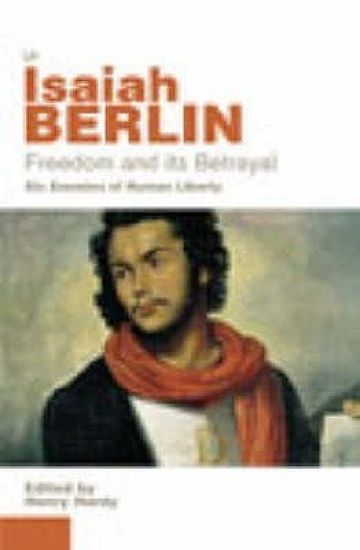
Freedom and its Betrayal is one of Isaiah Berlin's earliest and most convincing expositions of his views on human freedom and the history of ideas, views which later found expression in such famous works as 'Two Concepts of Liberty', and were at the heart of his lifelong work on the Enlightenment and its critics.
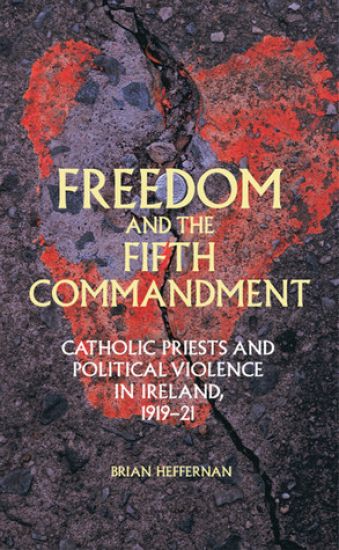
The guerilla war waged between the IRA and the crown forces between 1919 and 1921 was a pivotal episode in the modern history of Ireland. This book addresses the War of Independence from a new perspective by focusing on the attitude of a powerful social elite: the Catholic clergy. The close relationship between Irish nationalism and Catholicism was put to the test when a pugnacious new republicanism emerged after the 1916 Easter rising. When the IRA and the crown forces became involved in a guerilla war between 1919 and 1921, priests had to define their position anew.Using a wealth of source material, much of it newly available, this book assesses the clergy’s response to political violence. It describes how the image of shared victimhood at the hands of the British helped to contain tensions between the clergy and the republican movement, and shows how the links between Catholicism and Irish nationalism were sustained.
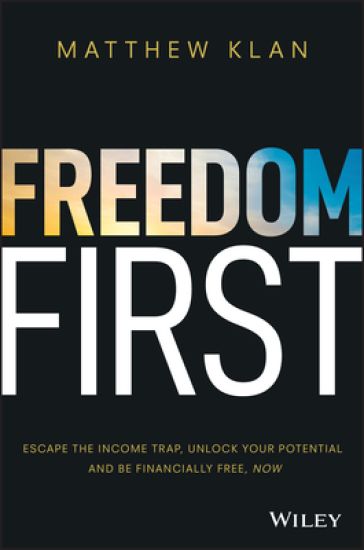
True freedom is within your grasp with this powerful wealth creation strategy. Freedom First challenges you to rethink your ideas about how to become financially free. Drawing on historical financial insights as old as Confucius, as well as lessons gleaned from modern psychology and economics, this book explores a counterintuitive approach to wealth creation: if you want to become financially free, you need to become free first. Author Matthew Klan walked away from his professional career and the promise of financial security in the pursuit of freedom. Now a self-made millionaire, Klan reveals his two-part wealth-building principle, and shares stories of others who have harnessed the power of getting free first. This book will enable you to: Learn the counterintuitive financial insights of the richUnderstand the traps of not being free: Dependence trap, Debt trap, Income trapLearn how to free yourself from what is holding you backFree up time and energy to unlock your full creative potentialAdopt a growth mindset and go beyond the traditional ’passive income‘ approach Whether you’re a millennial or retiree, this book will teach you the wealth generation secrets of the rich and enable you to become financially free now.
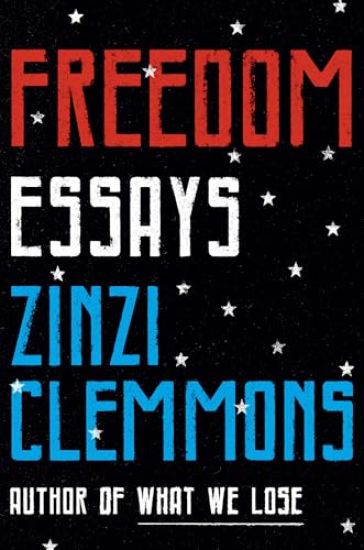
A radically vulnerable and virtuosic inquiry into the pursuit of freedom and the interminable nature of struggle, from the award-winning author of What We Lose Weaving personal reflections with piercing insight and expansive vision across nine brilliant essays, Clemmons explores the complexities of the elusive concept of freedom. As the daughter of a South African mother and a Trinidadian-America father, she recounts growing up in the largely white, affluent town of Swarthmore, Pennsylvania--and her frequent travels to Johannesburg, where the lofty promise of freedom was all around her. Coming of age amidst the euphoria of South Africa's first all-race elections, she grapples with the legacy of Nelson Mandela and the shattered hope in the wake of the Obama era. Clemmons critiques the entrenched inequalities that haunt both countries, from the tragic loss of her childhood friend Robbie to the violence that often befalls women who have the audacity to be free. In a deft mix of memoir, family history, criticism, and reportage, drawing on a vast range of material from Joan Didion to James Baldwin, political analysis and history to Clemmons's own experiences across the globe, Freedom is an incendiary exploration of race, sex, class, and inheritance. In elegiac prose, Clemmons trains her discerning eye on American institutions and mythologies, probing the bounds of liberation and autonomy to interrogate our most enduring quest--the relentless pursuit of freedom for all.
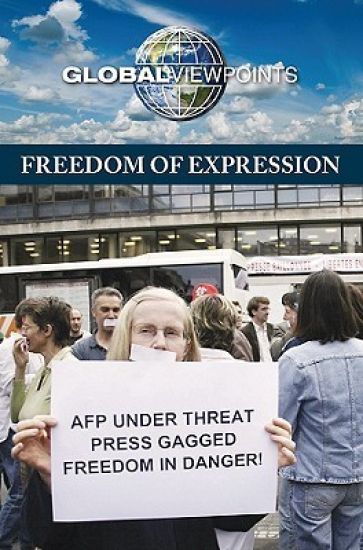
Freedom of Expression
Greenhaven Press
2009
pokkari

Freedom of Thought in Jerome Lawrence and Robert Edwin Lee's Inherit the Wind
Greenhaven Press
2010
pokkari
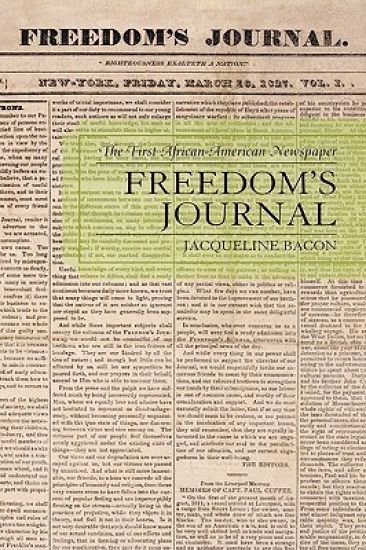
On March 16, 1827,Freedom's Journal, the first African-American newspaper, began publication in New York. Freedom's Journal was a forum edited and controlled by African Americans in which they could articulate their concerns. National in scope and distributed in several countries, the paper connected African Americans beyond the boundaries of city or region and engaged international issues from their perspective. It ceased publication after only two years, but shaped the activism of both African-American and white leaders for generations to come. A comprehensive examination of this groundbreaking periodical, Freedom's Journal: The First African-American Newspaper is a much-needed contribution to the literature. Despite its significance, it has not been investigated comprehensively. This study examines all aspects of the publication as well as extracts historical information from the content.
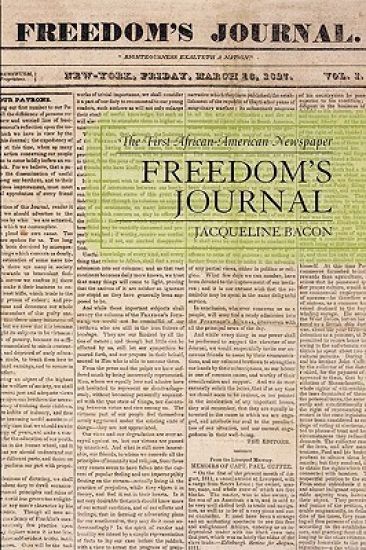
On March 16, 1827,Freedom's Journal, the first African-American newspaper, began publication in New York. Freedom's Journal was a forum edited and controlled by African Americans in which they could articulate their concerns. National in scope and distributed in several countries, the paper connected African Americans beyond the boundaries of city or region and engaged international issues from their perspective. It ceased publication after only two years, but shaped the activism of both African-American and white leaders for generations to come. A comprehensive examination of this groundbreaking periodical, Freedom's Journal: The First African-American Newspaper is a much-needed contribution to the literature. Despite its significance, it has not been investigated comprehensively. This study examines all aspects of the publication as well as extracts historical information from the content.
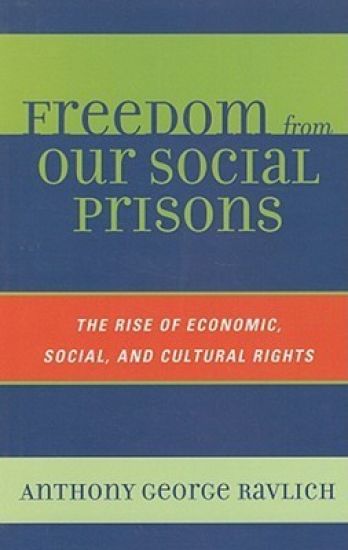
The purpose of this book is to provide a belief system to empower people using the democratic system and human rights law. This author contends that neo-liberalism has created a large underclass and has impinged upon the right to development for those who do not fit into the "neo-liberal square". Economic, social, and cultural rights, which have been rising in importance within the United Nations and have been denied to many, can be implemented using the core minimum obligations as defined by the General Comments of the United Nations Committee on Economic, Social and Cultural Rights. This will go a long way toward civilizing neo-liberalism. Core minimum obligations such as ensuring basic shelter and housing and essential primary health care only amount to "top-down" provisions. This book argues that people are most likely to become aware of their human rights if these rights are taught using a more elementary, "bottom-up" approach. Consequently human rights education should also be regarded as a core minimum obligation especially given that the people of the world have been deliberately kept ignorant of what constitutes basic human rights. Human rights education will enable people to decide through the democratic process whether they want to see economic, social and cultural rights included in domestic human rights law.
The purpose of this book is to provide a belief system to empower people using the democratic system and human rights law. This author contends that neo-liberalism has created a large underclass and has impinged upon the right to development for those who do not fit into the 'neo-liberal square'. Economic, social, and cultural rights, which have been rising in importance within the United Nations and have been denied to many, can be implemented using the core minimum obligations as defined by the General Comments of the United Nations Committee on Economic, Social and Cultural Rights. This will go a long way toward civilizing neo-liberalism. Core minimum obligations such as ensuring basic shelter and housing and essential primary health care only amount to 'top-down' provisions. This book argues that people are most likely to become aware of their human rights if these rights are taught using a more elementary, 'bottom-up' approach. Consequently human rights education should also be regarded as a core minimum obligation especially given that the people of the world have been deliberately kept ignorant of what constitutes basic human rights. Human rights education will enable people to decide through the democratic process whether they want to see economic, social and cultural rights included in domestic human rights law.
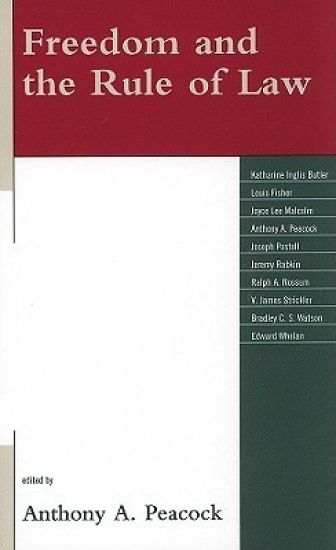
Freedom and the Rule of Law
Lexington Books
2009
sidottu
Freedom and the Rule of Law takes a critical look at the historical beginnings of law in the United States, and how that history has influenced current trends regarding law and freedom. Anthony Peacock has compiled articles that examine the relationship between freedom and the rule of law in America. Although this is a theme that has been a perennial one since America's founding, it is also one of particular importance today, and this book explains how history makes this apparent. The rule of law is fundamental to all liberal constitutional regimes whose political orders recognize the equal natural rights of all, and whose purpose is to protect those natural rights in addition to the general welfare. The rule of law was essential to achieving both of these ends and to reconciling them where necessary. But just how free is America today? It was certainly within the contemplation of the Founders that the federal judiciary would have a significant role in interpreting the Constitution, federal laws, and treaties, but it would be difficult to argue that those who framed and ratified the Constitution contemplated a role for the courts, particularly for the United States Supreme Court, of the magnitude they have today. The writers take the reader far back into history to the very roots of American Law by examining the English common law roots that provided the foundation for the rule of law in America. This book explores these phenomena and other recent developments in American freedom through history.
Freedom in Resistance and Creative Transformation
Michael St. A. Miller
Lexington Books
2013
sidottu
In Freedom in Resistance and Creative Transformation, Michael Miller addresses the concept of freedom that is central to the grammar of Christian faith and important in a wide range of religious and nonreligious settings across the globe. He confronts the fact that despite the claimed importance of freedom there continues to be interpersonal, socio-political, and religious power hierarchies that keep some people dominant and others subjugated. The book suggests that often these hierarchies are informed by Christian teachings that deny freedom to human beings on the basis of their humanity per se. Having classified humanity as fallen, we are instructed that freedom is experienced by disparaging our humanity as we actually experience it, seeing ourselves as our own worst enemies and accepting bondage to God—the bondage reflected in the character of relations with those seen as God’s special representatives in the world. Miller presents a case against this understanding of the human situation, and in the process he critically engages the Old and New Testaments along with ideas of significant representatives of Christian orthodoxy. As an alternative he promotes freedom that is finite, realistically libertarian, and relational as most compatible with the character of human beings that are partially self-creating and self-determining. Contributing to this position is the view that an infinitely temporal God, by character and desire, participates in human life in a way that ensures the requisite space for authentic decision making, from which emerges genuinely novel possibilities for human life. This dynamic has implications for the continued development of the human species and the quality of life in the cosmos as a whole.

Freedom and Dissatisfaction in the Works of Agnes Heller
Lucy Jane Ward
Lexington Books
2016
sidottu
Ward’s book focuses on the work of the Hungarian philosopher Agnes Heller; prominent member of the Budapest School, a group of students who studied under the Marxist social theorist György Lukács. For both Marx and Heller (albeit in different ways) dissatisfaction emerges as the inevitable result of the expansion of need(s) within modernity and as a catalyst for the development of anthropological wealth (what Marx refers to as the 'human being rich in need'). Ward argues that dissatisfaction and the corresponding category of human wealth–as both motif and method–is central to grasping Heller’s seemingly disparate writings. While Marx postulates a radical overcoming of dissatisfaction, Heller argues dissatisfaction is integral not only to the on-going survival of modernity but also to the dynamics of both freedom and individual life. In this way Heller’s work remains committed to a position that both continually returns and departs, is both with and against, the philosophy of Marx. This book will be of interest to scholars of political philosophy, social theory, critical theory, and sociology.