Jake Foster is a divorced Afghanistan veteran with PTSD working a crap job for a crap boss in Miami. Malcolm Weaver, owner at Global source Enterprises, has no redeeming qualities. He's pompous and treats his coworkers like trash, so when Jake has the alcohol-fueled notion to defraud the company for a couple million dollars, it seems like a good idea. Although Jake is usually an honest, regular guy, he's been through enough bad experiences to deserve a lucky break. Maybe committing fraud is just the ticket. After all, "Fraud can be simple if conditions are right and you know what you're doing." Of course, then, there's the bank auditor, Sharon Scott--attractive, smart, and onto Jake's dirty dealings. Together, they take the money and run, seeking anonymity and a life of luxury in central Florida. Turns out, though, Jake really isn't cut out to be a criminal, especially when some deadly characters pursue him and even abuse Sharon's younger sister. Bad guys like Jake aren't the worst guys. In the end, Jake might even end up a hero.
This book has grown out of our individual experiences as well as our shared ones; out of our differences as well as our commonalities; and out of our conflicts as well as our convergences. Among us there are dif ferences in gender; in individual, family, community, and racial histo ries; in life experiences, identities, and career paths; and even in reasons for writing this book. Of course there are also commonalities. We enjoy one another's company; we enjoy working together; and we feel en riched from our collaboration. We have written this book out of our complete selves, not just our professional selves. The original objective of our book was to present to practitioners of psychotherapy, trainers of psychotherapists, and psychotherapy stu dents a model of conducting psychotherapy that actively acknowledges and builds upon the ethnic and racial heritage of both therapist and client. We have found that to fulfill that objective we need also to acknowledge and build upon the psychological ecology of the therapist and client; and we also need to outline the kind of research necessary if we are to develop and evaluate the perspectives presented here. Those perspectives are embodied in what we have come to call the ethnic validity model (EVM) of psychotherapy.
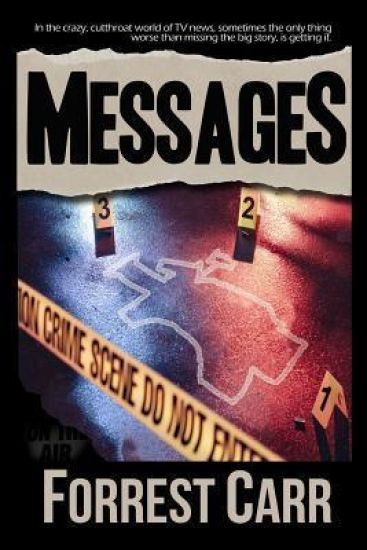
"And what did the boss say?" Regina demanded. Austin locked eyes with her. "He said our stories need more vagina." Regina recoiled as if Austin had poked her with a sharp stick. "He said what?" Austin held his hand up. "As God is my judge. That was the word he used." What kind of crazy newsroom is this? It's the kind three friends find as each embarks on a broadcast journalism career at the height of the Golden Age of TV News. In their quest for Truth, Justice, and Ratings, they'll risk it all, battling profit-minded owners, idiotic managers, shady businessmen, out-of-control public officials, and dangerous criminals. Before it's over, one will be in a fight for his job, another will be fighting for his sanity, and the third will be struggling for his very life. Written by Forrest Carr, an award-winning journalist who spent 33 years in the trenches of local news warfare, Messages tells a compelling reality-inspired crime story while also providing rare and authentic insight into the powerful world of local TV news and the driven, sometimes tortured people who decide what you'll be allowed to know about the community where you live. An "accomplished debut novel" written with "smooth skill" and filled will "considerable comic energy and fast-paced dialogue. A spirited, lavishly detailed behind-the-scenes look at the inner workings of a newsroom." -- Kirkus Reviews "A masterful expos of TV news. Carr's novel is engrossing, fun to read and a joy to see play out to its inevitable, tragic, hilarious and scandalous conclusion. Take this book home. You won't be disappointed." -- Tim Schwartz, MoCoVox.com What readers are posting about Messages: - "Great read Many laugh out loud moments." - "Fast paced and funny." - "Better than Anchorman." - "Loved it Hard to put down." - "Like reading M*A*S*H set in a newsroom."