Kirjojen hintavertailu. Mukana 11 244 527 kirjaa ja 12 kauppaa.

Kirjahaku

Etsi kirjoja tekijän nimen, kirjan nimen tai ISBN:n perusteella.

1000 tulosta hakusanalla Forst Birgit

First Nations in the Twenty-first Century

First Nations in the Twenty-first Century

Frideres James F.

Oxford University Press, Canada
2011
nidottu
In this exciting new addition to Oxford's acclaimed Themes in Canadian Sociology series, author James S. Frideres examines the ways in which colonization and government action - and inaction - have impacted First Nations peoples in Canada over the last three centuries. Unlike most undergraduate textbooks in this area, which tend to focus on all three Aboriginal groups in Canada, First Nations in the Twenty-First Century is a concise yet comprehensive text that focuses exclusively on First Nations peoples. Covering such crucial topics as trauma, health and well-being, language, law, and politics, this important and innovative text is an indispensable core or supplemental resource for undergraduate courses that focus on First Nations peoples.
First Words, Last Words

First Words, Last Words

Yigal Bronner; Lawrence McCrea

Oxford University Press Inc
2021
sidottu
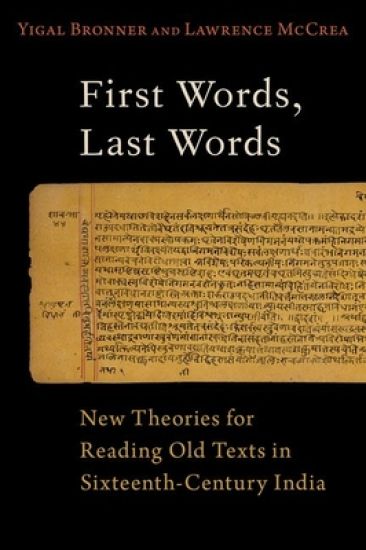
First Words, Last Words charts an intense "pamphlet war" that took place in sixteenth-century South India. Yigal Bronner and Lawrence McCrea explore this controversy as a case study in the dynamics of innovation in early modern India, a time of great intellectual innovation. This debate took place within the traditional discourses of Vedic Hermeneutics, or Mima?sa, and its increasingly influential sibling discipline of Vedanta, and its proponents among the leading intellectuals and public figures of the period. Bronner and McCrea examine the nature of theoretical innovation in scholastic traditions by focusing on a specific controversy regarding scriptural interpretation and the role of sequence-what comes first and what follows later-in determining our interpretation of a scriptural passage. Vyasatirtha and his grand-pupil Vijayindratirtha, writers belonging to the camp of Dualist Vedanta, purported to uphold the radical view of their founding father, Madhva, who believed, against a long tradition of Mima?sa interpreters, that the closing portion of a scriptural passage should govern the interpretation of its opening. By contrast, the Nondualist Appayya Dik?ita ostensibly defended his tradition's preference for the opening. But, as this volume shows, the debaters gradually converged on a profoundly novel hermeneutic-cognitive theory in which sequence played little role, if any. First Words, Last Words traces both the issue of sequence and the question of innovation through an in-depth study of this debate and through a comparative survey of similar problems in Judaism, Christianity, and Islam, revealing that the disputants in this controversy often pretended to uphold traditional views, when they were in fact radically innovative.
First-Person Fictions

First-Person Fictions

Mary R. Lefkowitz

Clarendon Press
1991
sidottu
This collection of essays, written over a period of almost thirty years, deals with one problem: who is the `I' in the odes of the most celebrated ancient Greek poet, Pindar? Since antiquity, the complex and allusive language of the first-person statements has provoked many different answers. Professor Lefkowitz describes the function and nature of Pindar's `I'-statements and proposes a controversial solution that would cause some histories of Greek literature to be rewritten. Rather than accept the view that the identity of the speaker could be subject to instant and unannounced change, she proposes that the voice of the victory odes is the poet himself, in his most professional persona. Professor Lefkowitz also refutes the traditional belief that the odes were sung by a chorus. She shows that in most, if not all cases, they were sung as solos and that Pindar was continuing the tradition established by the Homeric bards.
First Philharmonic

First Philharmonic

Cyril Ehrlich

Clarendon Press
1995
sidottu
Established by musicians in 1813, the Philharmonic is the world's second oldest concert society; only Leipzig is senior. Weber and Mendelssohn were active honorary members; Joachim and Clara Schumann lifelong friends. The list of gold medalists runs from Elgar and Beecham to Sibelius, Rachmaninov, and Tippett. Most instrumentalists and many singers of international repute mounted its platforms. Berlioz, Wagner, Tchaikovsky, Grieg, Dvorak and Strauss came to preside over their music. Celebrating a venerable institution, this history, based upon exhaustive research in the Society's archives, also addresses wider themes, which continue to bear upon concert life: the evolution of repertoire and performance, audience, agent and conductor; networks of recruitment; patronage and the market place; the collective biography and proliferation of London orchestras; the economics of fees and rehearsals. Shaw once claimed that the Philharmonic's generosity towards Beethoven was the only creditable incident in English history, and never mentioned by historians. A leading authority on the economic and social history of music now attempts to repair that omission.
Forest Ecology and Conservation

Forest Ecology and Conservation

Adrian Newton

Oxford University Press
2007
nidottu
Forest conservation has become one of the most important environmental issues currently facing humanity, as a result of widespread deforestation and forest degradation. Pressures on remaining natural forests continue to intensify, leading to high rates of biodiversity loss. Understanding how human activities influence ecological processes within forests is essential for developing effective conservation action. This book describes research methods and techniques relevant to understanding forest ecology, with a particular focus on those that are relevant to practical conservation and sustainable forest management. This information is currently disparate and difficult to locate and, as with other books in this series, the intention is to provide a comprehensive synthesis for use by graduate students, researchers and practising conservationists. Methods are presented for assessing forest extent and condition, structure and composition, and forest dynamics at a variety of scales. Techniques for assessing genetic variation and reproductive ecology, and for evaluating the habitat value of forests are also described. Particular emphasis is given to state-of-the-art techniques such as remote sensing, GIS, computer modelling and molecular markers. However, traditional methods of forest mensuration and ecological survey are also presented. The methods and techniques described are generally applicable to all forest types, including both temperate and tropical forest ecosystems.
First Steps in the Law

First Steps in the Law

Geoffrey Rivlin

Oxford University Press
2015
nidottu
First Steps in the Law is an entertaining and insightful overview of the legal system. Geoffrey Rivlin, who boasts a wealth of experience as a former senior resident judge, barrister, and QC, leads the reader through the quirks of English law, offering fascinating details. Readers are regaled with lively descriptions of the workings of the legal system and vivid tales of the law in times gone by. Real life cases bring the book to life, enabling the reader to see the law in action, while descriptions of the participants in the legal system (including judges, lawyers, and police officers) root the book in the everyday reality of the legal profession. This is an essential read for anyone who is preparing for a law course or requires an understanding of the law in their working life.
First of the Small Nations

First of the Small Nations

Gerard Keown

Oxford University Press
2016
sidottu
First of the Small Nations traces the ideas and aspirations of the revolutionary generation in Ireland from the 1890s to 1918 who dreamt of an independent Irish state and imagined how an Irish foreign policy might look. It follows attempts to put these ideas into practice during the campaign for independence and how they evolved into the first Irish foreign policy in the decade after independence. During these years, efforts were focused on asserting the young Irish state's independence as it pushed out the boundaries of Commonwealth membership, made a contribution at the League of Nations, and forged ties in Europe and America. Many of the ideas that continue to shape Irish foreign policy - small state and European country; honest broker and international good citizen; mother-country with a diaspora and bridge between Europe and America - have their roots in this period. There is a strong modern and internationalist vein running through Irish nationalism, including outside ideas on how the international order should be arranged - from the desire to pursue a policy based on values, to attempts to create an international rationale for independence, and an understanding of the influence of public opinion. First of the Small Nations also shines a light on interwar European relations and how small states managed their affairs in a world system dominated by their larger neighbours. Drawing on a rich vein of archival sources and private papers, this study charts the beginnings of Irish foreign policy and the aspiration to be 'first of the small nations'.
First Steps in Random Walks

First Steps in Random Walks

J. Klafter; I. M. Sokolov

Oxford University Press
2015
nidottu
The name "random walk" for a problem of a displacement of a point in a sequence of independent random steps was coined by Karl Pearson in 1905 in a question posed to readers of "Nature". The same year, a similar problem was formulated by Albert Einstein in one of his Annus Mirabilis works. Even earlier such a problem was posed by Louis Bachelier in his thesis devoted to the theory of financial speculations in 1900. Nowadays the theory of random walks has proved useful in physics and chemistry (diffusion, reactions, mixing flows), economics, biology (from animal spread to motion of subcellular structures) and in many other disciplines. The random walk approach serves not only as a model of simple diffusion but of many complex sub- and super-diffusive transport processes as well. This book discusses the main variants of random walks and gives the most important mathematical tools for their theoretical description.
First Woman

First Woman

James Rodger Fleming

Oxford University Press
2020
sidottu
Clouds are the spark plugs in the heat engine of the tropical atmosphere, and heat from the tropics drives the planet's general circulation. Atmospheric scientists didn't know this in the 1950s, but Joanne Simpson, the first American woman to earn a Ph.D. in meteorology, did. Most histories of meteorology focus on polar and temperate regions and the accomplishments of male scientists. They marginalize or erase completely the contributions of female researchers. Joanne's work on the tropical atmosphere did not fit this pattern. Joanne had a lifelong passion for clouds and severe storms. She flew into and above them, photographed them, modeled them, attempted to modify them, and studied them from all angles. She held two university professorships, married three times, had two lovers (one secret), mentored a generation of meteorologists, and blazed a trail for other women to follow. This book is about Joanne's personal and professional life, her career prospects as a woman in science, and her relationship to the tropical atmosphere. These multifaceted and interacting textual streams constitute a braided narrative and form a complex dynamic system that displays surprising emergent properties. Is Joanne Simpson best remembered as a pioneer woman scientist or the best tropical scientist of her generation? She was both, with the emphasis on best scientist.
First Steps in Random Walks

First Steps in Random Walks

J. Klafter; I. M. Sokolov

Oxford University Press
2011
sidottu
The name "random walk" for a problem of a displacement of a point in a sequence of independent random steps was coined by Karl Pearson in 1905 in a question posed to readers of "Nature". The same year, a similar problem was formulated by Albert Einstein in one of his Annus Mirabilis works. Even earlier such a problem was posed by Louis Bachelier in his thesis devoted to the theory of financial speculations in 1900. Nowadays the theory of random walks has proved useful in physics and chemistry (diffusion, reactions, mixing in flows), economics, biology (from animal spread to motion of subcellular structures) and in many other disciplines. The random walk approach serves not only as a model of simple diffusion but of many complex sub- and super-diffusive transport processes as well. This book discusses the main variants of random walks and gives the most important mathematical tools for their theoretical description.
First Vision

First Vision

Steven C. Harper

Oxford University Press Inc
2019
sidottu
This is the biography of a contested memory, how it was born, grew, changed the world, and was changed by it. It's the story of the story of how the Church of Jesus Christ of Latter-day Saints began. Joseph Smith, the church's founder, remembered that his first audible prayer, uttered in spring of 1820 when he was about fourteen, was answered with a vision of heavenly beings. Appearing to the boy in the woods near his parents' home in western New York State, they told Smith that he was forgiven and warned him that Christianity had gone astray. Smith created a rich and controversial historical record by narrating and documenting this event repeatedly. In First Vision, Steven C. Harper shows how Latter-day Saints (beginning with Joseph Smith) and others have remembered this experience and rendered it meaningful. When and why and how did Joseph Smith's first vision, as saints know the event, become their seminal story? What challenges did it face along the way? What changes did it undergo as a result? Can it possibly hold its privileged position against the tides of doubt and disbelief, memory studies, and source criticism-all in the information age? Steven C. Harper tells the story of how Latter-day Saints forgot and then remembered accounts of Smith's experience and how Smith's 1838 account was redacted and canonized. He explores the dissonance many saints experienced after discovering multiple accounts of Smith's experience. He describes how, for many, the dissonance has been resolved by a reshaped collective memory.
First Love and Other Stories

First Love and Other Stories

Ivan Turgenev

Oxford University Press
2008
nidottu
This collection brings together six of Turgenev's best-known `long' short stories, in which he turns his skills of psychological observation and black comedy to subjects as diverse as the tyranny of serfdom, love, and revenge on the Russian steppes. These stories all display the elegance and clarity of Turgenev's finest writing. Richard Freeborn was until recently Professor of Russian at the School of Slavonic and East European Studies, London. ABOUT THE SERIES: For over 100 years Oxford World's Classics has made available the widest range of literature from around the globe. Each affordable volume reflects Oxford's commitment to scholarship, providing the most accurate text plus a wealth of other valuable features, including expert introductions by leading authorities, helpful notes to clarify the text, up-to-date bibliographies for further study, and much more.
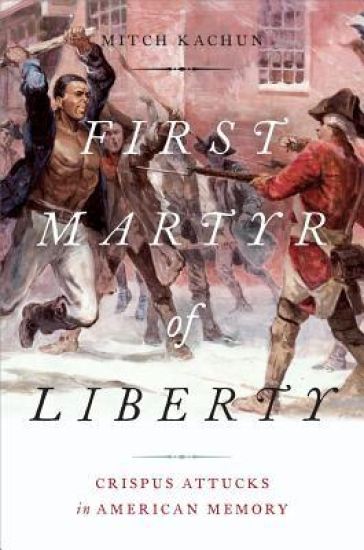
First Martyr of Liberty

First Martyr of Liberty

Mitch Kachun

Oxford University Press Inc
2017
sidottu
First Martyr of Liberty explores how Crispus Attucks's death in the 1770 Boston Massacre, often cited as the first man to die in the American Revolution, led to his achieving mythic significance in African Americans' struggle to incorporate their experiences and heroes into the mainstream of the American historical narrative. While the other victims of the Massacre have been largely ignored, Attucks is widely celebrated as the first to die in the cause of freedom during the era of the American Revolution. He became a symbolic embodiment of black patriotism and citizenship. This book traces Attucks's career through both history and myth to understand how his public memory has been constructed through commemorations and monuments; institutions and organizations bearing his name; juvenile biographies; works of poetry, drama, and visual arts; popular and academic histories; and school textbooks. There will likely never be a definitive biography of Crispus Attucks since so little evidence exists about the man's actual life. While what can and cannot be known about Attucks is addressed here, the focus is on how he has been remembered--variously as either a hero or a villain--and why at times he has been forgotten by different groups and individuals from the eighteenth century to the present day.
First, Second, and Other Selves

First, Second, and Other Selves

Jennifer Whiting

Oxford University Press Inc
2016
sidottu
In her essay collection First, Second, and Other Selves: Essays on Friendship and Personal Identity, well-known scholar of ancient philosophy Jennifer Whiting gathers her previously published essays taking Aristotle's theories on friendship as a springboard to engage with contemporary philosophical work on personal identity and moral psychology. Whiting examines three themes throughout the collection, the first being psychic contingency, or the belief that the psychological structures characteristic of human beings may in fact vary, not just from one cultural (or socio-historical) context to another, but also from one individual to another. The second theme is the belief that friendship informs an understanding of the nature of the self, an idea that springs from Whiting's uncommon reading of Aristotle's writings on friendship. Specifically, Whiting explains a scenario in which a "virtuous agent" adopts a kind of impersonal attitude both towards herself and towards her "character" friends, loving both because they are virtuous; this scenario ties in with an examination of the Aristotelian concept of the ideal friend as an "other self," or a friendship that evolves from character rather than ego, as well as Whiting's meditation on whether or not a virtuous individual should have a "special" sort of concern for her own future self, distinct in kind from the concern that she has for others. The third theme is that of rational egoism, a concept that Whiting critiques, especially in the context of Aristotle's eudaimonism. The central tenet of the collection is the message that taking "ethocentric" (or character-based) attitudes both towards ourselves and towards our friends sheds light on the nature of personal identity and helps to combat ethnocentric and other objectionable forms of bias, a message that is becoming increasingly urgent in light of the recent deaths of Trayvon Martin and Michael Brown.
Forest Dwellers, Forest Protectors
The Guarani of Paraguay have survived over four centuries of contact with the commercial system, while keeping in tact their traditions of leadership, religion and kinship. This concise ethnography examines how the Guarani have adapted over time, in concert with Paraguay’s subtropical forest system. New To This Edition: Expanded historical background and updated demographic information on the Guarani brings the research to the present day (Chapter 1).Expands and strengthens the discussion of “sustainability” to include more recent advances in the concept (Chapter 1), and introduces the idea of “subsidy from nature” into the discussion of conventional tropical development (Chapter 3).Develops the discussion of women’s labor in horticulture (Chapter 3).Analyzes the effects of indigenous mixed agro-forestry in stemming the high rates of Paraguayan deforestation of the 1990s (Chapter 4).Discusses the recent globalization of the yerba mate market, and the economy's effecton Paraguay’s protected areas (Chapter 4).Describes Guarani ethnic federations as a means to engage the national and international political institutions (Chapter 4).Explores the rapid growth in Guarani population in native communities, which results from lower infant mortality, more land pressure and more reliable census data (Chapter 4). This brief introductory text makes the ideal supplementary text for students of anthropology.
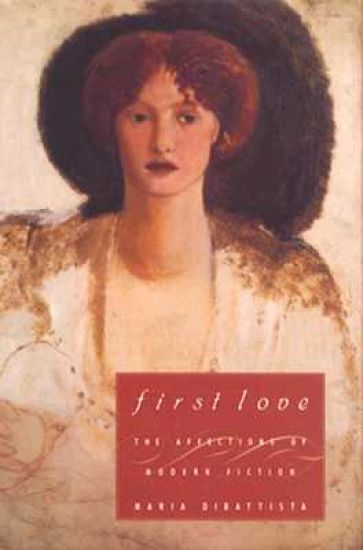
First Love

First Love

Maria DiBattista

University of Chicago Press
1991
sidottu
All of us remember our First Love. In this brilliant and often passionate book, Maria DiBattista shows that the yearning for the freshness of First Love, and the sadness of that yearning, are central to modern literature. DiBattista offers a sweeping and wholly original reinterpretation of modern fiction, allowing us to see the romantic affections that lie behind the seemingly most ironic of modernist texts. DiBattista argues that modernity reinvented First Love as a myth of creative initiative, as its characteristic response to a pervasive sense of historical belatedness. Anxious that its own creations can never be more than diminished forms of mightier originals, modernity idolizes First Love as the beginning that can never be repeated. First Love hence epitomizes the dream of a new self-incarnation. From Turgenev's First Love to the formative works of Virginia Woolf, Gertrude Stein, E. M. Forster, and Vladimir Nabokov, First Love confirms the birth of an artistic vocation. For modern men and women intent on becoming the original authors of their own lives, First Love becomes paradigmatic of those life-altering moments that transform the undifferentiated sequence of days into a fateful narrative. DiBattista focuses on the enunciation of First Love in the fiction of Thomas Hardy, D. H. Lawrence, James Joyce, and Samuel Beckett. In reading their works, DiBattista dramatically revises the accepted view of irony as the dominant tone of modernism. First Love constitutes, she shows, a new apprehension of the world characterized not by the frigid distances of irony but by a belief in the creative individual who may begin the world anew, as if for the first time.
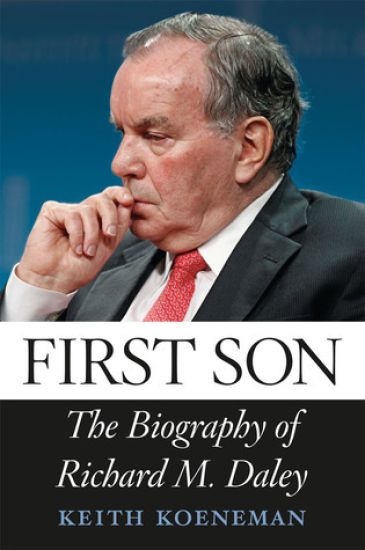
First Son

First Son

Keith Koeneman

University of Chicago Press
2013
sidottu
With those four words, an era ended. After twenty-two years, the longest-serving and most powerful mayor in the history of Chicago - and, arguably, America - stepped down, leaving behind a city that was utterly transformed, and a complicated legacy we are only beginning to evaluate. In "First Son", Keith Koeneman chronicles the sometimes Shakespearean, sometimes Machiavellian life of an American political legend. Making deft use of unprecedented access to key players in the Daley administration, as well as Chicago's business and cultural leaders, Koeneman draws on more than one hundred interviews to tell an up-close, insider story of political triumph and personal evolution. With Koeneman as our guide, we follow young Daley from his beginnings as an average Bridgeport kid thought to lack his father's talent and charisma to his unlikely transformation into an iron-fisted leader. Daley not only escaped the giant shadow of his father but also transformed Chicago from a gritty, postindustrial Midwestern capital into a beautiful, sophisticated global city. But in spite of his many accomplishments, Richard M. Daley's record is far from flawless. First Son sets the dramatic improvement of certain parts of the city against the persistent realities of crime, financial stress, failing public housing, and dysfunctional schools. And it reveals that in many ways Daley was unable to fully escape the machine politics of his father. A nuanced portrait of a complex man, "First Son" shows Daley to be sensitive yet tough, impatient yet persistent, a street-smart fighter and detail-driven policy expert who not only ran Chicago, but was Chicago.
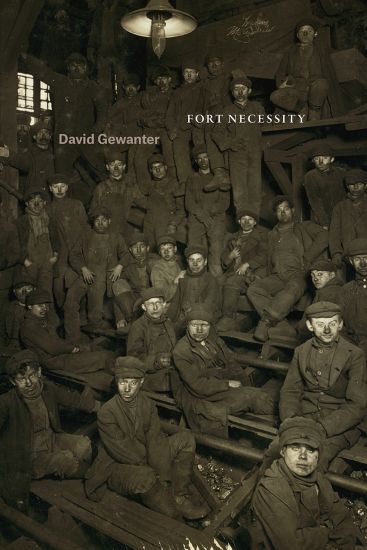
Fort Necessity

Fort Necessity

David Gewanter

University of Chicago Press
2018
pokkari
Who are the lords of labor? The owners, or the working bodies? In this smart, ambitious, and powerful book, David Gewanter reads the body as creator and destroyer--ultimately, as the broken mold of its own work. Haunted by his father's autopsy of a workman he witnessed as a child, Gewanter forges intensely personal poems that explore the fate of our laboring bodies, from the Carnegie era's industrial violence and convict labor to our present day of broken trust, profiteering, and the Koch brothers. Guided by a moral vision to document human experience, this unique collection takes raw historical materials--newspaper articles, autobiography and letters, court testimony, a convict ledger, and even a menu--and shapes them into sonnets, ballads, free verse, and prose poems. The title poem weaves a startling lyric sequence from direct testimony by steelworkers and coal-miners, strikers and prisoner chain-gangs, owners and anarchists, revealing an American empire that feeds not just on oil and metal, but also on human energy, impulse, and flesh. Alongside Gewanter's family are hapless souls who dream of fortune, but cannot make their fates, confronting instead the dark outcomes of love, loyalty, fantasy, and betrayal.
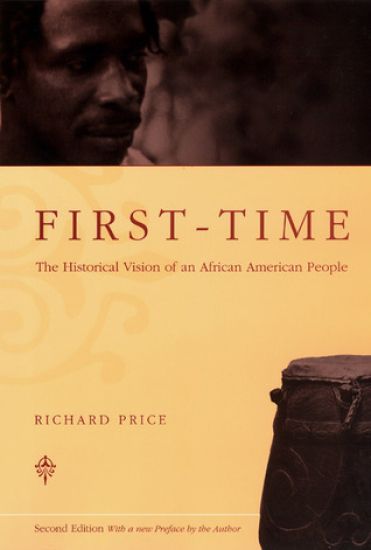
First-Time

First-Time

Richard Price

University of Chicago Press
2002
nidottu
A classic of historical anthropology, First-Time traces the shape of historical thought among peoples who had previously been denied any history at all. Each page of the book presents a transcript of oral histories told by living Saramakas about their eighteenth-century ancestors along with commentary from Price that places their accounts into a broader historical context.
First Canadian Army

First Canadian Army

Simon Forty; Leo Marriott

FIREFLY BOOKS LTD
2022
nidottu
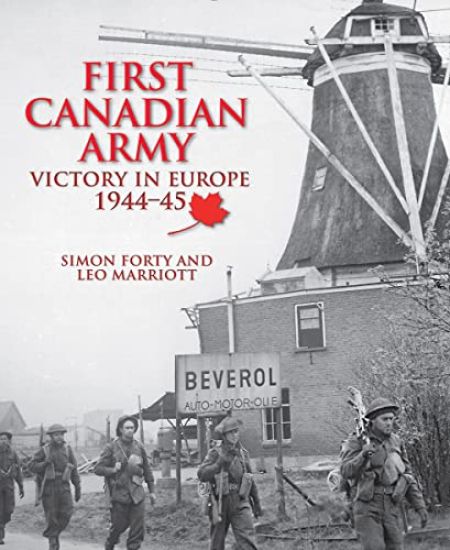
“It’s rare for a book to capture your attention from the very first sentence, but kudos to the authors of First Canadian Army for doing just that... I, too, feel that Canada’s contributions to victory in both world wars have unfortunately been downplayed or ignored over the decades by the country’s allies.” — Canada’s History Magazine. A pictorial history of the decisive role played by Canada in the final year of World War II. After Dunkirk, as the tattered remnants of Britain’s best troops returned home without their heavy weapons, Canadian troops moved in to defend northwest Europe, sending in virtually all of its disposable weapon resources and 368,000 soldiers. The majority of these were to be part of the First Canadian Army, which would play a key role leading to the unconditional surrender by Nazi Germany on May 9, 1945. This book is a pictorial history of the First Canadian Army in northwest Europe during the final year of the war. It concentrates not just on the events of 75 years ago but also what can be seen on the ground today. The illustrations, over 350 of them, include battle, landing and assault maps; photographs of soldiers in action and resting, aerial photographs of key sites of action then and now; battlefield survivors such as Sherman tanks; memorials to individuals and units; and, of course, the cemeteries of Canadian, Polish and British soldiers. In ten parts and 60 chapters featuring 350 illustrations and maps, the book covers: The Bridgehead; The Battles Around Caen; Clearing the Coast; Clearing The Scheldt; Winter on the Maas; The Rhineland; Advance to the Sea; I Corps in The West Netherlands; The German Surrender. Military history buffs will enjoy this book for its focus on a specific battalion and its actions at a decisive moment in the war. The archival photographs are important records and reminders of this watershed moment in World War II’s European theater.