Kirjojen hintavertailu. Mukana 12 390 323 kirjaa ja 12 kauppaa.

Kirjahaku

Etsi kirjoja tekijän nimen, kirjan nimen tai ISBN:n perusteella.

1000 tulosta hakusanalla Friedrich Neumann

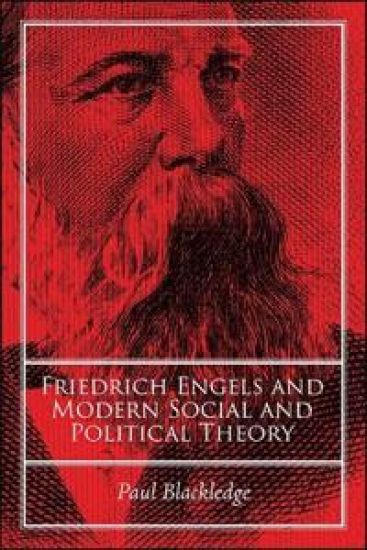
Friedrich Engels and Modern Social and Political Theory

Friedrich Engels and Modern Social and Political Theory

Paul Blackledge

State University of New York Press
2020
pokkari
Offers a powerful new interpretation of Engels's contributions to modern social and political theory.In this comprehensive overview of Friedrich Engels's writings, Paul Blackledge critically explores Engels's contributions to modern social and political theory generally and Marxism specifically. Through a careful examination both of Engels's role in the forging of Marxism in the 1840s, and his contributions to the further deepening and expansion of this worldview over the next half century, Blackledge offers a closely argued and balanced assessment of his thought. This book challenges the long-standing attempt among academic Marxologists to denigrate Engels as Marx's greatest mistake, and concludes that Engels was a profound thinker whose ideas continue to resonate to this day.
Friedrich Nietzsche (1844-1900)

Friedrich Nietzsche (1844-1900)

Springer-Verlag New York Inc.
2010
nidottu
Nietzsche – Economy and Society: The Closed and the Open Questions a b Jürgen G. Backhaus and Wolfgang Drechsler a University of Erfurt, Germany b Tallinn University of Technology, Estonia Nietzsche’s impact and in?uence anywhere in and on our civilization was and is immense. This has by now been widely recognized in almost all areas, even in the “hard sciences” (see Babich 1999), but Nietzsche is still completely understudied in the ?eld of economics. This is all the more surprising because in?uence paths, both serious (e. g. , Joseph A. Schumpeter) and pop ones (e. g. , Ayn Rand), seem obvious, and because in some of his works, especially M- schliches, Allzumenschliches (1878-1886), a focus on economics is hard to miss. It would thus be only likely that he had some sort of signi?cant in?uence there; yet, one can ?nd hardly any references in the Nietzsche or economics 1 literature on what kind of in?uence that might have been or still is. To remedy this situation, the idea to plan an exploratory conference on Nietzsche and Economics arose. Because of the dif?cult and indeed unusual topic, we found it necessary to even start with a pre-conference, where the issues, questions, sources and possible approaches would be discussed. This pre-conference took place in Heilbronn, in the framework of the Heilbronn Symposia on Economics and the Social Sciences, in June 2000.
Friedrich Von Hausen

Friedrich Von Hausen

Hugo Bekker

The University of North Carolina Press
2020
pokkari
The author casts new light on Hausen's lyrics by often favoring the manuscript readings. In the readings, irony emerges as a leading poetic device, as does the element of Spiel. Questions arise regarding such concepts as Gottesdienst, Frauendienst, and hohe Minne. Attrition is discussed as the possible motivation behind the persona's decision to take the cross.
Friedrich Hebbel's Conception of Movement in the Absolute and in History

Friedrich Hebbel's Conception of Movement in the Absolute and in History

Sten G. Flygt

The University of North Carolina Press
2020
pokkari
Flygt undertakes an analysis first of Hebbel's writings on social and historical progress in his letters and diaries and then of his plays, in order to draw conclusions on Hebbel's conception of movement. Noting oscillations throughout Hebbel's life between social progressivism and conservatism, Flygt turns his focus to the Hebbel's conceptions of flux and change both in society and the individual.
Friedrich Nietzsche in Plain and Simple English

Friedrich Nietzsche in Plain and Simple English

Bookcaps

Createspace Independent Publishing Platform
2012
nidottu
You've heard of Nietzsche-but have you ever really understood him?"God is dead." "The bermensch." "Eternal recurrence."These are some of the most powerful-and misunderstood-ideas in modern philosophy.Nietzsche's writing is bold, thought-provoking, and often confusing. Dense language, abstract concepts, and poetic style make his work intimidating for new readers. But that's where the Plain and Simple English series comes in.This book breaks down Nietzsche's most famous ideas-from the "Death of God" to "Master-Slave Morality" and the "Transvaluation of Values"-into everyday language that anyone can understand. Whether you're a philosophy student or just curious about his influence on modern thought, this book is your accessible introduction to the mind of one of history's most radical thinkers.If you've struggled with Nietzsche in the past, or want a simple starting point, this book is a must-have.
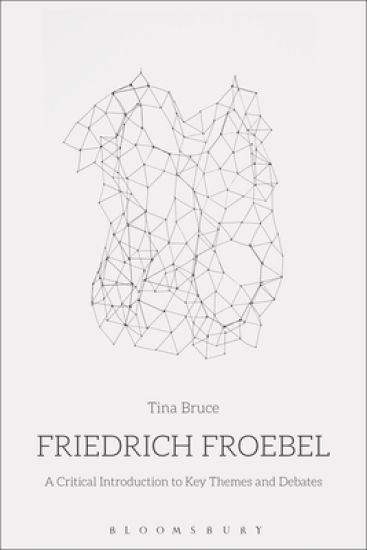
Friedrich Froebel

Friedrich Froebel

Tina Bruce

Bloomsbury Academic
2021
nidottu
This book considers the origins of Froebelian early childhood education providing context to the development of his theories and ideas, critically examines the key themes of this philosophy of education and explores the relevance of Froebelian practice today. Tina Bruce reflects on central aspects of Froebelian philosophy of education: the importance of family, highly trained teachers, engagement with nature, mother songs, movement games, play and self-activity of the child, the whole child and the Froebelian concept of unity. In exploring each element Bruce considers the implications for Froebelian practice and research today, and addresses the views of critics and supporters, Each aspect is considered within an international context, drawing on research and practice from across the world. The final chapter gathers together the next steps for Froebelian early childhood education, providing navigational tools and suggestions for what needs to be addressed if Froebel is to remain useful to future practitioners, researchers and policy makers.
Friedrich Froebel

Friedrich Froebel

Tina Bruce

Bloomsbury Academic
2021
sidottu
This book considers the origins of Froebelian early childhood education providing context to the development of his theories and ideas, critically examines the key themes of this philosophy of education and explores the relevance of Froebelian practice today. Tina Bruce reflects on central aspects of Froebelian philosophy of education: the importance of family, highly trained teachers, engagement with nature, mother songs, movement games, play and self-activity of the child, the whole child and the Froebelian concept of unity. In exploring each element Bruce considers the implications for Froebelian practice and research today, and addresses the views of critics and supporters, Each aspect is considered within an international context, drawing on research and practice from across the world. The final chapter gathers together the next steps for Froebelian early childhood education, providing navigational tools and suggestions for what needs to be addressed if Froebel is to remain useful to future practitioners, researchers and policy makers.