Kirjojen hintavertailu. Mukana 11 342 296 kirjaa ja 12 kauppaa.

Kirjahaku

Etsi kirjoja tekijän nimen, kirjan nimen tai ISBN:n perusteella.

1000 tulosta hakusanalla Greg Woolf

Film After Jung

Film After Jung

Greg Singh

Routledge
2009
sidottu
Popular film as a medium of communication, expression and storytelling has proved one of the most durable and fascinating cultural forms to emerge during the twentieth century, and has long been the object of debate, discussion and interpretation. Film After Jung provides the reader with an overview of the history of film theory and delves into analytical psychology to consider the reaction that popular film can evoke through emotional and empathetic engagement with its audience.This book includes:an introduction to film scholarship discussions of key Jungian concepts Post-Jungian film studies beyond filmIt also considers the potential for post-Jungian contributions to film studies, and the ways in which these can help to enrich the lives of those undergoing clinical analysis.Film After Jung encourages students of film and psychology to explore the insights and experiences of everyday life that film has to offer by applying Post-Jungian concepts to film, image construction, narrative, and issues in cultural theory. It will enhance the film student’s knowledge of film engagement as well as introducing the Jungian analyst to previously unexplored traditions in film theory.
Film After Jung

Film After Jung

Greg Singh

Routledge
2009
nidottu
Popular film as a medium of communication, expression and storytelling has proved one of the most durable and fascinating cultural forms to emerge during the twentieth century, and has long been the object of debate, discussion and interpretation. Film After Jung provides the reader with an overview of the history of film theory and delves into analytical psychology to consider the reaction that popular film can evoke through emotional and empathetic engagement with its audience.This book includes:an introduction to film scholarship discussions of key Jungian concepts Post-Jungian film studies beyond filmIt also considers the potential for post-Jungian contributions to film studies, and the ways in which these can help to enrich the lives of those undergoing clinical analysis.Film After Jung encourages students of film and psychology to explore the insights and experiences of everyday life that film has to offer by applying Post-Jungian concepts to film, image construction, narrative, and issues in cultural theory. It will enhance the film student’s knowledge of film engagement as well as introducing the Jungian analyst to previously unexplored traditions in film theory.
Feeling Film: Affect and Authenticity in Popular Cinema
Cinema has the capacity to enflame our passions, to arouse our pity, to inspire our love. Feeling Film is a book that examines the emotional encounters found in contemporary popular cinema cultures. Examining melodrama, film noir, comic book franchises, cult indie movies and romantic comedy within the context of a Jungian-informed psychology and contemporary movements in film-philosophy, this book considers the various kinds of feelings engendered by our everyday engagements with cinema.Greg Singh questions the popular idea of what cinema is, and considers what happens during the anticipation and act of watching a movie, through to the act of sharing our feelings about them, the reviewing process and repeat-viewing practices. Feeling Film does this through a critique of purely textual approaches, instead offering a model which emphasises lived, warm (embodied and inhabited) psychological relationships between the viewer and the viewed. It extends the narrative action of cinema beyond the duration of the screening into realms of anticipation and afterlife, in particular providing insight into the tertiary and participatory practices afforded through rich media engagement. In rethinking the everyday, co-productive relationship between viewer and viewed from this perspective, Feeling Film reinstates the importance of feelings as a central concern for film theory. What emerges from this study is a re-engagement of the place of emotion, affect and feeling in film theory and criticism. In reconsidering the duration of the cinematic encounter, Feeling Film makes a significant contribution to the understanding of the inter-subjective relationship between viewer and viewed. It takes post-Jungian criticism into the realms of post-cinema technologies and reignites the dialogue between depth psychology and the study of images as they appear to, and for, us. This book will make essential reading for those interested in the relationship between film and aspects of depth psychology, film and philosophy students at advanced undergraduate and postgraduate levels, film and cinema academics and cinephiles.
Feeling Film: Affect and Authenticity in Popular Cinema
Cinema has the capacity to enflame our passions, to arouse our pity, to inspire our love. Feeling Film is a book that examines the emotional encounters found in contemporary popular cinema cultures. Examining melodrama, film noir, comic book franchises, cult indie movies and romantic comedy within the context of a Jungian-informed psychology and contemporary movements in film-philosophy, this book considers the various kinds of feelings engendered by our everyday engagements with cinema.Greg Singh questions the popular idea of what cinema is, and considers what happens during the anticipation and act of watching a movie, through to the act of sharing our feelings about them, the reviewing process and repeat-viewing practices. Feeling Film does this through a critique of purely textual approaches, instead offering a model which emphasises lived, warm (embodied and inhabited) psychological relationships between the viewer and the viewed. It extends the narrative action of cinema beyond the duration of the screening into realms of anticipation and afterlife, in particular providing insight into the tertiary and participatory practices afforded through rich media engagement. In rethinking the everyday, co-productive relationship between viewer and viewed from this perspective, Feeling Film reinstates the importance of feelings as a central concern for film theory. What emerges from this study is a re-engagement of the place of emotion, affect and feeling in film theory and criticism. In reconsidering the duration of the cinematic encounter, Feeling Film makes a significant contribution to the understanding of the inter-subjective relationship between viewer and viewed. It takes post-Jungian criticism into the realms of post-cinema technologies and reignites the dialogue between depth psychology and the study of images as they appear to, and for, us. This book will make essential reading for those interested in the relationship between film and aspects of depth psychology, film and philosophy students at advanced undergraduate and postgraduate levels, film and cinema academics and cinephiles.
Understanding Social Movements

Understanding Social Movements

Greg Martin

Routledge
2015
sidottu
This book offers a new and fresh approach to understanding social movements. It provides interdisciplinary perspectives on social and cultural protest and contentious politics. It considers major theories and concepts, which are presented in an accessible and engaging format. Historical and contemporary case studies and examples from a variety of different countries are provided throughout, including the American civil rights movement, Greenpeace, Pussy Riot, indigenous peoples movements, liberation theology, Occupy, Tea Party, and the Arab Spring.The book presents specific chapters outlining the early origins of social movement studies, and more recent theoretical and conceptual developments. It considers key ideas from resource mobilization theory, the political process model, and new social movement approaches. It provides an expansive commentary on the role of culture in social protest, and looks at substantive areas in chapters dedicated to religious movements, geography and struggles over space, media and movements, and global activism.Understanding Social Movements will be a useful resource for undergraduate and postgraduate students across disciplines wanting to be introduced to or extend their knowledge of the field. The book will also prove invaluable for lecturers and academic researchers interested in studying social movements.
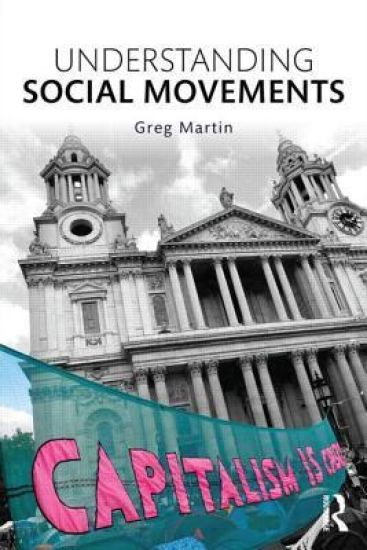
Understanding Social Movements

Understanding Social Movements

Greg Martin

Routledge
2015
nidottu
This book offers a new and fresh approach to understanding social movements. It provides interdisciplinary perspectives on social and cultural protest and contentious politics. It considers major theories and concepts, which are presented in an accessible and engaging format. Historical and contemporary case studies and examples from a variety of different countries are provided throughout, including the American civil rights movement, Greenpeace, Pussy Riot, indigenous peoples movements, liberation theology, Occupy, Tea Party, and the Arab Spring.The book presents specific chapters outlining the early origins of social movement studies, and more recent theoretical and conceptual developments. It considers key ideas from resource mobilization theory, the political process model, and new social movement approaches. It provides an expansive commentary on the role of culture in social protest, and looks at substantive areas in chapters dedicated to religious movements, geography and struggles over space, media and movements, and global activism.Understanding Social Movements will be a useful resource for undergraduate and postgraduate students across disciplines wanting to be introduced to or extend their knowledge of the field. The book will also prove invaluable for lecturers and academic researchers interested in studying social movements.
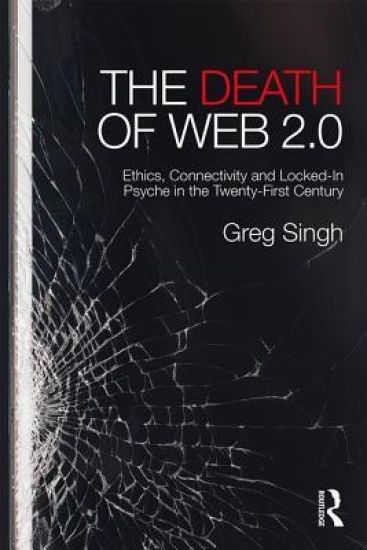
The Death of Web 2.0

The Death of Web 2.0

Greg Singh

Routledge
2018
sidottu
With all our contemporary connectivity, are we really connected? What does the nature of connectivity tell us about interpersonal and community relationships? What ethical concerns are raised through an always-on culture?Communication in today’s world is characterised by a condition of persistent, semi-permanent connectivity, which seems to bring us closer together, but which can also be profoundly alienating. The Death of Web 2.0 takes a retrospective look at a moment in recent media history that has had, and will continue to have, a lasting impact upon the predominant attitude towards cultures of connectivity. Greg Singh draws from a range of approaches, intellectual traditions and scholarly disciplines to engage key questions underpinning the contemporary communications media ecosystem.Bringing together influences from communitarian ethics, recognition theory and relational and depth psychology, Singh synthesises key approaches to produce a critical inquiry that projects the tensions at the heart of connectivity as a principle of Web 2.0. He argues that Web 2.0 is a cultural moment that is truly over, and that what is popularly described as 'Web 2.0' is an altogether different set of principles and practices. The Death of Web 2.0 recognises the consequences of our 'always-on' culture, where judgments are made quickly and where impacts can be far-reaching, affecting our relationships, wellbeing, mental health and the health of our communities, and it concludes by asking what an ethics of connectivity would look like.This unique interdisciplinary work will be essential reading for academics and students of Jungian and post-Jungian studies, media and cultural studies and psychosocial studies as well as anyone interested in the social implications of new media.
The Death of Web 2.0

The Death of Web 2.0

Greg Singh

Routledge
2018
nidottu
With all our contemporary connectivity, are we really connected? What does the nature of connectivity tell us about interpersonal and community relationships? What ethical concerns are raised through an always-on culture?Communication in today’s world is characterised by a condition of persistent, semi-permanent connectivity, which seems to bring us closer together, but which can also be profoundly alienating. The Death of Web 2.0 takes a retrospective look at a moment in recent media history that has had, and will continue to have, a lasting impact upon the predominant attitude towards cultures of connectivity. Greg Singh draws from a range of approaches, intellectual traditions and scholarly disciplines to engage key questions underpinning the contemporary communications media ecosystem.Bringing together influences from communitarian ethics, recognition theory and relational and depth psychology, Singh synthesises key approaches to produce a critical inquiry that projects the tensions at the heart of connectivity as a principle of Web 2.0. He argues that Web 2.0 is a cultural moment that is truly over, and that what is popularly described as 'Web 2.0' is an altogether different set of principles and practices. The Death of Web 2.0 recognises the consequences of our 'always-on' culture, where judgments are made quickly and where impacts can be far-reaching, affecting our relationships, wellbeing, mental health and the health of our communities, and it concludes by asking what an ethics of connectivity would look like.This unique interdisciplinary work will be essential reading for academics and students of Jungian and post-Jungian studies, media and cultural studies and psychosocial studies as well as anyone interested in the social implications of new media.
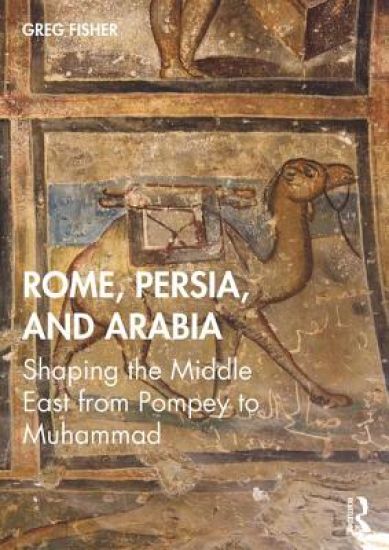
Rome, Persia, and Arabia

Rome, Persia, and Arabia

Greg Fisher

Routledge
2019
sidottu
Rome, Persia, and Arabia traces the enormous impact that the Great Powers of antiquity exerted on Arabia and the Arabs, between the arrival of Roman forces in the Middle East in 63 BC and the death of the Prophet Muhammad in AD 632.Richly illustrated and covering a vast area from the fertile lands of South Arabia to the bleak deserts of Iraq and Syria, this book provides a detailed and captivating narrative of the way that the empires of antiquity affected the politics, culture, and religion of the Arabs. It examines Rome’s first tentative contacts in the Syrian steppe and the controversial mission of Aelius Gallus to Yemen, and takes in the city states, kingdoms, and tribes caught up in the struggle for supremacy between Rome and Persia, including the city state of Hatra, one of the many archaeological sites in the Middle East that have suffered deliberate vandalism at the hands of the ‘Islamic State’. The development of an Arab Christianity spanning the Middle East, the emergence of Arab fiefdoms at the edges of imperial power, and the crucial appearance of strong Arab leadership in the century before Islam provide a clear picture of the importance of pre-Islamic Arabia and the Arabs to understanding world and regional history.Rome, Persia, and Arabia includes discussions of heritage destruction in the Middle East, the emergence of Islam, and modern research into the anthropology of ancient tribal societies and their relationship with the states around them. This comprehensive and wide-ranging book delivers an authoritative chronicle of a crucial but little known era in world history, and is for any reader with an interest in the ancient Middle East, Arabia, and the Roman and Persian empires.
Rome, Persia, and Arabia

Rome, Persia, and Arabia

Greg Fisher

Routledge
2019
nidottu
Rome, Persia, and Arabia traces the enormous impact that the Great Powers of antiquity exerted on Arabia and the Arabs, between the arrival of Roman forces in the Middle East in 63 BC and the death of the Prophet Muhammad in AD 632.Richly illustrated and covering a vast area from the fertile lands of South Arabia to the bleak deserts of Iraq and Syria, this book provides a detailed and captivating narrative of the way that the empires of antiquity affected the politics, culture, and religion of the Arabs. It examines Rome’s first tentative contacts in the Syrian steppe and the controversial mission of Aelius Gallus to Yemen, and takes in the city states, kingdoms, and tribes caught up in the struggle for supremacy between Rome and Persia, including the city state of Hatra, one of the many archaeological sites in the Middle East that have suffered deliberate vandalism at the hands of the ‘Islamic State’. The development of an Arab Christianity spanning the Middle East, the emergence of Arab fiefdoms at the edges of imperial power, and the crucial appearance of strong Arab leadership in the century before Islam provide a clear picture of the importance of pre-Islamic Arabia and the Arabs to understanding world and regional history.Rome, Persia, and Arabia includes discussions of heritage destruction in the Middle East, the emergence of Islam, and modern research into the anthropology of ancient tribal societies and their relationship with the states around them. This comprehensive and wide-ranging book delivers an authoritative chronicle of a crucial but little known era in world history, and is for any reader with an interest in the ancient Middle East, Arabia, and the Roman and Persian empires.
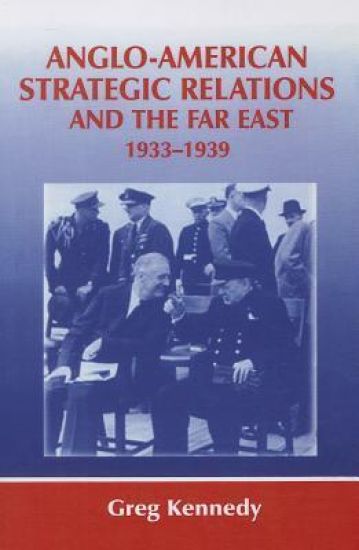
Anglo-American Strategic Relations and the Far East, 1933-1939
This volume charts how the national strategic needs of the United States of America and Great Britain created a "parallel but not joint" relationship towards the Far East as the crisis in that region evolved from 1933-39. In short, it is a look at the relationship shared between the two nations with respect to accommodating one another on certain strategic and diplomatic issues so that they could become more confident of one another in any potential showdowns with Japan.
What Media Classes Really Want to Discuss
You probably already have a clear idea of what a "discussion guide for students" is: a series of not-very-interesting questions at the end of a textbook chapter. Instead of triggering thought-provoking class discussion, all too often these guides are time-consuming and ineffective.This is not that kind of discussion guide.What Media Classes Really Want To Discuss focuses on topics that introductory textbooks generally ignore, although they are prominent in students’ minds. Using approachable prose, this book will give students a more precise critical language to discuss “common sense” phenomena about media.The book acknowledges that students begin introductory film and television courses thinking they already know a great deal about the subject. What Media Classes Really Want To Discuss provides students with a solid starting point for discussing their assumptions critically and encourages the reader to argue with the book, furthering the 'discussion' on media in everyday life and in the classroom.
What Media Classes Really Want to Discuss
You probably already have a clear idea of what a "discussion guide for students" is: a series of not-very-interesting questions at the end of a textbook chapter. Instead of triggering thought-provoking class discussion, all too often these guides are time-consuming and ineffective.This is not that kind of discussion guide.What Media Classes Really Want To Discuss focuses on topics that introductory textbooks generally ignore, although they are prominent in students’ minds. Using approachable prose, this book will give students a more precise critical language to discuss “common sense” phenomena about media.The book acknowledges that students begin introductory film and television courses thinking they already know a great deal about the subject. What Media Classes Really Want To Discuss provides students with a solid starting point for discussing their assumptions critically and encourages the reader to argue with the book, furthering the 'discussion' on media in everyday life and in the classroom.
Towards a Political Economy of Resource-dependent Regions
This book advances our understanding of resource-dependent regions in developed economies in the 21st Century. It explores how rural and small town places are working to find success in a new economy marked by demographic, economic, social, cultural, political, and environmental change. How are we to understand the changes and transformations working through communities and economies? Where are the trajectories of change leading these resource-dependent places and regions? Drawing upon examples from Canada, USA, UK, Australia, New Zealand, and the Nordic countries, these and other questions are explored and addressed by constructing a critical political economy framework of resource hinterland transition. Towards a Political Economy of Resource Dependent Regions is a key resource for students and researchers in geography, rural and industrial sociology, economics, environmental studies, political science, regional studies, and planning, as well as policy-makers, those in industry and the private sector, and local and regional development practitioners.
International Financial Reporting Standards

International Financial Reporting Standards

Greg F. Burton; Eva K. Jermakowicz

Routledge
2015
sidottu
International Financial Reporting Standards: A Framework-based Perspective links broad concepts and general accounting principles to the specific requirements of IFRS to help students develop and understand the judgments required in using a principle-based standard.Although it is still unclear whether the US will adopt IFRS, the global business environment makes it necessary for accounting students and professionals to be bilingual in both US GAAP and IFRS. This comprehensive textbook offers: A clear presentation of the concepts underlying IFRSA conceptual framework to guide students in interpreting and applying IFRS rulesA comparison between IFRS and US GAAP to develop students’ understanding of the requirements of each standardReal world examples and case studies to link accounting theory to practice, while also exposing students to different interpretations and applications of IFRSEnd of chapter material covering other aspects of financial reporting, including international auditing standards, international ethics standards, and corporate governance and enforcement, as well as emerging topics, such as integrated accounting, sustainability and social responsibility accounting and new forms of financial reportingBurton & Jermakowicz have crafted a thorough and extensive tool to give students a competitive edge in understanding, and applying IFRS. A companion website provides additional support for both students and instructors.
International Financial Reporting Standards

International Financial Reporting Standards

Greg F. Burton; Eva K. Jermakowicz

Routledge
2015
nidottu
International Financial Reporting Standards: A Framework-based Perspective links broad concepts and general accounting principles to the specific requirements of IFRS to help students develop and understand the judgments required in using a principle-based standard.Although it is still unclear whether the US will adopt IFRS, the global business environment makes it necessary for accounting students and professionals to be bilingual in both US GAAP and IFRS. This comprehensive textbook offers: A clear presentation of the concepts underlying IFRSA conceptual framework to guide students in interpreting and applying IFRS rulesA comparison between IFRS and US GAAP to develop students’ understanding of the requirements of each standardReal world examples and case studies to link accounting theory to practice, while also exposing students to different interpretations and applications of IFRSEnd of chapter material covering other aspects of financial reporting, including international auditing standards, international ethics standards, and corporate governance and enforcement, as well as emerging topics, such as integrated accounting, sustainability and social responsibility accounting and new forms of financial reportingBurton & Jermakowicz have crafted a thorough and extensive tool to give students a competitive edge in understanding, and applying IFRS. A companion website provides additional support for both students and instructors.
Communicating Climate Change and Energy Security

Communicating Climate Change and Energy Security

Greg Philo; Catherine Happer

Routledge
2013
sidottu
This book, drawing on new research conducted for the UK Energy Resource Centre (UKERC), examines the contemporary public debate on climate change and the linked issue of energy security. It analyses the key processes which affect the formation of public attitudes and understanding in these areas, while also developing a completely new method for analysing these processes. The authors address fundamental questions about how to adequately inform the public and develop policy in areas of great social importance when public distrust of politicians is so widespread. The new methods of attitudinal research pioneered here combined with the attention to climate change have application and resonance beyond the UK and indeed carry global import.
The Roman World from Romulus to Muhammad
This volume provides a detailed examination of nearly 1,400 years of Roman history, from the foundation of the city in the eighth century BC until the evacuation of Roman troops from Alexandria in AD 642 in the face of the Arab conquests. Drawing on a vast array of ancient texts written in Latin, Greek, Syriac, Armenian, and Arabic, and relying on a host of inscriptions, archaeological data, and the evidence from ancient art, architecture, and coinage, The Roman World from Romulus to Muhammad brings to the fore the men and women who chronicled the story of the city and its empire. Richly illustrated with 71 maps and 228 illustrations—including 20 in colour—and featuring a detailed glossary and suggestions for further reading, this volume examines a broad range of topics, including ancient climate change, literature, historiography, slavery, war and conquest, the development of Christianity, the Jewish revolts, and the role of powerful imperial women. The author also considers the development of Islam within a Roman historical context, examines the events that led to the formation of the post-Roman states in Western Europe, and contemplates aff airs on the imperial periphery in the Caucasus, Ethiopia, and the Arabian Peninsula. Emphasising the voices of antiquity throughout, The Roman World from Romulus to Muhammad is an invaluable resource for students and scholars interested in the beguiling history of the world’s most famous empire.
The Roman World from Romulus to Muhammad
This volume provides a detailed examination of nearly 1,400 years of Roman history, from the foundation of the city in the eighth century BC until the evacuation of Roman troops from Alexandria in AD 642 in the face of the Arab conquests. Drawing on a vast array of ancient texts written in Latin, Greek, Syriac, Armenian, and Arabic, and relying on a host of inscriptions, archaeological data, and the evidence from ancient art, architecture, and coinage, The Roman World from Romulus to Muhammad brings to the fore the men and women who chronicled the story of the city and its empire. Richly illustrated with 71 maps and 228 illustrations—including 20 in colour—and featuring a detailed glossary and suggestions for further reading, this volume examines a broad range of topics, including ancient climate change, literature, historiography, slavery, war and conquest, the development of Christianity, the Jewish revolts, and the role of powerful imperial women. The author also considers the development of Islam within a Roman historical context, examines the events that led to the formation of the post-Roman states in Western Europe, and contemplates aff airs on the imperial periphery in the Caucasus, Ethiopia, and the Arabian Peninsula. Emphasising the voices of antiquity throughout, The Roman World from Romulus to Muhammad is an invaluable resource for students and scholars interested in the beguiling history of the world’s most famous empire.
Critical Dispositions

Critical Dispositions

Greg Dimitriadis

Routledge
2011
sidottu
Set against the current proliferation of global "difference" and economic realignment, Critical Dispositions explores the notions of "evidence" and "expertise" in times of material scarcity. Both have come to the forefront of national and international debate in education as "evidence" and "evidence-based" research and pedagogical practices continue as major trends in educational policy. Greg Dimitriadis maintains this debate is best understood as part of a broader rise in professional and managerial discourses in various aspects of educational research and practice. Each aims to control and contain some aspect of research and practice in ways that are increasingly specific and targeted. As demonstrated through examples from critical intellectuals and artists outside the field of education, this current proliferation of specific, autonomous fields of inquiry and practice marks a much deeper ambivalence about our contemporary moment and how we understand it. Following Bourdieu and other theorists, Dimitriadis argues that educational researchers and practitioners today must be increasingly self-reflexive about the positions they take up in various fields of inquiry, what they allow us to see and to understand, what they blind us to. This kind of self-reflexivity, however, is becoming increasingly difficult today as material demands and dislocations are forcing educators to occupy particular fields in more specific ways. Unpacking this tension and offering alternative "thinking tools" is at the core of this volume.