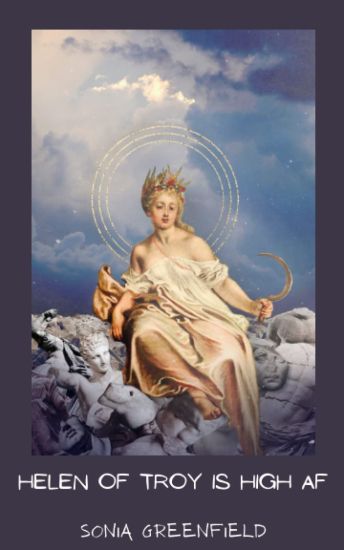
Sonia Greenfield (she/they) is the author of All Possible Histories (Riot in Your Throat, 2022), Letdown (White Pine Press, 2020), American Parable (Autumn House, 2018), and Boy with a Halo at the Farmer's Market (Codhill Press, 2015). Her work has appeared in the 2018 and 2010 Best American Poetry, Southern Review, Willow Springs and elsewhere. She lives with her family in Minneapolis where she teaches at Normandale College, edits the Rise Up Review, and advocates for both neurodiversity and the decentering of the cis/het white hegemony. You can find more at soniagreenfield.com.
Helen of Bikini examines the way humans inhabit the world, both in beauty and in conflict. How do the twinned human forces of domestication and domination, rage and mediation, witness and culpability, destruction and nurturing, find their balances, not in an either/or, but in a melding? In an unapologetically feminist approach to these topics, Reeves explores the idea that "we are the only ones who name," and goes about teaching us the "alphabet of our unmaking."
All of us have our comfort zones, the familiar place where we feel safe. But what would happen if we stepped into unfamiliar territory? As author Helen Kithinji says in the book, Limitless Success with Helen Kithinji, magical things are bound to happen. Following her five key points, we can enter a circle of continual growth and enjoy a successful life. This book is for anyone who wants more out of life but doesn't know where to start.About the AuthorHelen Kithinji is a successful entrepreneur, investor, an Accredited Executive Coach, and author of one of the most powerful personal development books published: Profiles on Success with Helen Kithinji, which also features other global best-selling authors. An MBA graduate, her story about growing to executive management in her fifteen-year banking career, becoming an entrepreneur, and establishing a multi-million-dollar global business in less than five years continues to provide inspiration and encouragement to others in pursuit of their dreams. She has been featured in leading business publications, including the Voyager Magazine, Business Daily, The Daily Nation, Business for Home, and The Standard newspaper. She has won several awards, her latest recognition being the achievement of a million dollars in sales commissions in her online business. She also enjoys a rich, happy family life with her husband-Ronnie-and their two adorable sons.
In Greek mythology, Helen, better known as Helen of Sparta or Helen of Troy, was daughter of Zeus and Leda, wife of king Menelaus of Sparta and sister of Castor, Polydeuces and Clytemnestra. Her abduction by Paris brought about the Trojan War. Helen was described as having the face that launched a thousand ships. Helen or Helene is probably derived from the Greek word meaning "torch" or "corposant" or might be related to "selene" meaning "moon".
Helen is a novel by Maria Edgeworth (1767-1849). It was written in 1834, late in the writer's life. Helen tells the story of a young orphan, Helen Stanley, whose guardian, Dean Stanley, has squandered his fortune and left Helen without means of support. She is forced to take up residence with the local vicar, whose wife is astonished that none of the Stanleys' aristocratic friends have offered a refuge to her. Eventually, however, the Davenant family returns from abroad and invite Helen to their daughter's new home, Clarendon Park. (Cecilia Davenant has just married General Clarendon.) Helen journeys to join her dear friend Cecilia (a charming socialite), and the first half of the novel describes Helen's experiences among the most fortunate of Britain's elite under the tutelage of Lady Davenant, who in some ways favors Helen over her own daughter Cecilia. In the second and more dramatic half of the novel, Lady Davenant departs with her husband, who has been named ambassador at the Court of St. Petersburg, Russia. Helen is left to the care of General Clarendon and Cecilia. By this time she is engaged to Granville Beauclerc, a young and handsome man who is another of Lady Davenant's favorites. All does not run smoothly for Helen, however. Before her marriage, Cecilia has carried on an amorous correspondence with Colonel d'Aubigny, a worthless rou who has since died. These letters reappear in a packet addressed to Cecilia's husband. Cecilia implores Helen to act as if the letters were addressed to her rather than to Cecilia. Helen, from misguided devotion to her friend and gratitude for Cecilia's kind hospitality, agrees to the deception. This first step leads to more and more serious consequences, until finally Helen's reputation is in tatters. Beauclerc is forced to fight a duel in defense of his fianc e, after which he must flee from England. Cecilia still refuses to recognize the letters as hers, out of fear of losing her own husband if she admits to the correspondence. The General is convinced that Helen is faithless. She refuses to stay where she is not respected and chooses exile in Wales with the General's sister, where she becomes dangerously ill. Even the birth of Cecilia's first child, a son, does not encourage her to confess to her husband, and Helen gives up all hope of exoneration. The d nouement comes when Lady Davenant, also dangerously ill, returns to London at the same time as the General finally discovers his wife's deception and vows to separate from Cecilia for life. Helen's character is redeemed, Beauclerc returns to England when his adversary recovers from his wounds, and the novel ends happily for all the protagonists with Lady Davenant saying that she is "now, and not till now, happy--perfectly happy in Love and Truth "....... Maria Edgeworth (1 January 1768 - 22 May 1849) was a prolific Anglo-Irish writer of adults' and children's literature. She was one of the first realist writers in children's literature and was a significant figure in the evolution of the novel in Europe. She held advanced views, for a woman of her time, on estate management, politics and education, and corresponded with some of the leading literary and economic writers, including Sir Walter Scott and David Ricardo. Early life: Maria Edgeworth was born at Black Bourton, Oxfordshire. She was the second child of Richard Lovell Edgeworth (who eventually fathered 22 children by four wives) and Anna Maria Edgeworth; Maria was thus an aunt of Francis Ysidro Edgeworth. She spent her early years with her mother's family in England, until her mother's death when Maria was five. When her father married his second wife Honora Sneyd in 1773, she went with him to his estate, Edgeworthstown, in County Longford, Ireland. Maria was sent to Mrs. Lattafi re's school in Derby after Honora fell ill in 1775....
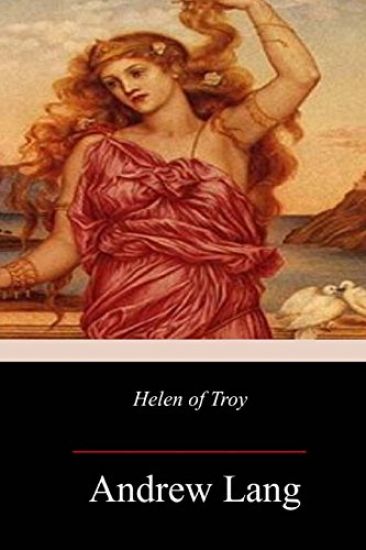
Scottish writer Andrew Lang is best remember for his prolific collections of folk and fairy tales, but he was also an accomplished poet, literary critic, novelist and contributor in the field of anthropology. In Lang's Helen of Troy, a story in rhyme of the fortunes of Helen, the theory that she was an unwilling victim of the Gods has been preferred. Many of the descriptions of manners are versified from the Iliad and the Odyssey. The description of the events after the death of Hector, and the account of the sack of Troy, is chiefly borrowed from Quintus Smyrnaeus. The character and history of Helen of Troy have been conceived of in very different ways by poets and mythologists.
Trieste Publishing has a massive catalogue of classic book titles. Our aim is to provide readers with the highest quality reproductions of fiction and non-fiction literature that has stood the test of time. The many thousands of books in our collection have been sourced from libraries and private collections around the world.The titles that Trieste Publishing has chosen to be part of the collection have been scanned to simulate the original. Our readers see the books the same way that their first readers did decades or a hundred or more years ago. Books from that period are often spoiled by imperfections that did not exist in the original. Imperfections could be in the form of blurred text, photographs, or missing pages. It is highly unlikely that this would occur with one of our books. Our extensive quality control ensures that the readers of Trieste Publishing's books will be delighted with their purchase. Our staff has thoroughly reviewed every page of all the books in the collection, repairing, or if necessary, rejecting titles that are not of the highest quality. This process ensures that the reader of one of Trieste Publishing's titles receives a volume that faithfully reproduces the original, and to the maximum degree possible, gives them the experience of owning the original work.We pride ourselves on not only creating a pathway to an extensive reservoir of books of the finest quality, but also providing value to every one of our readers. Generally, Trieste books are purchased singly - on demand, however they may also be purchased in bulk. Readers interested in bulk purchases are invited to contact us directly to enquire about our tailored bulk rates.
Scottish writer Andrew Lang is best remember for his prolific collections of folk and fairy tales, but he was also an accomplished poet, literary critic, novelist and contributor in the field of anthropology. In Lang's Helen of Troy, a story in rhyme of the fortunes of Helen, the theory that she was an unwilling victim of the Gods has been preferred. Many of the descriptions of manners are versified from the Iliad and the Odyssey. The description of the events after the death of Hector, and the account of the sack of Troy, is chiefly borrowed from Quintus Smyrnaeus. The character and history of Helen of Troy have been conceived of in very different ways by poets and mythologists.
A hopelessly mismatched niece and uncle find themselves thrown together by circumstance. But underneath their constant bickering and nitpicking, the pair truly cares about each other. Will this hilariously dysfunctional duo find a way to make their nontraditional household work?
This book is a tribute to the pioneers who explored the New Brunswick wilderness and revelled in the beauty of its rivers, mountains and forests. It is also a tribute to my wife and partner, Helen Crocker who loved this land as much as I do. There is no better place to be, than the Miramichi.
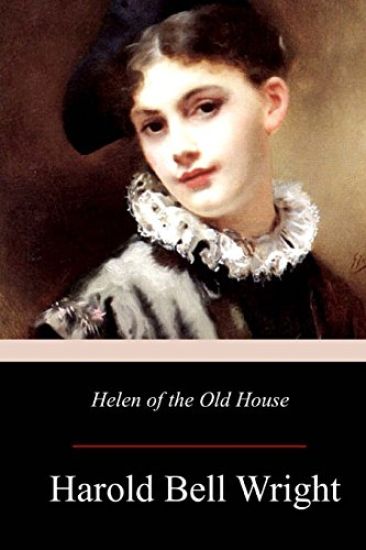
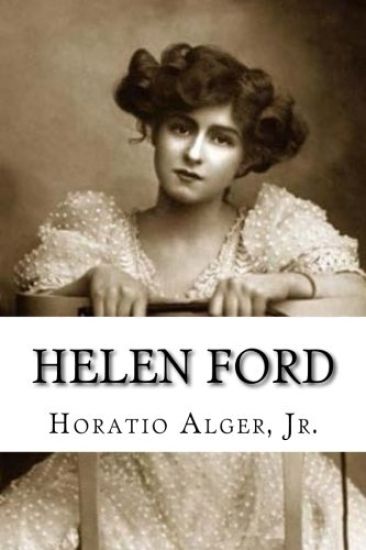
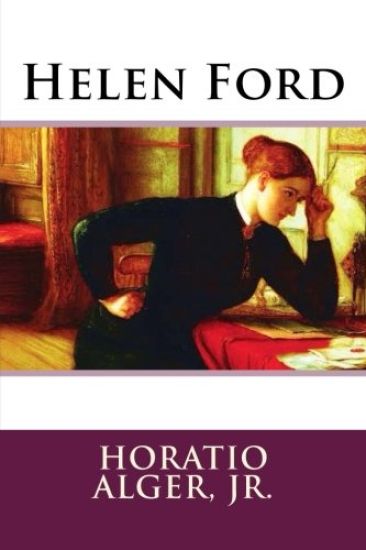
Helen Ford works as a seamstress in a typical 1800's sweat shop, supporting her father, a dreamer who wants to invent a flying machine. There is money in the family, however, kept at a distance by a deceitful nephew who schemes to take the fortune for himself. The nephew has kept the family separated for some time. This is suspense and mystery.
Helen Ford works as a seamstress in a typical 1800's sweat shop, supporting her father, a dreamer who wants to invent a flying machine. There is money in the family, however, kept at a distance by a deceitful nephew who schemes to take the fortune for himself. The nephew has kept the family separated for some time. This is suspense and mystery.
An emotive soprano, heartrending melodies about unrequited love, and a draped-over-the-piano persona made Helen Morgan (1902–1941) the original torch singer, but she was so much more. The versatile actress appeared on Broadway, in film, and on radio. In a number of stage revues, she danced, sang, and excelled in sketch comedy. She played Julie in Kern and Hammerstein's Broadway musical Show Boat (1927) and also starred in the duo's Sweet Adeline in 1929. That same year, Morgan appeared in Rouben Mamoulian's classic film Applause. When the Great Depression made theater roles scarce, she headed the CBS radio program Broadway Melodies and worked in the emerging medium of television. Yet Morgan's life was one of extremes. She earned a million dollars throughout her career but remained in constant debt. She was one of the most universally beloved people in her profession, but a stable romantic relationship eluded her until the very end of her life. She was a protofeminist who aided women facing unplanned pregnancies, yet she also sought respite in a man whose financial support would allow her to retire from the stage. Through it all, she battled alcoholism; brandy would eventually extinguish her flame in 1941. Helen Morgan: The Original Torch Singer and Ziegfeld's Last Star is the first biography of the gifted performer since 1974. Author Christopher Connelly utilizes interviews, newspaper articles, and family scrapbooks to present an honest and unflinching look at Morgan's life. Connelly's meticulous research addresses Morgan's troubled childhood, including her mother's six marriages, and the trauma of her stepfather's arrest and conviction for manslaughter in 1913. Also revealed are details regarding her early career in vaudeville and silent film, insights into the speakeasy and supper-club culture that served as a backdrop to Morgan's career, and accounts of her outstanding accomplishments, philanthropic actions, and enduring popularity. This gripping narrative presents the brief but brilliant life of a complex, talented, and iconic entertainer.
An emotive soprano, heartrending melodies about unrequited love, and a draped-over-the-piano persona made Helen Morgan (1902–1941) the original torch singer, but she was so much more. The versatile actress appeared on Broadway, in film, and on radio. In a number of stage revues, she danced, sang, and excelled in sketch comedy. She played Julie in Kern and Hammerstein's Broadway musical Show Boat (1927) and also starred in the duo's Sweet Adeline in 1929\. That same year, Morgan appeared in Rouben Mamoulian's classic film Applause. When the Great Depression made theater roles scarce, she headed the CBS radio program Broadway Melodies and worked in the emerging medium of television. Yet Morgan's life was one of extremes. She earned a million dollars throughout her career but remained in constant debt. She was one of the most universally beloved people in her profession, but a stable romantic relationship eluded her until the very end of her life. She was a protofeminist who aided women facing unplanned pregnancies, yet she also sought respite in a man whose financial support would allow her to retire from the stage. Through it all, she battled alcoholism; brandy would eventually extinguish her flame in 1941. Helen Morgan: The Original Torch Singer and Ziegfeld's Last Star is the first biography of the gifted performer since 1974\. Author Christopher Connelly utilizes interviews, newspaper articles, and family scrapbooks to present an honest and unflinching look at Morgan's life. Connelly's meticulous research addresses Morgan's troubled childhood, including her mother's six marriages, and the trauma of her stepfather's arrest and conviction for manslaughter in 1913\. Also revealed are details regarding her early career in vaudeville and silent film, insights into the speakeasy and supper-club culture that served as a backdrop to Morgan's career, and accounts of her outstanding accomplishments, philanthropic actions, and enduring popularity. This gripping narrative presents the brief but brilliant life of a complex, talented, and iconic entertainer.
As women’s university participation expanded rapidly in the first decade of the twentieth century, two close friends at Queen’s University Belfast nursed scholarly ambitions. Helen Waddell, budding feminist literary critic, and Maude Clarke, future Irish historian, were to become famous medievalists. Waddell’s progress was stymied by her stepmother’s insistence on family duty and by academic misogyny; Clarke’s father, in contrast, helped to clear her way. This joint biography intertwines the story of their friendship with their modern education, their shifting research interests and the obstacles and opportunities that faced them as women seeking academic careers. It traces Waddell’s evolution into an independent scholar, creative writer and translator of medieval Latin, and Clarke’s career as an influential Oxford don, training a generation of high-achieving women academics. The book also reproduces the surviving chapters of Helen Waddell’s Woman in the Drama before Shakespeare (1912-1919), an example of early feminist literary criticism, and Maude Clarke’s searching, self-reflective ‘Historiographical Notes’ (c.1930).