Kirjahaku
Etsi kirjoja tekijän nimen, kirjan nimen tai ISBN:n perusteella.
1000 tulosta hakusanalla J P Wheeldon


Heat-Resistant Polymers
J.P. Critchley; G.J. Knight; W.W. Wright
Springer-Verlag New York Inc.
2013
nidottu
Definitions of what is meant by a heat-resistant polymer vary considerably. We have taken the term to mean a polymer which can be used, at least for short time periods, at temperatures from 150°C. The greatest problem which arises in writing a monograph on such materials is the tremendous amount of data that is available. More than 2000 references have been published on one heat-resistant polymer system alone over a period of little more than two years. The result is that a very high degree of selectivity must be exercised with respect to the information reproduced. We have chosen to restrict our coverage to polymers that have received at least some degree of commercial exploitation and to details of their methods of preparation, their thermal and thermo-oxidative stabilities and modes of degradation, and their properties at elevated temperatures. It must be emphasized that other properties not cited, e. g. , hydrolytic and chemical stability, and resistance to ultraviolet radiation, may be equally important in particular uses of these materials. The "older" heat-resistant polymers, e. g. , the thermosets and some of the fluorine-containing materials, are not dealt with in such depth as are the "newer" polymers with aromatic and/or heterocyclic rings in the chain. This is because books have been available for some time on the well-established commercial polymers and developments in them have not been as marked re cently as in the aromatic and heterocyclic macromolecules.
Giant Resonances in Atoms, Molecules, and Solids
J.P. Connerade; J.M. Esteva; R.C. Karnatak
Springer-Verlag New York Inc.
2013
nidottu
Often, a new area of science grows at the confines between recognised subject divisions, drawing upon techniques and intellectual perspectives from a diversity of fields. Such growth can remain unnoticed at first, until a characteristic fami ly of effects, described by appropriate key words, has developed, at which point a distinct subject is born. Such is very much the case with atomic 'giant resonances'. For a start, their name itself was borrowed from the field of nuclear collective resonances. The energy range in which they occur, at the juncture of the extreme UV and the soft X-rays, remains to this day a meeting point of two different experimental techniques: the grating and the crystal spectrometer. The impetus of synchrotron spectroscopy also played a large part in developing novel methods, described by many acronyms, which are used to study 'giant resonances' today. Finally, although we have described them as 'atomic' to differentiate them from their counterparts in Nuclear Physics, their occurrence on atomic sites does not inhibit their existence in molecules and solids. In fact, 'giant resonances' provide a new unifying theme, cutting accross some of the traditional scientific boundaries. After much separate development, the spectroscopies of the atom in various environments can meet afresh around this theme of common interest. Centrifugal barrier effects and 'giant resonances' proper emerged almost simultaneously in the late 1960's from two widely separated areas of physics, namely the study of free atoms and of condensed matter.
Although a number of books have appeared on learning disabili ties, we feel that the present book has two distinct features which are not found in most others. It is multidisciplinary and it com bines theory with practice. A group of researchers from the disciplines of Psychology in cluding medical psychology and information processing, Reading, Special Education and Physical Education interacted with each other before and after their presentations in a conference (November 1980, at the University of Alberta, Edmonton, Canada), and then wrote their chapters for this book. We hope that their chapters were enriched by the discussions and arguments which happened in formal and informal settings during the authors' stay in Edmonton. Dr. Leong could not attend the conference, but was asked to write the introductory chapter for the book. The contributors to this volume have been involved with basic research as well as with clinical and educational research in learning disabilities. Some of them have a theoretical rather than a practical interest. However, a serious interest in a handicapping condition perhaps compels one to consider its amelioration no matter how 'pure' is the researcher. It is because of such a feeling.that those who do basic research have sug gested procedures for applying their findings. The result is a balanced product, entailing theory and practice.



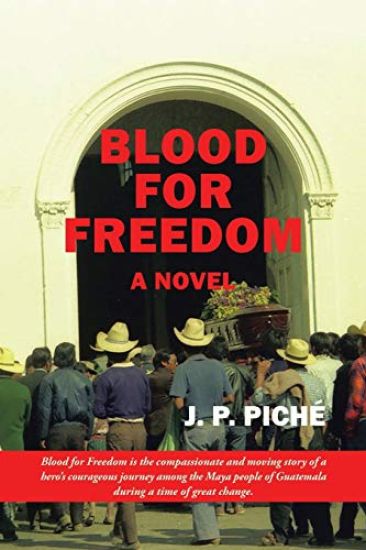
For Paul Desilets, the suicide of his twin brother will mean a constant state of mental paralysis unless he finds a new vision of life and gains deeper insight into himself. After several months of spiritual retreat in a monastery, he decides to serve as a lay missionary among the Maya people of Guatemala. Soon after, he is sent to a small parish to help missionary priest Father John Callaghan fulfill his last assignment. Fascinated by the pre-Columbian spiritual and cultural traditions that still survive among the Mayas, Desilets gains valuable insights into their unique way of knowing about the world and human experience. But after just eighteen months of working with the Mayas, he finds himself caught in the midst of mounting political tensions when the fragile bridge between the indigenous population and the Ladino rulers threatens to collapse. Now it may not be enough to just live with the oppressed. He may also have to be willing to sacrifice his life for them. Will he be able to achieve his mission in a country run by a dictatorship and where foreign missionaries are suspected of having links with leftist organizations?

For Paul Desilets, the suicide of his twin brother will mean a constant state of mental paralysis unless he finds a new vision of life and gains deeper insight into himself. After several months of spiritual retreat in a monastery, he decides to serve as a lay missionary among the Maya people of Guatemala. Soon after, he is sent to a small parish to help missionary priest Father John Callaghan fulfill his last assignment. Fascinated by the pre-Columbian spiritual and cultural traditions that still survive among the Mayas, Desilets gains valuable insights into their unique way of knowing about the world and human experience. But after just eighteen months of working with the Mayas, he finds himself caught in the midst of mounting political tensions when the fragile bridge between the indigenous population and the Ladino rulers threatens to collapse. Now it may not be enough to just live with the oppressed. He may also have to be willing to sacrifice his life for them. Will he be able to achieve his mission in a country run by a dictatorship and where foreign missionaries are suspected of having links with leftist organizations?