Kirjojen hintavertailu. Mukana 11 699 587 kirjaa ja 12 kauppaa.

Kirjahaku

Etsi kirjoja tekijän nimen, kirjan nimen tai ISBN:n perusteella.

1000 tulosta hakusanalla James M. Hutchisson

Religion in the Public Square

Religion in the Public Square

James M. Patterson

University of Pennsylvania Press
2019
sidottu
Ven. Fulton J. Sheen, Dr. Martin Luther King Jr., and Rev. Jerry Falwell—religious leaders who popularized theology through media campaigns designed to persuade the public In Religion in the Public Square, James M. Patterson considers religious leaders who popularized theology through media campaigns designed to persuade the public. Ven. Fulton J. Sheen, Dr. Martin Luther King Jr., and Rev. Jerry Falwell differed profoundly on issues of theology and politics, but they shared an approach to public ministry that aimed directly at changing how Americans understood the nature and purpose of their country. From the 1930s through the 1950s, Sheen was an early adopter of paperbacks, radio, and television to condemn totalitarian ideologies and to defend American Catholicism against Protestant accusations of divided loyalty. During the 1950s and 1960s, King staged demonstrations and boycotts that drew the mass media to him. The attention provided him the platform to preach Christian love as a political foundation in direct opposition to white supremacy. Falwell started his own church, which he developed into a mass media empire. He then leveraged it during the late 1970s through the 1980s to influence the Republican Party by exhorting his audience to not only ally with religious conservatives around issues of abortion and the traditional family but also to vote accordingly. Sheen, King, and Falwell were so successful in popularizing their theological ideas that they won prestigious awards, had access to presidents, and witnessed the results of their labors. However, Patterson argues that Falwell's efforts broke with the longstanding refusal of religious public figures to participate directly in partisan affairs and thereby catalyzed the process of politicizing religion that undermined the Judeo-Christian consensus that formed the foundation of American politics.
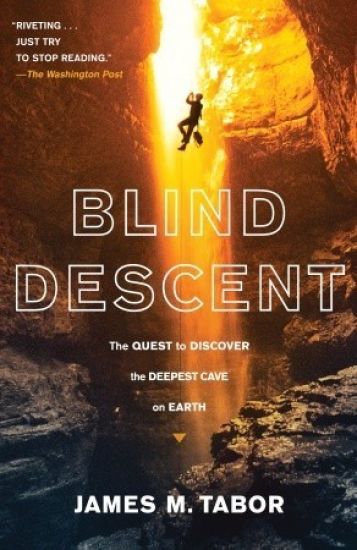
Blind Descent: The Quest to Discover the Deepest Cave on Earth
"Heart-stopping and relentlessly gripping. Tabor takes us on an odyssey into unfathomable worlds beneath us, and into the hearts of rare explorers who will do anything to get there first."--Robert Kurson, author of ShadowDivers In 2004, two great scientist-explorers attempted to find the bottom of the world. American Bill Stone took on the vast, deadly Cheve Cave in southern Mexico. Ukrainian Alexander Klimchouk targeted Krubera, a freezing nightmare of a supercave in the war-torn former Soviet republic of Georgia. Both men spent months almost two vertical miles deep, contending with thousand-foot drops, raging whitewater rivers, monstrous waterfalls, mile-long belly crawls, and the psychological horrors produced by weeks in absolute darkness, beyond all hope of rescue. Based on his unprecedented access to logs and journals as well as hours of personal interviews, James Tabor has crafted a thrilling exploration of man's timeless urge to discover--and of two extraordinary men whose pursuit of greatness led them to the heights of triumph and the depths of tragedy. Blind Descent is an unforgettable addition to the classic literature of true-life adventure, and a testament to human survival and endurance."Holds the reader to his seat, containing dangers aplenty with deadly falls, killer microbes, sudden burial, asphyxiation, claustrophobia, anxiety, and hallucinations far underneath the ground in a lightless world. Using a pulse-pounding narrative, this is tense real-life adventure pitting two master cavers mirroring the cold war with very uncommonly high stakes."--Publishers Weekly (starred review) "A fascinating and informative introduction to the sport of cave diving, as well as a dramatic portrayal of a significant man-vs.-nature conflict. . . . What counts is Tabor's knack for maximizing dramatic potential, while also managing to be informative and attentive to the major personalities associated with the most important cave explorations of the last two decades."--Kirkus ReviewsIncludes a 16-pg black and white insert
Fifty Years of Justice

Fifty Years of Justice

James M. Denham

University Press of Florida
2015
nidottu
Representing half of the state’s population, the U.S. Middle District Court is one of the busiest federal courts in Florida. It is recognized most often as the battleground for the Terri Schiavo “right to die” case, but it has been at the center of major decisions for more than fifty years. The famous and the infamous have stood before the judges of the Middle District courts, including young civil rights lawyer Thurgood Marshall, mobster Santo Trafficante, drug lord Carlos Lehder, baseball star Denny McLain, movie star Wesley Snipes, criminal defense attorney F. Lee Bailey, and Constance Baker Motley, the first African American woman to argue a case before the U.S. Supreme Court.The verdicts have made headlines, but little is known about the inner workings of the court in which they were delivered. In Fifty Years of Justice, James Denham presents the fascinating history of the U.S. Middle District Court of Florida from its founding in 1962 to the present. Readers will discover the intricacies of rulings, the criminal defendants and civil litigants, and the dedicated officials - the unsung heroes - who keep the justice system running day to day. From desegregation to discrimination, espionage to the environment, trafficking to terrorism, and a host of cases in between, litigation in these courtrooms has shaped and shaken both state andnation.
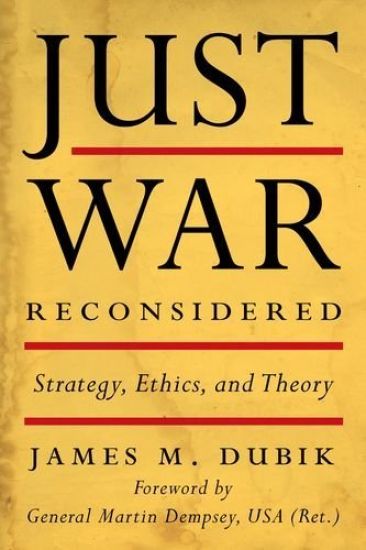
Just War Reconsidered

Just War Reconsidered

James M. Dubik; Martin Dempsey

The University Press of Kentucky
2016
sidottu
In the seminal Just and Unjust Wars, Michael Walzer famously considered the ethics of modern warfare, examining the moral issues that arise before, during, and after conflict. However, Walzer and subsequent scholars have often limited their analyses of the ethics of combat to soldiers on the ground and failed to recognize the moral responsibilities of senior political and military leaders.In Just War Reconsidered: Strategy, Ethics, and Theory, James M. Dubik draws on years of research as well as his own experiences as a soldier and teacher to fill the gaps left by other theorists. He applies moral philosophy, political philosophy, and strategic studies to historical and contemporary case studies to reveal the inaccuracies and moral bankruptcy that inform some of the literature on military ethics. Conventional just war theory adopts a binary approach, wherein political leaders have moral accountability for the decision to go to war and soldiers have accountability for fighting the war ethically. Dubik argues, however, that political and military leadership should be held accountable for the planning and execution of war in addition to the decision to initiate conflict.Dubik bases his sober reassessment on the fundamental truth that war risks the lives of soldiers and innocents as well as the political and social health of communities. He offers new standards to evaluate the ethics of warfare in the hope of increasing the probability that the lives of soldiers will not be used in vain and the innocent not put at risk unnecessarily.
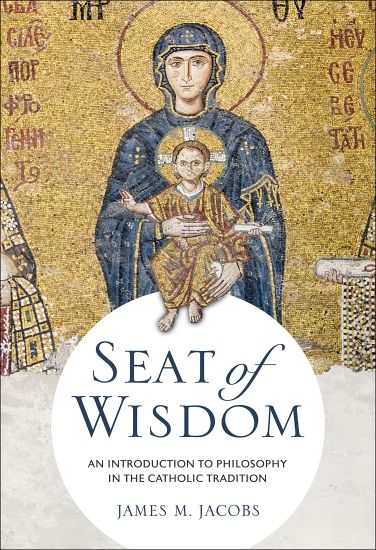
Seat of Wisdom

Seat of Wisdom

James M. Jacobs

THE CATHOLIC UNIVERSITY OF AMERICA PRESS
2022
nidottu
The Catholic Church has always recognized that philosophy is necessary both to understand the faith as well as to defend it. The need for a philosophically informed faith has become more acute with the rise of secularism. Seat of Wisdom demonstrates that the philosophical principles developed in the Catholic tradition, especially as articulated in Thomism, provide the intellectual foundation for belief in God and are also the only reliable basis for a fully coherent vision of man's place in the world.Seat of Wisdom begins with an exploration of the relationship between faith and reason. Philosophy's essential role is to discover the rational principles underlying the intelligible order of reality. These principles act as a bridge connecting science and religious faith, enabling the believer to integrate all facets of human experience.Each of those first principles, as expressed in the transcendental properties, are then analyzed as the basis of the major philosophical disciplines. Starting with metaphysics' study of being, the argument proceeds to consider the true, the good, and the beautiful in terms of epistemology, anthropology, ethics, aesthetics, and political philosophy. Lastly, these principles are shown to point to God as creator.The strength of the Catholic philosophical tradition is evident when contrasted with reductive theories which fail to account for the breadth of human experience. Consequently, each chapter will introduce influential philosophers whose inadequate theories inform contemporary assumptions. Against this, the Thomistic argument is elucidated as being inclusive of the insights of the reductive position. It will be seen that this "both/and" approach is the only way to do justice to the glory of God and the gift of creation.Religion is prey to skepticism when it is isolated from the rest of knowledge. This integrative argument, uniting discussions of nature, politics, and theology according to common principles, enables the reader to grasp the unity of wisdom. Moreover, by engaging alternative positions, it provides the reader with tools to defend the Catholic worldview against those reductive philosophies which only deprive life of its full meaning.
The Student?s Guide to the Gospels

The Student?s Guide to the Gospels

James M. Reese

Liturgical Press
1992
pokkari
The Gospels are not only the foundation of the New Testament, they are also integral to the celebration of the Eucharist. Because the Gospels embody the whole Christian tradition, every Christian seeking to be a student of Christ should be a student of the Gospels.This work provides that opportunity for all Christians, whether in classrooms, study groups, prayer groups, or in individual study, to come to know Christ by coming to know the Gospels. The first three chapters address the literary, structural, and rhetorical principles underlying the Synoptic Gospels. The remaining chapters encourage readers to dialogue with the Gospels in three ways: 1) by explaining the structure and theology of each Synoptic Gospel, 2) by devoting attention to the four outstanding features of the Gospels parables, miracles, the passion narratives, and the resurrection accounts, and 3) by introducing the readers to the special features of John's Gospel. This flexible textbook's approach allows beginning students to encounter the Jesus of the Gospels on their own terms, to make their new knowledge personal and practical.
Autosegmental Representation in a Declarative Constraint-Based Framework
First Published in 1998. Since the original appearance of this thesis there have been enormous changes in phonology. The phrase 'constraint-based phonology' has almost universal coverage now, it would seem. This study is not solely about constraint-based phonology, as the title of the book indicates. The investigation of autosegmental representation is central also.
The Scandalous Neglect of Children’s Mental Health

The Scandalous Neglect of Children’s Mental Health

James M. Kauffman; Jeanmarie Badar

CRC Press Inc
2018
sidottu
The Scandalous Neglect of Children’s Mental Health: What Schools Can Do makes the case that children with mental health needs are under-identified and under-served by schools and other agencies. After reading this brief but powerful book, you will better understand the nature of children’s mental health needs and the need for expanded services for children in schools and communities. The risks and benefits of treatment, especially early intervention, are discussed and guidelines for action by teachers, parents, and others are provided. The sad fact is that many people do not understand that most young people with mental health needs never receive any treatment of any kind and most of those who receive any treatment at all receive those services only in schools.
The Scandalous Neglect of Children’s Mental Health

The Scandalous Neglect of Children’s Mental Health

James M. Kauffman; Jeanmarie Badar

CRC Press Inc
2018
nidottu
The Scandalous Neglect of Children’s Mental Health: What Schools Can Do makes the case that children with mental health needs are under-identified and under-served by schools and other agencies. After reading this brief but powerful book, you will better understand the nature of children’s mental health needs and the need for expanded services for children in schools and communities. The risks and benefits of treatment, especially early intervention, are discussed and guidelines for action by teachers, parents, and others are provided. The sad fact is that many people do not understand that most young people with mental health needs never receive any treatment of any kind and most of those who receive any treatment at all receive those services only in schools.
Defending America

Defending America

James M. Lindsay; Michael E. O'Hanlon

Brookings Institution
2002
nidottu
"""The authors provide a sound critique of the standard positions and hyperboles of both advocates and opponents, as well as an accessible primer on the types, advantages, and limitations of various systems and architectures.... Defending America provides as good a 'few years out' unclassified guide as you're likely to find."" - The Washington Times ""Even those readers who have made up their minds should find this book a useful compendium of information and analysis on an old topic."" - Foreign Affairs"
America Unbound

America Unbound

James M. Lindsay; Ivo H. Daalder

Brookings Institution
2003
sidottu
"George W. Bush has launched a revolution in American foreign policy. He has redefined how America engages the world, shedding the constraints that friends, allies, and international institutions impose on its freedom of action. He has insisted that an America unbound is a more secure America. How did a man once mocked for knowing little about the world come to be a foreign policy revolutionary? In America Unbound, Ivo H. Daalder and James M. Lindsay dismiss claims that neoconservatives have captured the heart and mind of the president. They show that George W. Bush has been no one's puppet. He has been a strong and decisive leader with a coherent worldview that was evident even during the 2000 presidential campaign. Daalder and Lindsay caution that the Bush revolution comes with significant risks. Raw power alone is not enough to preserve and extend America's security and prosperity in the modern world. The United States often needs the help of others to meet the challenges it faces overseas. But Bush's revolutionary impulse has stirred great resentment abroad. At some point, Daalder and Lindsay warn, Bush could find that America's friends and allies refuse to follow his lead. America will then stand alone—a great power unable to achieve its most important goals."
Power and Purpose

Power and Purpose

James M. Goldgeier; Michael McFaul

Brookings Institution
2003
nidottu
"Russia, once seen as America's greatest adversary, is now viewed by the United States as a potential partner. This book traces the evolution of American foreign policy toward the Soviet Union, and later Russia, during the tumultuous and uncertain period following the end of the cold war. It examines how American policymakers—particularly in the executive branch—coped with the opportunities and challenges presented by the new Russia. Drawing on extensive interviews with senior U.S. and Russian officials, the authors explain George H. W. Bush's response to the dramatic coup of August 1991 and the Soviet breakup several months later, examine Bill Clinton's efforts to assist Russia's transformation and integration, and analyze George W. Bush's policy toward Russia as September 11 and the war in Iraq transformed international politics. Throughout, the book focuses on the benefits and perils of America's efforts to promote democracy and markets in Russia as well as reorient Russia from security threat to security ally. Understanding how three U.S. administrations dealt with these critical policy questions is vital in assessing not only America's Russia policy, but also efforts that might help to transform and integrate other former adversaries in the future."
Edward Abbey

Edward Abbey

James M. Cahalan

University of Arizona Press
2003
nidottu
The best biography ever about Ed. Cahalan's meticulous research and thoughtful interviews have made this book the authoritative source for Abbey scholars and fans alike.? ?Doug Peacock, author, environmentalist activist and explorer, and the inspiration for Hayduke in The Monkey Wrench Gang He was a hero to environmentalists and the patron saint of monkeywrenchers, a man in love with desert solitude. A supposed misogynist, ornery and contentious, he nevertheless counted women among his closest friends and admirers. He attracted a cult following, but he was often uncomfortable with it. He was a writer who wandered far from Home without really starting out there. James Cahalan has written a definitive biography of a contemporary literary icon whose life was a web of contradictions. Edward Abbey: A Life sets the record straight on "Cactus Ed," giving readers a fuller, more human Abbey than most have ever known. It separates fact from fiction, showing that much of the myth surrounding Abbey such as his birth in Home, Pennsylvania, and later residence in Oracle, Arizona was self-created and self-perpetuated. It also shows that Abbey cultivated a persona both in his books and as a public speaker that contradicted his true nature: publicly racy and sardonic, he was privately reserved and somber. Cahalan studied all of Abbey's works and private papers and interviewed many people who knew him including the models for characters in The Brave Cowboy and The Monkey Wrench Gang to create the most complete picture to date of the writer's life. He examines Abbey's childhood roots in the East and his love affair with the West, his personal relationships and tempestuous marriages, and his myriad jobs in continually shifting locations including sixteen national parks and forests. He also explores Abbey's writing process, his broad intellectual interests, and the philosophical roots of his politics. For Abbey fans who assume that his "honest novel," The Fool's Progress, was factual or that his public statements were entirely off the cuff, Cahalan's evenhanded treatment will be an eye-opener. More than a biography, Edward Abbey: A Life is a corrective that shows that he was neither simply a countercultural cowboy hero nor an unprincipled troublemaker, but instead a complex and multifaceted person whose legacy has only begun to be appreciated. The book contains 30 photographs, capturing scenes ranging from Abbey's childhood to his burial site.
Hinterlands and Regional Dynamics in the Ancient Southwest

Hinterlands and Regional Dynamics in the Ancient Southwest

James M. Bayman

University of Arizona Press
2007
sidottu
Hinterlands and Regional Dynamics in the Ancient Southwest is the first volume dedicated to understanding the nature of and changes in regional social autonomy, political hegemony, and organizational complexity across the entire prehistoric American Southwest. With geographic coverage extending from the Great Plains to the Colorado River, and from Mesa Verde to the international border, the volume's ten case studies synthesize research that enhances our understanding of the ancient Southwest's highly variable demographic, land use, and economic histories. For this volume, ?hinterlands are those areas whose archaeological records do not disclose the ceramic, architectural, and network evidence that initially led to the establishment of the Hohokam, Chaco, and Casas Grandes regional systems. Employing a variety of perspectives, such as the cultural landscapes approach, heterarchy, and the common-pool resource model, as well as technical methods, such as petrographic and stylistic-attribute analyses, the volume's contributors explore variation in hinterland identities, subsistence ecology, and sociopolitical organization as regional systems expanded and contracted between the 9th and 14th centuries AD. The hinterlands of the prehistoric Southwest were home to a substantial number of people and were often used as resource catchments by the inhabitants of regional systems. Importantly, hinterlands also influenced developments of nearby regional systems, under whose footprint they managed to retain considerable autonomy. By considering the dynamics between hinterlands and regional systems, the volume reveals unappreciated aspects of the ancient Southwest's peoples and their lives, thereby deepening our awareness of the region's rich and complicated cultural past.
There's No Place Like Home Video

There's No Place Like Home Video

James M. Moran

University of Minnesota Press
2002
nidottu
Defines, examines, and elevates home video to its rightful placeFrom its recording of family events to its influence on filmmaking, home video defies easy categorization and demands serious consideration. In There’s No Place Like Home Video, James Moran takes on this neglected aspect of popular culture. He offers a cultural history of amateur home video, exploring its technological and ideological predecessors, the development of event videography, and its symbiotic relationship with television and film. He also investigates the broader field of video, taking on the question of medium specificity: the attempt to define its unique identity, to capture what constitutes its pure practice. In Moran’s discussion of video, he argues that previous scholars have not sufficiently dealt with its nature as hybrid, varied, and mutable. He argues that such a medium shouldn’t be conceived as pure in and of itself; it is neither autonomous from other media nor entirely dependent on any other, but instead has a chameleonlike interface with films, television, computers, telephones, and even architecture. Rather than look for a grand narrative to define its specificity, Moran places video and home video at the intersections of multiple forms of communication.
National Growth and Economic Change in the Upper Midwest

National Growth and Economic Change in the Upper Midwest

James M. Henderson; Anne Krueger

University of Minnesota Press
1965
nidottu
This volume constitutes the final, general report of the comprehensive research conducted by the Upper Midwest Economic Study, a joint undertaking of the Upper Midwest Research and Development Council and the University of Minnesota. The authors present a detailed analysis of the economy of the Upper Midwest, the region coincident with the Ninth Federal Reserve District, which includes Montana, North Dakota, South Dakota, Minnesota, twenty-six counties in northwestern Wisconsin, and Michigan’s Upper Peninsula. The present study analyzes the region’s past economic growth, its current structure, and possible future development. The region’s initial economic growth was based upon its natural resources-land, forest, and minerals. Today productivity growth is increasing more rapidly than demand in most of these sectors. Hence, total employment opportunities in resource-based industries are declining. Future employment growth generally must be based on the region’s advantage in human resources. This is the challenge for economic growth in the Upper Midwest. The same challenge exists on a nation-wide basis, but the severity of transition away from natural resources industries is greater in the Upper Midwest because of its above-average reliance on such industries. The authors analyze economic change in the region from 1950 to 1960 and possible future development through 1975, with projections of employment, income, population, and migration for 1975. The projections, based on an assumption of no new action to facilitate economic growth in the region, serve mainly as a departure point for the analysis of regional policy and action.
A Rogue's Paradise

A Rogue's Paradise

James M. Denham

The University of Alabama Press
1997
sidottu
This text traces the growth and social development of the Florida frontier through its experience with crime and punishment. Using court records, government documents, newspapers and personal papers, it explores how crime affected ordinary citizens in antebellum Florida.