Since A Nation at Risk was published in 1983, there has been widespread recognition that public education is failing in the U.S. Numerous expensive reforms have been attempted to no avail, and costs have increased dramatically. Furthermore, economic austerity requires educational systems to do more with less. This book presents convincing evidence that paradigm change – such as the change of lighting systems from the candle to the light bulb – is the only way to significantly improve student learning and simultaneously lower costs. The authors provide a thought-provoking vision of the new paradigm, including a new brain-based pedagogy, a new professional role for teachers, a new central role for technology, and even a new more empowered role for students and parents. The authors also describe three examples – a school, a school district, and a school model – that have implemented many features of the new paradigm, along with evidence of their effectiveness. Finally, this book describes ways we can transform our Industrial-Age school systems to the new paradigm, including ways our state and federal governments can help.
Since A Nation at Risk was published in 1983, there has been widespread recognition that public education is failing in the U.S. Numerous expensive reforms have been attempted to no avail, and costs have increased dramatically. Furthermore, economic austerity requires educational systems to do more with less. This book presents convincing evidence that paradigm change – such as the change of lighting systems from the candle to the light bulb – is the only way to significantly improve student learning and simultaneously lower costs. The authors provide a thought-provoking vision of the new paradigm, including a new brain-based pedagogy, a new professional role for teachers, a new central role for technology, and even a new more empowered role for students and parents. The authors also describe three examples – a school, a school district, and a school model – that have implemented many features of the new paradigm, along with evidence of their effectiveness. Finally, this book describes ways we can transform our Industrial-Age school systems to the new paradigm, including ways our state and federal governments can help.
This illustrated guide to the role of the forensic anthropologist in investigating child abuse is an essential resource in one of the most contentious areas of forensic pathology. Not only does it supply a review of the literature in this field, but it illustrates the material with photographs from real cases investigated by the Harris County Institute of Forensic Sciences, which serves a population of four million people. Broken down into body regions and skeletal elements for ease of reference, the atlas facilitates the vital work performed by forensic anthropologists, who bring to the autopsy table a store of specialist knowledge that can turn a case.Despite the frequency of child fatalities (in America, 2.3per 100,000) attributed to physical abuse, merely recognizing the offense is a major forensic challenge. The tell-tale signatures of non-accidental injury can be very subtle, making it difficult to differentiate between accidental and non-accidental injury. Yet successful adjudication of a child abuse case often rests on the correct interpretation of skeletal injury.In this volume the authors guide the reader through published data regarding the mechanics and interpretation of injuries,including the agencies they indicate. The material includes discussion of the limitations faced in interpreting some injuries, where making a judgment on cause is tricky. In addition, a chapter on natural diseases affecting the bones provides a good overview of several conditions that are often invoked as 'mimics' of child abuse. Finally, this publication evinces the value of collaboration between the pathologist and the anthropologist.
This book describes the risks of working with dangerous pathogens and toxins in the current era of international terrorism. The authors characterize the global spread of legitimate biotechnology and relate it to the rise of transnational terrorism, emphasizing the need for biosecurity measures even in legitimate bioscience. This second edition is considerably longer than the first and includes several new chapters and sections, with the final two-thirds of the book entirely reorganized.
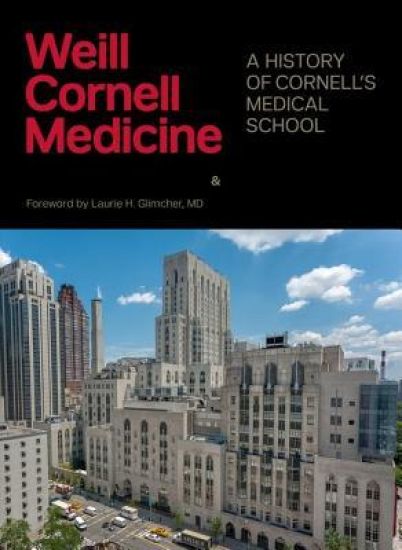
Weill Cornell Medicine is a story of continuity and transformation. Throughout its colorful history, Cornell's medical school has been a leader in education, patient care, and research—from its founding as Cornell University Medical College in 1898, to its renaming as Weill Cornell Medical College in 1998, and now in its current incarnation as Weill Cornell Medicine. In this insightful and nuanced book, dean emeritus Antonio M. Gotto Jr., MD, and Jennifer Moon situate the history of Cornell's medical school in the context of the development of modern medicine and health care. The book examines the triumphs, struggles, and controversies the medical college has undergone. It recounts events surrounding the medical school's beginnings as one of the first to accept female students, its pioneering efforts to provide health care to patients in the emerging middle class, wartime and the creation of overseas military hospitals, medical research ranging from the effects of alcohol during Prohibition to classified partnerships with the Central Intelligence Agency, and the impact of the Depression, 1960s counterculture, and the Vietnam War on the institution. The authors describe how the medical school built itself back up after nearing the brink of financial ruin in the late 1970s, with philanthropic support and a renewal of its longstanding commitments to biomedical innovation and discovery. Central to this story is the closely intertwined, and at times tumultuous, relationship between Weill Cornell and its hospital affiliate, now known as New York–Presbyterian. Today the medical school's reach extends from its home base in Manhattan to a branch campus in Qatar and to partnerships with institutions in Houston, Tanzania, and Haiti. As Weill Cornell Medicine relates, the medical college has never been better poised to improve health around the globe than it is now.
Many business researchers, from novice to expert, have been amazed to find that the answers to their questions could be found in the Economic Censuses provided by the U.S. government. Until now, there have been no comprehensive guides to this valuable resource. Industry Research Using the Economic Census explains Census concepts, methods, terminology, and data sources in an understandable manner, and assists Census users in locating needed Census data. Designed as a working handbook, it does not duplicate the data from the census, but introduces users to the features, uses, and formats of the data. This guidebook also discusses the important changes that the 1997 and 2002 Economic Censuses introduced from previous versions. Librarians, businesspeople, researchers, faculty, and students will find this guide valuable for mining the riches found in the Economic Censuses.
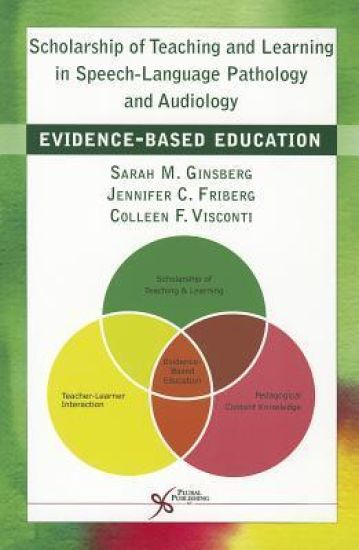
This educational text is based on the premise that university faculty preparing students in communication disorder disciplines need to rely on the evidence-base of literature regarding effective teaching in much the same way that they are expected to rely on evidence-based practice as clinicians. By sharing what evidence-based education (EBE) methods are available, authors seek to increase the efficacy of clinical education in a variety of fields and at the same time, provide valuable insights to these faculty members as to how they can contribute to the growing body of evidence regarding teaching, often referred to as the scholarship of teaching and learning (SOTL). This text is a valuable resource for faculty and doctoral students teaching in communication sciences and disorders programs. The book introduces those in higher education to the concepts key to SOTL, how to use SOTL for professional development to improve learning outcomes, and how to begin engaging in SOTL.Coverage highlights how instructors can make use of existing SOTL research to improve teaching through the use of specific, evidence-based education strategies described in depth using specific classroom application vignettes.
This illustrated guide to the role of the forensic anthropologist in investigating child abuse is an essential resource in one of the most contentious areas of forensic pathology. Not only does it supply a review of the literature in this field, but it illustrates the material with photographs from real cases investigated by the Harris County Institute of Forensic Sciences, which serves a population of four million people. Broken down into body regions and skeletal elements for ease of reference, the atlas facilitates the vital work performed by forensic anthropologists, who bring to the autopsy table a store of specialist knowledge that can turn a case.Despite the frequency of child fatalities (in America, 2.3per 100,000) attributed to physical abuse, merely recognizing the offense is a major forensic challenge. The tell-tale signatures of non-accidental injury can be very subtle, making it difficult to differentiate between accidental and non-accidental injury. Yet successful adjudication of a child abuse case often rests on the correct interpretation of skeletal injury.In this volume the authors guide the reader through published data regarding the mechanics and interpretation of injuries,including the agencies they indicate. The material includes discussion of the limitations faced in interpreting some injuries, where making a judgment on cause is tricky. In addition, a chapter on natural diseases affecting the bones provides a good overview of several conditions that are often invoked as 'mimics' of child abuse. Finally, this publication evinces the value of collaboration between the pathologist and the anthropologist.
Thirty of young Photographer Jen's attractive photographs are enhanced by her "life-view" paragraphs; 82 year old Grandmother Judy the "Book-builder" also shares thoughts (that may not be in total agreement) on subjects such asStormy Desolation, Hope, Freedom, and Knowing Your Truth. The reader has lined "workbook" space to share, expand or reject personal life-values. A unique and challenging gift for friend and enemy alike? A way to grow in human communication and understanding? The authors say YES
Affective Labour explores four distinct landscapes in order to demonstrate how collective feelings are organized by social actors in order to both reproduce and contest hegemony. Utilizing a variety of methods, including participant observation, in-depth interviews across field sites, and content analysis of mass media, Correa and Thomas demonstrate the centrality of affective labor in enabling and constraining prevailing norms and practices of race, citizenship, class, gender, and sexuality across multiple spatial contexts: the U.S.- Mexico border, urban nightlife districts, American college campuses, and emergent social movements against the police state. The book demonstrates how the power of affective labour might be harnessed for progressively oriented world-building projects, including what the authors term an ‘affective labour from below.’ By tying an analysis of affective labour into movements for social justice, the authors aim to produce a critical theory of the world that can be practically applied.
Affective Labour explores four distinct landscapes in order to demonstrate how collective feelings are organized by social actors in order to both reproduce and contest hegemony. Utilizing a variety of methods, including participant observation, in-depth interviews across field sites, and content analysis of mass media, Correa and Thomas demonstrate the centrality of affective labor in enabling and constraining prevailing norms and practices of race, citizenship, class, gender, and sexuality across multiple spatial contexts: the U.S.- Mexico border, urban nightlife districts, American college campuses, and emergent social movements against the police state. The book demonstrates how the power of affective labour might be harnessed for progressively oriented world-building projects, including what the authors term an ‘affective labour from below.’ By tying an analysis of affective labour into movements for social justice, the authors aim to produce a critical theory of the world that can be practically applied.
Examine the techniques and Java tools supporting the growing field of data science About This Book * Your entry ticket to the world of data science with the stability and power of Java * Explore, analyse, and visualize your data effectively using easy-to-follow examples * Make your Java applications more capable using machine learning Who This Book Is For This book is for Java developers who are comfortable developing applications in Java. Those who now want to enter the world of data science or wish to build intelligent applications will find this book ideal. Aspiring data scientists will also find this book very helpful. What You Will Learn * Understand the nature and key concepts used in the field of data science * Grasp how data is collected, cleaned, and processed * Become comfortable with key data analysis techniques * See specialized analysis techniques centered on machine learning * Master the effective visualization of your data * Work with the Java APIs and techniques used to perform data analysis In Detail Data science is concerned with extracting knowledge and insights from a wide variety of data sources to analyse patterns or predict future behaviour. It draws from a wide array of disciplines including statistics, computer science, mathematics, machine learning, and data mining. In this book, we cover the important data science concepts and how they are supported by Java, as well as the often statistically challenging techniques, to provide you with an understanding of their purpose and application. The book starts with an introduction of data science, followed by the basic data science tasks of data collection, data cleaning, data analysis, and data visualization. This is followed by a discussion of statistical techniques and more advanced topics including machine learning, neural networks, and deep learning. The next section examines the major categories of data analysis including text, visual, and audio data, followed by a discussion of resources that support parallel implementation. The final chapter illustrates an in-depth data science problem and provides a comprehensive, Java-based solution. Due to the nature of the topic, simple examples of techniques are presented early followed by a more detailed treatment later in the book. This permits a more natural introduction to the techniques and concepts presented in the book. Style and approach This book follows a tutorial approach, providing examples of each of the major concepts covered. With a step-by-step instructional style, this book covers various facets of data science and will get you up and running quickly.
Data collection, processing, analysis, and more About This Book * Your entry ticket to the world of data science with the stability and power of Java * Explore, analyse, and visualize your data effectively using easy-to-follow examples * A highly practical course covering a broad set of topics - from the basics of Machine Learning to Deep Learning and Big Data frameworks. Who This Book Is For This course is meant for Java developers who are comfortable developing applications in Java, and now want to enter the world of data science or wish to build intelligent applications. Aspiring data scientists with some understanding of the Java programming language will also find this book to be very helpful. If you are willing to build efficient data science applications and bring them in the enterprise environment without changing your existing Java stack, this book is for you! What You Will Learn * Understand the key concepts of data science * Explore the data science ecosystem available in Java * Work with the Java APIs and techniques used to perform efficient data analysis * Find out how to approach different machine learning problems with Java * Process unstructured information such as natural language text or images, and create your own search * Learn how to build deep neural networks with DeepLearning4j * Build data science applications that scale and process large amounts of data * Deploy data science models to production and evaluate their performance In Detail Data science is concerned with extracting knowledge and insights from a wide variety of data sources to analyse patterns or predict future behaviour. It draws from a wide array of disciplines including statistics, computer science, mathematics, machine learning, and data mining. In this course, we cover the basic as well as advanced data science concepts and how they are implemented using the popular Java tools and libraries.The course starts with an introduction of data science, followed by the basic data science tasks of data collection, data cleaning, data analysis, and data visualization. This is followed by a discussion of statistical techniques and more advanced topics including machine learning, neural networks, and deep learning. You will examine the major categories of data analysis including text, visual, and audio data, followed by a discussion of resources that support parallel implementation. Throughout this course, the chapters will illustrate a challenging data science problem, and then go on to present a comprehensive, Java-based solution to tackle that problem. You will cover a wide range of topics - from classification and regression, to dimensionality reduction and clustering, deep learning and working with Big Data. Finally, you will see the different ways to deploy the model and evaluate it in production settings. By the end of this course, you will be up and running with various facets of data science using Java, in no time at all. This course contains premium content from two of our recently published popular titles: * Java for Data Science * Mastering Java for Data Science Style and approach This course follows a tutorial approach, providing examples of each of the concepts covered. With a step-by-step instructional style, this book covers various facets of data science and will get you up and running quickly.
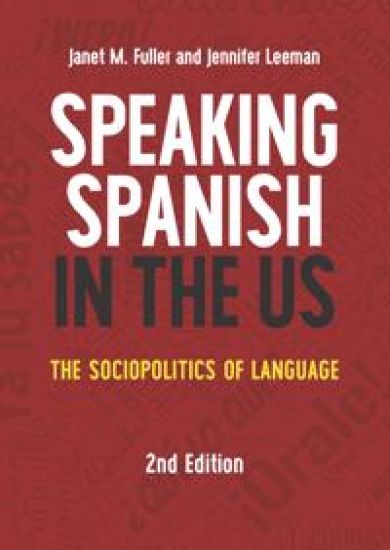
This book introduces readers to basic concepts of sociolinguistics with a focus on Spanish in the US. The coverage goes beyond linguistics to examine the history and politics of Spanish in the US, the relationship of language to Latinx identities, and how language ideologies and policies reflect and shape societal views of Spanish and its speakers. Accessible to those with no linguistic background, this book provides students with a foundation in the study of language and society, and the opportunity to relate theoretical concepts to Spanish in the US in a range of contexts, including everyday speech, contemporary culture, media, education and policy. The book is a substantially revised and expanded 2nd edition of Spanish Speakers in the USA, including new chapters on the history of Spanish in the US, the demographics of Spanish in the US, and language policy; and expanded chapters on language ideologies, race, identity, media, and education. A Spanish-language edition of this book is also available: https://www.multilingual-matters.com/page/detail/?K=9781800413931.
This book introduces readers to basic concepts of sociolinguistics with a focus on Spanish in the US. The coverage goes beyond linguistics to examine the history and politics of Spanish in the US, the relationship of language to Latinx identities, and how language ideologies and policies reflect and shape societal views of Spanish and its speakers. Accessible to those with no linguistic background, this book provides students with a foundation in the study of language and society, and the opportunity to relate theoretical concepts to Spanish in the US in a range of contexts, including everyday speech, contemporary culture, media, education and policy. The book is a substantially revised and expanded 2nd edition of Spanish Speakers in the USA, including new chapters on the history of Spanish in the US, the demographics of Spanish in the US, and language policy; and expanded chapters on language ideologies, race, identity, media, and education. A Spanish-language edition of this book is also available: https://www.multilingual-matters.com/page/detail/?K=9781800413931.
In Equity at the End, authors Staci M. Zavattaro and Jennifer L. Wright-Berryman explore the intricate and often confusing landscape of deathcare in the United States. This complex system of public, private, and nonprofit institutions often leaves individuals perplexed as they navigate their final arrangements, revealing significant inequities. Combining comprehensive research from public administration and social work to examine policy design and deathcare bureaucracy, Zavattaro and Wright-Berryman scrutinize the governance of the deathcare system, the policies shaping it, and the economic and personal biases influencing its implementation. They begin by defining the concept of death equity, exploring disparities in access to resources like eco-friendly burials, identity-aligned services, and affordable body disposition. Through their extensive research, including interviews with over 70 deathcare professionals from both the public and private sectors, the authors provide readers with tools to navigate these inequities, addressing the reluctance to discuss and prepare for death. Equity at the End offers practical tools and insights to reduce inequities and improve transparency in the deathcare system. Promoting death literacy and equitable practices, this work is essential reading for social scientists, public policy experts, healthcare professionals, and educators.