This collection of literature attempts to compile many of the classic works that have stood the test of time and offer them at a reduced, affordable price, in an attractive volume so that everyone can enjoy them.
"A fascinating insight into the understanding of passion and love over the major epochs of life " Jim Reardon expresses an insight into the ever changing visions of passion over a lifetime. From youthful 'angst' to weary acceptance of a love lost, I express poetically the human need for connection and intimacy. An Age of Passion presents a lifelong, evolving notion of the romantic, often bitter, ages of passion. "It's better to have loved and lost, than never to have loved at all," is expressed and explored poetically to a depth that is expressive and real. Poetry at its best, expressing in words the emotions that dominate our lives. Read and enjoy
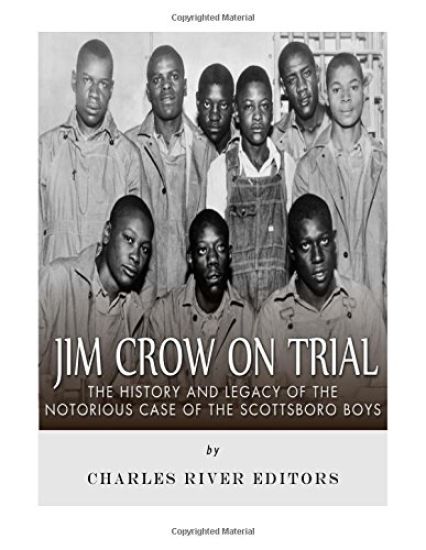
*Includes pictures *Includes accounts of the case *Includes online resources and a bibliography for further reading *Includes a table of contents "I'm interested solely in seeing that that poor...colored boy over there and his co-defendants in the other cases get a square shake of the dice, because I believe, before God, they are the victims of a dastardly frame up." - Samuel Leibowitz, defense attorney When famous political philosopher Alexis de Tocqueville toured the new United States of America, he was impressed by the representative government set up by the Founders. At the same time, he ominously predicted, "If there ever are great revolutions there, they will be caused by the presence of the blacks upon American soil. That is to say, it will not be the equality of social conditions but rather their inequality which may give rise thereto." De Tocqueville was prescient, because the longest battle fought in the history of the United States has been the Civil Rights Movement. The framers of the Constitution kicked the problem down the road, over half a million died during the Civil War to end slavery, and then many more fought and died to dismantle segregation and legalized racism in the 100 years after. It goes without saying that Jim Crow was pervasive in the wake of the Civil War, but few events in history put the effects of institutionalized segregation and racism on display like the case of the Scottsboro Boys, a group of black teenagers accused of raping two young white girls on a train. When the girls made the accusation, the teens were nearly lynched by an angry mob, only to be dragged almost immediately into court and given a sham trial that inevitably ended in a conviction by an all-white jury and death sentences for 8 of the 9 boys. In the wake of the quick trial, the case was appealed by outsiders on behalf of the boys, and though Alabama's Supreme Court affirmed almost all the convictions, the attention raised nearly every potential issue implicating criminal procedure among the states. While the Bill of Rights had ensured a number of rights for criminal defendants, the states had previously been allowed to interpret those rights, leading to instances where defendants weren't provided adequate legal representation. The case of the Scottsboro Boys compelled the U.S. Supreme Court to order new trials in Powell v. Arizona (1932), which went a long way to determining and codifying some of the rights of criminal defendants in state courts. However, even after one of the girls recanted her testimony during retrials, the Scottsboro Boys were still found guilty, leading to more appeals and yet another Supreme Court ruling ordering retrials. Eventually, some of the boys were cleared of charges, but several still ended up serving time in prison, and it would not be until 80 years after the controversial case that Alabama posthumously pardoned the defendants who hadn't been cleared of all charges. To this day, the case remains synonymous with the injustice of Jim Crow and the manner in which African Americans were deprived of basic civil rights, and historian Wayne Flynt may have put it best when he summed up the case and its aftermath: "I think that's perhaps an ultimate tragedy. People pulled into history who never wanted to be pulled into history suddenly put on a national platform, and tragically paraded out for everybody's benefit but their own. And the question of who really cared about them, who really defended them? Almost everyone had an agenda that involved the Scottsboro Boys. And I think the courage of the Scottsboro Boys is just surviving, just enduring." Jim Crow On Trial: The History and Legacy of the Notorious Case of the Scottsboro Boys chronicles the infamous crime and the notorious trial that followed. Along with pictures of important people, places, and events, you will learn about one of the most controversial cases in American history like never before.
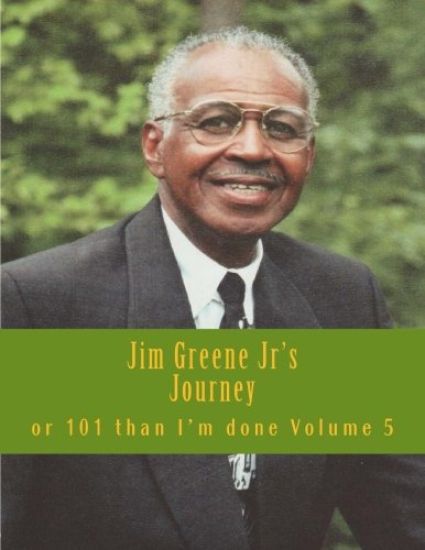
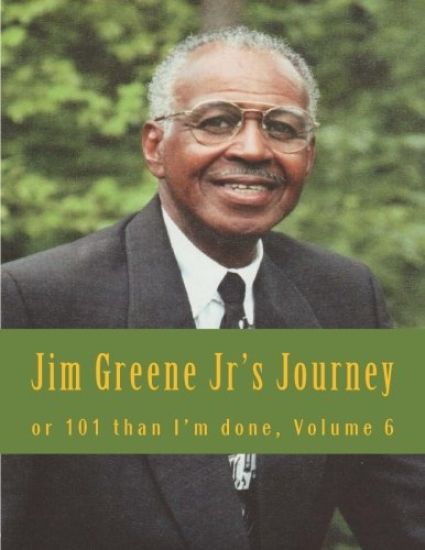
All my life I have wanted to be sure I gave honor to my parents even when they were not around. When I was very young, I was told by my dad, "If he was not at home, because I was the oldest, I was the man of the house." This made me very strong and a caring person. Wanting to learn everything it took to be just like my dad, I studied him very, very closely. My dad never had to raise his voice or repeat himself to me, unless he chose to, he always had my full attention when he was showing me something. I never wanted to miss a word he was saying to us.
All my life I have wanted to be sure I gave honor to my parents even when they were not around. When I was very young, I was told by my dad, "If he was not at home, because I was the oldest, I was the man of the house." This made me very strong and a caring person. Wanting to learn everything it took to be just like my dad, I studied him very, very closely. My dad never had to raise his voice or repeat himself to me, unless he chose to, he always had my full attention when he was showing me something. I never wanted to miss a word he was saying to us.
Jim Flynn's first column about the law and the legal profession was published in the Gazette Telegraph (now The Gazette) in November of 1992. Since then, more than 1,200 columns have appeared in the paper, initially under the name "Legal Ease" and then "Money & the Law." This book contains 165 of the columns, with the selection criteria being: entertainment value, an interesting topic, and/or useful (occasionally) information. Here are a few of Jim's favorite lines from these columns: -Kimberly Haman sued her bank and Equifax under the Fair Credit Reporting Act after she was unable to have information removed from her credit file indicating she was dead. In her lawsuit, Ms. Haman claims being reported as dead has had an adverse effect on her applications for credit. -Your spouse cannot both murder you and order that your body be fed to bears. -Thirty years is a long time to go between visits to an estate planning attorney. I hope you do better with your dentist. -Explanatory statement in will: "I have left all my wealth to the Colorado Rockies because they need a pitcher more than my children need anything." -Money was a great improvement over a payments system that required you to drag around, say, beaver pelts if you wanted to buy beer. -Although my old debit card was working just fine, last week my bank sent me a new one. This was an exciting event since my old card was merely gold and the new one is -- platinum I can hardly wait for my next trip to the ATM. -With the possible exception of being admitted to a hospital, buying a home is the largest financial commitment most of us will ever make. -Ever since the invention of the automobile -- and, for that matter, the horse -- there has been a thriving market for used means of transportation. -Recently, Daimler Chrysler announced a recall of some 600,000 late model SUV's and pickup trucks. The problem is failed ball joints which, in rare cases, could cause a wheel to come off. (Most experts agree this can have an adverse effect on handling.)
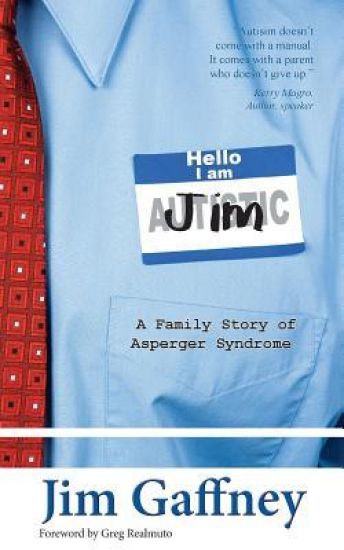
Few people understand what it means to live with autism or to raise a child that is on the spectrum. Even fewer know what it's like to experience both. Most, if not all, parents of autistic children ask the same question about their child's future. Can my autistic child grow to lead a normal life? While the term normal is subjective, the simple answer to that question is a resounding yes. You are hereby invited on a journey of discovery through some of the darkest and more enlightened corners of autism as the Gaffney family confront and utterly defy Asperger Syndrome at every turn. "Truth and I have brokered what I would describe as a fragile and uneasy truce over the years." Jim Gaffney, author and voice of Hello, I am Jim, recounts years of hard truths, painful memories, and fond nostalgia as he chronicles his lifelong journey with Asperger Syndrome. Born in 1970 among the quiet suburbs of Youngstown, Ohio, Jim always knew the truth - that he was different, but he didn't know why. From the frustrated vigilance of his parents at home, the hostile classrooms where his peers bullied him, to the unforgiving walls of his own self-esteem, he could not escape a constant sense of isolation during his childhood and adolescent years. Now, he shares his thoughts as a 48 year-old man looking back on his younger self with a totally new perspective. With stunning clarity of his inner world as a child, teenager, and young adult, Jim reflects on everything that shaped him: the tough love of his father, his struggle with obesity, his perseverance as a distance runner, and eventually the gentle, guiding current of fatherhood. With an introduction by his best friend and running companion, Greg Realmuto, this autobiographical memoir widens conventional understanding of autism, explains the value of "fire in the blood" and ultimately explores what it means to live a "neurotistic" life.
Jim Davis By John Masefield Lively tale, told by the hero, of an English boy who is kidnapped by smugglers on the Devonshire coast in the early nineteenth century and passes through dangerous adventures. We are delighted to publish this classic book as part of our extensive Classic Library collection. Many of the books in our collection have been out of print for decades, and therefore have not been accessible to the general public. The aim of our publishing program is to facilitate rapid access to this vast reservoir of literature, and our view is that this is a significant literary work, which deserves to be brought back into print after many decades. The contents of the vast majority of titles in the Classic Library have been scanned from the original works. To ensure a high quality product, each title has been meticulously hand curated by our staff. Our philosophy has been guided by a desire to provide the reader with a book that is as close as possible to ownership of the original work. We hope that you will enjoy this wonderful classic work, and that for you it becomes an enriching experience.
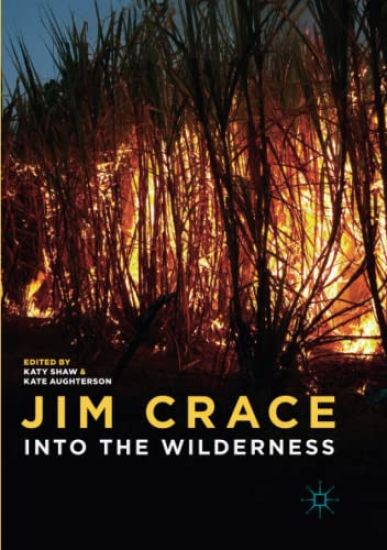
This is a unique essay collection on Jim Crace, locating his writing within contemporary philosophical, cultural and political debates. This timely first critical collection of essays on Crace’s work provides a retrospective on his work to date, locating his work within a number of contemporary interdisciplinary critical and cultural perspectives and concerns, including post-humanism, post-millennial pastoralism, post-post feminism and gender, intersections between science and literary theory, environmental politics, the symbiotics of authorial and critical archival work, and the context of the burgeoning world of literary prizes. It includes additional contextual material in the form of an interview with Jim Crace and the re-publication of a seminal critical essay on “Craceland” by Adam Begley. As such this critical essay collection will be essential reading for anyone interested in contemporary fiction, and Crace’s unique writing.
This book features a selection of the published writings and public presentations of Jim Dator. Most of the chapters are directly concerned with futures studies and ideas about the futures. The topic covers many disciplines and subjects. It is also concerned with many different parts of the world, even Mars. In addition, a few of the earlier papers contained here are about more conventional topics in politics and religion.The collection spans a more than 50 year period of thought, reflection, and instruction. In particular, the papers examine six main topics. These include meditations on the very nature of future studies, visions of preferred futures, ideas about alternative futures, and details on future theories and methods. Coverage also considers such specific topics as AI and robots, the environment, food, culture, energy, families, future generations, and more.Overall, these papers help readers gain insight into what it takes to weave together alternative images of the future in useful ways. They also reveal cross-disciplinary patterns in key fields of human endeavor that will help readers better understand trends and emerging issues.
This book features a selection of the published writings and public presentations of Jim Dator. Most of the chapters are directly concerned with futures studies and ideas about the futures. The topic covers many disciplines and subjects. It is also concerned with many different parts of the world, even Mars. In addition, a few of the earlier papers contained here are about more conventional topics in politics and religion.The collection spans a more than 50 year period of thought, reflection, and instruction. In particular, the papers examine six main topics. These include meditations on the very nature of future studies, visions of preferred futures, ideas about alternative futures, and details on future theories and methods. Coverage also considers such specific topics as AI and robots, the environment, food, culture, energy, families, future generations, and more.Overall, these papers help readers gain insight into what it takes to weave together alternative images of the future in useful ways. They also reveal cross-disciplinary patterns in key fields of human endeavor that will help readers better understand trends and emerging issues.