Kirjojen hintavertailu. Mukana 11 717 486 kirjaa ja 12 kauppaa.

Kirjahaku

Etsi kirjoja tekijän nimen, kirjan nimen tai ISBN:n perusteella.

1000 tulosta hakusanalla Jon B. Fish

Søren Kierkegaard

Søren Kierkegaard

Jon Stewart

Oxford University Press
2018
nidottu
Søren Kierkegaard: Subjectivity, Irony, and the Crisis of Modernity examines the thought of Søren Kierkegaard, a unique figure, who has freeired, provoked, fascinated, and irritated people ever since he walked the streets of Copenhagen. At the end of his life, Kierkegaard said that the only model he had for his work was the Greek philosopher Socrates. This work takes this statement as its point of departure. Jon Stewart explores what Kierkegaard meant by this and to show how different aspects of his writing and argumentative strategy can be traced back to Socrates. The main focus is The Concept of Irony, which is a key text at the beginning of Kierkegaard's literary career. Although it was an early work, it nevertheless played a determining role in his later development and writings. Indeed, it can be said that it laid the groundwork for much of what would appear in his later famous books such as Either/Or and Fear and Trembling.
Sugar and Spice

Sugar and Spice

Jon Stobart

Oxford University Press
2016
nidottu
Consumers in eighteenth-century England were firmly embedded in an expanding world of goods, one that incorporated a range of novel foods (tobacco, chocolate, coffee, and tea) and new supplies of more established commodities, including sugar, spices, and dried fruits. Much has been written about the attraction of these goods, which went from being novelties or expensive luxuries in the mid-seventeenth century to central elements of the British diet a century or so later. They have been linked to the rise of Britain as a commercial and imperial power, whilst their consumption is seen as transforming many aspects of British society and culture, from mealtimes to gender identity. Despite this huge significance to ideas of consumer change, we know remarkably little about the everyday processes through which groceries were sold, bought, and consumed. In tracing the lines of supply that carried groceries from merchants to consumers, Sugar and Spice reveals not only how changes in retailing and shopping were central to the broader transformation of consumption and consumer practices, but also questions established ideas about the motivations underpinning consumer choices. It demonstrates the dynamic nature of eighteenth-century retailing; the importance of advertisements in promoting sales and shaping consumer perceptions, and the role of groceries in making shopping an everyday activity. At the same time, it shows how both retailers and their customers were influenced by the practicalities and pleasures of consumption. They were active agents in consumer change, shaping their own practices rather than caught up in a single socially-inclusive cultural project such as politeness or respectability.
An Avant-garde Theological Generation

An Avant-garde Theological Generation

Jon Kirwan

Oxford University Press
2018
sidottu
An Avant-garde Theological Generation examines the Fourvière Jesuits and Le Saulchoir Dominicans, theologians and philosophers who comprised the influential reform movement the nouvelle théologie. Led by Henri de Lubac, Jean Daniélou, Yves Congar, and Marie-Dominique Chenu, the movement flourished from the 1930s until its suppression in 1950. It aims to remedy certain historical deficiencies by constructing a history both sensitive to the wider intellectual, political, economic, and cultural milieu of the French interwar crisis, and that establishes continuity with the Modernist crisis and the First World War. Chapter One examines the modern French avant-garde generations that have shaped intellectual and political thought in France, providing context for a historical narrative of the nouvelle théologie. Chapters Two and Three examine the influential older generations that flourished from 1893 to 1914, such as the Dreyfus generation, the generation of Catholic Modernists, and two generations of older Jesuits and Dominicans, which were instrumental in the Fourvière Jesuits' development. Chapter Four explores the influence of the First World War and the years of the 1920s, during which the Jesuits and Dominicans were in religious and intellectual formation, relying heavily on unpublished letters and documents from the Jesuits archives in Paris (Vanves). Chapter Five analyses the crises of the interwar period and the emergence of the wider generation of 1930--to which the nouveaux théologiens belonged--and its intellectual thirst for revolution. Chapter Six examines the emergence of the ^ ressourcement thinkers during the tumultuous years of the 1930s. The decade of the 1940s, explored in Chapter Seven, saw the rise to prominence of the members of the generation of 1930, who, thanks to their participation in the resistance, emerged from the Second World War, with significant influence on the postwar French intellectual milieu. Finally, the monograph concludes in Chapter Eight with an examination of the triumph of French Left Catholicism and the nouvelle théologie during the 1960s at the Second Vatican Council.
Hegel's Interpretation of the Religions of the World

Hegel's Interpretation of the Religions of the World

Jon Stewart

Oxford University Press
2018
sidottu
In his Lectures on the Philosophy of Religion, Hegel treats the religions of the world under the rubric "the determinate religion." This is a part of his corpus that has traditionally been neglected since scholars have struggled to understand what philosophical work it is supposed to do. In Hegel's Interpretation of the Religions of the World, Jon Stewart argues that Hegel's rich analyses of Buddhism, Hinduism, Zoroastrianism, Judaism, Egyptian and Greek polytheism, and the Roman religion are not simply irrelevant historical material, as is often thought. Instead, they play a central role in Hegel's argument for what he regards as the truth of Christianity. Hegel believes that the different conceptions of the gods in the world religions are reflections of individual peoples at specific periods in history. These conceptions might at first glance appear random and chaotic, but there is, Hegel claims, a discernible logic in them. Simultaneously, a theory of mythology, history, and philosophical anthropology, Hegel's account of the world religions goes far beyond the field of philosophy of religion. The controversial issues surrounding his treatment of the non-European religions are still very much with us today and make his account of religion an issue of continued topicality in the academic landscape of the twenty-first century.
The Emergence of Subjectivity in the Ancient and Medieval World
The Emergence of Subjectivity in the Ancient and Medieval World: An Interpretation of Western Civilization represents a combination of different genres: cultural history, philosophical anthropology, and textbook. It follows a handful of different but interrelated themes through more than a dozen texts that were written over a period of several millennia and, by means of an analysis of these texts, presents a theory of the development of Western civilization from antiquity to the Middle Ages. The main line of argument traces the various self-conceptions of different cultures as they developed historically, reflecting different views of what it is to be human. The thesis of the volume is that through examination of these changes we can discern the gradual emergence of what we today call inwardness, subjectivity, and individual freedom. As human civilization took its first tenuous steps, it had a very limited conception of the individual. Instead, the dominant principle was that of the wider group: the family, clan, or people. Only in the course of history did the idea of what we now know as individuality begin to emerge, and it took millennia for this idea to be fully recognized and developed. The conception of human beings as having a sphere of inwardness and subjectivity subsequently had a sweeping impact on all aspects of culture, including philosophy, religion, law, and art: indeed, this notion largely constitutes what is today referred to as modernity. It is easy to lose sight of the fact that this modern conception of human subjectivity was not simply something given, but rather the result of a long process of historical and cultural development.
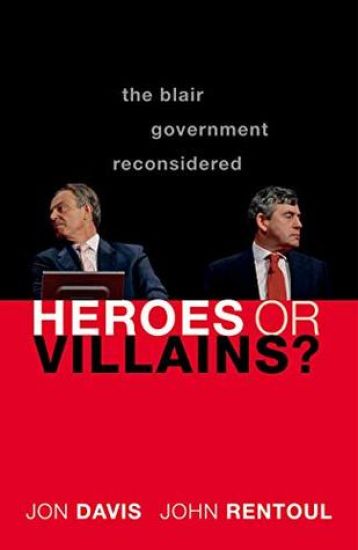
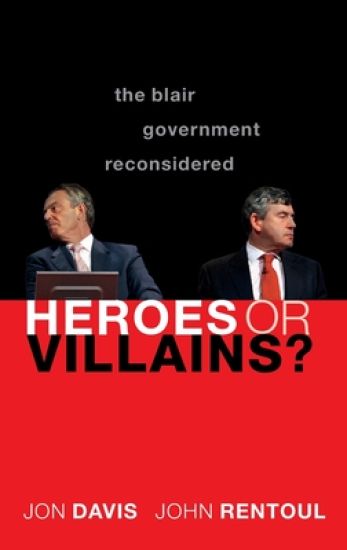
Heroes or Villains?

Heroes or Villains?

Jon Davis; John Rentoul

Oxford University Press
2021
nidottu
Tony Blair was the political colossus in Britain for thirteen years, winning three elections in a row for New Labour, two of them by huge majorities. However, since leaving office he has been disowned by many in his own party, with the term 'Blairite' becoming an insult. The election of Jeremy Corbyn as Labour Party leader in 2015 seemed to be, if not an equal, at least an opposite reaction to Blair's long dominance of the centre and left of British politics. Drawing on new contributions from most of the main players in the Blair government, including Tony Blair himself, Jon Davis and John Rentoul reconsider the history and common view of New Labour against its record of delivering moderate social democracy. They show how New Labour was not one party but two, and how it essentially governed as a coalition, much like the government that followed it. This book tells the inside story of how Tony Blair worked out, late in the day, his ideas for improving the NHS and school reform; how he groped towards, and was eventually defined by, a foreign policy of liberal interventionism; how he managed a difficult relationship with his Chancellor for ten years; and how Gordon Brown finally took over just as the boom went bust and the New Labour era came to an end. Rentoul and Davis reveal how the governing tribes dealt with each other in the New Labour years: not simply the 'Blairites' and the 'Brownites', but the 'temporary' ministers and the 'permanent', under-reported civil servants who worked alongside them. Many of the arguments that raged within and around the Blair government of 1997-2007 remain very much alive: reform of public services; the right course for the divided Labour Party; and the Iraq war. The Blair Government Reconsidered aims at a balanced account of how decisions were made, to allow the reader to make up their own mind about controversies that still dominate politics today.
Visions of Cannabis Control

Visions of Cannabis Control

Jon Heidt; Johannes Wheeldon

Oxford University Press
2023
sidottu
Visions of Cannabis Control argues that cannabis prohibition is the result of moral panic that has been instigated, perpetuated, and sustained in ways that are difficult to dislodge. The book documents the history of these cannabis policies and explores the impact of issues such as racism, labelling, and stigmatization. Stan Cohen argued that reforms designed to replace carceral tendencies within correctional institutions can instead extend such approaches into our communities. The idea that criminal justice reforms often reproduce what they were intended to disrupt can be applied to the cannabis revolution currently underway around the world. Racial disparities in arrests persist, exacerbated by laws that make it legal to possess cannabis but illegal to consume it anywhere but in your home. In this book, the authors argue that too often, cannabis liberalization comes at the cost of expanding paternalistic public health models and abstention-based diversion programs. The goal of dismantling and disrupting illicit markets has undermined onerous regulations, anaemic marketing efforts, and failure to promote consumer-centred approaches. Emphasizing public health goals ahead of market conditions complicates legal cannabis as an industry. To understand the future of cannabis policy, Visions of Cannabis Control examines the experience of six countries and several US states through the lens of criminological theory, recent research, and practice. The book presents several solutions for responsible regulation concluding that sustaining reform will require a more inclusive approach ensuring those affected by cannabis policies are consulted, respected, and involved.
Christ as Mediator

Christ as Mediator

Jon M. Robertson

Oxford University Press
2007
sidottu
A detailed study of one theological concept (divine mediation) that was central to the Christological controversy of the early fourth century. By analysing the views of three participants at the Council of Nicaea (325), Jon M. Robertson demonstrates the variety of perspectives in a way that questions popular approaches to the period that see the controversy as having only two sides. His analysis constitutes a new approach to the early Arian controversy, as well as showing the theological backdrop of Athanasius' insight on Christ as mediator. It further demonstrates the contemporary relevance of the issue by giving an Athanasian critique of the modern Christology of Roger Haight.
Ecological and Environmental Physiology of Insects

Ecological and Environmental Physiology of Insects

Jon F. Harrison; H. Arthur Woods; Stephen P. Roberts

Oxford University Press
2012
sidottu
Insects are the most ecologically important multicellular heterotrophs in terrestrial systems. They play critical roles in ecological food webs, remain devastating agricultural and medical pests, and represent the most diverse group of eukaryotes in terms of species numbers. Their dominant role among terrestrial heterotrophs arises from a number of key physiological traits, and in particular by the developmental and evolutionary plasticity of these traits. Ecological and Environmental Physiology of Insects presents a current and comprehensive overview of how the key physiological traits of insects respond to environmental variation. It forges conceptual links from molecular biology through organismal function to population and community ecology. As with other books in the Series, the emphasis is on the unique physiological characteristics of the insects, but with applications to questions of broad relevance in physiological ecology. As an aid to new researchers on insects, it also includes introductory chapters on the basics and techniques of insect physiology ecology.
Ecological and Environmental Physiology of Insects

Ecological and Environmental Physiology of Insects

Jon F. Harrison; H. Arthur Woods; Stephen P. Roberts

Oxford University Press
2012
nidottu
Insects are the most ecologically important multicellular heterotrophs in terrestrial systems. They play critical roles in ecological food webs, remain devastating agricultural and medical pests, and represent the most diverse group of eukaryotes in terms of species numbers. Their dominant role among terrestrial heterotrophs arises from a number of key physiological traits, and in particular by the developmental and evolutionary plasticity of these traits. Ecological and Environmental Physiology of Insects presents a current and comprehensive overview of how the key physiological traits of insects respond to environmental variation. It forges conceptual links from molecular biology through organismal function to population and community ecology. As with other books in the Series, the emphasis is on the unique physiological characteristics of the insects, but with applications to questions of broad relevance in physiological ecology. As an aid to new researchers on insects, it also includes introductory chapters on the basics and techniques of insect physiology ecology.
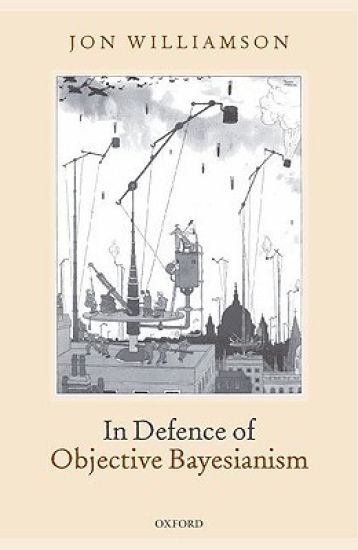
In Defence of Objective Bayesianism

In Defence of Objective Bayesianism

Jon Williamson

Oxford University Press
2010
sidottu
How strongly should you believe the various propositions that you can express? That is the key question facing Bayesian epistemology. Subjective Bayesians hold that it is largely (though not entirely) up to the agent as to which degrees of belief to adopt. Objective Bayesians, on the other hand, maintain that appropriate degrees of belief are largely (though not entirely) determined by the agent's evidence. This book states and defends a version of objective Bayesian epistemology. According to this version, objective Bayesianism is characterized by three norms: · Probability - degrees of belief should be probabilities · Calibration - they should be calibrated with evidence · Equivocation - they should otherwise equivocate between basic outcomes Objective Bayesianism has been challenged on a number of different fronts. For example, some claim it is poorly motivated, or fails to handle qualitative evidence, or yields counter-intuitive degrees of belief after updating, or suffers from a failure to learn from experience. It has also been accused of being computationally intractable, susceptible to paradox, language dependent, and of not being objective enough. Especially suitable for graduates or researchers in philosophy of science, foundations of statistics and artificial intelligence, the book argues that these criticisms can be met and that objective Bayesianism is a promising theory with an exciting agenda for further research.
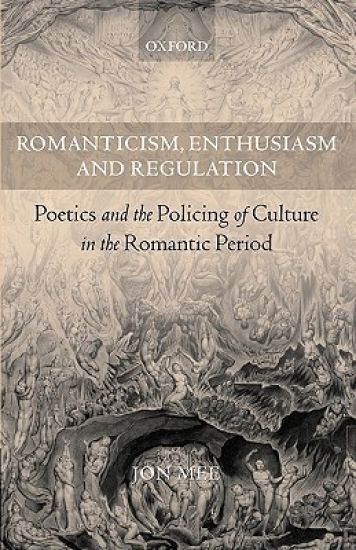
Romanticism, Enthusiasm, and Regulation

Romanticism, Enthusiasm, and Regulation

Jon Mee

Oxford University Press
2005
nidottu
What is enthusiasm? Enthusiasm for most of the eighteenth century was identified with excess of religious feeling, although it came increasingly to be used to describe the unregulated and infectious urgings of the crowd more generally. Yet there was a developing alternative understanding of the term which identified it with a therapeutic influx of feeling in an increasingly formalistic and commodified world. This understanding came to be particularly identified with poetry. Enthusiasm was deemed a necessary condition of poetry by the end of the century, but not a sufficient one. For without proper regulation, poetic enthusiasm might become nothing more than the formless emotionalism of the crowd that the literary elite perceived all around them. Although enthusiasm might be thought of as a distinctly Romantic term, this study looks at the way the inherited discourse of enthusiasm structured most writing of the Romantic period. Many of those new to writing as a career in the period took enthusiasm to licence their feelings as a legitimate basis for turning to print. Others took this as an alarming version of the old virus. Few elite writers, Coleridge and Wordsworth included, did not take pains to show they were on the right side of the fence that separate the noble enthusiasm of the poet from either the fanaticism of the crowd or the undisciplined pretensions of hacks and scribblers. Understanding the influence of these processes of regulation and the difficulty faced by writers in clearly articulating the difference they were meant to enshrine is at the centre of Romanticism, Enthusiasm, and Regulation.
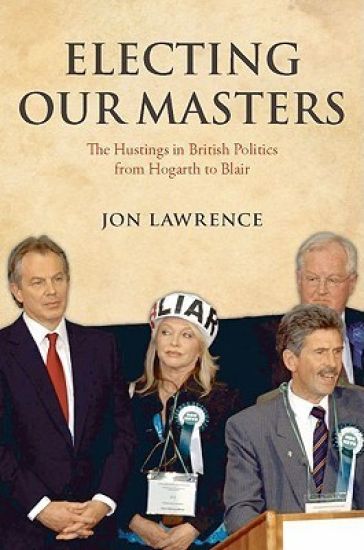
Electing Our Masters

Electing Our Masters

Jon Lawrence

Oxford University Press
2009
sidottu
In this engagingly written history of electioneering in Britain from the eighteenth century to the present, Jon Lawrence explores the changing relationship between politicians and public. Throughout this period, he argues, British politics has been characterized by bruising public rituals intended to bestow legitimacy on politicians by obliging them to face an often irreverent public on broadly equal terms. Face-to-face interaction was central both to the disorderly civic rituals of eighteenth-century politics, and to the Victorian and Edwardian election meeting. Perhaps surprisingly, it also survived in pretty rude health between the wars, despite the emergence of the new mass communication media of radio and cinema. But the same cannot be said of the post-war era and the rise of television. Today most politicians are content merely to offer the semblance of meaningful engagement - walkabouts, canvassing and meetings are all designed to ensure that most senior politicians come into contact only with the smiling faces of that dwindling band, the 'party faithful'. Lloyd George and Churchill might have relished the rough and tumble of a tumultuous public meeting, but their modern counterparts tend to be more risk-averse (and not without reason, given that the cameras are always present to capture their mishaps). But this is not another nostalgic lament for a lost 'golden age'. On the contrary, Electing Our Masters argues that politicians frequently still crave the kudos to be derived from bruising encounters with an irreverent public - hence Tony Blair's so-called 'masochism strategy' in the 2005 election campaign, with its succession of gruelling sessions before live studio audiences. As Lawrence points out, the vital question for today is: can we persuade our broadcasters that such encounters must form a staple of modern, mediated politics?
Greek Popular Religion in Greek Philosophy

Greek Popular Religion in Greek Philosophy

Jon Mikalson

Oxford University Press
2010
sidottu
Jon D. Mikalson examines how Socrates, Plato, Aristotle, and other Greek philosophers described, interpreted, criticized, and utilized the components and concepts of the religion of the people of their time - practices such as sacrifice, prayer, dedications, and divination. The chief concepts involved are those of piety and impiety, and after a thorough analysis of the philosophical texts Mikalson offers a refined definition of Greek piety, dividing it into its two constituent elements of `proper respect' for the gods and `religious correctness'. He concludes with a demonstration of the benevolence of the gods in the philosophical tradition, linking it to the expectation of that benevolence evinced by popular religion.
Sugar and Spice

Sugar and Spice

Jon Stobart

Oxford University Press
2012
sidottu
Consumers in eighteenth-century England were firmly embedded in an expanding world of goods, one that incorporated a range of novel foods (tobacco, chocolate, coffee, and tea) and new supplies of more established commodities, including sugar, spices, and dried fruits. Much has been written about the attraction of these goods, which went from being novelties or expensive luxuries in the mid-seventeenth century to central elements of the British diet a century or so later. They have been linked to the rise of Britain as a commercial and imperial power, whilst their consumption is seen as transforming many aspects of British society and culture, from mealtimes to gender identity. Despite this huge significance to ideas of consumer change, we know remarkably little about the everyday processes through which groceries were sold, bought, and consumed. In tracing the lines of supply that carried groceries from merchants to consumers, Sugar and Spice reveals how changes in retailing and shopping were central to the broader transformation of consumption and consumer practices, but also questions established ideas about the motivations underpinning consumer choices. It demonstrates the dynamic nature of eighteenth-century retailing; the importance of advertisements in promoting sales and shaping consumer perceptions, and the role of groceries in making shopping an everyday activity. At the same time, it shows how both retailers and their customers were influenced by the practicalities and pleasures of consumption. They were active agents in consumer change, shaping their own practices rather than caught up in a single socially-inclusive cultural project such as politeness or respectability.
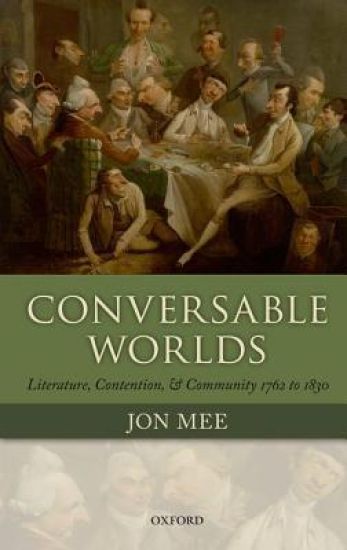
Conversable Worlds

Conversable Worlds

Jon Mee

Oxford University Press
2011
sidottu
Conversable Worlds addresses the emergence of the idea of 'the conversation of culture'. Around 1700 a new commercial society was emerging that thought of its values as the product of exchanges between citizens. Conversation became increasingly important as a model and as a practice for how community could be created. A welter of publications, in periodical essays, in novels, and in poetry, enjoined the virtues of conversation. These publications were enthusiastically read and discussed in book clubs and literary societies that created their own conversable worlds. From some perspectives, the freedom of a distinctively English conversation allowed for the 'collision' of ideas and sentiments. For others, like Joseph Addison and David Hume, ease of 'flow' was the key issue, and politeness the means of establishing a via media. For Addison and Hume, the feminization of culture promised to make women the sovereigns of what Hume called 'the conversable world'. As the culture seemed to open up to a multitude of voices, anxieties appeared as to how far things should be allowed to go. The unruliness of the crowd threatened to disrupt the channels of communication. There was a parallel fear that mere feminized chatter might replace learning. This book examines the influence of these developments on the idea of literature from 1762 through to 1830. Part I examines the conversational paradigm established by figures like Addison and Hume, and the proliferation of conversable worlds into gatherings like Johnson's Club and Montagu's Bluestocking assemblies. Part II looks at the transition from the eighteenth century to 'Romantic' ideas of literary culture, the question of the withdrawal from mixed social space, the drive to sublimate verbal exchange into forms that retained dialogue without contention in places like Coleridge's 'conversation poems,' and the continuing tensions between ideas of the republic of letters as a space of vigorous exchange as opposed to the organic unfolding of consciousness.
Heroes or Villains?

Heroes or Villains?

Jon Davis; John Rentoul

Oxford University Press
2019
sidottu
Tony Blair was the political colossus in Britain for thirteen years, winning three elections in a row for New Labour, two of them by huge majorities. However, since leaving office he has been disowned by many in his own party, with the term 'Blairite' becoming an insult. The election of Jeremy Corbyn as Labour Party leader in 2015 seemed to be, if not an equal, at least an opposite reaction to Blair's long dominance of the centre and left of British politics. Drawing on new contributions from most of the main players in the Blair government, including Tony Blair himself, Jon Davis and John Rentoul reconsider the history and common view of New Labour against its record of delivering moderate social democracy. They show how New Labour was not one party but two, and how it essentially governed as a coalition, much like the government that followed it. This book tells the inside story of how Tony Blair worked out, late in the day, his ideas for improving the NHS and school reform; how he groped towards, and was eventually defined by, a foreign policy of liberal interventionism; how he managed a difficult relationship with his Chancellor for ten years; and how Gordon Brown finally took over just as the boom went bust and the New Labour era came to an end. Rentoul and Davis reveal how the governing tribes dealt with each other in the New Labour years: not simply the 'Blairites' and the 'Brownites', but the 'temporary' ministers and the 'permanent', under-reported civil servants who worked alongside them. Many of the arguments that raged within and around the Blair government of 1997-2007 remain very much alive: reform of public services; the right course for the divided Labour Party; and the Iraq war. The Blair Government Reconsidered aims at a balanced account of how decisions were made, to allow the reader to make up their own mind about controversies that still dominate politics today.
Lectures on Inductive Logic

Lectures on Inductive Logic

Jon Williamson

Oxford University Press
2017
sidottu
Logic is a field studied mainly by researchers and students of philosophy, mathematics and computing. Inductive logic seeks to determine the extent to which the premisses of an argument entail its conclusion, aiming to provide a theory of how one should reason in the face of uncertainty. It has applications to decision making and artificial intelligence, as well as how scientists should reason when not in possession of the full facts. In this book, Jon Williamson embarks on a quest to find a general, reasonable, applicable inductive logic (GRAIL), all the while examining why pioneers such as Ludwig Wittgenstein and Rudolf Carnap did not entirely succeed in this task. Along the way he presents a general framework for the field, and reaches a new inductive logic, which builds upon recent developments in Bayesian epistemology (a theory about how strongly one should believe the various propositions that one can express). The book explores this logic in detail, discusses some key criticisms, and considers how it might be justified. Is this truly the GRAIL? Although the book presents new research, this material is well suited to being delivered as a series of lectures to students of philosophy, mathematics, or computing and doubles as an introduction to the field of inductive logic
Conversable Worlds

Conversable Worlds

Jon Mee

Oxford University Press
2013
nidottu
Conversable Worlds addresses the emergence of the idea of 'the conversation of culture'. Around 1700 a new commercial society was emerging that thought of its values as the product of exchanges between citizens. Conversation became increasingly important as a model and as a practice for how community could be created. A welter of publications, in periodical essays, in novels, and in poetry, enjoined the virtues of conversation. These publications were enthusiastically read and discussed in book clubs and literary societies that created their own conversable worlds. From some perspectives, the freedom of a distinctively English conversation allowed for the 'collision' of ideas and sentiments. For others, like Joseph Addison and David Hume, ease of 'flow' was the key issue, and politeness the means of establishing a via media. For Addison and Hume, the feminization of culture promised to make women the sovereigns of what Hume called 'the conversable world'. As the culture seemed to open up to a multitude of voices, anxieties appeared as to how far things should be allowed to go. The unruliness of the crowd threatened to disrupt the channels of communication. There was a parallel fear that mere feminized chatter might replace learning. This book examines the influence of these developments on the idea of literature from 1762 through to 1830. Part I examines the conversational paradigm established by figures like Addison and Hume, and the proliferation of conversable worlds into gatherings like Johnson's Club and Montagu's Bluestocking assemblies. Part II looks at the transition from the eighteenth century to 'Romantic' ideas of literary culture, the question of the withdrawal from mixed social space, the drive to sublimate verbal exchange into forms that retained dialogue without contention in places like Coleridge's 'conversation poems,' and the continuing tensions between ideas of the republic of letters as a space of vigorous exchange as opposed to the organic unfolding of consciousness.
Exposing the Magic of Design

Exposing the Magic of Design

Jon Kolko

Oxford University Press Inc
2011
sidottu
As the world deals with increasing complexity -- in issues of sustainability, finance, culture and technology -- business and governments are searching for a form of problem solving that can deal with the unprecedented levels of ambiguity and chaos. Traditional "linear thinking" has been disparaged by the popular media as being inadequate for dealing with the global economic crisis. Standard forms of marketing and product development have been rejected by businesses who need to find a way to stay competitive in a global economy. Yet little has been offered as an alternative. It is not enough to demand that someone "be more innovative" without giving him the tools to succeed. Design synthesis is a way of thinking about complicated, multifaceted problems of this scale with a repeatable degree of success. Design synthesis methods can be applied in business, with the goal of producing new and compelling products and services, and they can be applied in government, with the goal of changing culture and bettering society. In both contexts, however, there is a need for speed and for aggressive action. This text is immediately relevant, and is more relevant than ever, as we acknowledge and continually reference a feeling of an impending and massive change. Simply, this text is intended to act as a practitioner's guide to exposing the magic of design. There are three simple goals for this text. The first goal is to present a theory of design synthesis in a simple and concise manner. This theory is based on academic research and discourse, but presented in a way that is clear and valuable to a practicing design manager, designer or design researcher. This theory of design synthesis can then be used to substantiate single methods of synthesis. The second goal is to offer a rationalization of why design synthesis is important, both in a general sense ("why should I care about this at all?") as well as in a more immediate sense ("why should I care about this right now?"). The final goal is to present a set of actionable, learnable methods for design synthesis that can be applied to any design problem. Practicing industrial designers, interaction designers, interface designers, and designers of other disciplines can use these methods to make sense of complicated design problems and to move seamlessly from various forms of research to design. The methods can add a systematic sense of rigor to an otherwise subjective, often introspective process.