Kirjojen hintavertailu. Mukana 12 016 292 kirjaa ja 12 kauppaa.

Kirjahaku

Etsi kirjoja tekijän nimen, kirjan nimen tai ISBN:n perusteella.

1000 tulosta hakusanalla Jon Goode

Cities of the Heartland

Cities of the Heartland

Jon C. Teaford

Indiana University Press
1993
pokkari
"Recommended for all who want to learn about the origins of the contemporary urban crisis." —Library Journal Teaford writes a definitive history of the transformation of "America's heartland" into the "Rust Belt," chronicling the development of the cities of the industrial Midwest as they challenged the urban supremacy of the East, from their heyday to the trying times of the 1970s and '80s. The early part of this century brought wealth and promise to the heartland: automobile production made Detroit a boomtown, and automobile-related industries enriched communities; Frank Lloyd Wright and the Prairie School of architects asserted the Midwest's aesthetic independence; Sherwood Anderson and Carl Sandburg established Chicago as a literary mecca; Jane Addams made the Illinois metropolis an urban laboratory for experiments in social justice. Soon, however, emerging Sunbelt cities began to rob such cities as Cincinnati, Saint Louis, and Chicago of their distinction as boom areas, foreshadowing urban crisis.
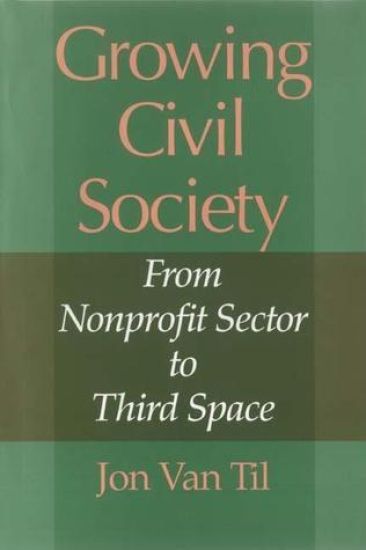
Growing Civil Society

Growing Civil Society

Jon Van Til

Indiana University Press
2008
pokkari
Growing Civil Society investigates the role of voluntary action and nonprofit organization in contemporary America. Key to the book is the concept of "third space," which provides an important tool for the construction of civil society. The third space is not independent from society's major institutions, but exists in dynamic interdependence with them, linking individuals in their home bases of family and community to the larger governmental and economic structures within which all citizens, workers, and consumers learn to find their way in modern society.
Performing Messiaen's Organ Music

Performing Messiaen's Organ Music

Jon Gillock

Indiana University Press
2009
sidottu
Olivier Messiaen (1908–1992) was the most influential composer for the organ in the 20th century. Shaped by French tradition as well as the innovations of Debussy, Stravinsky, and Bartók, Messiaen developed a unique style that would become his signature. Using Messiaen's own analytical and aesthetic notes as a point of departure, Jon Gillock offers detailed commentary on the performance of Messiaen's 66 organ works. Gillock provides background information on the composition and premiere of each piece, a translation of Messiaen's related writings, and a systematic explanation of performance considerations. Gillock also supplies details about the organ at La Trinité in Paris, the instrument for which most of Messiaen's pieces were imagined.
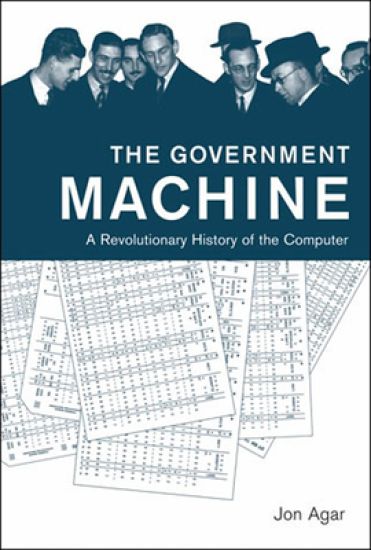
The Government Machine

The Government Machine

Jon Agar

MIT Press
2016
pokkari
An examination of technology and politics in the evolution of the British "government machine."In The Government Machine, Jon Agar traces the mechanization of government work in the United Kingdom from the nineteenth to the early twenty-first century. He argues that this transformation has been tied to the rise of "expert movements," groups whose authority has rested on their expertise. The deployment of machines was an attempt to gain control over state action-a revolutionary move. Agar shows how mechanization followed the popular depiction of government as machine-like, with British civil servants cast as components of a general purpose "government machine"; indeed, he argues that today's general purpose computer is the apotheosis of the civil servant.Over the course of two centuries, government has become the major repository and user of information; the Civil Service itself can be seen as an information-processing entity. Agar argues that the changing capacities of government have depended on the implementation of new technologies, and that the adoption of new technologies has depended on a vision of government and a fundamental model of organization. Thus, to study the history of technology is to study the state, and vice versa.
Game Wizards

Game Wizards

Jon Peterson

MIT Press
2021
nidottu
Discover the colorful history of the table-top RPG phenomenon, Dungeons & Dragons, as a D&D expert examines its surprising successes, setbacks, and controversies.“The battle over Dungeons & Dragons was the ultimate geek war.” —WiredWhen Dungeons & Dragons was first released to a small hobby community, it hardly seemed destined for mainstream success—and yet this arcane tabletop role-playing game became an unlikely pop culture phenomenon. In Game Wizards, Jon Peterson chronicles the rise of Dungeons & Dragons from hobbyist pastime to mass market sensation, from the initial collaboration to the later feud of its creators, Gary Gygax and Dave Arneson. Inside you’ll learn about:• Gygax and Arneson’s first meeting and their work toward the 1974 release• The founding of TSR and its growth as a company• Arneson’s acrimonious departure and subsequent challenges to TSR• "Satanic Panic" accusations that plagued D&D—and boosted its popularity• TSR’s reckless expansion and near-fatal corporate infighting• And much more!With Game Wizards, Peterson restores historical particulars long obscured by competing narratives spun by the one-time partners. That record amply demonstrates how the turbulent experience of creating something as momentous as Dungeons & Dragons can make people remember things a bit differently from the way they actually happened.
The Elusive Shift: How Role-Playing Games Forged Their Identity
How the early Dungeons & Dragons community grappled with the nature of role-playing games, theorizing a new game genre. When Dungeon & Dragons made its debut in the mid-1970s, followed shortly thereafter by other, similar tabletop games, it sparked a renaissance in game design and critical thinking about games. D&D is now popularly considered to be the first role-playing game. But in the original rules, the term "role-playing" is nowhere to be found; D&D was marketed as a war game. In The Elusive Shift, Jon Peterson describes how players and scholars in the D&D community began to apply the term to D&D and similar games--and by doing so, established a new genre of games.
Playing at the World, 2E, Volume 1

Playing at the World, 2E, Volume 1

Jon Peterson

MIT PRESS LTD
2024
nidottu
The first volume of two in a new, updated edition of the 2012 book Playing at the World, which charts the vast and complex history of role-playing games. This new edition of Playing at the World is the first of two volumes that update the 720-page original tome of the same name from 2012. This first volume is The Invention of Dungeons & Dragons, which explores the publication of that iconic game. (The second volume is The Three Pillars of Role-Playing Games, a deeper dive into the history of the setting, system, and character of D & D.) In this first volume, Jon Peterson distills the story of how the wargaming clubs and fanzines circulating around the upper Midwest in the 1970s culminated in Gary Gygax and Dave Arneson s seminal role-playing game, D & D. It augments the research of the original editions with new insights into the crucial period in 1972 3 when D & D began to take shape. Drawing from primary sources ranging from eighteenth-century strategists to modern hobbyists, Playing at the World explores the origins of wargames and roleplaying through the history of conflict simulations and the eccentric characters who drove the creation of a signature cultural innovation in the late twentieth century. Filled with unparalleled archival research (from obscure fanzines to letters, drafts, and other ephemera), this new edition of Playing at the World is the ultimate geek s guide to the original RPG. As such, it is an indispensable resource for academics and game fans exploring the origins of the hobby.
Playing at the World, 2E, Volume 2

Playing at the World, 2E, Volume 2

Jon Peterson

MIT PRESS LTD
2025
nidottu
The second volume of two in a new, updated edition of the 2012 book Playing at the World, which charts the vast and complex history of role-playing games. This new edition of Playing at the World is the second of two volumes that update the 720-page original tome of the same name from 2012. This second volume is The Three Pillars of Role-Playing Games, a deep dive into the history of the setting, system, and characters of D&D--the three pillars indicated by the volume's title. (The first volume of the new edition is The Invention of Dungeons & Dragons, which explores the publication and reception of that iconic game.) In this second volume, Jon Peterson covers the medieval fantasy setting--the first pillar--and addresses why the first role-playing game evolved around fantasy and medieval settings as opposed to some other historical setting. In the second pillar, the author explores how the rules of wargames, from their roots in chess variants from eighteenth-century Germany, developed into those of role-playing games. Finally, the third pillar focuses on character, perhaps the most elusive of the three pillars, and investigates how precedents governed the introduction of characters to games more so than the original D&D rule books. Filled with unparalleled archival research (from obscure fanzines to letters, drafts, and other ephemera), this new edition of Playing at the World is the ultimate geek's guide to the original RPG. As such, it is an indispensable resource for academics and game fans exploring the origins of the hobby.
Darwinism and the Divine in America

Darwinism and the Divine in America

Jon H. Roberts

University of Notre Dame Press
2001
nidottu
Originally published in 1988, Jon Roberts's book provided the first comprehensive analytical overview of public dialogue among nineteenth-century American Protestant intellectuals who struggled with the theory of organic evolution. Before the publication of Darwin's Origin of Species in 1859, most American Protestant intellectuals valued science, especially natural history, for supplying data that appeared to be invaluable for defending many major tenets of the Christian worldview. Arguments over the scientific merits of Darwin's theory gave way to discussions of its theological implications. Roberts's book reconstructs the course of that conversation from 1875 to 1900.
Darwinism and the Divine in America

Darwinism and the Divine in America

Jon H. Roberts

University of Notre Dame Press
2001
sidottu
Originally published in 1988, Jon Roberts's book provided the first comprehensive analytical overview of public dialogue among nineteenth-century American Protestant intellectuals who struggled with the theory of organic evolution. Before the publication of Darwin's Origin of Species in 1859, most American Protestant intellectuals valued science, especially natural history, for supplying data that appeared to be invaluable for defending many major tenets of the Christian worldview. Arguments over the scientific merits of Darwin's theory gave way to discussions of its theological implications. Roberts's book reconstructs the course of that conversation from 1875 to 1900.
Intervention and Underdevelopment

Intervention and Underdevelopment

Jon Kofas

Pennsylvania State University Press
1989
pokkari
. . . this ground-breaking study by Jon Kofas . . . provides an insightful analysis of the American aid program that determined the political and economic configuration of postwar Greece. Kofa's analysis, however, is equally significant for United States history because it was on Greek soil that American counterinsurgency, pacification, and containment tactics were evolved, tested, and later applied elsewhere in the Third World. Those who seek meaningful reappraisal rather than beguiling rationalization might well begin with this study, solidly grounded on all available sources. It presents a revisionist perspective regarding both the economic and the political development of Greece under American tutelage. The declared objective of the economic aid was to avoid restructuring of the Greek economy, and to preserve Greece as an exporter of raw materials and an importer of manufactured goods. Kofas asserts that an alternative program similar to that of the northern Balkan countries was feasible, and that failure to undertake such a program is vulnerable of today's Greek economy. Likewise in the political realm, Kofas rejects the Washington dogma that Greece has to be in either the Soviet or the American camp, and therefore must be in the latter. Kofas proposes as a "plausible alternative" a social-demographic regime that, in addition to socioeconomic reforms at home, could have pursued abroad a pro-Greek rather than a pro-Soviet or pro-American course. The victory of the American-supported forces in Greece obscured this alternative vision for decades. Yet it was persistently propounded, in the face of discouraging odds, by a variety of centrist and leftist leaders. With the coming to office of Andreas Papandreou, this vision has become official policy in Athens. Furthermore, assorted versions of this alternative strategy are cropping up globally, which is the underlying reason why the Third World today is out of control. And also why superpower doctrines and projects not recognizing this indisputable and irreversible fact are experiencing difficulties as embarrassing as they are predictable. Hence the broad significance of this thoughtful and thought provoking study. —From the Foreword by L. S. Stavrianos
The Illusion of Civil Society

The Illusion of Civil Society

Jon Shefner

Pennsylvania State University Press
2008
sidottu
Much has been written about how civil society challenges authoritarian governments and helps lead the way to democratization. These studies show that neoliberal economic policies have harmed many sectors of society, weakening the state and undermining clientelistic relationships that previously provided material benefits to middle- and low-income citizens, who are then motivated to organize coalitions to work for greater social justice and equality. Recognizing this important role played by civil society organizations, Jon Shefner goes further and analyzes the variegated nature of the interests represented in these coalitions, arguing that the differences among civil society actors are at least as important as their similarities in explaining how they function and what success, or lack thereof, they have experienced. Through an ethnographic examination extending over a decade, Shefner tells the story of how a poor community on the urban fringe of Guadalajara mobilized through an organization called the Unión de Colonos Independientes (UCI) to work for economic improvement with the support of Jesuits inspired by liberation theology. Yet Mexico’s successful formal democratic transition, won with the elections in 2000, was followed by the dissolution of the coalition. Neither political access for the urban poor, nor their material well-being, has increased with democratization. The unity and even the concept of civil society has thus turned out to be an illusion.
The Illusion of Civil Society

The Illusion of Civil Society

Jon Shefner

Pennsylvania State University Press
2012
pokkari
Much has been written about how civil society challenges authoritarian governments and helps lead the way to democratization. These studies show that neoliberal economic policies have harmed many sectors of society, weakening the state and undermining clientelistic relationships that previously provided material benefits to middle- and low-income citizens, who are then motivated to organize coalitions to work for greater social justice and equality. Recognizing this important role played by civil society organizations, Jon Shefner goes further and analyzes the variegated nature of the interests represented in these coalitions, arguing that the differences among civil society actors are at least as important as their similarities in explaining how they function and what success, or lack thereof, they have experienced. Through an ethnographic examination extending over a decade, Shefner tells the story of how a poor community on the urban fringe of Guadalajara mobilized through an organization called the Unión de Colonos Independientes (UCI) to work for economic improvement with the support of Jesuits inspired by liberation theology. Yet Mexico’s successful formal democratic transition, won with the elections in 2000, was followed by the dissolution of the coalition. Neither political access for the urban poor, nor their material well-being, has increased with democratization. The unity and even the concept of civil society has thus turned out to be an illusion.
Global Financial Systems

Global Financial Systems

Jon Danielsson

Pearson Education Limited
2013
pokkari
Global Financial Systems is an innovative, interdisciplinary text that explores the â??whyâ?? behind global financial stability. Danielsson draws on economic theory, finance, mathematical modelling, risk theory, and policy to posit a coherent and current analysis of the global financial system.
Genetics of Human Mentality

Genetics of Human Mentality

Jon Karlsson

Praeger Publishers Inc
1991
sidottu
According to Jon Karlsson, the influence of genetic factors on human mentality has been neglected for many years in the study of intelligence. He contends that the evidence for biological influences on human intelligence is too compelling to be ignored any longer. Karlsson believes that such influences can be positive, and that ways can be found to measure their importance.Serious efforts are necessary to extend the scope of basic conceptions concerning the structure of the brain and to explore the mysteries of the physiological mechanisms that govern the human mind. The research reported in this volume suggests some approaches that might prove useful. Karlsson believes that an effective approach to the genetics of mentality can be built around studies of serious brain abnormalities. Beginning with the idea that psychosis probably has a genetic bond to creativity, he argues that parallel possibilities exist in relation to other frequently occurring disorders. The product of many years of research, this work is certain to be a source of both controversy and of new ideas for the study of human intellectual development.
The Wages of Sin

The Wages of Sin

Jon H. Huer

Praeger Publishers Inc
1991
sidottu
This is an incisive book about what has gone wrong with the social fabric of American society. Jon Huer postulates two models of society: one that pursues profit and self-interest, and the other that cherishes community values. Huer holds that these two types of ethics cannot coexist in a truly just society. One prominent result of the current dominance of the profit-driven model of behavior is that American society increasingly substitutes reality with illusion, happiness with pleasure, strength with brute force--highlighted by the now-obsessive demands for entertainment and overconsumption, and frequent calls for warlike ventures.The Wages of Sin is a major work of American cultural analysis that gives historical insights and suggests remedies to the current societal malaise. Calling attention to the United States' original purpose and resolve, the author challenges the generally accepted views in the United States. He is critical of American society--but expresses his view hopefully, regretfully, and sympathetically. Huer passionately uncovers the underpinnings of the unhappiness and dissatisfaction rampant in America--while at the same time providing historical and sociological insights and facts. This book will be of great interest to the educated or general reader, scholars, and students in sociology, American studies, political science, philosophy, psychology, and even literary criticism.
New Spirituality, Self, and Belonging

New Spirituality, Self, and Belonging

Jon P. Bloch

Praeger Publishers Inc
1998
sidottu
Through in-depth interviews with 22 New Agers and Neo-Pagans, this study proposes a new model of religious identity from a sociological standpoint. The analysis demonstrates that in spite of their great diversity of beliefs and lack of strong organizational ties, a discernible community of alternative spiritualists does exist.This volume will appeal not only to scholars of the sociology of religion, but also to sociologists interested in community building, social movements, and self-identity.
Confederates against the Confederacy

Confederates against the Confederacy

Jon L. Wakelyn

Praeger Publishers Inc
2002
sidottu
Far from being a monolith with unanimous leadership loyalty to the cause of a separate nation, the Confederacy was in reality deeply divided over how to achieve independence. Many supposedly loyal leaders, civilian as well as elected officials, opposed governmental policies on the national and state levels, and their actions ultimately influenced non-support for military policies. Congressional differences over arming the slaves and bureaucratic squabbles over how to conduct the war disrupted the government and Cabinet of President Jefferson Davis. Rumors of such irreconcilable differences spread throughout the South, contributing to an overall decline in morale and support for the war effort and causing the Confederacy to come apart from within.When asked to make sacrifices, civilian leaders found themselves caught in the dilemma of either aiding the Confederacy or losing money through poor utilization of slave labor. To sustain profits, the business and planter classes often traded with the enemy. Upon consideration of arming the slaves, many members of Congress proclaimed that the war effort was not worth the demise of slavery and preferred instead to take their chances with the Northern government. Cultural leaders, clergy, newspapermen, and men of letters claimed their loyalty to the war effort, but often criticized government policies in public. By asking for financial support and instituting a military draft, the national government infuriated local patriots who wanted to defend their own states more than they desired to defeat the enemy.