Kirjahaku
Etsi kirjoja tekijän nimen, kirjan nimen tai ISBN:n perusteella.
1000 tulosta hakusanalla Julia Addison

How is art criticism to be understood within an expanding artistic field? A look at its history and its manifestations within globalized conditions shows the variety of the genre, of the criteria and of the styles of writing. This reader is an attempt to bring a diverse range of art-critical voices and perspectives into conversation with each other, with texts from the 18th century to the present. The editors Beate Söntgen and Julia Voss have invited colleagues from various geographical and intellectual backgrounds to present and discuss the art critics of their choice, choosing one example from their respective bodies of work to comment upon. How have these writers approached art criticism? Which styles do they employ? What makes them extraordinary? What can we learn from their writings today, and why is it important in its contemporary context? Texts by: Ananda Kentish Coomaraswamy, Denis Diderot, Takashi Kashima, Patrick Mudekereza, Annemarie Sauzeau-Boetti, Bertha Zuckerkandl and many more Comments by: Juli Carson, Yuriko Furuhata, Isabelle Graw, Angela Harutyunyan, Monica Juneja, Wolfgang Kemp, Florencia Malbran, Yvette Mutumba, Azu Nwagbogu, Sarah Wilson and many more

The cosmos of Hanne Darboven The publication concludes Julia Gaisbacher's longtime exploration of Hanne Darboven's Ku¨nstlerinnenhaus and at the same time continues her own work on “dream houses.” The Viennese artist's photographs provide sensitive insights into Hanne Darboven's studios in the south of Hamburg. To this day, the ensemble also functions as a treasury for thousands of objects and artworks. Gaisbacher's precisely composed black-and-white photographs of the rooms, whose seemingly chaotic abundance is also diametrically opposed to the strict order of Darboven's own works on paper, are brought together with color reproductions of the latter's annual art calendars. As such, the book offers an artistic dialog about time and space between the generations.



Three hundred years ago, intellectuals of the European Enlightenment constructed a mythology of technology. Influenced by a confluence of humanism, colonialism, and racism, this mythology ignored local wisdom and indigenous innovation, deeming it primitive. Today, we have slowly come to realize that the legacy of this mythology is haunting us. Designers understand the urgency of reducing humanity’s negative environmental impact, yet perpetuate the same mythology of technology that relies on exploiting nature. Responding to climate change by building hard infrastructures and favoring high-tech homogenous design, we are ignoring millennia-old knowledge of how to live in symbiosis with nature. Without implementing soft systems that use biodiversity as a building block, designs remain inherently unsustainable.Lo—TEK, derived from Traditional Ecological Knowledge, is a cumulative body of multigenerational knowledge, practices, and beliefs, countering the idea that indigenous innovation is primitive and exists isolated from technology. It is sophisticated and designed to sustainably work with complex ecosystems. With a foreword by anthropologist Wade Davis and four chapters spanning Mountains, Forests, Deserts, and Wetlands, Julia Watson explores thousands of years of human wisdom and ingenuity from 18 countries including Peru, the Philippines, Tanzania, Kenya, Iran, Iraq, India, and Indonesia. We rediscover an ancient mythology in a contemporary context, radicalizing the spirit of human nature. The tactile reading experience of Lo—TEK reflects the ingenuity of carefully selected projects with sophisticated design details: copper highlights the value of ancient knowledge, a cardboard hardcover echoes rawness, and the Swiss binding showcases an open spine and reveals the construction of the book, just as the book discloses hidden technological knowledge.

In this era of progress, we have gone from being protectors of life on earth, to its greatest threat. One challenge we will confront in the next millennia is water. This book offers a wide diversity of ancient wisdom and technology from Hawaii to Brazil, from fishing to wastewater treatment, to navigate and co-create our increasingly aquatic world.


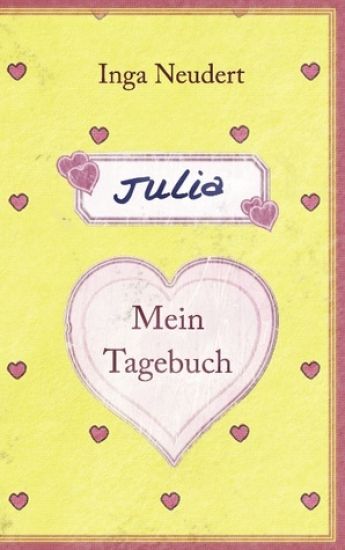




Julia ist attraktiv, Ende 20 und sie ist leidenschaftlich verliebt, in Robert, der sie betr gt. Doch Julia gibt nicht auf und steht zu sich und ihrer Entscheidung f r Robert. Und beginnt zu k mpfen. Selbstbewusst und engagiert tritt sie Robert und seiner Geliebten entgegen und hat die besten Aussichten, mit ihren Waffen zum Erfolg zu kommen und Robert zur ck zu erobern ... Eine packende Geschichte um gro e Gef hle und tiefe Leidenschaften beginnt ...


Julia Gruner. Universal Azo Fizz - A Deconstruction: Kienbaum Artists' Books Edition 2025
Julia Gruner
Snoeck Publishing Company
2026
nidottu
Painters need paint - it could be as simple as that. Julia Gruner (b. 1984), who graduated from Kunstakademie D sseldorf in 2015 as a master student of Katharina Grosse, opts for quite a different palette in her Domestic Paintings by using products such as Bilou Sweet Galaxy shower gel, Dontodent mouthwash junior Learning Effect, Dresdner Essenz bath concentrate Pure Calm, got2b Glue waterproof hair gel, Rewe Beste Wahl cream with Aceto Balsamico di Modena IPG, Rewe Bio Styrian pumpkin seed oil, and treacle- moon shower cream One Ginger Morning. This creates structure, is then blurred, squeezed on top of one another, resulting in a chemical reaction between the components. The artist spreads this onto a sheet of cling film on a scanner, in a way that occasionally includes a few folds and creases. The effects range from bombastic views and interstellar spaces to childlike doodles. In other words, these ephemeral paintings captured in the scan pique our curiosity about the industrially manufactured products that surround us every day, which, moreover, are perfectly tailored to every situation in life, and whose ingredients and manufacturing processes we basically know little about.