From Ste. Marie's little flat which overlooked the gardens they drove down the quiet Rue du Luxembourg, and, at the Place St. Sulpice, turned to the left. They crossed the Place St. Germain des Pr s, where lines of homebound working people stood waiting for places in the electric trams, and groups of students from the Beaux Arts or from Julien's sat under the awnings of the Deux Magots, and so, beyond that busy square, they came into the long and peaceful stretch of the Boulevard St. Germain. The warm sweet dusk gathered round them as they went, and the evening air was fresh and aromatic in their faces.
From Ste. Marie's little flat, which overlooked the gardens, they drove down the quiet rue du Luxembourg, and at the Place St. Sulpice turned to the left. They crossed the Place St. Germain des Pr s, where lines of home-bound working-people stood waiting for places in the electric trams, and groups of students from the Beaux Arts or from Julien's sat under the awnings of the Deux Magots, and so, beyond that busy square, they came into the long and peaceful stretch of the Boulevard St. Germain. The warm, sweet dusk gathered round them as they went, and the evening air was fresh and aromatic in their faces.
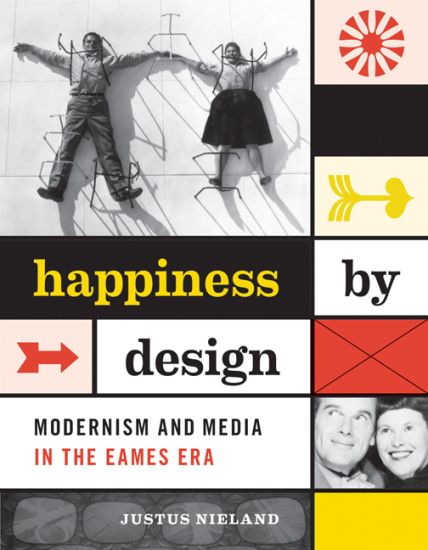
A cultural history of modern lifestyle viewed through film and multimedia experiments of midcentury designers Charles and Ray Eames For the designers Charles and Ray Eames, happiness was both a technical and ideological problem central to the future of liberal democracy. Being happy demanded new things but also a vanguard life in media that the Eameses modeled as they brought film into their design practice. Midcentury modernism is often considered institutionalized, but Happiness by Design casts Eames-era designers as innovative media artists, technophilic humanists, change managers, and neglected film theorists.Happiness by Design offers a fresh cultural history of midcentury modernism through the film and multimedia experiments of Charles and Ray Eames and their peers-Will Burtin, LÁszlÓ Moholy-Nagy, and GyÖrgy Kepes, among others-at a moment when designers enjoyed a new cultural prestige. Justus Nieland traces how, as representatives of the American Century’s exuberant material culture, Cold War designers engaged in creative activities that spanned disciplines and blended art and technoscience while reckoning with the environmental reach of media at the dawn of the information age.Eames-era modernism, Nieland shows, fueled novel techniques of culture administration, spawning new partnerships between cultural and educational institutions, corporations, and the state. From the studio, showroom floor, or classroom to the stages of world fairs and international conferences, the midcentury multimedia experiments of Charles and Ray Eames and their circle became key to a liberal democratic lifestyle-and also anticipated the look and feel of our networked present.
Sunde und Gnade Im Religi sen Leben des Volkes Israel Bis Auf Christum by Justus K berle. This book is a reproduction of the original book published in 1905 and may have some imperfections such as marks or hand-written notes.
The title of this book, He speaks to me, means God speaks to me. The significance of this title is that, since God speaks to me, therefore he speaks to human beings today. Such a title definitely raises a number of questions. Following are a few of those questions. What is meant by God speaking to someone? How does God speak to a human being? Why should God speak to anyone at all? The Bible contains many examples of God speaking to his people in olden days, but does that still happen today? Answers to these questions, and others not mentioned above, are provided in this book. The aim of this book is to help believers who might be struggling with the idea of God speaking to human beings, to realize that God still speaks to his children and that he desires to speak to you continually. This book is divided into two major parts. Part One: The Holy Spirit Speaks to Us, consists of chapters I to VIII, while Part Two: Let the Holy Spirit Speak to You, consists of chapters IX to XII. In Part One, the first chapter of this book highlights the role of prayer in the guidance of the Holy Spirit, while the second chapter provides several examples from God's written Word of the continuing guidance that the Lord provided to his people of Israel. The third to the eighth chapters examine closely, using biblical examples, a number of areas in which God speaks to us and guides us in our lives and ministry. These chapters reveal the results of faithfully following the Holy Spirit as he leads, enlightens, and inspires us. In Part Two, the ninth chapter highlights instances from the Bible of some of the inevitable consequences that followed when God's people failed to hear from God and follow his guidance, while the tenth chapter reveals that similar consequences still follow when God's people fail to hear from God and follow his guidance today. The eleventh chapter discusses several means by which the Holy Spirit speaks to us, as the Twelfth chapter then concludes by applying the guidance of the Holy Spirit to various aspects of our normal lives. Special attention is made in this book to how, as God's church and people today, we must shun our apathy, prayerlessness, and dependence upon today's technologies for guidance and direction, and ensure that we follow the leading of the Holy Spirit in our lives and Kingdom business.
"...This book (in two volumes) reveals to the careful reader many phases of Chinese life and manners which he will admire and commend. But if he should tire with the senseless and useless opinions cherished, and the strange and superstitious customs practiced among all classes of society, let him reflect that for over twenty centuries China has been in bondage to the writings of Confucius and Mencius, and, for nearly the same period, to the religions of Tauism and Buddhism. This fact satisfactorily accounts for many of the absurd, superstitious, and stereotyped opinions and customs prevalent in that empire. Its people need, above all other things, the peculiar influences which the Bible - the great enlightener and enfranchiser - invariably exerts over those who make it their lamp and their law..."
Self fulfillment is the key factor that Sir Justus Abramelech is passionate about in his manuscript to reveal to his audience a greater self awareness. Happiness and common values harmonize unity. Many of today's problems are vast and are not always resolved as there is a great need for a since of direction when one embarks on new territory. Many relationships have been violated and without a community to share concerns or hold accountable; Sir Justus Abramelech has took it upon himself to share poetic experiences, relational values of the spiritual and physical realm to awaken the conscious mind to know the why. Logic is the connection of synergy for outside influence that benefits a community without dictatorship.
Self fulfillment is the key factor that Sir Justus Abramelech is passionate about in his manuscript to reveal to his audience a greater self awareness. Happiness and common values harmonize unity. Many of today's problems are vast and are not always resolved as there is a great need for a since of direction when one embarks on new territory. Many relationships have been violated and without a community to share concerns or hold accountable; Sir Justus Abramelech has took it upon himself to share poetic experiences, relational values of the spiritual and physical realm to awaken the conscious mind to know the why. Logic is the connection of synergy for outside influence that benefits a community without dictatorship.