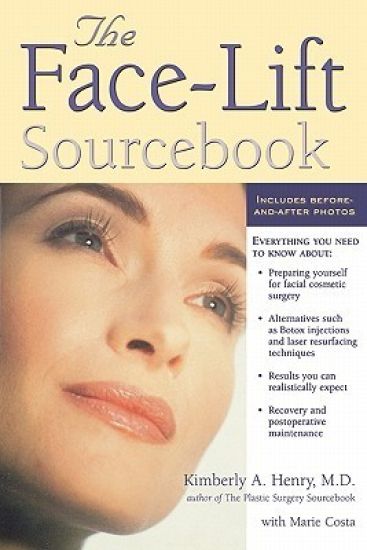
In 1999, more than 80,000 people (90 percent women) underwent face-lift procedures. With compassionate insights from her own face-lift, as well as dozens of before-and-after photos of patients, Dr. Henry explains what surgery can realistically accomplish, average costs, what to expect during recovery, and how to find the right surgeon.
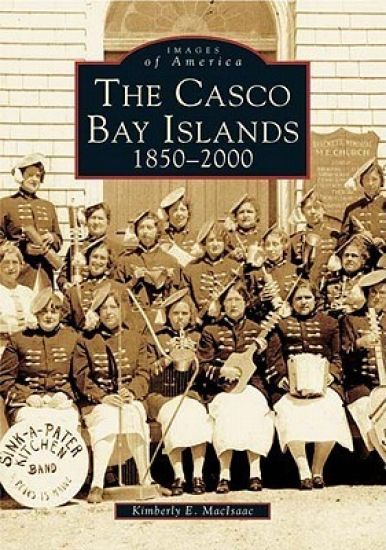
The Casco Bay Islands-romantic, mysterious, a world apart. Native peoples called the bay Auccocisco; their presence is recorded in the shell middens found on the shores of many of the islands. Early explorers, believing there were 352 islands in the bay, called them the Calendar Islands. Visitors from all over the world have flocked to the islands seeking peace and tranquility. The U.S. military, recognizing the strategic location of the islands, has been a presence in times of peace and war. The years 1850-2000 brought constant change. This pictorial history features more than two hundred images that illustrate how the residents of the islands in southern Casco Bay-Peaks, Cushing, House, the Diamonds, Long, Cliff, Chebeague, and Jewell-have adapted to changing times yet have remained rooted in their traditional lifestyle.
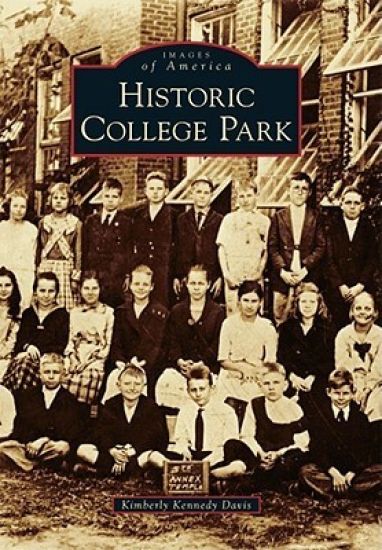
Uncover the history of Historic College Park, Georgia through vintage images in this pictorial history.What makes College Park so special? It is the people who live here. College Park has managed to maintain a small-town feel even as it is home of the Georgia International Convention Center and with the town's close proximity to Hartsfield Jackson International Airport. Located 15 minutes southwest of Atlanta, College Park is a small town nestled within a large urban city. The people who live here make it what it has always been--an active and caring community. College Park has more than 800 buildings on the National Register of Historic Places. It was home to prestigious Cox College and Georgia Military Academy, which became the largest preparatory school in the United States, Woodward Academy. As a tribute to higher institutions of learning, many streets are collegiately named.
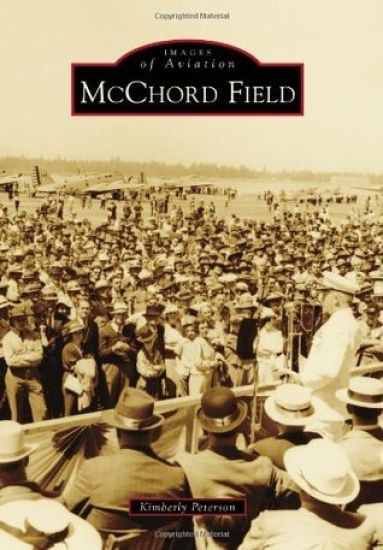
McChord Field, tucked away in the Pacific Northwest, maintains an understated presence. Yet this subdued outpost plays a vital role in major conflicts around the world. On July 3, 1940, McChord officially opened as a training base, developing bomber crews for aircraft such as B-17s, B-18s, B-25s, B26s, and even some of the Doolittle Raiders. Strategically located, McChord functioned as an aircraft modification center, producing P-39s, the Soviet Union's most venerable aircraft, as well as a homeland defense center during World War II. The dawning of the Cold War expanded air defense operations with the newly formed Air Defense Command, receiving the P-61, followed by the F-86, F-102, F-106, and F-15. A global airlift hub using C-124s, C-141s, and C-17s, McChord has supported humanitarian, Antarctic, and wartime missions for America.
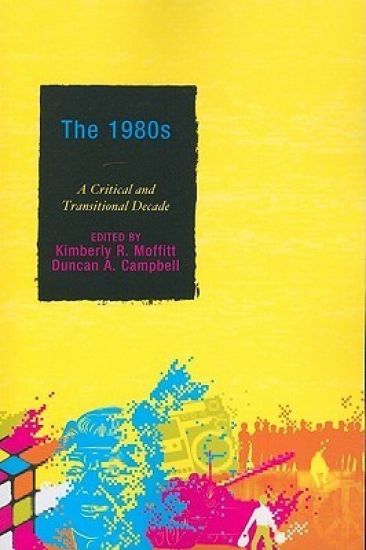
As we approach twenty years since the end of the 1980s, we have the opportunity to see the decade in perspective, and are in a position to question the glib assumption that the 1980s were a mere conservative foil to the 1960s. The 1980s: A Critical and Transitional Decade, edited by Kimberly R. Moffitt and Duncan A. Campbell, places its topics within the context of a decade described as both critical and transitional because the 1980s, in many respects, marked the end of one era and the beginning of another. For example, the Reagan presidency, the end of the Cold War, MTV, and the appearance of the personal computer all reflect a legacy of political, cultural, and social transformation of the United States and the world, and took place specifically within the 1980s. The function of this interdisciplinary volume is not to simply highlight the significant phenomena of the period, but rather demonstrate how so many apparently disparate events were, in fact, closely inter-related and also products of their age. The 1980s is a holistic analysis of the decade that focuses on major turning points, developments in literature, art, entertainment, politics, and social experimentation. The 1980s: A Critical and Transitional Decade, edited by Kimberly R. Moffitt and Duncan A. Campbell is a groundbreaking and stand-alone introductory volume that is unapologetically interdisciplinary in nature and encourages students to explore topics of the decade often overlooked or grouped together with other, more memorable decades such as the 1920s or 1960s.
As we approach twenty years since the end of the 1980s, we have the opportunity to see the decade in perspective, and are in a position to question the glib assumption that the 1980s were a mere conservative foil to the 1960s. The 1980s: A Critical and Transitional Decade, edited by Kimberly R. Moffitt and Duncan A. Campbell, places its topics within the context of a decade described as both critical and transitional because the 1980s, in many respects, marked the end of one era and the beginning of another. For example, the Reagan presidency, the end of the Cold War, MTV, and the appearance of the personal computer all reflect a legacy of political, cultural, and social transformation of the United States and the world, and took place specifically within the 1980s. The function of this interdisciplinary volume is not to simply highlight the significant phenomena of the period, but rather demonstrate how so many apparently disparate events were, in fact, closely inter-related and also products of their age. The 1980s is a holistic analysis of the decade that focuses on major turning points, developments in literature, art, entertainment, politics, and social experimentation. The 1980s: A Critical and Transitional Decade, edited by Kimberly R. Moffitt and Duncan A. Campbell is a groundbreaking and stand-alone introductory volume that is unapologetically interdisciplinary in nature and encourages students to explore topics of the decade often overlooked or grouped together with other, more memorable decades such as the 1920s or 1960s.
Francis Bacon, long considered a minor figure in the founding of modern political thought, is now recognized as one of its foremost thinkers. Bacon not only championed a new type and method of scientific inquiry, he also developed a plan for how modern society could be re-ordered to accommodate and promote scientific progress. Bacon’s scientific writings cannot be wholly understood apart from his political writings, and many of his works combine the two topics so subtly that it is difficult to even place them in a definitive category; in this book, Kimberly Hurd Hale identifies the thread in Bacon’s body of work that links modern science and liberalism. Hale provides a detailed analysis of New Atlantis, examining Bacon’s place in the founding of modern political philosophy and the ways he relates to Plato, Machiavelli, and Hobbes. Hurd argues that Bacon’s demonstration of scientific rule in the New Atlantis is not meant as a blueprint for modern society; rather it shows us the dangers of a scientific society devoid of liberty. By examining what is troubling about the New Atlantis, this book explains what problems lead to the emergence of Atlantean societies, i.e. societies that are prosperous, ambitious, and doomed. It shows that Bacon’s portrait of Bensalem may provide the light necessary to guide those of us living in a world shaped by modern science through the dangerous seas.
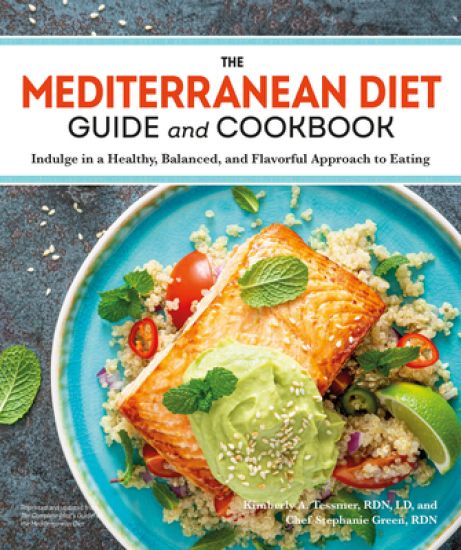
Healthy food, healthy lifestyle, healthy you. Based on the fundamentals of balancing foods high in omega-3 fats such as fresh fruits, vegetables, fish, olive oil, nuts, etc. The Mediterranean diet has a variety of health benefits. More than just a flavorful diet, this is a lifestyle developed over centuries in the warm climates along the Mediterranean Sea to help everyone appreciate life that much more. And now, you too can reap the benefits of this way of eating The Mediterranean Diet Guide and Cookbook helps you understand, develop and implement this heart-healthy diet and lifestyle. In this nutritious guide, you'll get: Over 75 good-for-you recipes, each with a complete nutritional analysis; and a month's worth of delicious menu plans--one week for each season--to kick-start your diet.The history and science behind the Mediterranean diet and what makes it so exceptional.Essential information on the foods and beverages that make up the Mediterranean Diet Pyramid.- An eye-opening look at how this diet can enhance heart health, help manage diabetes and assist in weight loss.A better understanding of the healthy fats, carbs, protein, fiber, vitamins, minerals and antioxi-dants you acquire eating the Mediterranean way.
Hegel and Feminist Philosophy traces the legacy of Hegel in the work of thinkers such as de Beauvoir, Irigaray and Butler, and also in contemporary debates in feminist ethics and political philosophy. As Hutchings demonstrates, this is an ambivalent legacy. Hegel figures both as an antagonistic ‘other’ and as a significant resource for feminist thinking from de Beauvoir onwards. Hegel's philosophy is antagonistic to feminism in so far as it denigrates the female or feminist subject, excluding women from both reason and history. His work provides a resource for feminist philosophy because his account of reason and history is fundamentally non-binary and can be drawn on in feminist philosophy’s attempts to escape the binary thinking of the philosophical tradition. Hutchings claims that feminist philosophy is characterized by patterns of thought which oscillate between accepting and overturning conceptual dualisms central to the philosophical tradition. She suggests that Hegelian elements within feminist thought provide the basis for a rethinking of feminist philosophy which escapes this either/or choice and opens up new possibilities for feminism. This is demonstrated by showing how Hegelian modes of thinking help to resolve entrenched debates within feminist philosophy over sexual difference, ethical judgement and equality of right. Hegel and Feminist Philosophy will be of great interest to students and scholars of philosophy, women's studies and political theory.
Traces the legacy of Hegel in the work of thinkers such as Beauvoir, Irigaray and Butler, and also in contemporary debates in feminist ethics, political philosophy and epistemology. It should be of interest to students and scholars of philosophy, women's studies and political theory.
This is an inspirational diet book with a difference. It is a non-diet book - with no restrictions, point-counting, calorie-watching or danger foods. Instead, DIET COACH is a pocket-sized guide full of tried and tested practical tips and tricks that restrictive diet plans cannot compete with. Author Kimberly Willis focuses on you, rather than the food, to help you beat cravings and take control of your eating habits. She uses a combination of yoga, hypnotherapy, NLP, acupressure and common-sense to identify ways in which you can really change your eating habits. Whether it is remembering key slogans (a glass of wine is the same as a glass of pasta), trying new distraction techniques (rubbing your finger between your nose and your top lip when cravings hit) or taking the time to really chew and taste each mouthful you eat, you will find strategies and coping methods that really work for you.This title has previously been published as The Little Book of Diet Help.
Kimberly Rhodes's interdisciplinary book is the first to explore fully the complicated representational history of Shakespeare's Ophelia during the Victorian period. In nineteenth-century Britain, the shape, function and representation of women's bodies were typically regulated and interpreted by public and private institutions, while emblematic fictional female figures like Ophelia functioned as idealized templates of Victorian womanhood. Rhodes examines the widely disseminated representations of Ophelia, from works by visual artists and writers, to interpretations of her character in contemporary productions of Hamlet, revealing her as a nexus of the struggle for the female body's subjugation. By considering a broad range of materials, including works by Anna Lea Merritt, Elizabeth Siddal, Dante Gabriel Rossetti, and John Everett Millais, and paying special attention to images women produced, Rhodes illuminates Ophelia as a figure whose importance crossed class and national boundaries. Her analysis yields fascinating insights into 'high' and mass culture and enables transnational comparisons that reveal the compelling associations among Ophelia, gender roles, body image and national identity.
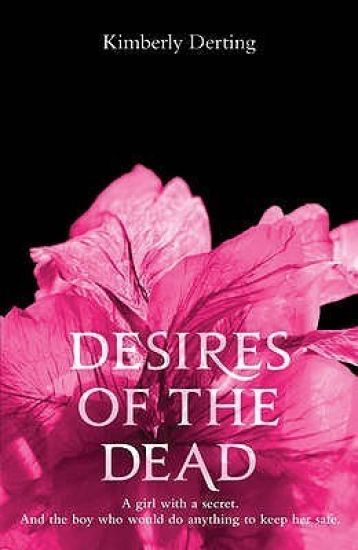
Violet Ambrose is grappling with two major issues: Jay Heaton and her morbid secret ability. While the sixteen-year-old is confused by her new feelings for her best friend, she is more disturbed by her "power" to sense dead bodies - or at least those that have been murdered. Since she was a little girl, she has felt the echoes the dead leave behind in the world...and the imprints that attach to their killers.Violet has never considered her strange talent to be a gift, but now that a serial killer is terrorizing her small town Violet realizes she might be the only person who can stop him.Despite his fierce protectiveness over her, Jay reluctantly agrees to help Violet find the murderer - and Violet is unnerved by her hope that Jay's intentions are much more than friendly. But even as she's falling in love, Violet is getting closer to discovering a killer...and becoming his prey herself.
Violet and Jay are finally dating, but adjusting to the new relationship is not as easy as Violet anticipated. Especially when she has to split Jay's time and attention with his new best friend, Mike, and Mike's pesky younger sister - who happens to be obsessed with Jay. Meanwhile, when Violet's special abilities lead her to the body of a young boy, her tip to the police puts her on the radar of the FBI. Violet tries to fend off the FBI's questions while maintaining the semblance of a normal life, but somebody's leaving her threatening notes and an echo around Mike's house reinforces that all is not right. Violet is forced to admit that perhaps the only people who can help her figure it out are the very people she's desperate to avoid - the FBI.
Violet has always kept her strange ability to sense dead bodies a secret from everyone except her family and best-friend-turned-boyfriend Jay. But now she's using her gift to help track down murderers, working in a group that includes the mysterious and dangerously attractive Rafe. When Violet discovers the body of a college girl murdered by "the girlfriend collector", she is determined to solve the case. But now the serial killer is on the lookout for a new "relationship" and Violet seems to have caught his eye . . .