Kirjojen hintavertailu. Mukana 12 083 983 kirjaa ja 12 kauppaa.

Kirjahaku

Etsi kirjoja tekijän nimen, kirjan nimen tai ISBN:n perusteella.

1000 tulosta hakusanalla Laran Mithras

Studying Lacan’s Seminar VII
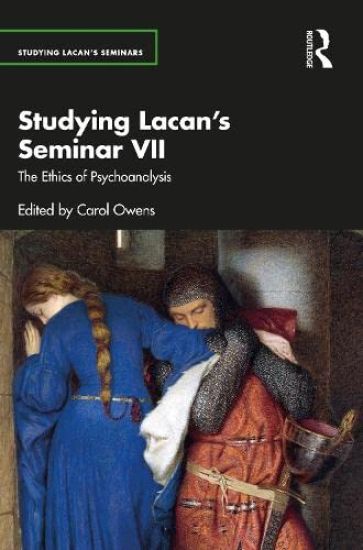
Studying Lacan’s Seminar VII offers a contemporary, critically informed set of analyses of Lacan’s ethics seminar and astute reflections about what Lacan’s ethics offer to the field of psychoanalytic thought today. The volume interrogates the seminar with fresh voices and situated curiosities and perspectives, making for a compellingly exciting range of explorations of the crucial matters related to an ethics of psychoanalysis. The chapters question and tease out the paradoxes Lacan draws attention to in his seminar of 1959–1960, and in addition, they offer radical engagements with the seminar in light of theories of racism, inequality, capitalism, education, and subjectivity. The key elements in Lacan’s seminar are explained, debated, and reconsidered with Antigone, das Ding, and the inevitable “ne céder pas sur son désir ” duly unpacked, examined, and ruminated upon.Studying Lacan’s Seminar VII will be of interest to psychoanalytic scholars and students of Lacanian psychoanalysis, as well as psychoanalytic therapists and analysts. It will also be of interest to scholars and students of politics, philosophy, and studies at the intersections of racism, film, feminism, sociology, gender, and queer theory.
Studying Lacan’s Seminar VI

Studying Lacan’s Seminar VI

Olga Cox Cameron; Carol Owens

Routledge
2021
sidottu
The second volume in the Studying Lacan’s Seminars series, this book is the first comprehensive study of Lacan’s Seminar VI: Desire and its Interpretation. A natural companion to Bruce Fink’s recent translation of the seminar into English (2019), this book offers a genuine opportunity to delve deeply into the seminar, and a hospitable introduction to Lacan’s teachings of the 1950s.This important book brings together various aspects of Cox Cameron’s teachings and systematic, careful, and critical readings of Seminar VI. Lacan’s theorizing and conceptualizing of the object a, the fundamental fantasy, and aphanisis, as well as the ambiguous treatment of the phallus in his work at the time, are all introduced, contextualized, and explored in detail. The trajectories of his thinking are traced in terms of future developments and elaborations in the seminars that follow closely on the heels of Seminar VI – Seminars VII (Ethics of Psychoanalysis), VIII (Transference), IX (Identification), and X (Anxiety). Consideration is also given to how certain themes and motifs are recapitulated or reworked in his later teachings such as in Seminars XX (Encore), and XXIII (The Sinthome). Also included in this volume are two further essays by Cox Cameron, a most valuable critique of the concept of the phallus in Lacan’s theories of the 1950s, and an overview of Seminar VI originally presented as a keynote address to the APW congress in Toronto 2014.The book is of great interest to Lacanian scholars and students, as well as psychoanalytic therapists and analysts interested in Lacan’s teachings of the 1950s and in how important concepts developed during this period are treated in his later work.
The Seminar of Jacques Lacan

The Seminar of Jacques Lacan

Jacques Lacan

WW Norton Co
2007
sidottu
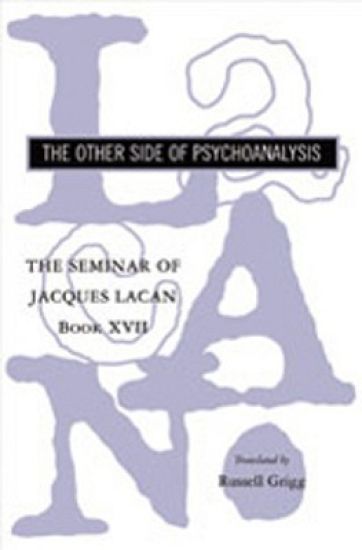
This new translation of Jacques Lacan's deliberation on psychoanalysis and contemporary social order offers welcome, readable access to the brilliant author's seminal thinking on Freud, Marx, and Hegel; patterns of social and sexual behavior; and the nature and function of science and knowledge in the contemporary world.
The Seminar of Jacques Lacan: The Ethics of Psychoanalysis
Lacan dedicates this seventh year of his famous seminar to the problematic role of ethics in psychoanalysis. Delving into the psychoanalyst's inevitable involvement with ethical questions and "the attraction of transgression," Lacan illuminates Freud's psychoanalytic work and its continued influence. Lacan explores the problem of sublimation, the paradox of jouissance, the essence of tragedy (a reading of Sophocle's Antigone), and the tragic dimension of analytic experience. His exploration leads us to startling insights on "the consequence of man's relationship to desire" and the conflicting judgments of ethics and analysis.
The Seminar of Jacques Lacan: The Four Fundamental Concepts of Psychoanalysis
This volume is based on a year's seminar in which Dr. Lacan addressed a larger, less specialized audience than ever before, among whom he could not assume familiarity with his work. For his listeners then, and for his readers now, he wanted to "introduce a certain coherence into the major concepts on which psycho-analysis is based," namely, the unconscious, repetition, the transference, and the drive. Along the way he argues for a structural affinity between psychoanalysis and language, discusses the relation of psychoanalysis to religion, and reveals his particular stance on topics ranging from sexuality and death to alienation and repression. This book constitutes the essence of Dr. Lacan's sensibility.
The Seminar of Jacques Lacan

The Seminar of Jacques Lacan

Jacques Lacan

WW Norton Co
2000
nidottu
Often controversial, always inspired, Jacques Lacan here weighs theories of the relationship between the desire for love and the attainment of knowledge from such thinkers as Aristotle, Marx, and Freud. He leads us through mathematics, philosophy, religion, and, naturally, psychoanalysis into an entirely new way of interpreting the two most fundamental human drives. Long anticipated by English-speaking readers, this annotated translation presents Lacan's most sophisticated work on love and desire.
The Seminar of Jacques Lacan

The Seminar of Jacques Lacan

Jacques Lacan

WW Norton Co
2008
nidottu
This new translation of Jacques Lacan's deliberation on psychoanalysis and contemporary social order offers welcome, readable access to the brilliant author's seminal thinking on Freud, Marx, and Hegel; patterns of social and sexual behavior; and the nature and function of science and knowledge in the contemporary world.
Jacques Lacan

Jacques Lacan

Elizabeth Grosz

Routledge
1990
nidottu
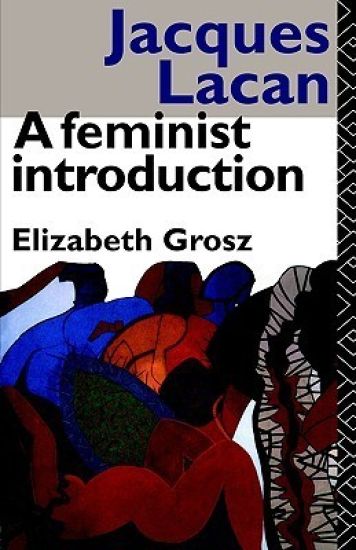
Grosz gives a critical overview of Lacan's work from a feminist perspective. Discussing previous attempts to give a feminist reading of his work, she argues for women's autonomy based on an indifference to the Lacanian phallus.
Jacques Lacan

Jacques Lacan

Anika Lemaire

Routledge
1979
nidottu
The work of Jaques Lacan, eminent French psychoanalyst and influential thinker (1901-1981), is recognized as being of vital importance to psychoanalysts, philosophers, and all those concerned with the the study of man and language. Its value is not limited to the field of psychoanalysis alone, but provides the basis for a new philosophy of man and a new theory of discourse. It is, however, notoriously difficult for the non-specialist reader to come to terms with Lacan's reading of Freud and his investigations of the unconscious. Until now, there has been no satisfactory general introduction to Lacan, and this first general exposition of his work, translated and revised from the French edition, is designed to provide the conceptual tools which will enable the reader to study Lacan using the original texts.
Jacques Lacan and the Freudian Practice of Psychoanalysis
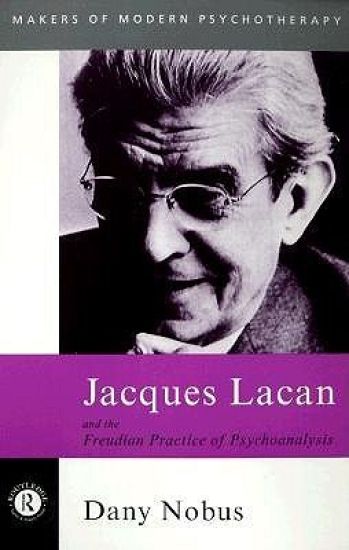
Jacques Lacan and the Freudian Practice of Psychoanalysis paints a completely new picture of the man and his ideas. The book suceeds in showing how ideas can become more accessible, and re-evaluates his significance within the field of psychodynamic psychotherapy.The book is structured thematically around five key issues: diagnosis, the analyst's position during the treatment, the management of transference, the formulation of interpretations, and the organisation of analytic training. For each of these issues, Lacan's entire work both published and unpublished material, has been taken into account and theoretical principles have been illustrated with clinical examples. The book also contains the first complete bibliography of Lacan's works in English.Clear, detailed, and wide ranging, Jacques Lacan and the Freudian Practice of Psychoanalysis will prove essential reading, not only for professionals and students within the fields of psychology and psychiatry, but for all those keen to discover a new Lacan.
Jacques Lacan

Jacques Lacan

Sean Homer

Routledge
2004
sidottu
Jacques Lacan is one of the most challenging and controversial of contemporary thinkers, as well as the most influential psychoanalyst since Freud. Lacanian theory has reached far beyond the consulting room to engage with such diverse disciplines as literature, film, gender and social theory. This book covers the full extent of Lacan's career and provides an accessible guide to Lacanian concepts and his writing on: the imaginary and the symbolic; the Oedipus Complex and the meaning of the phallus; the subject and the unconscious; the real; sexual difference.Locating Lacan's work in the context of contemporary French thought and the history of psychoanalysis, Sean Homer's Jacques Lacan is the ideal introduction to this influential theorist.
Jacques Lacan

Jacques Lacan

Sean Homer

Routledge
2004
nidottu
Jacques Lacan is one of the most challenging and controversial of contemporary thinkers, as well as the most influential psychoanalyst since Freud. Lacanian theory has reached far beyond the consulting room to engage with such diverse disciplines as literature, film, gender and social theory. This book covers the full extent of Lacan's career and provides an accessible guide to Lacanian concepts and his writing on: the imaginary and the symbolic; the Oedipus Complex and the meaning of the phallus; the subject and the unconscious; the real; sexual difference.Locating Lacan's work in the context of contemporary French thought and the history of psychoanalysis, Sean Homer's Jacques Lacan is the ideal introduction to this influential theorist.
Jacques Lacan
Presents a selection of texts covering the entire scope of the Lacan debate, focusing on four areas of Lacan's influence--psychoanalytic theory and practice; philosophy; society, politics, and ideology; and culture.
Jacques Lacan and Feminist Epistemology
This book outlines a compelling new agenda for feminist theories of identity and social relations. Using Lacanian psychoanalysis with feminist epistemology, the author sets out a groundbreaking psychoanalytic social theory. Campbell's work offers answers to the important contemporary question of how feminism can change the formation of gendered subjectivities and social relations. Drawing on the work of third wave feminists, the book shows how feminism can provide new political models of knowing and disrupt foundational ideas of sexual identity.Kirsten Campbell engages the reader with an original intepretation of Lacanian psychoanalysis and offers a compelling argument for a fresh commitment to the politics of feminism. Jacques Lacan and Feminist Epistemology will be essential reading for anyone with interests in gender studies, cultural studies, psychoanalytic studies or social and political theory.
Jacques Lacan and Feminist Epistemology
This book outlines a compelling new agenda for feminist theories of identity and social relations. Using Lacanian psychoanalysis with feminist epistemology, the author sets out a groundbreaking psychoanalytic social theory. Campbell's work offers answers to the important contemporary question of how feminism can change the formation of gendered subjectivities and social relations. Drawing on the work of third wave feminists, the book shows how feminism can provide new political models of knowing and disrupt foundational ideas of sexual identity.Kirsten Campbell engages the reader with an original intepretation of Lacanian psychoanalysis and offers a compelling argument for a fresh commitment to the politics of feminism. Jacques Lacan and Feminist Epistemology will be essential reading for anyone with interests in gender studies, cultural studies, psychoanalytic studies or social and political theory.
The Laban Sourcebook
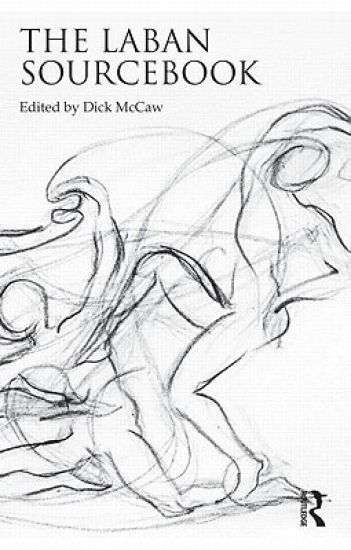
Rudolf Laban (1879 – 1958) was a pioneer in dance and movement, who found an extraordinary range of application for his ideas; from industry to drama, education and therapy. Laban believed that you can understand about human beings by observing how they move, and devised two complimentary methods of notating the shape and quality of movements. The Laban Sourcebook offers a comprehensive account of Laban’s writings. It includes extracts from his five books in English and from his four works in German, written in the 1920s and translated here for the first time. This book draws on archival research in England and Germany to chart the development of Laban’s groundbreaking ideas through a variety of documents, including letters, articles, transcripts of interviews, and his unpublished Effort and Recovery. It covers: The beginning of his career in Germany and Switzerland in the 1910s. His astonishing rise to fame in Germany in the 1920s as a dance teacher, choreographer and creator of public dance events. Following his move to England in 1938, the application of his ideas to drama, education, industry, and therapy.Each extract has a short preface providing contextual background, and highlighting and explaining key terms. Passages have been selected and are introduced by many of the world’s leading Laban scholars.
The Laban Sourcebook
Rudolf Laban (1879 – 1958) was a pioneer in dance and movement, who found an extraordinary range of application for his ideas; from industry to drama, education and therapy. Laban believed that you can understand about human beings by observing how they move, and devised two complimentary methods of notating the shape and quality of movements. The Laban Sourcebook offers a comprehensive account of Laban’s writings. It includes extracts from his five books in English and from his four works in German, written in the 1920s and translated here for the first time. This book draws on archival research in England and Germany to chart the development of Laban’s groundbreaking ideas through a variety of documents, including letters, articles, transcripts of interviews, and his unpublished Effort and Recovery. It covers: The beginning of his career in Germany and Switzerland in the 1910s. His astonishing rise to fame in Germany in the 1920s as a dance teacher, choreographer and creator of public dance events. Following his move to England in 1938, the application of his ideas to drama, education, industry, and therapy.Each extract has a short preface providing contextual background, and highlighting and explaining key terms. Passages have been selected and are introduced by many of the world’s leading Laban scholars.
Reading Lacan's Écrits: From ‘The Freudian Thing’ to 'Remarks on Daniel Lagache'
The Écrits was Jacques Lacan’s single most important text, a landmark in psychoanalysis which epitomized his aim of returning to Freud via structural linguistics, philosophy and literature. Reading Lacan’s Écrits is the first extensive set of commentaries on the complete edition of Lacan’s Écrits to be published in English. An invaluable document in the history of psychoanalysis, and one of the most challenging intellectual works of the 20th Century, Lacan’s Écrits still today begs the interpretative engagement of clinicians, scholars, philosophers and cultural theorists. The three volumes of Reading Lacan’s Écrits offer just this: a series of systematic paragraph-by-paragraph commentaries – by some of the world’s most renowned Lacanian analysts and scholars – on the complete edition of the Écrits, inclusive of lesser known articles such as ‘Kant with Sade’, ‘The Youth of Gide’, ‘Science and Truth’, ‘Presentation on Transference’ and ‘Beyond the "Reality Principle"'. The originality and importance of Lacan’s Écrits to psychoanalysis and intellectual history is matched only by the text’s notorious inaccessibility. Reading Lacan’s Écrits is an indispensable companion piece and reference-text for clinicians and scholars exploring Lacan's magnum opus. Not only does it contextualize, explain and interrogate Lacan's arguments, it provides multiple interpretative routes through this most labyrinthine of texts. Reading Lacan’s Écrits provides an incisive and accessible companion for psychoanalysts and psychoanalytic psychotherapists in training and in practice, as well as philosophers, cultural theorists and literary, social science and humanities researchers who wish to draw upon Lacan’s pivotal work.
Reading Lacan's Écrits: From ‘The Freudian Thing’ to 'Remarks on Daniel Lagache'
The Écrits was Jacques Lacan’s single most important text, a landmark in psychoanalysis which epitomized his aim of returning to Freud via structural linguistics, philosophy and literature. Reading Lacan’s Écrits is the first extensive set of commentaries on the complete edition of Lacan’s Écrits to be published in English. An invaluable document in the history of psychoanalysis, and one of the most challenging intellectual works of the 20th Century, Lacan’s Écrits still today begs the interpretative engagement of clinicians, scholars, philosophers and cultural theorists. The three volumes of Reading Lacan’s Écrits offer just this: a series of systematic paragraph-by-paragraph commentaries – by some of the world’s most renowned Lacanian analysts and scholars – on the complete edition of the Écrits, inclusive of lesser known articles such as ‘Kant with Sade’, ‘The Youth of Gide’, ‘Science and Truth’, ‘Presentation on Transference’ and ‘Beyond the "Reality Principle"'. The originality and importance of Lacan’s Écrits to psychoanalysis and intellectual history is matched only by the text’s notorious inaccessibility. Reading Lacan’s Écrits is an indispensable companion piece and reference-text for clinicians and scholars exploring Lacan's magnum opus. Not only does it contextualize, explain and interrogate Lacan's arguments, it provides multiple interpretative routes through this most labyrinthine of texts. Reading Lacan’s Écrits provides an incisive and accessible companion for psychoanalysts and psychoanalytic psychotherapists in training and in practice, as well as philosophers, cultural theorists and literary, social science and humanities researchers who wish to draw upon Lacan’s pivotal work.