Observera att förlaget som ger ut denna produkt baserar innehållet i sina produkter på fria källor som Wikipedia. Boken är med stor sannolikhet endast ett utdrag ur dessa informationskällor, alltså inte en vanlig bok i den bemärkelsen.
Observera att förlaget som ger ut denna produkt baserar innehållet i sina produkter på fria källor som Wikipedia. Boken är med stor sannolikhet endast ett utdrag ur dessa informationskällor, alltså inte en vanlig bok i den bemärkelsen.
Observera att förlaget som ger ut denna produkt baserar innehållet i sina produkter på fria källor som Wikipedia. Boken är med stor sannolikhet endast ett utdrag ur dessa informationskällor, alltså inte en vanlig bok i den bemärkelsen.
Observera att förlaget som ger ut denna produkt baserar innehållet i sina produkter på fria källor som Wikipedia. Boken är med stor sannolikhet endast ett utdrag ur dessa informationskällor, alltså inte en vanlig bok i den bemärkelsen.
Observera att förlaget som ger ut denna produkt baserar innehållet i sina produkter på fria källor som Wikipedia. Boken är med stor sannolikhet endast ett utdrag ur dessa informationskällor, alltså inte en vanlig bok i den bemärkelsen.
Observera att förlaget som ger ut denna produkt baserar innehållet i sina produkter på fria källor som Wikipedia. Boken är med stor sannolikhet endast ett utdrag ur dessa informationskällor, alltså inte en vanlig bok i den bemärkelsen.
Observera att förlaget som ger ut denna produkt baserar innehållet i sina produkter på fria källor som Wikipedia. Boken är med stor sannolikhet endast ett utdrag ur dessa informationskällor, alltså inte en vanlig bok i den bemärkelsen.
Observera att förlaget som ger ut denna produkt baserar innehållet i sina produkter på fria källor som Wikipedia. Boken är med stor sannolikhet endast ett utdrag ur dessa informationskällor, alltså inte en vanlig bok i den bemärkelsen.
Observera att förlaget som ger ut denna produkt baserar innehållet i sina produkter på fria källor som Wikipedia. Boken är med stor sannolikhet endast ett utdrag ur dessa informationskällor, alltså inte en vanlig bok i den bemärkelsen.
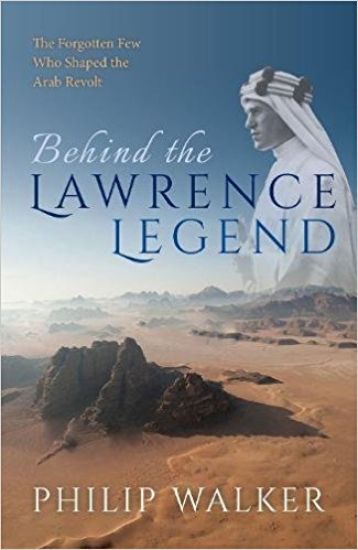
T. E. Lawrence became world-famous as 'Lawrence of Arabia', after helping Sherif Hussein of Mecca gain independence from Turkey during the Arab Revolt of 1916-18. His achievements, however, would have been impossible without the unsung efforts of a forgotten band of fellow officers and spies. This groundbreaking account by Philip Walker interweaves the compelling stories of Colonel Cyril Wilson and a colourful supporting cast with the narrative of Lawrence and the desert campaign. These men's lost tales provide a remarkable and fresh perspective on Lawrence and the Arab Revolt. While Lawrence and others blew up trains in the desert, Wilson and his men carried out their shadowy intelligence and diplomatic work. His deputies rooted out anti-British jihadists who were trying to sabotage the revolt. Meanwhile, Lieutenant Lionel Gray, a cipher officer, provided a gateway into unknown aspects of the revolt through his previously unpublished photographs and eyewitness writings. Wilson's crucial influence underpinned all these missions and steadied the revolt on a number of occasions when it could have collapsed. Without Wilson and his circle there would have been no 'Lawrence of Arabia'. Yet Wilson's band mostly fell through the cracks of history into obscurity. "Behind the Lawrence Legend" reveals their vital impact and puts Lawrence's efforts into context, thus helping to set the record straight for one of the most beguiling and iconic characters of the twentieth century.
In 1912 Lawrence Bragg explained the interaction of X-rays with crystals, and he and his father (William) thereby pioneered X-ray spectroscopy and X-ray crystallography. They then led the latter field internationally for 50 years, when most areas of science were transformed by the knowledge created: physics, chemistry, geology, materials science, electronics, and most recently biology and medical science. This book charts how this humble pair (William English, his son Australian) rose from obscurity to international prominence and then back to current, undeserved obscurity. Attention is also given to the crucial roles of both father and son during the dreadful years of the First World War, and to William's early and unshakeable belief in the dual wave and particle natures of radiation and his eventual vindication. Unlike earlier studies, the book highlights the intimate interactions between father and son that made their project possible, emphasizes personal, family, and wider human relationships, and offers new insights into teaching and research in a British colonial setting.
In 1912 Lawrence Bragg explained the interaction of X-rays with crystals, and he and his father, William thereby pioneered X-ray spectroscopy and X-ray crystallography. They then led the latter field internationally for fifty years, when most areas of science were transformed by the knowledge they created: physics, chemistry, geology, materials science, electronics, and most recently biology and medical science. This book charts how this humble pair (William English, his son Australian) rose from obscurity to international prominence and then back to current, undeserved obscurity. Attention is also given to the crucial roles of both father and son during the dreadful years of the First World War, and to William's early and unshakeable belief in the dual wave and particle natures of radiation and his eventual vindication. Unlike earlier studies, the book highlights the intimate interactions between father and son that made their project possible, emphasizes personal, family, and wider human relationships, and offers new insights into teaching and research in a British colonial setting.
Carefully controlled information, structure and vocabularyGlossary at the back of the book explains some of the difficult words and phrasesThe book has around 1400 basic words for Pre-intermediate-level studentsPoints for Understanding section and Exercises contained within the back of the book
An investigation of T.E. Lawrence's life-long interest in the medieval world, particularly with regard to medieval literature, and its considerable influence on himself and his view of the Arabs with whom he fought during World War I.
M. D. Allen's study deals with T. E. Lawrence's lifelong interest in the medieval world, especially medieval literature, and its considerable influence on his view of himself and of the Arabs with whom he fought in an archaic theater of war, and hence his own literary production. The Medievalism of Lawrence of Arabia investigates the influence Lawrence's interest in medieval life and literature had on his attitudes toward life in general and—in content, theme, and diction—on his masterpiece, Seven Pillars of Wisdom, in particular. Allen begins with a brief biography of Lawrence—his early interest in things medieval and his somewhat controversial BA thesis on crusader castles. Allen then reveals the extent to which Lawrence's ideas about honor, warfare, and chivalry in the Arab war against the Turks were shaped by his reading in medieval writings such as Malory's Morte d'Arthur. (Both, as he makes clear, were warrior societies dominated by horses.) Lawrence's reading in the nineteenth-century medievalism is also explored, as in Tennyson's Idylls of the King, and Ruskin's writing on art, where the parallel between Ruskin's ideas on ornament and Lawrence's ideas about the dignity of war is demonstrated. Allen then identifies the medieval and neomedieval texts of Seven Pillars of Wisdom and shows why and to what effect Lawrence borrowed from chivalric, neochivalric, and pseudochivalric works, and sometimes transmogrified them, revealing Lawrence's greatest inspiration to be an English translation of the Moallakat (which is, so to speak, the Arabic Beowulf). Allen sheds new light on many aspects of the influence of medievalism on Lawrence's thought and writing.