Kirjojen hintavertailu. Mukana 12 390 323 kirjaa ja 12 kauppaa.

Kirjahaku

Etsi kirjoja tekijän nimen, kirjan nimen tai ISBN:n perusteella.

1000 tulosta hakusanalla Lynn Faherty

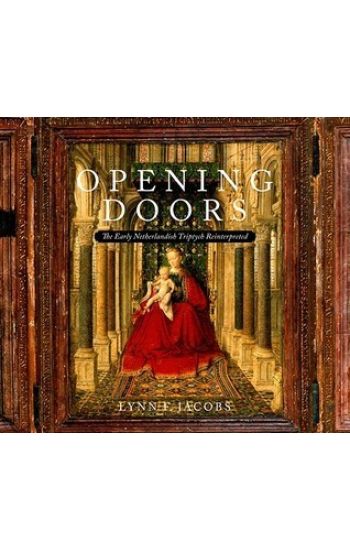
Opening Doors

Opening Doors

Lynn F. Jacobs

Pennsylvania State University Press
2012
sidottu
Opening Doors is the first book of its kind: a comprehensive study of the emergence and evolution of the Netherlandish triptych from the early fifteenth through the early seventeenth centuries. The modern term “triptych” did not exist during the period Lynn Jacobs discusses. Rather, contemporary French, Dutch, and Latin documents employ a very telling description—they call the triptych a “painting with doors.” Using this term as her springboard, Jacobs considers its implications for the structure and meaning of the triptych. The fundamental nature of the format created doors that established thresholds, boundaries, and interconnections between physical parts of the triptych—the center and wings, the interior and the exterior—and between types of meaning, the sacred and the earthly, different narrative moments, different spaces, different levels of status, and, ultimately, different worlds. Moving chronologically from early triptychs such as Campin’s Mérode Triptych and Van Eyck’s Dresden Triptych to sixteenth-century works by Bosch, and closing with a discussion of Rubens, Jacobs considers how artists negotiated the idea of the threshold. From her analysis of Campin’s ambiguous divisions between the space represented across the panels, to Van der Weyden’s invention of the “arch motif” that organized relations between the viewer and the painting, to Van der Goes’s complex hierarchical structures, to Bosch’s unprecedentedly unified spaces, Jacobs shows us how Netherlandish artists’ approach to the format changed and evolved, culminating in the early seventeenth century with Rubens’s great Antwerp altarpieces.
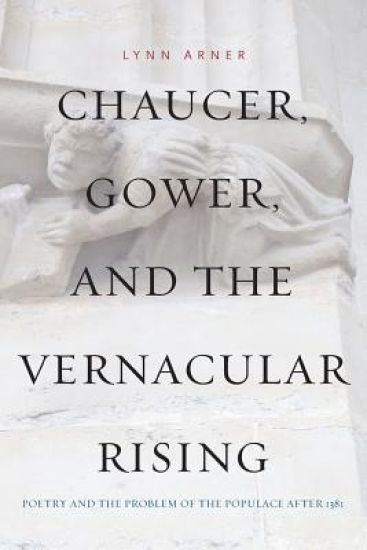
Chaucer, Gower, and the Vernacular Rising

Chaucer, Gower, and the Vernacular Rising

Lynn Arner

Pennsylvania State University Press
2013
sidottu
Chaucer, Gower, and the Vernacular Rising examines the transmission of Greco-Roman and European literature into English during the late fourteenth and early fifteenth centuries, while literacy was burgeoning among men and women from the nonruling classes. This dissemination offered a radically democratizing potential for accessing, interpreting, and deploying learned texts. Focusing primarily on an overlooked sector of Chaucer’s and Gower’s early readership, namely, the upper strata of nonruling urban classes, Lynn Arner argues that Chaucer’s and Gower’s writings engaged in elaborate processes of constructing cultural expertise. These writings helped define gradations of cultural authority, determining who could contribute to the production of legitimate knowledge and granting certain socioeconomic groups political leverage in the wake of the English Rising of 1381. Chaucer, Gower, and the Vernacular Rising simultaneously examines Chaucer’s and Gower’s negotiations—often articulated at the site of gender—over poetics and over the roles that vernacular poetry should play in the late medieval English social formation. This study investigates how Chaucer’s and Gower’s texts positioned poetry to become a powerful participant in processes of social control.
Chaucer, Gower, and the Vernacular Rising

Chaucer, Gower, and the Vernacular Rising

Lynn Arner

Pennsylvania State University Press
2015
pokkari
Chaucer, Gower, and the Vernacular Rising examines the transmission of Greco-Roman and European literature into English during the late fourteenth and early fifteenth centuries, while literacy was burgeoning among men and women from the nonruling classes. This dissemination offered a radically democratizing potential for accessing, interpreting, and deploying learned texts. Focusing primarily on an overlooked sector of Chaucer’s and Gower’s early readership, namely, the upper strata of nonruling urban classes, Lynn Arner argues that Chaucer’s and Gower’s writings engaged in elaborate processes of constructing cultural expertise. These writings helped define gradations of cultural authority, determining who could contribute to the production of legitimate knowledge and granting certain socioeconomic groups political leverage in the wake of the English Rising of 1381. Chaucer, Gower, and the Vernacular Rising simultaneously examines Chaucer’s and Gower’s negotiations—often articulated at the site of gender—over poetics and over the roles that vernacular poetry should play in the late medieval English social formation. This study investigates how Chaucer’s and Gower’s texts positioned poetry to become a powerful participant in processes of social control.
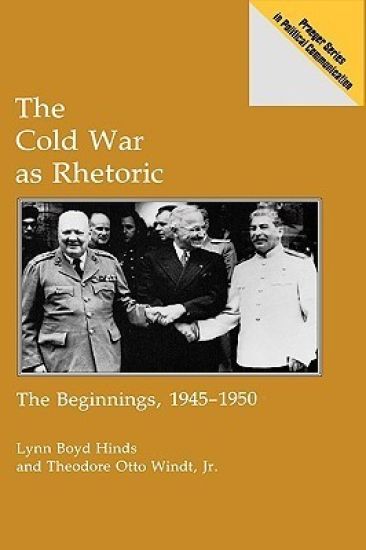
The Cold War as Rhetoric

The Cold War as Rhetoric

Lynn B. Hinds; Theodore O. Windt

Praeger Publishers Inc
1991
sidottu
Rhetoric, Lynn Boyd Hinds and Theodore Windt argue, is central to shaping both political consciousness and political culture. In this important new contribution to Praeger's Series in Political Communication, they examine how the rhetoric of the early Cold War years was used to create and develop a national and international reality. The pervasive political view of events, motives, actions, and policy was largely created in the years between 1945 and 1950 and grew from a pre-existing set of rhetorical beliefs as well as from the political speeches and pronouncements of the time. Hinds and Windt focus their study on American rhetoric applied to Soviet-American relations, centering essentially on Europe. They offer a brief outline of the theoretical principles used in their analysis, and follow with a look at certain images of the USSR selected for use by American politicians. In subsequent chapters, the authors trace developments from the end of World War II to Winston Churchill's Iron Curtain speech, thoroughly explore the British leader's address and its effect in dividing the world into two warring camps, analyze the writing and presentation of the 1947 Truman Doctrine and its suggestion of two ways of life, and detail the Truman Loyalty Program and the 1947 House Committee on Un-American Activities hearings in Hollywood. The remaining chapters discuss George Marshall's address originating the European Recovery Act, George Kennan's Sources of Soviet Conduct, contemporary critics, and such proofs as the Korean War, which showed the rhetoric to be correct. This work will be an important reference tool for courses in political communication, American history, political science, and presidential studies, and a useful addition to library collections.
Bastard Keynesianism

Bastard Keynesianism

Lynn Turgeon

Praeger Publishers Inc
1997
nidottu
The thinking of John Maynard Keynes is still relevant to successful development of the advanced capitalistic system as is shown by evolution of economic thinking since World War II. The changes in economic thinking in the United States and in the world are described, with a chapter devoted to each presidency from Eisenhower to Clinton. The importance of Military Keynesianism in winning the Cold War is described along with similarities and differences between the various national administrations.
Florence Nightingale

Florence Nightingale

Lynn McDonald

SPCK Publishing
2017
pokkari
Florence Nightingale is remembered in history for the part she played in nursing wounded soldiers during the Crimean War and is often credited as the founder of modern nursing. In this brand new introduction, Lynn McDonald explores the social, political and religious factors that formed the original context of her life and writings such as her faith in a secular world, the Crimean War and the founding of a new profession, before considering how those factors affected the way she was initially received before turning to the intellectual and cultural 'afterlife' of Florence Nightingale. Part One: The History (What do we know?) This brief historical introduction to Florence Nightingale explores the social, political and religious factors that formed the original context of her life and writings, and considers how those factors affected the way she was initially received. What was her impact on the world at the time and what were the key ideas and values connected with her? Part Two: The Legacy (Why does it matter?) This second part explores the intellectual and cultural 'afterlife' of Florence Nightingale, and considers the ways in which her impact has lasted and been developed in different contexts by later generations. Why is she still considered important today? In what ways is her legacy contested or resisted? And what aspects of her legacy are likely to continue to influence the world in the future? The book has a brief chronology at the front plus a list of further reading at the back.
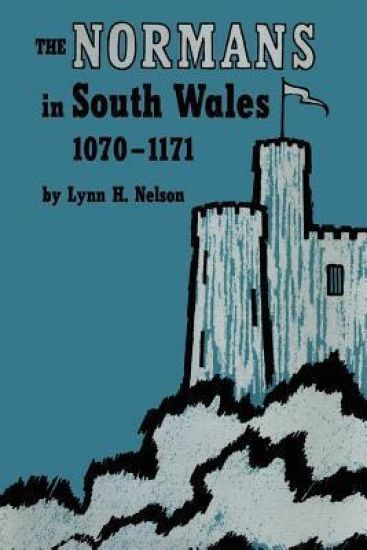
The Normans in South Wales, 1070–1171

The Normans in South Wales, 1070–1171

Lynn H. Nelson

University of Texas Press
1966
nidottu
A frontier has been called "an area inviting entrance." For the Norman invaders of England the Welsh peninsula was such an area. Fertile forested lowlands invited agricultural occupation; a fierce but primitive and disunited native population was scarcely a formidable deterrent. In The Normans in South Wales, Lynn H. Nelson provides a comprehensive history of the century during which the Normans accomplished this occupation. Skillfully he combines facts and statistics gleaned from a variety of original sources-The Anglo-Saxon Chronicle, the Domesday Book, Church records, charters of the kings and of the marcher lords, and more imaginative literary sources such as the chanson de geste and the frontier epic-to give a vivid picture of a century of strife. He describes the fluctuating conflict between Norman invaders in the lowlands and Welsh tribesmen in the highlands; the hard struggle of medieval frontiersmen to take from the new land a profit commensurate with their labors; the development of a Cambro-Norman society distinct and quite different from the Anglo-Norman culture which engendered it; and the attempt of the frontiersman to prevent the Anglo-Norman authorities from taking control of the lands he had won. The turbulent Welsh tribes provided an ever present harassment along the frontier, and Nelson begins his presentation with an account of the failure of the Saxons to control them. He examines the methods adopted by William the Conqueror to cope with the problem-the creation of the great marcher lordships and the subsequent problems in controlling these lordships-and the weakness of some Anglo-Norman kings and the strength of others. By 1171 the conquest of the Welsh frontier was complete; but as Nelson points out, this conquest was strangely limited. The frontier, which extended throughout the lowlands of Wales, stopped at the 600-foot contour line in the mountains. In his final chapter Nelson speculates upon the curious fact that large areas of seemingly inviting moorlands lying above this line remained closed to the Cambro-Norman, and his speculations lead him to some interesting inferences about the nature of the frontier's influence upon the civilization which moves in to occupy it.
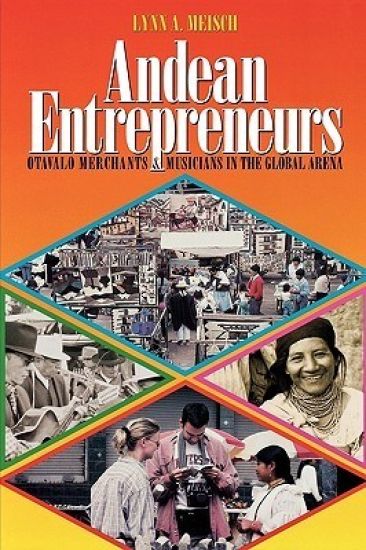
Andean Entrepreneurs

Andean Entrepreneurs

Lynn A. Meisch

University of Texas Press
2002
pokkari
Native to a high valley in the Andes of Ecuador, the Otavalos are an indigenous people whose handcrafted textiles and traditional music are now sold in countries around the globe. Known as weavers and merchants since pre-Inca times, Otavalos today live and work in over thirty countries on six continents, while hosting more than 145,000 tourists annually at their Saturday market.In this ethnography of the globalization process, Lynn A. Meisch looks at how participation in the global economy has affected Otavalo identity and culture since the 1970s. Drawing on nearly thirty years of fieldwork, she covers many areas of Otavalo life, including the development of weaving and music as business enterprises, the increase in tourism to Otavalo, the diaspora of Otavalo merchants and musicians around the world, changing social relations at home, the growth of indigenous political power, and current debates within the Otavalo community over preserving cultural identity in the face of globalization and transnational migration. Refuting the belief that contact with the wider world inevitably destroys indigenous societies, Meisch demonstrates that Otavalos are preserving many features of their culture while adopting and adapting modern technologies and practices they find useful.
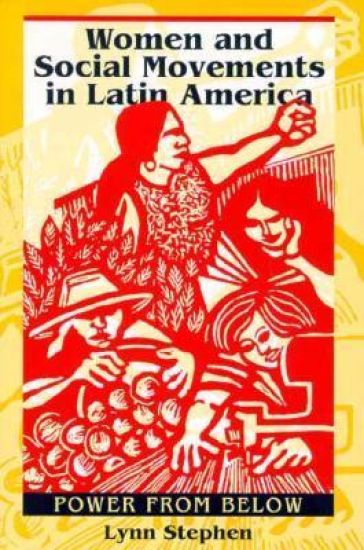
Women and Social Movements in Latin America

Women and Social Movements in Latin America

Lynn Stephen

University of Texas Press
1997
pokkari
Women's grassroots activism in Latin America combines a commitment to basic survival for women and their children with a challenge to women's subordination to men. Women activists insist that issues such as rape, battering, and reproductive control cannot be divorced from women's concerns about housing, food, land, and medical care.This innovative, comparative study explores six cases of women's grassroots activism in Mexico, El Salvador, Brazil, and Chile. Lynn Stephen communicates the ideas, experiences, and perceptions of women who participate in collective action, while she explains the structural conditions and ideological discourses that set the context within which women act and interpret their experiences. She includes revealing interviews with activists, detailed histories of organizations and movements, and a theoretical discussion of gender, collective identity, and feminist anthropology and methods.
Death of a Department Chair

Death of a Department Chair

Lynn C. Miller

Terrace Books
2006
nidottu
In ""Death of a Department Chair"", protagonist Miriam Held recounts the events of the previous fall when she was suspected of killing Isabel Vittorio, the chair of her department and her former lover. The controversial and contrary Vittorio was, at the time of her death, attempting to block the hire of a brilliant African American female professor. Already under siege for her attempts to increase diversity on campus, Miriam is forced to defend her reputation and her life. As she searches for the truth, Miriam amasses evidence that leaves few friends and colleagues free from suspicion. Both a classic whodunit and a witty satire, ""Death of a Department Chair"" dramatizes how communities can create the very climate of mistrust and paranoia that victimizes them.
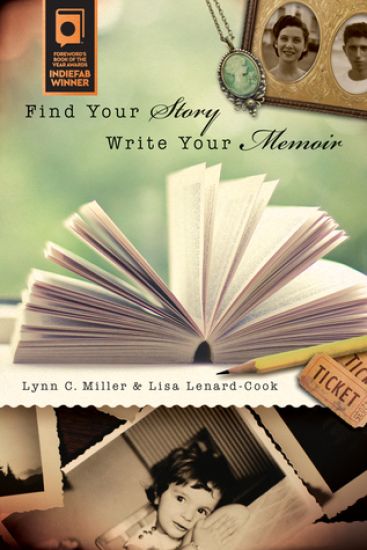
Find Your Story, Write Your Memoir

Find Your Story, Write Your Memoir

Lynn C. Miller; Lisa Lenard-Cook

University of Wisconsin Press
2013
nidottu
Every person has a story to tell, but few beginners know how to uncover their story's narrative potential. And despite a growing interest among students and creative writers, few guides to the genre of memoirs and creative nonfiction highlight compelling storytelling strategies. Addressing that gap, authors Lynn C. Miller and Lisa Lenard-Cook have provided a compact, accessible guide to memoir writing that shows how an aspiring memoir writer can use storytelling tools and tactics borrowed from fiction to weave personal experiences into the shape of a story.Find Your Story, Write Your Memoir offers an overview of the building blocks of memoir writing. Individual chapters focus on key issues and challenges, such as the balance between the remembering narrator and the experiencing narrator, the capacity to honour the subjective voice, the occasion of telling (why does this narrator tell this story now?), creating an organically functional structure for a particular story, and taking the next steps with a written memoir. Drawing on their combined years of experience teaching memoir writing, authoring works of fiction and nonfiction, and working in autobiographical performance, Miller and Lenard-Cook provide a practical guide whose core philosophy is motivated by a key word: story.
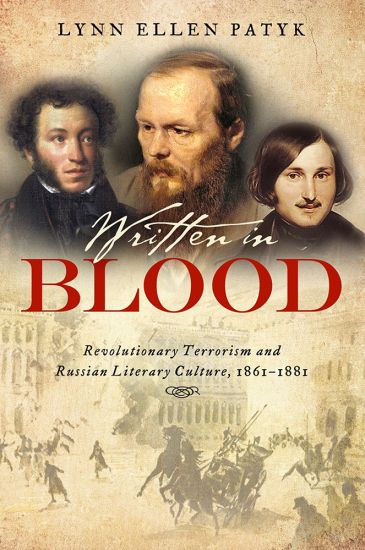
Written in Blood

Written in Blood

Lynn Ellen Patyk

University of Wisconsin Press
2017
sidottu
Written in Blood offers a fundamentally new interpretation of the emergence of modern terrorism, arguing that it formed in the Russian literary imagination well before any shot was fired or bomb exploded. In March 1881, Russia stunned the world when a small band of revolutionaries calling themselves ""terrorists"" assassinated the Tsar-Liberator, Alexander II. Horrified Russians blamed the influence of European political and social ideas, while shocked Europeans perceived something new and distinctly Russian in a strategy of political violence that became known the world over as ""terrorism"" or ""the Russian method.""Lynn Ellen Patyk contends that the prototype for the terrorist was the Russian writer, whose seditious word was interpreted as an audacious deed—and a violent assault on autocratic authority. The interplay and interchangeability of word and deed, Patyk argues, laid the semiotic groundwork for the symbolic act of violence at the center of revolutionary terrorism. While demonstrating how literary culture fostered the ethos, pathos, and image of the revolutionary terrorist and terrorism, she spotlights Fyodor Dostoevsky and his ""terrorism trilogy""—Crime and Punishment (1866), Demons (1870–73), and The Brothers Karamazov (1878–80)—as novels that uniquely illuminate terrorism's methods and trajectory. Deftly combining riveting historical narrative with penetrating literary analysis of major and minor works, Patyk's groundbreaking book reveals the power of the word to spawn deeds and the power of literature to usher new realities into the world.
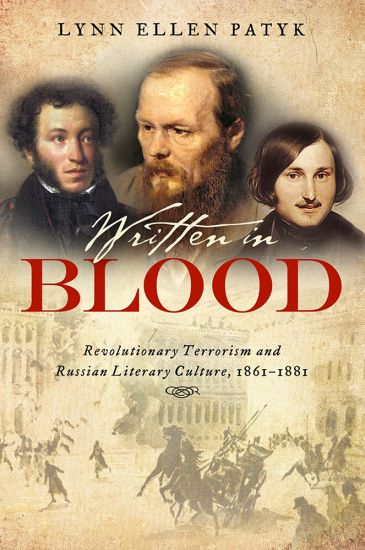
Written in Blood

Written in Blood

Lynn Ellen Patyk

University of Wisconsin Press
2020
nidottu
Written in Blood offers a fundamentally new interpretation of the emergence of modern terrorism, arguing that it formed in the Russian literary imagination well before any shot was fired or bomb exploded. Lynn Ellen Patyk contends that the prototype for the terrorist was the Russian writer, whose seditious word was interpreted as an audacious deed - and a violent assault on autocratic authority. Deftly combining riveting historical narrative with penetrating literary analysis of major and minor works, Patyk's groundbreaking book reveals the power of the word to spawn deeds and the power of literature to usher new realities into the world.
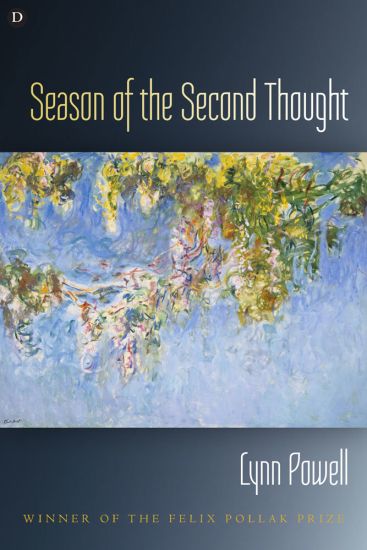
Season of the Second Thought

Season of the Second Thought

Lynn Powell

University of Wisconsin Press
2017
nidottu
Winner of the Felix Pollak Prize in Poetry, selected by Robert WrigleySeason of the Second Thought begins in a deep blue mood, longing to find words for what feels beyond saying. Lynn Powell's poems journey through the seasons, quarreling with the muse, reckoning with loss, questioning the heart and its ""pedigree of Pentecost,"" and seeking out paintings in order to see inside the self. With their crisp observations and iridescent language, these poems accumulate the bounty of an examined life. These lines emerge from darkness into a shimmering equilibrium—witty, lush, and hard-won.
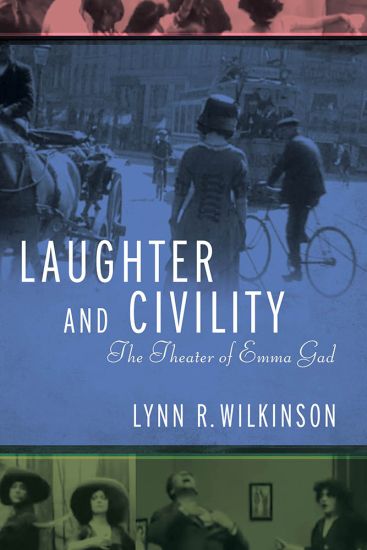
Laughter and Civility

Laughter and Civility

Lynn R. Wilkinson

University of Wisconsin Press
2020
sidottu
Emma Gad (1852-1921) was a prolific Danish playwright at the turn of the twentieth century. With sparkling prose and witty dialogue, Gad's ambitious and sophisticated theatrical productions raised important and still pressing questions about sexuality and morality-including the status of women in marriage, divorce, same-sex desire, and marital infidelity. Through her plays she engaged with contemporaries like Henrik Ibsen, Oscar Wilde, and George Bernard Shaw, yet she is primarily remembered for her etiquette book, Takt og Tone.Laughter and Civility, the first biographical and scholarly volume to examine and contextualize her dramas, deeply explores how and why influential women are so often excluded from the canon. Lynn R. Wilkinson provides insightful readings into all twenty-five of Gad's plays and demonstrates how writers and intellectuals of the time, including Georg and Edvard Brandes, took her critically acclaimed work seriously. This volume rightfully reinstates Emma Gad's work into the repertory of European drama and is crucial for scholars interested in turn-of-the-century Scandinavian drama, literature, culture, and politics.
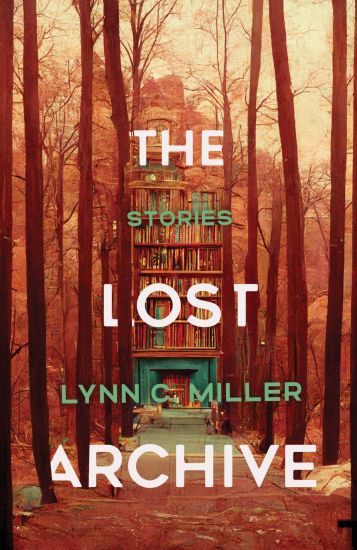
The Lost Archive

The Lost Archive

Lynn C. Miller

UNIVERSITY OF WISCONSIN PRESS
2023
nidottu
The characters—young and old, queer and straight, contemporary and historical—who inhabit Lynn C. Miller’s stories often find themselves in defining moments and crisis situations. As they search through the archives of memory, truth, and experience, they seek to understand not only the past and present but themselves. Stretching the definition of “archive,” Miller builds interconnected webs that surprise, much like the seemingly random papers collected in a box of materials. Fraught relationships, mistaken identities, mysterious disappearances, and the search for love play out in these stories. Friendships are celebrated, ex-husbands cross the line, and Gertrude Stein attempts to write her memoir. An unusual collection that proves greater than the sum of its parts, The Lost Archive will haunt readers with the intensity of its vision.
The Surrogate

The Surrogate

Lynn C. Miller

UNIVERSITY OF WISCONSIN PRESS
2026
nidottu
Alex Ross, a thirty-year-old psychologist, enjoys the benefits of a close-knit family: her mother and aunt are twins married to two close friends, and Alex and her cousins, Rolf and Stephen, grew up as if they were siblings. When Rolf is killed in a car accident, Alex’s entire family spins into grief and chaos. Nathaniel, a mysterious art museum curator, soon enters their lives and seems to offer the family solace. Frannie, Rolf’s mother, becomes infatuated with the young man; Alex, who split with her long-term girlfriend in the aftermath of Rolf’s death, finds herself deeply attracted to him. Only Stephen mistrusts Nathaniel—but he soon becomes consumed with the nationwide financial crisis threatening the family’s stability. Will Alex choose Nathaniel over her loyalty to Stephen? Torn between competing desires, fueled by her lifelong but unexamined love of Rolf, she must turn her own training as a psychologist on herself in order to find peace amid the turmoil all around.
Origins of Sex

Origins of Sex

Lynn Margulis; Dorion Sagan

Yale University Press
1990
pokkari
A fascinating and detailed examination of the evolution—and occasional devolution—of sexuality in microorganisms and more complex forms of life. Margulis and Sagan trace sex from its inauspicious beginnings in bacteria threatened by ultraviolet radiation to its intimate relation with the origin of mitotic division of nucleated cells. The origin of meiotic sex through cannibalism followed by centriole reproductive tardiness and the connection of cell symbiosis to sex and differentiation are explored.“The authors have not only given us a new and exiting scenario for the evolution of sex, but have also provided us with critical ways in which we can test their hypotheses. . . . This is a stimulating book that is sure to invoke criticism and discussion; I strongly recommend it.”—Symbiosis“The book is well organized and well written, leading the reader from one thought to another almost effortlessly. Background information is presented to aid those of us who are not experts in this field, and a glossary is appended. The book could be used at all levels of study, from interested undergraduates in general biology though postdoctoral students of genetics and evolution. I recommend this thought-provoking book to you for both your enjoyment and your enlightenment.”—Richard W. Cheney, Jr., Journal of College Science Teaching“This book, undoubtedly controversial, is a thoughtful and original contribution to an important aspect of cellular biology.”—John Langridge
Supervision and Leadership in Tourism and Hospitality

Supervision and Leadership in Tourism and Hospitality

Lynn Van Der Wagen; Christine Davies

Cengage Learning EMEA
2000
nidottu
A guide to all aspects of leadership, for any student who wants to become a supervisor or manager in the tourism and hospitality industry. The main focus is on managing workplace operations. Emphasis is also placed on the management of staff, including job design, selection and training, and monitoring workplace performance. The book also deals with policies and procedures in detail, including occupational health and safety.