
Kirjahaku
Etsi kirjoja tekijän nimen, kirjan nimen tai ISBN:n perusteella.
1000 tulosta hakusanalla Magda

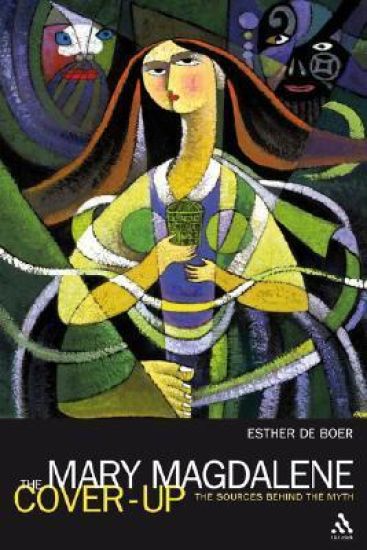
Mary Magdalene has always been the subject of both popular and scholarly intrigue. Was she the wife of Jesus, his complete initiate, a Goddess or a priestess? Did the Church dramatically alter her image to deny her importance? These questions have inspired representations of her in art, film and literature, from "Caravaggio" to "The Last Temptation of Christ" and "The Da Vinci Code". The "Mary Magdalene Cover-Up" is the first book to bring the original sources that have informed our current day view of Mary to a wider audience. Esther de Boer has brought together an impressive array of texts from the first century, when Mary Magdalene was alive, to the sixth century, when her image as a penitent sinner was invented. Each text is accompanied by an informed and lively commentary by the author placing it in its historical context. This combination of original texts and commentary enables the reader to draw their own conclusions about this most enigmatic of first-century women.
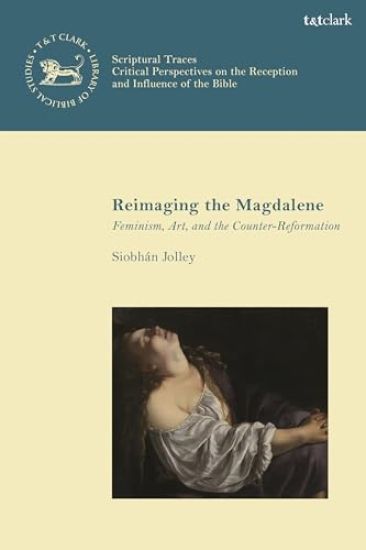
This book offers a new, intersectional feminist approach to utilising and interpreting the visual reception of Mary Magdalene. Through employment of Liberative Reception Criticism, which develops traditional reception theory in line with liberative hermeneutics, via the insights of intersectionality as critical theory, Siobhán Jolley provides a novel means of analysing how women, and particularly the Magdalene, are imaged in Christian tradition. Knowledge of both the biblical figure of Mary Magdalene and her cultural reception continue to be dominated by long-discredited ideas about her life and sexuality, which bear the hallmarks of their development under patriarchy. Through close study of relevant biblical texts and extracanonical accounts, and a comprehensive survey of the Magdalene’s presentation in the Italian art of the Counter-Reformation, Jolley demonstrates that the patriarchal portrayal of the Magdalene as a sexualised penitent and mournful witness to the resurrection is sustained by its mythic attachment to biblical text. Rather than adopting the same tropes uncritically, we are invited to look again at artworks and related texts in order to explore what happens when the influence of patriarchy is actively and intersectionally resisted. Ultimately, the Magdalene is transformed from a reductive and patriarchally mythologised figure to a multidimensional character, who is relatable and liberative as an exemplar.
This book offers a new, intersectional feminist approach to utilising and interpreting the visual reception of Mary Magdalene. Through employment of Liberative Reception Criticism, which develops traditional reception theory in line with liberative hermeneutics, via the insights of intersectionality as critical theory, Siobhán Jolley provides a novel means of analysing how women, and particularly the Magdalene, are imaged in Christian tradition. Knowledge of both the biblical figure of Mary Magdalene and her cultural reception continue to be dominated by long-discredited ideas about her life and sexuality, which bear the hallmarks of their development under patriarchy. Through close study of relevant biblical texts and extracanonical accounts, and a comprehensive survey of the Magdalene’s presentation in the Italian art of the Counter-Reformation, Jolley demonstrates that the patriarchal portrayal of the Magdalene as a sexualised penitent and mournful witness to the resurrection is sustained by its mythic attachment to biblical text. Rather than adopting the same tropes uncritically, we are invited to look again at artworks and related texts in order to explore what happens when the influence of patriarchy is actively and intersectionally resisted. Ultimately, the Magdalene is transformed from a reductive and patriarchally mythologised figure to a multidimensional character, who is relatable and liberative as an exemplar.
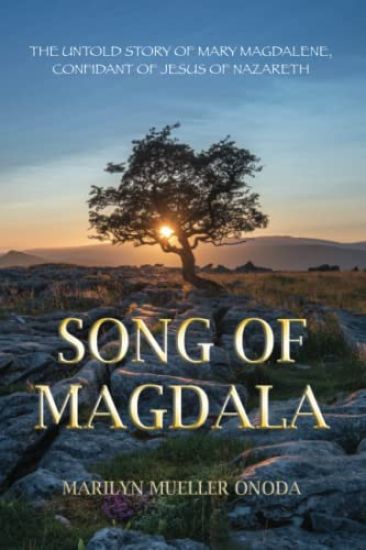
Mary Magdalene is the closest eyewitness to Jesus of Nazareth. Song of Magdala brings to life her legend. The saying, "Behind every great man is a great woman," applies to this book. Jesus, the great man, receives the help and support of this great woman.Mary Magdalene gives her eyewitness account of Jesus' ministry from their days in Galilee and Judea, all the way to his death and resurrection. She reveals much that history never recorded-personal and public aspects about Jesus and the disciples; things that only she is privy to-secrets that Jesus shared with only her.This is a very timely book in that the world needs a clear example of forgiveness and unconditional love. Through Mary's experiences one can see the example of ending racism, hatred, and resentment. Jesus ended the Old Testament tenet, "A tooth for a tooth..." He introduced a new concept of "turning the cheek," translated into modern terms, if you hit me, I must forgive it and return it with an act of love.Her life in history is a legend but her name is recorded in the books of the New Testament. Who was this great woman who walked and lived with the greatest man that ever lived?Read and find out their true to life story.
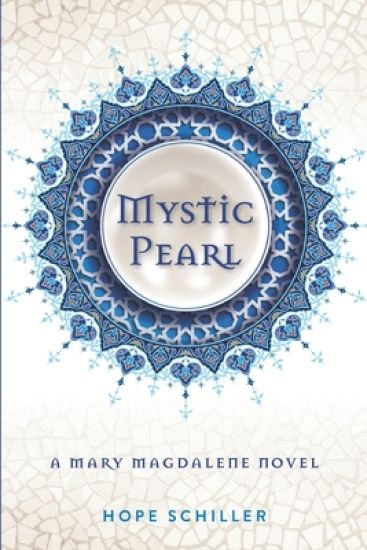
MARY MAGDALENE WAS NEVER A PROSTITUTE. INSTEAD, MARY OF MAGDALA was a spoiled, rich Jewish aristocrat who committed every kind of sin as she matured. Brave, intelligent and adventurous, this young woman questioned the patriarchal Hebrew faith, and embarked on a spiritual journey that led her to the university in Alexandria, Egypt. There, she embraced the excesses of this Roman city, a place Hebrews saw as filled with debauchery. When she finished her studies, she took over the family fishing village on the Sea of Galilee, where she eventually met Jesus of Nazareth. Mary Magdalene becomes a disciple of Jesus; and before he dies, Jesus calls her Apostle of the Apostles. In 1969, the Roman Catholic Church formally acknowledged Mary Magdalene was never a prostitute, and yet this is still common knowledge in the United States. The Vatican, in fact, announced that she was the Apostle of the Apostles. Finally, in 2006, Mary Magdalene was canonized by the Catholic Church. Her recognition is long overdue.
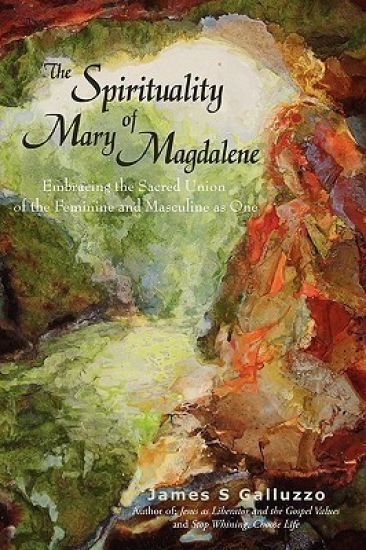
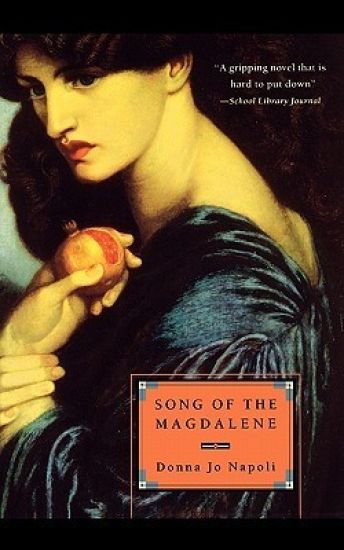
The story of a teenage Mary Magdalene -- here called Miriam -- is finally told.... When the world goes dark and her mind explodes within her, Miriam's future is shattered. In ancient Israel such seizures make her unclean. If anyone finds out about them, she will be an outcast. Only Abraham -- the son of Hannah, her caretaker -- shares her secret. Abraham, too, is afflicted -- a perfect mind in an imperfect body -- and to the villagers he is an idiot. To Miriam he is a savior....
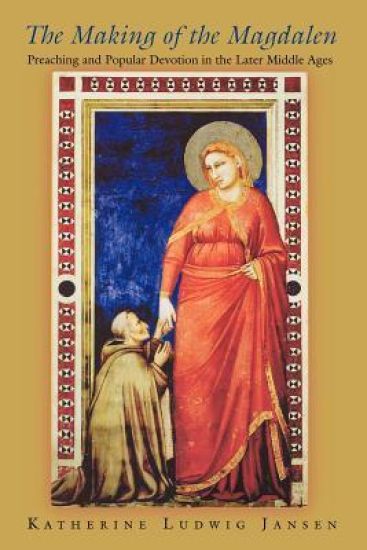
Best known during the Middle Ages as the prostitute who became a faithful follower of Christ, Mary Magdalen was the most beloved female saint after the Virgin Mary. Why the Magdalen became so popular, what meanings she conveyed, and how her story evolved over the centuries are the focus of this compelling exploration of late medieval religious culture. Analyzing previously unpublished sermons, Katherine Jansen uses the lens of medieval preaching to examine the mendicant friars' transformation of Mary Magdalen, a shadowy gospel figure, into an emblem of action and contemplation, a symbol of vanity and lust, a model of perfect penance, and the embodiment of hope and salvation. She draws on diverse historical sources to reveal the laity's devotion to Mary Magdalen, which departed significantly from the friars' image of the saint, signaling a major development in popular religious practice and personal piety. Finally, the author comprehensively addresses the question of the House of Anjou's alliance with the Magdalen, and illuminates the relationship between politics and sanctity in southern France and Italy. Jansen shows how perceptions of the Magdalen merged with errors and misunderstandings to shape the social, spiritual, and political agendas of the later Middle Ages. She brings to life the rich complexity of medieval culture, which condemned female sexuality and women's preaching and yet popularized the veneration of Mary Magdalen as a former prostitute chosen by Christ to be the "apostle of the apostles," the first to witness and preach the Good News of the Resurrection.
Nueve d as de rezo, que medita los hechos relevantes de la vida de Santa Mar a Magdalena como disc pula de Jes s, hasta convertirse en la Ap stol de ap stoles. Esta novena cuenta con la debida aprobaci n de la Iglesia Cat lica otorgado por un sacerdote censor del departamento de teolog a de la Pontificia Universidad Cat lica de Puerto Rico, y el Imprim tur del actual Obispo de la di cesis de Ponce (Puerto Rico). Contiene informaci n biogr fica sobre esta gran Santa, que se aparta de la imagen controversial presentada en la cultura popular, as como de la imagen tradicional como penitente. Se comienza con la Se al de la Cruz y el Acto de arrepentimiento, para luego pasar a la oraci n del d a correspondiente, y termina cada d a con la Oraci n final. Tambi n contiene tres oraciones adicionales: Oraci n por los matrimonios, Oraci n de las mujeres de fe y una Oraci n devocional. Estas son opcionales y aparte de la novena.

Someday,” Candelaria Garcia said to the author, “you will get all the stories.” It was a tall order in Magdalena, New Mexico, a once booming frontier town where Navajo, Anglo, and Hispanic peoplehave lived in shifting, sometimes separate, sometimes overlapping worlds for well over a hundred years. But these were the stories,and this was the world, that David Wallace Adams set out to map, in a work that would capture the intimate, complex history of growing up in a Southwest borderland. At the intersection of memory, myth, andhistory, his book asks what it was like to be a child in a land of ethnic and cultural boundaries. The answer, as close to “all thestories” as one might hope to get, captures the diverse, ever-changing experience of a Southwest community defined by culturalborders—and the nature and role of children in defending and crossing those borders.In this book, we listen to the voices of elders who knew Magdalena nearly a century ago, and the voices of a younger generation who negotiated the community’s shifting boundaries. Their stories take us to sheep and cattle ranches, Navajo ceremonies, Hispanic fiestas, mining camps, First Communion classes, ranch house dances, Indian boarding school drill fields, high school social activities, and children’s rodeos. Here we learn how class, religion, language, and race influenced the creation of distinct identities and ethnic boundaries, but also provided opportunities for crossculturalinteractions and intimacies. And we see the critical importance of education in both reinforcing differences and opening a shared space for those differences to be experienced and bridged. Adams’s workoffers a close-up view of the transformation of one multicultural community, but also of the transformation of childhood itself overthe course of the twentieth century. A unique blend of oral, social, and childhood history, Three Roads to Magdalena is a rare living document of conflict and accommodation across ethnic boundaries in our ever-evolving multicultural society.

Winner: David J. Weber-William P. Clements PrizeWinner: Robert G. Athearn AwardChoice Outstanding Academic Title“Someday,” Candelaria Garcia said to the author, “you will get all the stories.” It was a tall order, in Magdalena, New Mexico, a once booming frontier town where Navajo, Anglo, and Hispanic people have lived in shifting, sometimes separate, sometimes overlapping worlds for well over a hundred years. But these were the stories, and this was the world, that David Wallace Adams set out to map, in a work that would capture the intimate, complex history of growing up in a Southwest borderland. At the intersection of memory, myth, and history, his book asks what it was like to be a child in a land of ethnic and cultural boundaries. The answer, as close to “all the stories” as one might hope to get, captures the diverse, ever-changing experience of a Southwest community defined by cultural borders—and the nature and role of children in defending and crossing those borders.In this book, we listen to the voices of elders who knew Magdalena nearly a century ago, and the voices of a younger generation who negotiated the community’s shifting boundaries. Their stories take us to sheep and cattle ranches, Navajo ceremonies, Hispanic fiestas, mining camps, First Communion classes, ranch house dances, Indian boarding school drill fields, high school social activities, and children’s rodeos. Here we learn how class, religion, language, and race influenced the creation of distinct identities and ethnic boundaries, but also provided opportunities for cross-cultural interactions and intimacies. And we see the critical importance of education, in both reinforcing differences and opening a shared space for those differences to be experienced and bridged. In this, Adams’s work offers a close-up view of the transformation of one multicultural community, but also of the transformation of childhood itself over the course of the twentieth century.A unique blend of oral, social, and childhood history, Three Roads to Magdalena is a rare living document of conflict and accommodation across ethnic boundaries in our ever-evolving multicultural society.Published in Cooperation with the William P. Clements Center for Southwest Studies, Southern Methodist University

Ireland's Magdalen Laundries and the Nation's Architecture of Containment
Smith James M.
Manchester University Press
2008
nidottu
Ireland's Magdalen Laundries and the Nation's Architecture of Containment connects Ireland's Magdalen laundries and the nation-state's nativist politics in the post-independence era, while critically evaluating cultural representations of the Magdalen laundries that have, over the past fifteen years, recovered these institutions from the amnesia at the center of state politics. The book interrogates available archival resources, including government reports, legislative debates, and court cases, to assert that the state was always an active agent in the operation and function of the nation's Magdalen homes. The second half of the book considers a wide range of creative works that help imagine and give narrative form to the Magdalen experience: commercial, independent documentaries, photography and literary representations. Ultimately, the book contends that Ireland's Magdalen institutions chiefly exist in the public mind at the level of story (cultural representation and survivor testimony) rather than history (archival history and documentation). This fascinating study will be invaluable to those interested in Irish History, Gender History and Social History.


Ireland and the Magdalene Laundries
Claire McGettrick; Katherine O’Donnell; Maeve O'Rourke; James M. Smith; Mari Steed
I.B. Tauris
2021
sidottu
Between 1922 and 1996, over 10,000 girls and women were imprisoned in Magdalene Laundries, including those considered ‘promiscuous’, a burden to their families or the state, those who had been sexually abused or raised in the care of the Church and State, and unmarried mothers. These girls and women were subjected to forced labour as well as psychological and physical maltreatment. Using the Irish State’s own report into the Magdalene institutions, as well as testimonies from survivors and independent witnesses, this book gives a detailed account of life behind the high walls of Ireland’s Magdalene institutions. The book offers an overview of the social, cultural and political contexts of institutional survivor activism, the Irish State’s response culminating in the McAleese Report, and the formation of the Justice for Magdalenes campaign, a volunteer-run survivor advocacy group.Ireland and the Magdalene Laundries documents the ongoing work carried out by the Justice for Magdalenes group in advancing public knowledge and research into Magdalene Laundries, and how the Irish State continues to evade its responsibilities not just to survivors of the Magdalenes but also in providing a truthful account of what happened. Drawing from a variety of primary sources, this book reveals the fundamental flaws in the state's investigation and how the treatment of the burials, exhumation and cremation of former Magdalene women remains a deeply troubling issue today, emblematic of the system of torture and studious official neglect in which the Magdalene women lived their lives.The Authors are donating all royalties in the name of the women who were held in the Magdalenes to EPIC (Empowering People in Care).
The convents, asylums, and laundries that once comprised the Magdalene institutions are the subject of this work. Though originally half-way homes for prostitutes in the Middle Ages, these homes often became forced-labor institutions, particularly in Ireland. Examining the laundries within the context of a growing world capitalist economy, the work argues that the process of colonization, and of defining a national image, determined the nature and longevity of the Magdalene Laundries. This process developed differently in Ireland, where the last laundry closed in 1996. The book focuses on the devolution of the significance of Mary Magdalene as a metaphor for the organization: from an affluent, strong supporter of Jesus to a simple, fallen woman.