Kirjojen hintavertailu. Mukana 11 631 492 kirjaa ja 12 kauppaa.

Kirjahaku

Etsi kirjoja tekijän nimen, kirjan nimen tai ISBN:n perusteella.

1000 tulosta hakusanalla Maral Atmaca

Moral Development and Reality

Moral Development and Reality

John C. Gibbs

SAGE Publications Inc
2003
nidottu
"It can be confidently ventured that the present work by John Gibbs will be one of the most widely discussed contributions to moral psychology in quite some time . . . The text is quite alive intellectually, a real page-turner for those who are animated by cutting-edge debates in the moral domain. This is a work of accomplished and assured scholarship. It offers the best analysis of the contribution of Kohlberg and Hoffman to moral development theory currently available." - JOURNAL OF MORAL EDUCATION, Feb 13, 2004"It can be confidently ventured that the present work by John Gibbs will be one of the most widely discussed contributions to moral psychology in quite some time . . . The text is quite alive intellectually, a real page-turner for those who are animated by cutting-edge debates in the moral domain. This is a work of accomplished and assured scholarship. It offers the best analysis of the contribution of Kohlberg and Hoffman to moral development theory currently available." -- FROM THE FOREWORD by Daniel K. Lapsley, Chair, Educational Psychology Department, Ball State University "There is no one with a better understanding of how to help young people behave in a moral manner than John Gibbs. His EQUIP program, discussed in this book, is among the finest peer treatment programs available for antisocial youth. This book offers a far-reaching analysis of basic processes in moral development, and it should be read by anyone who is interested in the theory and practice of promoting positive behavior in even the most troubled young." --William Damon, Director, Stanford Center on Adolescence, Stanford University "Moral Development and Reality provides a most engaging journey through the terrain of moral and empathic development through the eyes of a seasoned guide. Gibbs's extension and integration of his previous work offers a remarkably fresh, interesting, and provocative study, challenging traditional understandings of moral development." -JOURNAL OF MORAL EDUCATION Moral Development and Reality: Beyond the Theories of Kohlberg and Hoffman explores the nature of moral development, social behavior, and human interconnectedness. By comparing, contrasting, and going beyond the works of pre-eminent theorists Lawrence Kohlberg and Martin Hoffman, author John C. Gibbs addresses fundamental questions: What is morality? Can we speak validly of moral development? Is the moral motivation of behavior primarily a matter of justice or of empathy? Does moral development, including moments of moral inspiration, reflect a deeper reality? Useful for promoting classroom debate and academic dialogue, this innovative book examines Fundamental themes of Kohlberg's cognitive developmental approach The recent integration of Hoffman's theory and research on empathy and moral development Moral self-relevance and other variables that account for prosocial behavior The understanding and treatment of antisocial behavior Issues of moral motivation, perception, and realityMoral Development and Reality elucidates the full range of moral development from superficial perception to a deeper understanding and feeling through social perspective-taking. Providing case studies and chapter questions, Gibbs creates a unique framework for understanding Kohlberg's and Hoffman's influential contributions. Primarily intended for advanced undergraduate and graduate students in the social and behavioral sciences, counseling, and education, Moral Development and Reality will also appeal to scholars in these disciplines.

Moral Choices

Moral Choices

Theodule Rey-Mermet

Liguori Publications,U.S.
1998
pokkari
This book chronicles Saint Alphonsus Liguori's contribution to the evolution of moral theology, a contribution that continues to influence contemporary Christian society more than 200 years after his death. Readers will come away with a renewed appreciation for this method of living and acting morally.
Moral Courage in Organizations

Moral Courage in Organizations

Debra R. Comer; Gina Vega

Routledge
2011
sidottu
The topic of moral courage is typically missing from business ethics instruction and management training. But moral courage is what we need when workplace pressures threaten to compromise our values and principles. Moral Courage in Organizations: Doing the Right Thing at Work, edited by Debra Comer and Gina Vega, underscores for readers the ethical pitfalls they can expect to encounter at work and enhances their ability do what they know is right, despite these organizational pressures. The book highlights the effects of organizational factors on ethical behavior; illustrates exemplary moral courage and lapses of moral courage; explores the skills and information that support those who act with moral courage; and considers how to change organizations to promote moral courage, as well as how to exercise moral courage to change organizations. By giving readers who want to do the right thing guidelines for going about it, Moral Courage in Organizations: Doing the Right Thing at Work is a potent tool to foster more ethical organizational behavior.
Moral Courage in Organizations

Moral Courage in Organizations

Debra R. Comer; Gina Vega

Routledge
2011
nidottu
The topic of moral courage is typically missing from business ethics instruction and management training. But moral courage is what we need when workplace pressures threaten to compromise our values and principles. Moral Courage in Organizations: Doing the Right Thing at Work, edited by Debra Comer and Gina Vega, underscores for readers the ethical pitfalls they can expect to encounter at work and enhances their ability do what they know is right, despite these organizational pressures. The book highlights the effects of organizational factors on ethical behavior; illustrates exemplary moral courage and lapses of moral courage; explores the skills and information that support those who act with moral courage; and considers how to change organizations to promote moral courage, as well as how to exercise moral courage to change organizations. By giving readers who want to do the right thing guidelines for going about it, Moral Courage in Organizations: Doing the Right Thing at Work is a potent tool to foster more ethical organizational behavior.
Moral Controversies in American Politics

Moral Controversies in American Politics

Raymond Tatalovich; Byron W. Daynes; Theodore J. Lowi

Routledge
2010
sidottu
No area of public policymaking is more hotly debated than the use of government authority to enforce certain standards of behavior in areas of moral controversy. Now thoroughly revised and updated, this collection examines a variety of such policy areas - ranging from abortion and affirmative action to gay rights - including two new chapters on animal rights and hate crimes. In discussing each policy area the book examines relevant issues and arguments, as well as policy shifts over time. It considers the roles of key political and institutional actors in policymaking - including lobbies and interest groups, the bureaucracy, the president, Congress, the judiciary, and state and local authorities. Written in an accessible style that is sure to spark classroom discussion, each chapter of this new edition includes a list of relevant books, web sites, and videos for further research.
Moral Controversies in American Politics

Moral Controversies in American Politics

Raymond Tatalovich; Byron W. Daynes; Theodore J. Lowi

Routledge
2010
nidottu
No area of public policymaking is more hotly debated than the use of government authority to enforce certain standards of behavior in areas of moral controversy. Now thoroughly revised and updated, this collection examines a variety of such policy areas - ranging from abortion and affirmative action to gay rights - including two new chapters on animal rights and hate crimes. In discussing each policy area the book examines relevant issues and arguments, as well as policy shifts over time. It considers the roles of key political and institutional actors in policymaking - including lobbies and interest groups, the bureaucracy, the president, Congress, the judiciary, and state and local authorities. Written in an accessible style that is sure to spark classroom discussion, each chapter of this new edition includes a list of relevant books, web sites, and videos for further research.
Moral Freedom

Moral Freedom

Nicolai Hartmann

Transaction Publishers
2004
nidottu
Ethics is Nicolai Hartmann's magnum opus on moral philosophy. Volume 1, Moral Phenomena, is concerned with the nature and structure of ethical phenomena. Volume 2, Moral Values, describes all values as forming a complex and imperfectly known system. The final volume, Moral Freedom, deals with one of the oldest puzzles in both philosophy and theology: the individual's freedom of the will.Freedom of the will is a necessary precondition of morality. Without it, there is no morality in the full sense of the word. In Moral Freedom Hartmann sets out to refute the determinist view that freedom of the will is impossible. Following Kant, while rejecting his transcendentalism, Hartmann first discusses the tension between causality and the freedom of the will.The tension between the determination by moral values and the freedom of the will is next examined, a crucial issue completely overlooked by Kant and virtually all other modern philosophers, but recognized by the scholastics. Why should we believe in the freedom of the will with regard to the moral values? Are there good reasons for thinking that it exists? If freedom of the will vis-a-vis the moral values does exist, how is it to be conceived? Moral Freedom concludes with the famous postscript on the antinomies between ethics and religion.Hartmann's Ethics may well be the most outstanding treatise on moral philosophy in the twentieth century. Andreas Kinneging's introduction sheds light on the volume's continuing relevance.
Moral Phenomena

Moral Phenomena

Transaction Publishers
2002
nidottu
Since the nineteenth century, moral philosophy in the Western world has been dominated by utilitarianism, Kantianism, and relativism. Only a few philosophers have been able to escape from this Procrustean bed. Foremost among these few is Nicolai Hartmann (1882-1950). Together with Henri Bergson and Martin Heidegger, Hartmann was instrumental in restoring metaphysics. Hartmann's metaphysics differs markedly from that of both Bergson and Heidegger, in his indebtedness to Plato.In 1926, Hartmann published a massive treatise, Ethik, which was translated into English by Stanton Coit and published as Ethics in 1932. Ethics is probably the most outstanding treatise on moral philosophy in the twentieth century. The central concept of the book is "value." Drawing upon the pre-modern view of ethics, Hartmann maintains that values are objectively given, part and parcel of the order of being. We cannot invent values, we can merely discover them.The first part of Ethics is concerned with the structure of ethical phenomena and criticizes utilitarianism, Kantianism, and relativism as misleading approaches. After some introductory thoughts concerning the competence of practical philosophy, Hartmann discusses the essence of moral values, including their absoluteness and ideal being, and the essence of the "ought." Hartmann is both controversial and compelling. He provides a moral philosophy that rejects the subjectivism of the ruling approaches, without taking recourse to older theological notions on the foundation of the ethical. In sum: Hartmann's Ethics constitutes an impressive and preeminent contribution to moral philosophy.
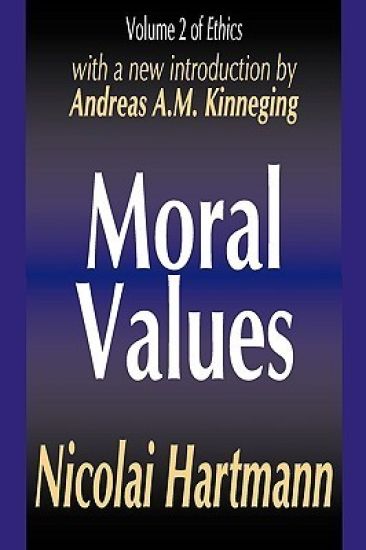
Moral Values

Moral Values

Nicolai Hartmann

Transaction Publishers
2002
nidottu
Nicolai Hartmann (1882-1950), along with Henri Bergson and Martin Heidegger, was instrumental in restoring metaphysics to the study of philosophy. Unlike his contemporaries, however, Hartmann was clearly influenced by Plato. His tour-de-force, Ethik, published in English in 1932 as Ethics, may be the most outstanding work on moral philosophy produced in the twentieth century.In the first part of Ethics (Moral Phenomena), Hartmann was concerned with the structure of ethical phenomena, and criticized utilitarianism, Kantianism, and relativism as misleading approaches. In the second part, Moral Values, the author describes all values as forming a complex and as yet imperfectly known system. The actualization of the non-moral and elementary moral values is a necessary condition for the actualization of the higher values. It is on this account that rudimentary values have a prior claim.Hartmann outlines the main features of the chief virtues, and shows that the moral disposition required in any exigency is always a specific synthesis of various and often conflicting values. Specifically describing fundamental moral values-such as goodness, nobility, and vitality-and special moral values-such as justice, wisdom, courage, self-control, trustworthiness, and modesty-Hartmann takes theoretical philosophy and brings it very much into the realm of the practical.A compelling and insightful volume, Moral Values remains an essential contribution to the moral and ethical literature of the twentieth century. Hartmann offers a self-contained system of ethics that yet offers a conservative outlook on social life.
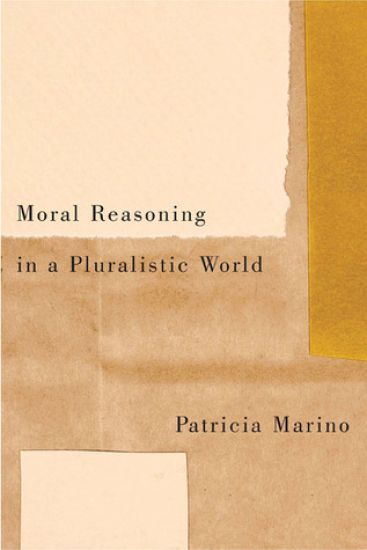
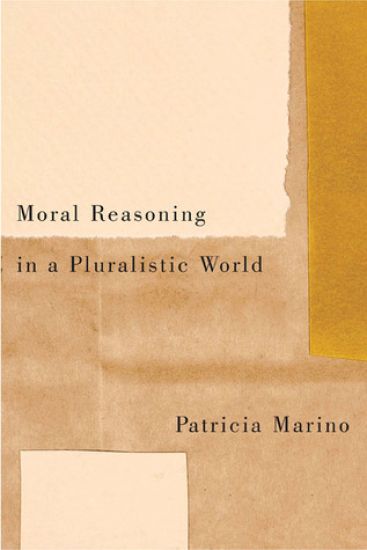
Moral Reasoning in a Pluralistic World

Moral Reasoning in a Pluralistic World

Patricia Marino

McGill-Queen's University Press
2015
sidottu
Moral diversity is a fundamental reality of today's world, but moral theorists have difficulty responding to it. Some take it as evidence for skepticism - the view that there are no moral truths. Others, associating moral reasoning with the search for overarching principles and unifying values, see it as the result of error. In the former case, moral reasoning is useless, since values express individual preferences; in the latter, our reasoning process is dramatically at odds with our lived experience. Moral Reasoning in a Pluralistic World takes a different approach, proposing an alternative way of thinking about moral reasoning and progress by showing how diversity and disagreement are compatible with theorizing and justification. Patricia Marino demonstrates that, instead of being evidence for skepticism and error, moral disagreements often arise because we value things pluralistically. This means that although people share multiple values such as fairness, honesty, loyalty, and benevolence, we interpret and prioritize those values in various ways. Given this pluralistic evaluation process, preferences for unified single-principle theories are not justified. Focusing on finding moral compromises, prioritizing conflicting values, and judging consistently from one case to another, Marino elaborates her ideas in terms of real-life dilemmas, arguing that the moral complexity and conflict we so often encounter can be part of fruitful and logical moral reflection. Aiming to draw new connections and bridge the gap between theoretical ethics and applied ethics, Moral Reasoning in a Pluralistic World offers a sophisticated set of philosophical arguments on moral reasoning and pluralism with real world applications.
Moral Reasoning in a Pluralistic World

Moral Reasoning in a Pluralistic World

Patricia Marino

McGill-Queen's University Press
2015
nidottu
Moral diversity is a fundamental reality of today's world, but moral theorists have difficulty responding to it. Some take it as evidence for skepticism - the view that there are no moral truths. Others, associating moral reasoning with the search for overarching principles and unifying values, see it as the result of error. In the former case, moral reasoning is useless, since values express individual preferences; in the latter, our reasoning process is dramatically at odds with our lived experience. Moral Reasoning in a Pluralistic World takes a different approach, proposing an alternative way of thinking about moral reasoning and progress by showing how diversity and disagreement are compatible with theorizing and justification. Patricia Marino demonstrates that, instead of being evidence for skepticism and error, moral disagreements often arise because we value things pluralistically. This means that although people share multiple values such as fairness, honesty, loyalty, and benevolence, we interpret and prioritize those values in various ways. Given this pluralistic evaluation process, preferences for unified single-principle theories are not justified. Focusing on finding moral compromises, prioritizing conflicting values, and judging consistently from one case to another, Marino elaborates her ideas in terms of real-life dilemmas, arguing that the moral complexity and conflict we so often encounter can be part of fruitful and logical moral reflection. Aiming to draw new connections and bridge the gap between theoretical ethics and applied ethics, Moral Reasoning in a Pluralistic World offers a sophisticated set of philosophical arguments on moral reasoning and pluralism with real world applications.
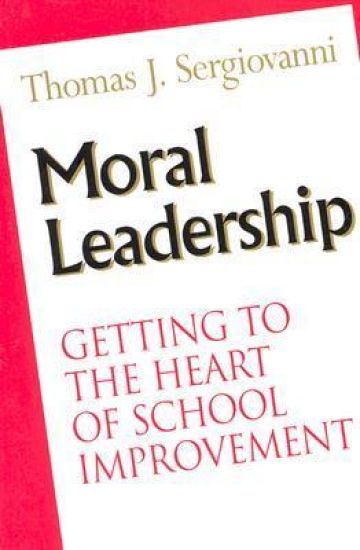
Moral Leadership

Moral Leadership

Thomas J. Sergiovanni

Jossey-Bass Inc.,U.S.
1996
nidottu
"A vision of what could (and probably should) be. . . . The reader may want to revisit some sections for further reflection."--Educational Leadership"An excellent book that offers much to the seasoned administrator and should be on the list of required reading for introductory administration classes."--NASSP Bulletin Moral Leadership shows how creating a new leadership practice--one with a moral dimension built around purpose, values, and beliefs--can transform a school from an organization to a community and inspire the kinds of commitment, devotion, and service that can make our schools great. Sergiovanni explains the importance of legitimizing emotion and getting in touch with basic values and connections with others. He reveals how true collegiality, based on shared work and common goals, leads to a natural interdepAndence among teachers and shows how a public declaration of values and purpose can help turn schools into virtuous communities where teachers are self-managers and professionalism is considered an ideal.
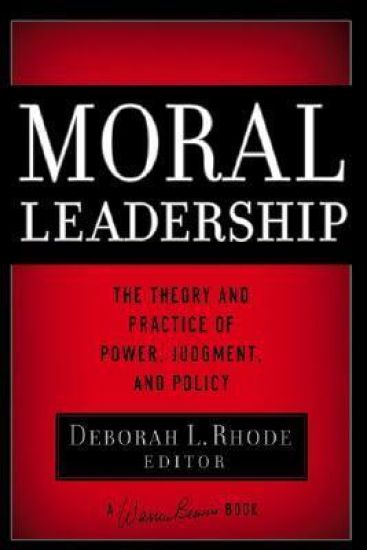
Moral Leadership

Moral Leadership

Warren Bennis

Jossey-Bass Inc.,U.S.
2006
sidottu
Moral Leadership brings together in one comprehensive volume essays from leading scholars in law, leadership, psychology, political science, and ethics to provide practical, theoretical policy guidance. The authors explore key questions about moral leadership such as: How do leaders form, sustain, and transmit moral commitments?Under what conditions are those processes most effective?What is the impact of ethics officers, codes, training programs, and similar initiatives?How do standards and practices vary across context and culture?What can we do at the individual, organizational, and societal level to foster moral leadership? Throughout the book, the contributors identify what people know, and only think they know, about the role of ethics in key decision-making positions. The essays focus on issues such as the definition and importance of moral leadership and the factors that influence its exercise, along with practical strategies for promoting ethical behavior. Moral Leadership addresses the dynamics of moral leadership, with particular emphasis on major obstacles that stand in its way: impaired judgment, self-interest, and power. Finally, the book explores moral leadership in a variety of contexts?business and the professions, nonprofit organizations, and the international arena.
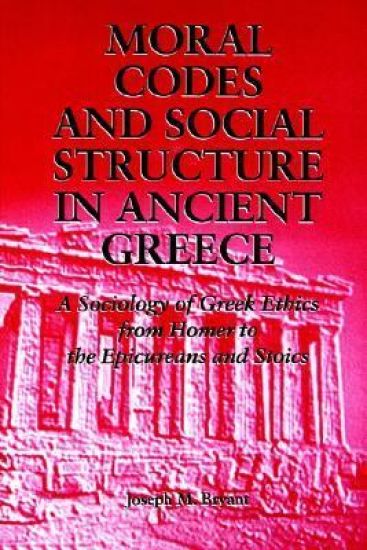
Moral Codes and Social Structure in Ancient Greece

Moral Codes and Social Structure in Ancient Greece

Joseph M. Bryant

State University of New York Press
1996
pokkari
An exercise in cultural sociology, Moral Codes and Social Structure in Ancient Greece seeks to explicate the dynamic currents of classical Hellenic ethics and social philosophy by situating those idea-complexes in their socio-historical and intellectual contexts. Central to this enterprise is a comprehensive historical-sociological analysis of the Polis form of social organization, which charts the evolution of its basic institutions, roles, statuses, and class relations. From the Dark Age period of "genesis" on to the Hellenistic era of "eclipse" by the emergent forces of imperial patrimonialism, Polis society promoted and sustained corresponding normative codes which mobilized and channeled the requisite emotive commitments and cognitive judgments for functional proficiency under existing conditions of life. The aristocratic warrior-ethos canonized in the Homeric epics; the civic ideology of equality and justice espoused by reformist lawgivers and poets; the democratization of status honor and martial virtue that attended the shift to hoplite warfare; the philosophical exaltation of the Polis-citizen bond as found in the architectonic visions of Plato and Aristotle; and the subsequent retreat from civic virtues and the interiorization of value articulated by the Skeptics, Epicureans, and Stoics, new age philosophies in a world remade by Alexander's conquests-these are the key phases in the evolving currents of Hellenic moral discourse, as structurally framed by transformations within the institutional matrix of Polis society.
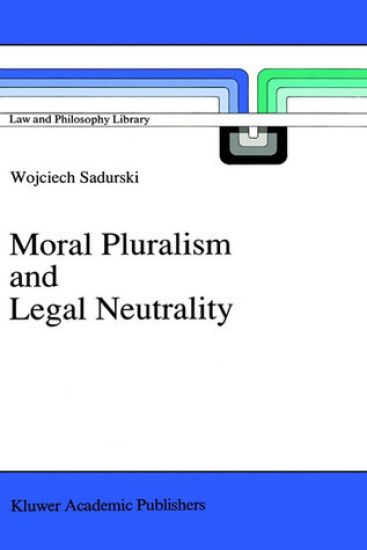
Moral Pluralism and Legal Neutrality

Moral Pluralism and Legal Neutrality

Wojciech Sadurski

Springer
1989
sidottu
lt is a commonplace that law and morality intersect and interpenetrate in all the areas of legal decision-making; that in order to make sense of constitutional, statutory or common-law questions, judges and other legal decision-makers must first resolve certain philosophical issues which include moral judgments of right and wrang_ This is particularly evident with regard to constitutional interpretation, especially when constitutions give a mandate for the protection of the substantive norms and values entrenched as constitutional rights. In these Situations, as a leading contemporary legal philosopher observed, the "Constitution fuses legal and moral issues, by making the validity of a law depend on an answer to complex moral 1 problems". But the need for substantive value elucidation is not confined, of course, only to constitutional interpretation under Bills of Rights. This, however, immediately raises a dilemma stemming from the moral diversity and pluralism of modern liberal societies. How can law remain sensitive to this pluralism and yet provide clear answers to the problems which call for a legal resolution? Sharply conflicting values in modern societies clash in the debates over the death penalty, abortion, homosexuality, separation of state and religion, the scope of the freedom of the press, or affirmative action. lt would often be difficult to discern a broader consensus within which these clashes of values operate, unless this consensus were described in such vague terms as to render it practically meaningless.