In beeindruckender Weise bringen die Psalmen der Bibel unterschiedliche Gefuhle und Stimmungen vor Gott: Freude und Leid, Angst und Geborgenheit, Begeisterung und Wut. Das Anliegen dieses Liederbuches ist es, dieses vielschichtige Beten und Singen in zeitgemassge Musik und Tete zu ubersetzen und den Psalmen doch auch ein Stuck Fremdheit zu lassen. Ausgabe mit Noten und Gitarrengriffen. Zweite, durchgesehene Auflage.
Bewusstsein und Intelligenz, obgleich noch in keiner Disziplin begrifflich klar definiert, konnen verstanden werden. Dieses Buch fuhrt den Leser von Philosophie und Semantik, mit klaren Definitionen schwieriger Begriffe - wie Information und Wissen - uber die informationstheoretischen, bis zu den neurobiologischen Grundlagen uber alle dazu essentiell erforderlichen Themenbereiche. Dennoch (oder gerade weil so viele Disziplinen betroffen sind) sollte sich der Leser naturlich keine vollig einfache Erklarung oder Losung erhoffen. Die Leistung, all die erklarten komplexen Zusammenhange zu einer plastischen Vorstellung zusammen zu setzen, muss der Leser selbst zu vollbringen.
Synthesizers have shaped the face of modern music for the last 50 years - take a comprehensive look at the history, technology, engineering and future of synthesis. This book covers everything from the electric organ up to modern software.
Quality Management and Managerialism in Healthcare creates a comprehensive and systematic international survey of various perspectives on healthcare quality management together with some of their most pertinent critiques. It reviews the factors which have underpinned the managerialist trajectory of healthcare management over the past decades.
This book challenges the idea that Western media systems are becoming more American in the digital age, arguing that journalistic cultures are not only significantly different from each other still but also variably open and resistant to change. Drawing upon extensive field research of political reporters and examination of discourses of journalistic professionalism as well institutional analysis, this book finds that occupational norms and values of journalism in the US are vigorously upheld but in fact relatively porous and malleable. In Germany, by contrast, professional boundaries are rather strong and resilient but treated matter-of-factly. Revers argues that this is both a consequence of institutional arrangements of media systems and historically evolved cultural principles of journalism in both countries which mutually constitute each other.
Controlling Sex in Captivity is the first book to examine the nature, extent and impact of the sexual activities of Axis prisoners of war in the United States during the Second World War. Historians have so far interpreted the interactions between captors and captives in America as the beginning of the post-war friendship between the United States, Germany and Italy. Matthias Reiss argues that this paradigm is too simplistic. Widespread fraternisation also led to sexual relationships which created significant negative publicity, and some Axis POWs got caught up in the U.S. Army’s new campaign against homosexuals.By focusing on the fight against fraternisation and same-sex activities, this study treads new ground. It stresses that contact between captors and captives was often loaded with conflict and influenced by perceptions of gender and race. It highlights the transnational impact of fraternisation and argues that the prisoners’ sojourn in the United States also influenced American society by fuelling a growing concern about social disintegration and sexual deviancy, which eventually triggered a conservative backlash after the war.
First secretary to the Aragonese kings of Naples, Giovanni Pontano (1429-1503) was a key figure of the Italian Renaissance. A poet and a philosopher of high repute, Pontano’s works offer a reflection on the achievements of fifteenth-century humanism and address major themes of early modern moral and political thought.Taking his defining inspiration from Aristotle, Pontano wrote on topics such as prudence, fortune, magnificence, and the art of pleasant conversation, rewriting Aristotle’s Ethics in the guise of a new Latin philosophy, inscribed with the patterns of Renaissance culture. This book shows how Pontano’s rewriting of Aristotelian ethics affected not only his philosophical views, but also his political life and his place in the humanist movement. Drawing on Pontano’s treatises, dialogues, letters, poems and political writings, Matthias Roick presents us with the first comprehensive study of Pontano’s moral and political thought, offering novel insights into the workings of Aristotelian virtue ethics in the early modern period.
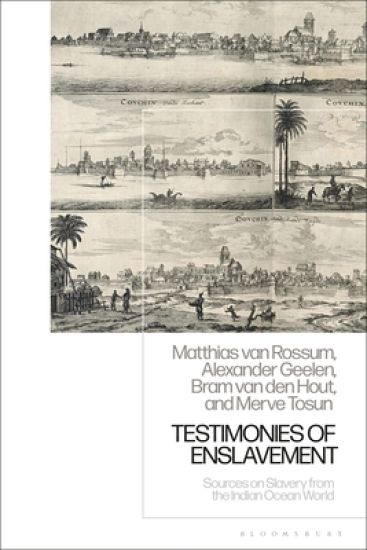
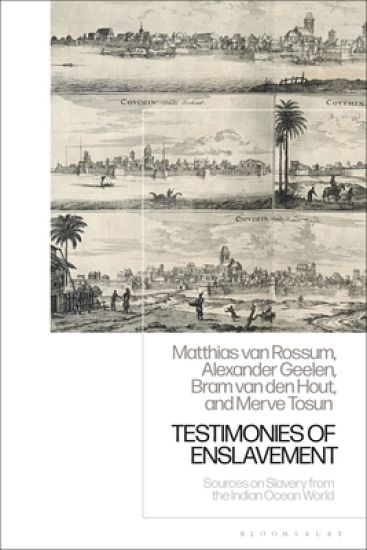
Drawing on the rich archives of the Court of Justice of Cochin, a main settlement of the Dutch East India Company, this book presents ten court cases that deal with themes of enslavement and ‘enslavebility’. Offering detailed insights into interrogations and testimonies, they paint a unique picture of the complex historical realities in which processes of enslavement and relations of slavery were shaped. Each original Dutch transcript is followed by an English translation, shedding light on the interactions between local systems of bondage and global systems of commodified slavery, and providing a new perspective on the global history of slavery.Analysing slavery in the Indian Ocean and South Asia, these case studies examine the dynamics of bondage, caste and social control, while offering a counterpoint to the traditional focus on Atlantic slavery.
Controlling Sex in Captivity is the first book to examine the nature, extent and impact of the sexual activities of Axis prisoners of war in the United States during the Second World War. Historians have so far interpreted the interactions between captors and captives in America as the beginning of the post-war friendship between the United States, Germany and Italy. Matthias Reiss argues that this paradigm is too simplistic. Widespread fraternisation also led to sexual relationships which created significant negative publicity, and some Axis POWs got caught up in the U.S. Army’s new campaign against homosexuals.By focusing on the fight against fraternisation and same-sex activities, this study treads new ground. It stresses that contact between captors and captives was often loaded with conflict and influenced by perceptions of gender and race. It highlights the transnational impact of fraternisation and argues that the prisoners’ sojourn in the United States also influenced American society by fuelling a growing concern about social disintegration and sexual deviancy, which eventually triggered a conservative backlash after the war.
Drawing on the rich archives of the Court of Justice of Cochin, a main settlement of the Dutch East India Company, this book presents ten court cases that deal with themes of enslavement and ‘enslavebility’. Offering detailed insights into interrogations and testimonies, they paint a unique picture of the complex historical realities in which processes of enslavement and relations of slavery were shaped. Each original Dutch transcript is followed by an English translation, shedding light on the interactions between local systems of bondage and global systems of commodified slavery, and providing a new perspective on the global history of slavery.Analysing slavery in the Indian Ocean and South Asia, these case studies examine the dynamics of bondage, caste and social control, while offering a counterpoint to the traditional focus on Atlantic slavery.
Offering a methodology for identifying particularly impactful literary narratives of climate change, this open access book examines a range of Anglophone fiction authors such as Margaret Atwood, Paolo Bacigalupi, Ian McEwan, Louise Erdrich, Octavia E. Butler and Sarah Hall, as well as films such as The Day After Tomorrow and Snowpiercer.Firstly, this book looks at which narratives, historically, have had an impact on social consciousness. Secondly, it considers the impact of popular and established strategies. Finally, it suggests emphasizing alternative narrative strategies, which it suggests can have a greater impact by causing people to act. This allows a more solid approach to assessing the effectiveness of literary narratives on global issues.The ebook editions of this book are available open access under a CC BY-NC-ND 4.0 licence on bloomsburycollections.com. Open access was funded by Bloomsbury Open Collections Library Collective
The 18th century was a wealth of knowledge, exploration and rapidly growing technology and expanding record-keeping made possible by advances in the printing press. In its determination to preserve the century of revolution, Gale initiated a revolution of its own: digitization of epic proportions to preserve these invaluable works in the largest archive of its kind. Now for the first time these high-quality digital copies of original 18th century manuscripts are available in print, making them highly accessible to libraries, undergraduate students, and independent scholars.Rich in titles on English life and social history, this collection spans the world as it was known to eighteenth-century historians and explorers. Titles include a wealth of travel accounts and diaries, histories of nations from throughout the world, and maps and charts of a world that was still being discovered. Students of the War of American Independence will find fascinating accounts from the British side of conflict. ++++The below data was compiled from various identification fields in the bibliographic record of this title. This data is provided as an additional tool in helping to insure edition identification: ++++British LibraryT154011M. S. = Matthias Symson.Edinburgh: printed in the year, M. DC. IV. 1704] 72]p.; 12
The 18th century was a wealth of knowledge, exploration and rapidly growing technology and expanding record-keeping made possible by advances in the printing press. In its determination to preserve the century of revolution, Gale initiated a revolution of its own: digitization of epic proportions to preserve these invaluable works in the largest archive of its kind. Now for the first time these high-quality digital copies of original 18th century manuscripts are available in print, making them highly accessible to libraries, undergraduate students, and independent scholars.The Age of Enlightenment profoundly enriched religious and philosophical understanding and continues to influence present-day thinking. Works collected here include masterpieces by David Hume, Immanuel Kant, and Jean-Jacques Rousseau, as well as religious sermons and moral debates on the issues of the day, such as the slave trade. The Age of Reason saw conflict between Protestantism and Catholicism transformed into one between faith and logic -- a debate that continues in the twenty-first century.++++The below data was compiled from various identification fields in the bibliographic record of this title. This data is provided as an additional tool in helping to insure edition identification: ++++British LibraryT097263With an errata slip pasted to the verso of the titlepage.London: printed for Richard Hett, 1729. 8], xv, 1],120p.; 8
The 18th century was a wealth of knowledge, exploration and rapidly growing technology and expanding record-keeping made possible by advances in the printing press. In its determination to preserve the century of revolution, Gale initiated a revolution of its own: digitization of epic proportions to preserve these invaluable works in the largest archive of its kind. Now for the first time these high-quality digital copies of original 18th century manuscripts are available in print, making them highly accessible to libraries, undergraduate students, and independent scholars.Medical theory and practice of the 1700s developed rapidly, as is evidenced by the extensive collection, which includes descriptions of diseases, their conditions, and treatments. Books on science and technology, agriculture, military technology, natural philosophy, even cookbooks, are all contained here.++++The below data was compiled from various identification fields in the bibliographic record of this title. This data is provided as an additional tool in helping to insure edition identification: ++++British LibraryT114595With an initial imprimatur leaf. 'Natura morborum medicatrix' has a separate titlepage, dated 1705. Pagination irregular after p.106.London: printed for D. Browne, R. Smith, and T. Browne, 1706. 22],343, i.e.283]p., plates; 2
The 18th century was a wealth of knowledge, exploration and rapidly growing technology and expanding record-keeping made possible by advances in the printing press. In its determination to preserve the century of revolution, Gale initiated a revolution of its own: digitization of epic proportions to preserve these invaluable works in the largest archive of its kind. Now for the first time these high-quality digital copies of original 18th century manuscripts are available in print, making them highly accessible to libraries, undergraduate students, and independent scholars.Delve into what it was like to live during the eighteenth century by reading the first-hand accounts of everyday people, including city dwellers and farmers, businessmen and bankers, artisans and merchants, artists and their patrons, politicians and their constituents. Original texts make the American, French, and Industrial revolutions vividly contemporary.++++The below data was compiled from various identification fields in the bibliographic record of this title. This data is provided as an additional tool in helping to insure edition identification: ++++Library of CongressW022216New-Haven: Printed by Thomas and Samuel Green, MDCCXC. 1790]. 24 p.; 4
We read, but we are also read by others. Interferences of these readings. Forcing someone to read himself as he is read (slavehood). Forcing the others to read me as I read myself (conquest). 1 Simone Weil Karl Jaspers was born in Oldenburg in 1883, grew up in a liberal-minded banker’s family, studied medicine and was granted a chair in philosophy at the Uni- 2 versity of Heidelberg in 1922. The decisive factor in this appointment was Jaspers’ 1919 monograph Psychology of World Views (Psychologie der Weltanschauungen), 3 which founded so-called ‘existence philosophy’. What is less known is that in 1913 Jaspers had already published an epoch-making methodological systematics, his General Psychopathology (Allgemeine Psychopathologie), which had established 4 him as an authority in the field of psychiatry in the German-speaking world. As a result of this as well as the fact that Jaspers addressed questions concerning physi- 5 sicians’ self-identity, Jaspers is now celebrated as one of the “classic figures of 6 medicine”. 1 Weil (1990), pg. 134. 2 Karl Jaspers (1883-1969) worked as a psychiatrist in Heidelberg starting in 1909, and from 1914 on he held a position as a Privatdozent for psychology in the Department of Philosophy after having completed his Habilitation. In 1920 he was granted an assistant professorship and in 1922 a chair in this department. In 1937 he was forced to retire because his wife was Jewish. In 1945 he was reinstated.
The English Galileo—the title of this book draws on the extraordinary prominence of Galileo Galilei in the historiography of the early modern Scienti?c Revolution. At the same time it questions the uniqueness of Galileo (not as a person, of course, but as an early modern phenomenon) by proclaiming another ?gure of his kind: Thomas H- riot. But putting Harriot on a pedestal next to Galileo is not a concern of this book, which is rather motivated by questions of the following kind: How did modern s- ence come about? What were the processes of knowledge and concept transformation that led from premodern to modern science, and, more speci?cally, from preclassical to classical mechanics? Which aspects of these developments rely on the peculiarities of particular historical actors and what aspects re?ect more general characteristics of the knowledge system at the time and its potentials for development? To answer such questions it is obviously necessary to complement the existing studies on Galileo’s science with studies on the work of his lesser-known contemporaries; and it is imp- tant that these studies are carried out in similar detail to make the different prota- nists’ work comparable. Without such comparison—this is the basic assumption of this book—our understanding of the shared knowledge of early modern thinking and the processes of knowledge transformation from which modern science emerged will remain incomplete and biased.