Kirjojen hintavertailu. Mukana 12 016 292 kirjaa ja 12 kauppaa.

Kirjahaku

Etsi kirjoja tekijän nimen, kirjan nimen tai ISBN:n perusteella.

1000 tulosta hakusanalla Maya Eisel

Chiapas Maya Awakening

Chiapas Maya Awakening

Marceal Méndez

University of Oklahoma Press
2017
nidottu
Mexico's indigenous people speak a number of rich and complex languages today, as they did before the arrival of the Spanish. Yet a common misperception is that Mayas have no languages of their own, only dialectos, and therefore live in silence. In reality, contemporary Mayas are anything but voiceless. Chiapas Maya Awakening, a collection of poems and short stories by indigenous authors from Chiapas, Mexico, is an inspiring testimony to their literary achievements. A unique trilingual edition, it presents the contributors' works in the living Chiapas Mayan languages of Tsotsil and Tseltal, along with English and Spanish translations. As Sean S. Sell, Marceal Méndez, and Inés Hernández-ávila explain in their thoughtful introductory pieces, the indigenous authors of this volume were born between the mid-1970s and the mid-1990s, a time of growing cultural awareness among the native communities of Chiapas. Although the authors received a formal education, their language of instruction was Spanish, and they had to pursue independent paths to learn to read and write in their native tongues. In the book's first half, devoted to poetry, the writers consciously speak for their communities. Their verses evoke the quetzal, the moon, and the sea and reflect the identities of those who celebrate them. The short stories that follow address aspects of modern Maya life. In these stories, mistrust and desperation yield violence among a people whose connection to the land is powerful but still precarious.Chiapas Maya Awakening demonstrates that Mayas are neither a vanished ancient civilization nor a remote, undeveloped people. Instead, through their memorable poems and stories, the indigenous writers of this volume claim a place of their own within the broader fields of national and global literature.
The Maya Calendar

The Maya Calendar

Weldon Lamb

University of Oklahoma Press
2017
sidottu
By 1,800 years ago, speakers of proto-Ch'olan, the ancestor of three present-day Maya languages, had developed a calendar of eighteen twenty-day months plus a set of five days for a total of 365 days. This original Maya calendar, used extensively during the Classic period (200-900 CE), recorded in hieroglyphic inscriptions the dates of dynastic and cosmological importance. Over time, and especially after the Mayas' contact with Europeans, the month names that had originated with these inscriptions developed into fourteen distinct traditions, each connected to a different ethnic group. Today, the glyphs encompass 250 standard forms, variants, and alternates, with about 570 meanings among all the cognates, synonyms, and homonyms. In The Maya Calendar, Weldon Lamb collects, defines, and correlates the month names in every recorded Maya calendrical tradition from the first hieroglyphic inscriptions to the present - an undertaking critical to unlocking and understanding the iconography and cosmology of the ancient Maya world. Mining data from astronomy, ethnography, linguistics, and epigraphy, and working from early and modern dictionaries of the Maya languages, Lamb pieces together accurate definitions of the month names in order to compare them across time and tradition. His exhaustive process reveals unsuspected parallels. Three-fourths of the month names, he shows, still derive from those of the original hieroglyphic inscriptions. Lamb also traces the relationship between month names as cognates, synonyms, or homonyms, and then reconstructs each name's history of development, connecting the Maya month names in several calendars to ancient texts and archaeological finds. In this landmark study, Lamb's investigations afford new insight into the agricultural, astronomical, ritual, and even political motivations behind names and dates in the Maya calendar. A history of descent and diffusion, of unexpected connectedness and longevity, The Maya Calendar offers readers a deep understanding of a foundational aspect of Maya culture.
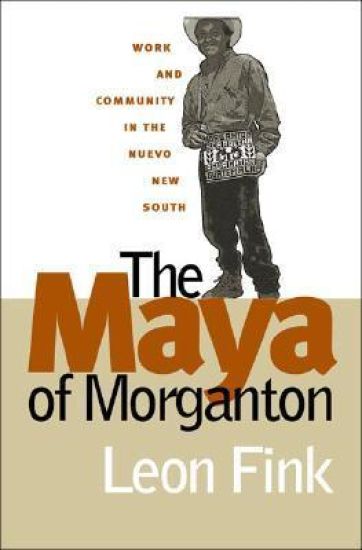
The Maya of Morganton

The Maya of Morganton

Fink Leon

The University of North Carolina Press
2003
nidottu
The arrival of several hundred Guatemalan-born workers in a Morganton, North Carolina, poultry plant sets the stage for this dramatic story of human struggle in an age of globalization. When laborers' concerns about safety and fairness spark a strike and, ultimately, a unionizing campaign at Case Farms, the resulting decade-long standoff pits a recalcitrant New South employer against an unlikely coalition of antagonists. Mayan refugees from war-torn Guatemala, Mexican workers, and a diverse group of local allies join forces with the Laborers union. The ensuing clash becomes a testing ground for ""new labor"" workplace and legal strategies. In the process, the nation's fastest-growing immigrant region encounters a new struggle for social justice. Using scores of interviews, Leon Fink gives voice to a remarkably resilient people. He shows that, paradoxically, what sustains these global travelers are the ties of local community. Whether one is finding a job, going to church, joining a soccer team, or building a union, kin and linguistic connections to the place of one's birth prove crucial in negotiating today's global marketplace. A story set at the intersection of globalization and community, two words not often linked, The Maya of Morganton addresses fundamental questions about the changing face of labor in the United States.
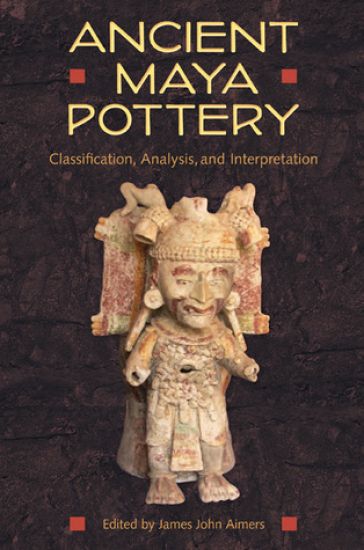
Ancient Maya Pottery

Ancient Maya Pottery

University Press of Florida
2013
sidottu
The ancient Maya produced a broad range of ceramics that has attracted concerted scholarly attention for over a century. Pottery sherds—the most abundant artefacts recovered from sites—reveal much about artistic expression, religious ritual, economic systems, cooking traditions, and cultural exchange in Maya society. Today, nearly every Maya archaeologist uses the type-variety classificatory framework for studying sherd collections. This impressive volume brings together many of the archaeologists signally involved in the analysis and interpretation of ancient Maya ceramics and represents new findings and state-of-the-art thinking. The result is a book that serves both as a valuable resource for archaeologists involved in pottery classification, analysis, and interpretation and as an illuminating exploration of ancient Mayan culture.
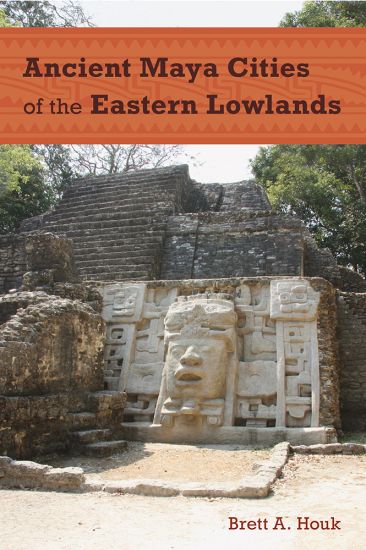
Ancient Maya Cities of the Eastern Lowlands

Ancient Maya Cities of the Eastern Lowlands

Brett A. Houk

University Press of Florida
2016
nidottu
For more than a century researchers have studied Maya ruins, and sites like Tikal, Palenque, Copan, and Chichen Itza have shaped our understanding of the Maya. Yet cities of the eastern lowlands of Belize, an area that was home to a rich urban tradition that persisted and evolved for almost 2,000 years, are treated as peripheral to these great Classic period sites. The hot and humid climate and dense forests are inhospitable and make preservation of the ruins difficult, but this oft-ignored area reveals much about Maya urbanism and culture. Using data collected from different sites throughout the lowlands, including the Vaca Plateau and the Belize River Valley, Brett Houk presents the first synthesis of these unique ruins and discusses methods for mapping and excavating them. Considering the sites through the analytical lenses of the built environment and ancient urban planning, Houk vividly reconstructs their political history, considers how they fit into the larger political landscape of the Classic Maya, and examines what they tell us about Maya city building.
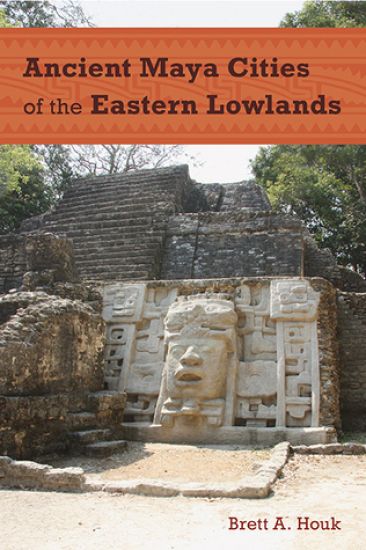
Ancient Maya Cities of the Eastern Lowlands

Ancient Maya Cities of the Eastern Lowlands

Brett A. Houk

University Press of Florida
2015
nidottu
For more than a century researchers have studied Maya ruins, and sites like Tikal, Palenque, Copán, and Chichén Itzá have shaped our understanding of the Maya. Yet the lowlands of Belize, which were once home to a rich urban tradition that persisted and evolved for almost 2,000 years, are treated as peripheral to these great Classic period sites. The hot and humid climate and dense forests are inhospitable and make preservation of the ruins difficult, but this oft-ignored area reveals much about Maya urbanism and culture.Using data collected from different sites throughout the Maya lowlands, including the Vaca Plateau and the Belize River Valley, Brett Houk presents the first synthesis of these unique monuments and discusses methods for mapping and excavating. Considering the sites through the theoretical lenses of the built environmentand ancient urban planning, Houk vividly reconstructs their political history, how they fit into the larger political landscape of the Classic Maya, and how the ancient cities fell apart over time.
Ancient Maya Political Dynamics

Ancient Maya Political Dynamics

Antonia E. Foias

University Press of Florida
2014
nidottu
The study of politics, a dominating force throughout history, can provide great insight into the lives of ancient people. Because of the richness and complexity of Maya society, archaeologists and anthropologists have spent decades attempting to reconstruct its political systems. In Ancient Maya Political Dynamics, Antonia Foias argues that there is no single Maya political history but multiple histories, no single Maya state but multiple polities that need to be understood at the level of the lived, individual experience. She explores the ways in which the dynamics of political power shaped the lives and landscape of the Maya and how this information can be used to look at other complex societies.
Ancient Maya Pottery

Ancient Maya Pottery

University Press of Florida
2015
nidottu
The ancient Maya produced a broad range of ceramics that has attracted concerted scholarly attention for over a century. Pottery shards--the most abundant artifacts recovered from sites--reveal much about artistic expression, religious ritual, economic systems, cooking traditions, and cultural exchange in Maya society.Today, nearly every Maya archaeologist uses the type-variety classificatory framework for studying sherd collections. This impressive volume brings together many of the archaeologists signally involved in the analysis and interpretation of ancient Maya ceramics and represents new findings and state-of-the-art thinking. The result is a book that serves both as a valuable resource for archaeologists involved in pottery classification, analysis, and interpretation and as an illuminating exploration of ancient Mayan culture.
Lacandón Maya in the Twenty-First Century

Lacandón Maya in the Twenty-First Century

James D. Nations

University Press of Florida
2023
sidottu
From the ancient traditions of the Lacandón Maya comes an Indigenous model for a sustainable future.Having lived for centuries isolated within Mexico’s largest remaining tropical rainforest, the Indigenous Lacandón Maya now live at the nexus of two worlds—ancient and modern. While previous research has focused on documenting Lacandón oral traditions and religious practices in order to preserve them, this book tells the story of how Lacandón families have adapted to the contemporary world while applying their ancestral knowledge to create an ecologically sustainable future.Drawing on his 49 years of studying and learning from the Lacandón Maya, James Nations discusses how in the midst of external pressures such as technological changes, missionary influences, and logging ventures, Lacandón communities are building an economic system of agroforestry and ecotourism that produces income for their families while protecting biodiversity and cultural resources. Nations describes methods they use to plant and harvest without harming the forest, illustrating that despite drastic changes in lifestyle, respect for the environment continues to connect Lacandón families across generations. By helping with these tasks and inheriting the fables and myths that reinforce this worldview, Lacandón children continue to learn about the plants, animals, and spiritual deities that coexist in their land.Indigenous peoples such as the Lacandón Maya control one-third of the intact forest landscapes left on Earth, and Indigenous knowledge and practices are increasingly recognized as key elements in the survival of the planet’s biological diversity. The story of the Lacandón Maya serves as a model for Indigenous controlled environmental conservation, and it will inform anyone interested in supporting sustainable Indigenous futures.A volume in the series Maya Studies, edited by Diane Z. Chase and Arlen F. Chase
Lacandón Maya in the Twenty-First Century

Lacandón Maya in the Twenty-First Century

James D. Nations

University Press of Florida
2023
pokkari
From the ancient traditions of the Lacandón Maya comes an Indigenous model for a sustainable future.Having lived for centuries isolated within Mexico’s largest remaining tropical rainforest, the Indigenous Lacandón Maya now live at the nexus of two worlds—ancient and modern. While previous research has focused on documenting Lacandón oral traditions and religious practices in order to preserve them, this book tells the story of how Lacandón families have adapted to the contemporary world while applying their ancestral knowledge to create an ecologically sustainable future.Drawing on his 49 years of studying and learning from the Lacandón Maya, James Nations discusses how in the midst of external pressures such as technological changes, missionary influences, and logging ventures, Lacandón communities are building an economic system of agroforestry and ecotourism that produces income for their families while protecting biodiversity and cultural resources. Nations describes methods they use to plant and harvest without harming the forest, illustrating that despite drastic changes in lifestyle, respect for the environment continues to connect Lacandón families across generations. By helping with these tasks and inheriting the fables and myths that reinforce this worldview, Lacandón children continue to learn about the plants, animals, and spiritual deities that coexist in their land.Indigenous peoples such as the Lacandón Maya control one-third of the intact forest landscapes left on Earth, and Indigenous knowledge and practices are increasingly recognized as key elements in the survival of the planet’s biological diversity. The story of the Lacandón Maya serves as a model for Indigenous controlled environmental conservation, and it will inform anyone interested in supporting sustainable Indigenous futures.A volume in the series Maya Studies, edited by Diane Z. Chase and Arlen F. Chase
Preclassic Maya Pottery at Cuello, Belize

Preclassic Maya Pottery at Cuello, Belize

Laura J. Kosakowsky

University of Arizona Press
2015
nidottu
The Anthropological Papers of the University of Arizona is a peer-reviewed monograph series sponsored by the School of Anthropology. Established in 1959, the series publishes archaeological and ethnographic papers that use contemporary method and theory to investigate problems of anthropological importance in the southwestern United States, Mexico, and related areas.
Ancient Maya Life in the Far West Bajo

Ancient Maya Life in the Far West Bajo

Julie L. Kunen

University of Arizona Press
2004
nidottu
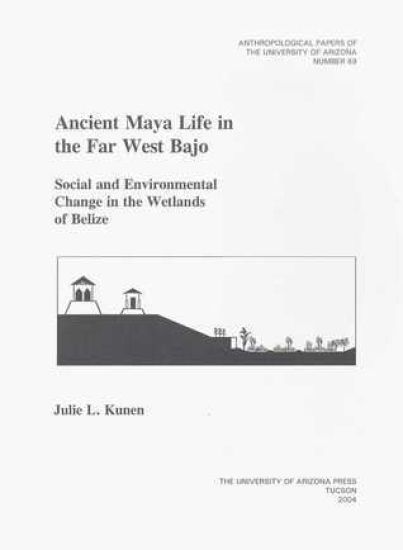
Human activity during centuries of occupation significantly altered the landscape inhabited by the ancient Maya of northwestern Belize. In response, the Maya developed new techniques to harvest the natural resources of their surroundings, investing increased labor and raw materials into maintaining and even improving their ways of life. In this lively story of life in the wetlands on the outskirts of the major site of La Milpa, Julie Kunen documents a hitherto unrecognized form of intensive agriculture in the Maya lowlands one that relied on the construction of terraces and berms to trap soil and moisture around the margins of low-lying depressions called bajos. She traces the intertwined histories of residential settlements on nearby hills and ridges and agricultural terraces and other farming-related features around the margins of the bajo as they developed from the Late Preclassic perios (400 BC-AD 250) until the area's abandonment in the Terminal Classic period (about AD 850). Kunen examines the organization of three bajo communities with respect to the use and management of resources critical to agricultural production. She argues that differences in access to spatially variable natural resources resulted in highly patterned settlement remains and that community founders and their descendents who had acquired the best quality and most diverse set of resources maintained an elevated status in the society. The thorough integration of three lines of evidence the settlement system, the agricultural system, and the ancient environment breaks new ground in landscape research and in the study of Maya non-elite domestic organization. Kunen reports on the history of settlement and farming in a small corner of the Maya world but demonstrates that for any study of human-environment interactions, landscape history consists equally of ecological and cultural strands of influence.
BECOMING MAYA

BECOMING MAYA

The University of Arizona Press

University of Arizona Press
2004
sidottu
In Mexico's Yucat n peninsula, it is commonly held that the population consists of two ethnic communities: Maya Indians and descendants of Spanish conquerors. As a result, the history of the region is usually seen in terms of conflict between conquerors and conquered that too often ignores the complexity of interaction between these groups and the complex nature of identity within them. Yet despite this prevailing view, most speakers of the Yucatec Maya language reject being considered Indian and refuse to identify themselves as Maya. Wolfgang Gabbert maintains that this situation can be understood only by examining the sweeping procession of history in the region. In Becoming Maya, he has skillfully interwoven history and ethnography to trace 500 years of Yucatec history, covering colonial politics, the rise of plantations, nineteenth-century caste wars, and modern reforms--always with an eye toward the complexities of ethnic categorization. According to Gabbert, class has served as a self-defining category as much as ethnicity in the Yucat n, and although we think of caste wars as struggles between Mayas and Mexicans, he shows that each side possessed a sufficiently complex ethnic makeup to rule out such pat observations. Through this overview, Gabbert reveals that Maya ethnicity is upheld primarily by outsiders who simply assume that an ethnic Maya consciousness has always existed among the Maya-speaking people. Yet even language has been a misleading criterion, since many people not considered Indian are native speakers of Yucatec. By not taking ethnicity for granted, he demonstrates that the Maya-speaking population has never been a self-conscious community and that the criteria employed by others in categorizing Mayas has changed over time. Grounded in field studies and archival research and boasting an exhaustive bibliography, Becoming Maya is the first English-language study that examines the roles played by ethnicity and social inequality in Yucat n history. By revealing the highly nuanced complexities that underlie common stereotypes, it offers new insights not only into Mesoamerican peoples but also into the nature of interethnic relations in general.
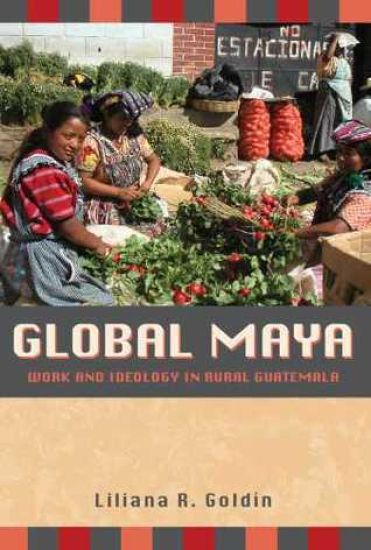
Global Maya

Global Maya

Goldin Liliana R.

University of Arizona Press
2009
sidottu
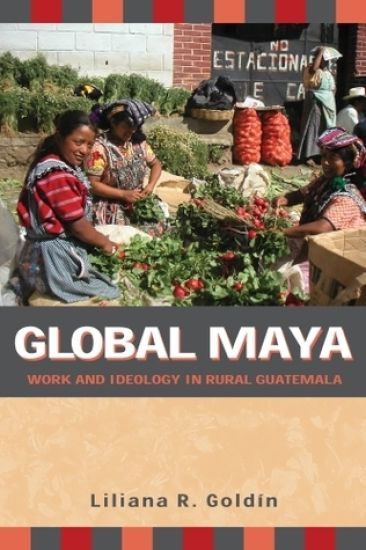
In the central highland Maya communities of Guatemala, the demands ofthe global economy have become a way of life. This book explores how ruralpeoples experience economic and cultural change as their country joins theglobal market, focusing on their thoughts about work and sustenance as a way oflearning about Guatemala's changing economy. For more than a decade, Liliana Goldin observed in highland towns boththe intensification of various forms of production and their growing links towider markets. In this first book to compare economic ideology across a rangeof production systems, she examines how people make a living and how theythink about their options, practices, and constraints. Drawing on interviews andsurveyseven retellings of traditional narratives'she reveals how contemporaryMaya respond to the increasingly globalized yet locally circumscribed conditionsin which they work. Goldin presents four case studies: cottage industries devoted to garmentproduction, vegetable growing for internal and border markets reached throughdirect commerce, crops grown for export, and wage labor in garment assemblyfactories.By comparing generational and gendered differences among workers,she reveals not only complexities of change but also how these complexities arereflected in changing attitudes, understandings, and aspirations that characterizepeople's economic ideology. Further, she shows that as rural people take ondiverse economic activities, they also reinterpret their views on such mattersas accumulation, cooperation, competition, division of labor, and communitysolidarity. Global Maya explores global processes in local terms, revealing the interplayof traditional values, household economics, and the inescapable conditions ofdemographic growth, a shrinking land base, and a global economy always lookingfor cheap labor. It offers a wealth of new insights not only for Maya scholarsbut also for anyone concerned with the effects of globalization on the Third World.
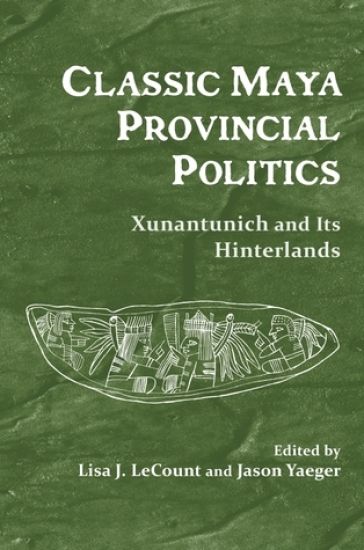
Classic Maya Provincial Politics

Classic Maya Provincial Politics

University of Arizona Press
2010
sidottu
Most treatments of large Classic Maya sites such as Caracol and Tikal regard Maya political organization as highly centralized. Because investigations have focused on civic buildings and elite palaces, however, a critical part of the picture of Classic Maya political organization has been missing. The contributors to this volume chart the rise and fall of the Classic Maya center of Xunantunich, paying special attention to its changing relationships with the communities that comprised its hinterlands. They examine how the changing relationships between Xunantunich and the larger kingdom of Naranjo affected the local population, the location of their farms and houses, and the range of economic and subsistence activities in which both elites and commoners engaged. They also examine the ways common people seized opportunities and met challenges offered by a changing political landscape. The rich archaeological data in this book show that incorporating subject communities and people--and keeping them incorporated--was an on-going challenge to ancient Maya rulers. Until now, archaeologists have lacked integrated regional data and a fine-grained chronology in which to document short-term shifts in site occupations, subsistence strategies, and other important practices of the daily life of the Maya. This book provides a revised picture of Maya politics--one of different ways of governing and alliance formation among dominant centers, provincial polities, and hinterland communities.
Global Maya

Global Maya

University of Arizona Press
2011
nidottu
In the central highland Maya communities of Guatemala, the demands of the global economy have become a way of life. This book explores how rural peoples experience economic and cultural change as their country joins the global market, focusing on their thoughts about work and sustenance as a way of learning about Guatemala's changing economy. For more than a decade, Liliana Gold n observed in highland towns both the intensification of various forms of production and their growing links to wider markets. In this first book to compare economic ideology across a range of production systems, she examines how people make a living and how they think about their options, practices, and constraints. Drawing on interviews and surveys--even retellings of traditional narratives--she reveals how contemporary Maya respond to the increasingly globalized yet locally circumscribed conditions in which they work. Gold n presents four case studies: cottage industries devoted to garment production, vegetable growing for internal and border markets reached through direct commerce, crops grown for export, and wage labor in garment assembly factories. By comparing generational and gendered differences among workers, she reveals not only complexities of change but also how these complexities arereflected in changing attitudes, understandings, and aspirations that characterize people's economic ideology. Further, she shows that as rural people take on diverse economic activities, they also reinterpret their views on such matters as accumulation, cooperation, competition, division of labor, and community solidarity. Global Maya explores global processes in local terms, revealing the interplay of traditional values, household economics, and the inescapable conditions of demographic growth, a shrinking land base, and a global economy always looking for cheap labor. It offers a wealth of new insights not only for Maya scholars but also for anyone concerned with the effects of globalization on the Third World.
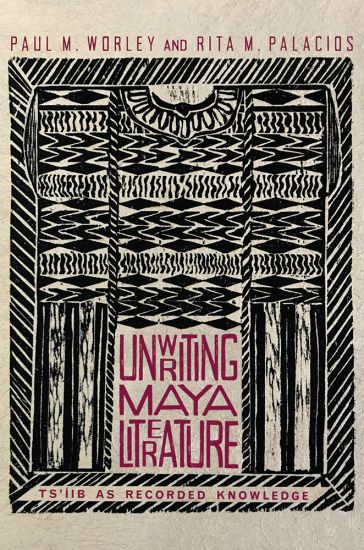
Unwriting Maya Literature

Unwriting Maya Literature

Paul M. Worley; Rita M. Palacios

University of Arizona Press
2019
sidottu
Unwriting Maya Literature provides an important decolonial framework for reading Maya texts that builds on the work of Maya authors and intellectuals such as Q'anjob'al Gaspar Pedro González and Kaqchikel Irma Otzoy. Paul M. Worley and Rita M. Palacios privilege the Maya category ts'íib over constructions of the literary in order to reveal how Maya peoples themselves conceive of artistic creation. This offers a decolonial departure from theoretical approaches that remain situated within alphabetic Maya linguistic and literary creation.As ts'íib refers to a broad range of artistic production from painted codices and textiles to works composed in Latin script, as well as plastic arts, the authors argue that texts by contemporary Maya writers must be read as dialoguing with a multimodal Indigenous understanding of text. In other words, ts'íib is an alternative to understanding “writing” that does not stand in opposition to but rather fully encompasses alphabetic writing, placing it alongside and in dialogue with a number of other forms of recorded knowledge. This shift in focus allows for a critical reexamination of the role that weaving and bodily performance play in these literatures, as well as for a nuanced understanding of how Maya writers articulate decolonial Maya aesthetics in their works.Unwriting Maya Literature places contemporary Maya literatures within a context that is situated in Indigenous ways of knowing and being. Through ts'íib, the authors propose an alternative to traditional analysis of Maya cultural production that allows critics, students, and admirers to respectfully interact with the texts and their authors. Unwriting Maya Literature offers critical praxis for understanding Mesoamerican works that encompass non-Western ways of reading and creating texts.
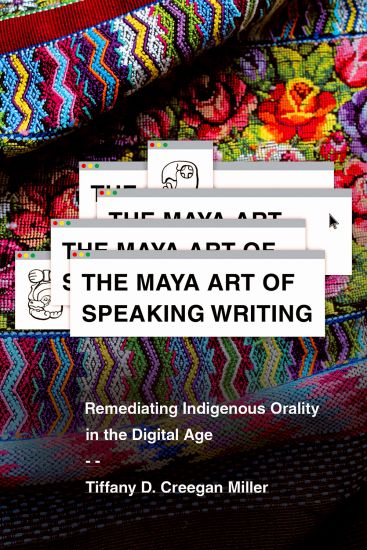
The Maya Art of Speaking Writing

The Maya Art of Speaking Writing

Tiffany D. Creegan Miller

University of Arizona Press
2022
sidottu
Challenging the distinctions between “old” and “new” media and narratives about the deprecation of orality in favor of inscribed forms, The Maya Art of Speaking Writing draws from Maya concepts of tz’ib’ (recorded knowledge) and tzij, choloj, and ch’owen (orality) to look at expressive work across media and languages. Based on nearly a decade of fieldwork in the Guatemalan highlands, Tiffany D. Creegan Miller discusses images that are sonic, pictorial, gestural, and alphabetic. She reveals various forms of creativity and agency that are woven through a rich media landscape in Indigenous Guatemala, as well as Maya diasporas in Mexico and the United States. Miller discusses how technologies of inscription and their mediations are shaped by human editors, translators, communities, and audiences, as well as by voices from the natural world. These texts push back not just on linear and compartmentalized Western notions of media but also on the idea of the singular author, creator, scholar, or artist removed from their environment. The persistence of orality and the interweaving of media forms combine to offer a challenge to audiences to participate in decolonial actions through language preservation.The Maya Art of Speaking Writing calls for centering Indigenous epistemologies by doing research in and through Indigenous languages as we engage in debates surrounding Indigenous literatures, anthropology, decoloniality, media studies, orality, and the digital humanities.
Unwriting Maya Literature

Unwriting Maya Literature

Paul M. Worley; Rita M. Palacios

University of Arizona Press
2022
nidottu
Unwriting Maya Literature provides an important decolonial framework for reading Maya texts that builds on the work of Maya authors and intellectuals such as Q’anjob’al Gaspar Pedro GonzÁlez and Kaqchikel Irma Otzoy. Paul M. Worley and Rita M. Palacios privilege the Maya category ts’Íib over constructions of the literary in order to reveal how Maya peoples themselves conceive of artistic creation. This offers a decolonial departure from theoretical approaches that remain situated within alphabetic Maya linguistic and literary creation. As ts’Íib refers to a broad range of artistic production from painted codices and textiles to works composed in Latin script as well as plastic arts, the authors argue that texts by contemporary Maya writers must be read as dialoguing with a multimodal Indigenous understanding of text. In other words, ts’Íib is an alternative to understanding “writing” that does not stand in opposition to but rather fully encompasses alphabetic writing, placing it alongside and in dialogue with a number of other forms of recorded knowledge. This shift in focus allows for a critical reexamination of the role that weaving and bodily performance play in these literatures, as well as for a nuanced understanding of how Maya writers articulate decolonial Maya aesthetics in their works.Unwriting Maya Literature places contemporary Maya literatures within a context situated in Indigenous ways of knowing and being. Through ts’Íib, the authors propose an alternative to traditional analysis of Maya cultural production that allows critics, students, and admirers to respectfully interact with the texts and their authors. Unwriting Maya Literature offers critical praxis for understanding Mesoamerican works that encompass non-Western ways of reading and creating texts.
Good Maya Women

Good Maya Women

Joyce N. Bennett

The University of Alabama Press
2022
sidottu
Good Maya Women:Migration and Revitalization of Clothing and Language in Highland Guatemala analyzes how Indigenous women’s migration contributes to women’s empowerment in their home communities in Guatemala. This decolonial ethnographic analysis of Kaqchikel Maya women’s linguistic and cultural activism demonstrates that marginalized people can and do experience empowerment and hope for the future of their communities, even while living under oppressive neoliberal regimes. Joyce N. Bennett contests dominant frameworks of affect theory holding that marginalized peoples never truly experience unrestricted hope or empowerment, and she contributes new understandings of the intimate connections between Indigenous women, migration, and language and clothing revitalization.Based on more than twenty months of fieldwork, the study begins with an ethnographic investigation of how economic policies force Indigenous women into migration for wage work. To survive, many, like the three young women profiled in this ethnography, are forced to leave their schooling, families, and highland homes to work in cities or other countries. They might work, for example, as vendors, selling crafts to tourists, or as housekeepers or waitresses. Their work exposes them to structural violence, including anti-Indigenous slurs, sexual harassment and violence, and robbery.Furthermore, the women are pressured to wear Western clothing and to speak Spanish, which endangers Indigenous culture and language in Guatemala. Yet the Indigenous migrant women profiled do not abandon their Indigenous clothing and language, in this case Kaqchikel Maya. Instead, they find inspiration and pride in revitalizing Kaqchikel traditions in their hometowns post-migration. As women attempt to revitalize Kaqchikel Maya language and clothing, they seek to earn the title of “good” women in their home communities.Unpacking women’s daily activisms reveals that women attempt to retain their language and clothing and also collectively seek to make space for Indigenous people in the modern world. Bennett reveals that women find their attempts at revitalization to be personally empowering, even when their communities do not support them.