
Kirjahaku
Etsi kirjoja tekijän nimen, kirjan nimen tai ISBN:n perusteella.
1000 tulosta hakusanalla Melvin L. Butler

The antiDVietnam War movement marked the first time in American history that record numbers marched and protested to an antiwar tune_on college campuses, in neighborhoods, and in Washington. Although it did not create enough pressure on decision-makers to end U.S. involvement in the war, the movement's impact was monumental. It served as a major constraint on the government's ability to escalate, played a significant role in President Lyndon B. Johnson's decision in 1968 not to seek another term, and was a factor in the Watergate affair that brought down President Richard Nixon. At last, the story of the entire antiwar movement from its advent to its dissolution is available in Antiwarriors: The Vietnam War and the Battle for America's Hearts and Minds . Author Melvin Small describes not only the origins and trajectory of the antiDVietnam War movement in America, but also focuses on the way it affected policy and public opinion and the way it in turn was affected by the government and the media, and, consequently, events in Southeast Asia. Leading this crusade were outspoken cultural rebels including Abbie Hoffman and Jerry Rubin, as passionate about the cause as the music that epitomizes the period. But in addition to radical protestors whose actions fueled intense media coverage, Small reveals that the anti-war movement included a diverse cast of ordinary citizens turned war dissenter: housewives, politicians, suburbanites, clergy members, and the elderly. The antiwar movement comes to life in this compelling new book that is sure to fascinate all those interested in the Vietnam War and the turbulent, tumultuous 1960s.

The anti–Vietnam War movement marked the first time in American history that record numbers marched and protested to an antiwar tune—on college campuses, in neighborhoods, and in Washington. Although it did not create enough pressure on decision-makers to end U.S. involvement in the war, the movement's impact was monumental. It served as a major constraint on the government's ability to escalate, played a significant role in President Lyndon B. Johnson's decision in 1968 not to seek another term, and was a factor in the Watergate affair that brought down President Richard Nixon. At last, the story of the entire antiwar movement from its advent to its dissolution is available in Antiwarriors: The Vietnam War and the Battle for America's Hearts and Minds . Author Melvin Small describes not only the origins and trajectory of the anti–Vietnam War movement in America, but also focuses on the way it affected policy and public opinion and the way it in turn was affected by the government and the media, and, consequently, events in Southeast Asia. Leading this crusade were outspoken cultural rebels including Abbie Hoffman and Jerry Rubin, as passionate about the cause as the music that epitomizes the period. But in addition to radical protestors whose actions fueled intense media coverage, Small reveals that the anti-war movement included a diverse cast of ordinary citizens turned war dissenter: housewives, politicians, suburbanites, clergy members, and the elderly. The antiwar movement comes to life in this compelling new book that is sure to fascinate all those interested in the Vietnam War and the turbulent, tumultuous 1960s.

Transcendence and Mature Thought in Adulthood
Melvin E. Miller; Susanne R. Cook-Greuter
Rowman Littlefield
1994
sidottu
This book is one of the very first to concentrate upon positive growth and development in the more advanced years of life. Incorporating both traditional Western paths of development and Eastern, meditative approaches, and both theoretical and empirical material, the contributors explore the many paths to postformal and postconventional development. They challenge the field of psychology to reconsider some of its most fundamental premises concerning how people change and develop over the course of their lives, including many of its conventional metaphysical and ontological assumptions; and they challenge the reader to actively continue his or her own growth process.
Transcendence and Mature Thought in Adulthood
Melvin E. Miller; Susanne R. Cook-Greuter
Rowman Littlefield
1994
nidottu
This book is one of the very first to concentrate upon positive growth and development in the more advanced years of life. Incorporating both traditional Western paths of development and Eastern, meditative approaches, and both theoretical and empirical material, the contributors explore the many paths to postformal and postconventional development. They challenge the field of psychology to reconsider some of its most fundamental premises concerning how people change and develop over the course of their lives, including many of its conventional metaphysical and ontological assumptions; and they challenge the reader to actively continue his or her own growth process.
"Cold, Clear, and Deadly" is both a mystery and the story of the evolution of its author, from a chemical and bioprocess scientist to the vice president in charge of a major company's corporate environmental division, to engaging in international research and travel to discover the source of POPs (persistent organic pollutants) in cold northern waters from the Great Lakes to the Arctic. POPs - PCBs and chlorinated pesticides such as DDT, toxaphene, and chlordane that came into use following World War II - were used in a wide range of seemingly benign scientific enhancements of modern life, from increasing crop yields to preventing fires. Initially, they were used in the West with abandon. However, when pesticide POPs and industrial PCBs (polychlorinated biphenyls) were found to cause cancer in humans and to devastate wildlife near their areas of application, they were banned. And yet, to this day they remain in the environment at dangerous levels. The question of why that is has occupied Melvin J. Visser for more than a decade.The attempts of Visser and other international environmental scientists to understand POP contamination in the far north, where the POP content of whale blubber would classify it as hazardous waste, leads to unraveling the mystery of continuing contamination of the Great Lakes. They discovered that POPs banning was not global and that POPs evaporating from agricultural and industrial uses in developing countries were circling the globe and traveling north. Air sweeping North America and Europe is contaminated with more than 100 million POPs molecules per adult human breath, a toxic blanket that keeps our waters dangerous to man and wildlife. This devastating toxicity and the fact that our current efforts to clean up POPs residues in developed countries - "Thinking Globally and Acting Locally" will not solve the problem - makes "Cold, Clear, and Deadly" a must-read for anyone concerned about the silent but deadly persistence of toxic chemicals in our food and water.
"Mel Goodman has spent the last few decades telling us what's gone wrong with American intelligence and the American military . . . he is also telling us how to save ourselves."--Seymour M. Hersh, The New Yorker "Whistleblower at the CIA offers a fascinating glimpse into the secret, behind-the-scenes world of U.S. intelligence. Melvin A. Goodman's first-person account of the systematic manipulation of intelligence at the CIA underscores why whistleblowing is so important, and why the institutional obstacles to it are so intense. . . . At its core it's an invaluable historical expose, a testimony to integrity and conscience, and a call for the U.S. intelligence community to keep its top leaders in check. Urgent, timely, and deeply recommended."--Daniel Ellsberg "In this fascinating and candid account of his years as a senior CIA analyst, Mel Goodman shows how the worst enemies of high quality intelligence can come from our own midst, and how the politicization of intelligence estimates can cause more damage to American security than its professed enemies. Whistleblower at the CIA is a must-read for anyone interested in the intricate web of intelligence-policymaking relations."--Uri Bar-Joseph, author of The Angel: The Egyptian Spy Who Saved Israel "Mel Goodman shines a critical whistleblower light into the dark recesses of the CIA as a former insider. His book serves in the public interest as a warning and wake-up call for what's at stake and why we cannot trust the CIA or the intelligence establishment to do the right thing."--Thomas Drake, former NSA senior executive and whistleblower"Mel Goodman's Whistleblower at the CIA is not just an insider's look at politics at the highest levels of government. It's also a personal account of the political odyssey Goodman had to negotiate for telling the truth. The CIA likes for its employees to believe that everything is a shade of grey. But some things are black or white, right or wrong. Mel Goodman did what was right. He may have paid with his career, but he's on the right side of history."--John Kiriakou, former CIA Counterterrorism Officer and former Senior Investigator, Senate Foreign Relations Committee"Mel Goodman's Whistleblower at the CIA confirmed for me what my own experience had revealed during six hectic days and seven sleepless nights at CIA headquarters, getting Colin Powell ready for his presentation to the UN Security Council on Iraq's 'Failure to Disarm' on February 5, 2003. Mr. Goodman provided exhaustive detail on why the agency has failed, again and again, and will continue to fail if some future president and congress do not step in and dramatically change the way CIA functions."--Lawrence Wilkerson, former chief of staff to secretary of state Colin Powell"A refreshingly honest, well-sourced expose of the CIA that not only furnishes the author's compelling personal story of standing up to inflated estimates sprinkled with little-known but historically significant details of the jewels and the warts, the successes and failures of decades of U.S. intelligence analysis. Especially instructive to our current era plagued by faulty group-think and the 'war on whistleblowers, ' the book chronicles how 'contrarian' analysts are often 'the best source for premonitory intelligence.' This book is a must-read not only for political historians and American citizens wanting to know the unvarnished and often surprising truth about the intelligence side of the CIA but for all students contemplating a career with the CIA or other intelligence agency."--Coleen Rowley, retired FBI agent Melvin Goodman's long career as a respected intelligence analyst at the CIA, specializing in US/Soviet relations, ended abruptly. In 1990, after twenty-four years of service, Goodman resigned when he could no longer tolerate the corruption he witnessed at the highest levels of the Agency. In 1991 he went public, blowing the whistle on top-level officials and leading the opposition against the appointment of Robert Gates as CIA director. In the widely covered Senate hearings, Goodman charged that Gates and others had subverted "the process and the ethics of intelligence" by deliberately misinforming the White House about major world events and covert operations. In this breathtaking expose, Goodman tells the whole story. Retracing his career with the Central Intelligence Agency, he presents a rare insider's account of the inner workings of America's intelligence community, and the corruption, intimidation, and misinformation that lead to disastrous foreign interventions. An invaluable and historic look into one of the most secretive and influential agencies of US government--and a wake-up call for the need to reform its practices. Melvin A. Goodman served as a senior analyst and Division Chief at the CIA from 1966 to 1990. His writing has appeared in the New York Times, Washington Post, Harper's, and many others. He is author of six books on US intelligence and international security.
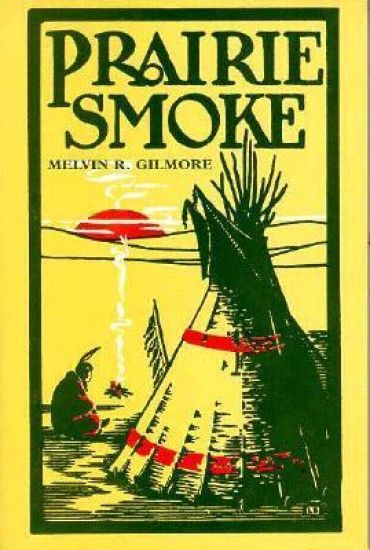
Tells the traditional stories and describes the lifeways of some of the first people of the Plains: the Pawnee, Sioux, Hidatsa, Mandan, Arikara, and Omaha Indians. Through these stories, readers learn of the essential ties Native peoples have to the land.

In the wake of Joseph Smith Jr.'s murder in 1844, his following splintered. Some followed a maverick Mormon apostle, Lyman Wight. Sometimes called the "Wild Ram of Texas," Wight took his splinter group to frontier Texas, a destination to which Smith, before his murder, had considered moving his followers, who were increasingly unwelcome in the Midwest. He had instructed Wight to take a small band of church members from Wisconsin to establish a Texas colony that would prepare the ground for a mass migration of the membership. Having received these orders directly from Smith, Wight did not believe the former's death changed their significance. If anything, he felt all the more responsible for fulfilling what he believed was a prophet's intention. Antagonism with Brigham Young and the other LDS apostles grew, and Wight refused to join with them or move to their new gathering place in Utah. He and his small congregation pursued their own destiny, becoming an interesting component of the Texas frontier, where they had a significant economic role as early millers and cowboys and a political one as a buffer with the Comanches. Their social and religious practices shared many of the idiosyncracies of the larger Mormon sect, including polygamous marriages, temple rites, and economic cooperatives. Wight was a charismatic but authoritarian and increasingly odd figure, in part because of chemical addictions. His death in 1858 while leading his shrinking number of followers on yet one more migration brought an effective end to his independent church.

Carefully woven, Netting the Sun offers a diversity of natural and human stories from a landscape seemingly empty and forlorn to passing casual travelers. This surprising interpretation of south central Oregon's botany, geology, climate, wildlife, ethnography, and history reveals what a truly special place the high desert is. Born in the sagebrush community of Lakeview in 1941, the author moved on following high school graduation. But as with many native sons and daughters from America's out-of-the-way places, the urge to return to his roots proved irresistible in middle age. "I endeavored to write this collection about the Oregon desert because of my childhood there," Adams writes, "but also because it is a place of startling mystery, subdued danger, and beauty.

At first glance the landscape looks desolate-a barren realm of basalt rims, high cold deserts, dry lakes, and vast expanses of grass and sage. In fact, it is a place where petite flowers bloom on rock shelves. Tiny organisms thrive in hot springs and water saltier than any ocean. Even some of the soil is unique--a special combination that collects and retains water and allows ancient pine stands to survive. The diminutive pika harvests meadow grass, building miniature haystacks to store food for the winter. When the time is right, thousands of tiny green and black frogs emerge from mud cracks along a lake perimeter. There is also human history, evidenced by petroglyphs and remnants of ranches, mills, and mines. Indeed, remote southeast Oregon is a rich wonderland of mountains, forests, creatures, and more--one well worth exploring.Designed as a road tour guide, Remote Wonders is an ideal introduction to Oregon's magnificent corner. Individual chapters highlight notable natural and historical features. The book includes essays, numerous photos, and a pull-out map keyed to selected sites. Supplemental information includes side trip recommendations, potential hazards, when to travel, and what to bring.Born and raised in Oregon's Outback, the author's affection for the region shines through. Ultimately, Melvin Adams hopes his book will entice readers to visit and delight in this wild steppe country.

I have spent a career sifting through the rubble, the abandoned documents, the factories and tools, with the thought of saving what remains of water, land, and animals. But water, wind, and root have their way."--Melvin R. AdamsPerhaps the first environmental engineer at Hanford, Adams spent twenty-four years on its 586 square miles. His thoughtful vignettes recall challenges and sites he worked on or found personally intriguing, like the 216-U-pond. Nestled among the trees, the pond looks like a pleasant place to go fishing. In reality, it has been contaminated with plutonium longer than any other place on earth.In what Adams considers his most successful project, he helped determine the initial scope of the soil and solid waste cleanup. The Environmental Restoration and Disposal Facility today covers 107 acres and has a capacity of 18 million tons.His group also designed and tested a marked, maintenance-free disposal barrier. It uses natural materials that will remain stable for thousands of years. They expanded a network of groundwater monitoring wells to define contaminated plumes, assess treatment effectiveness, and provide relevant data to hydrologists. They also developed a pilot scale pump and treatment plant for use on a four-square-mile carbon tetrachloride plume. His environmental and engineering unit included a biological control group fondly dubbed "The Weeds." They controlled tumbleweeds, tracked and collected plants and animals found growing or digging in contaminated sites, and caught stray wildlife discovered in Hanford offices.In Atomic Geography, Adams presents some surprising revelations. He shares his perspective on leaking high-level waste storage tanks, dosimeters, and Hanford's obsession with safety. He answers the question he is asked most, insisting he does not glow in the dark. He leaves that to spent fuel rods in water storage basins--a phenomenon known as Cherenkov radiation.

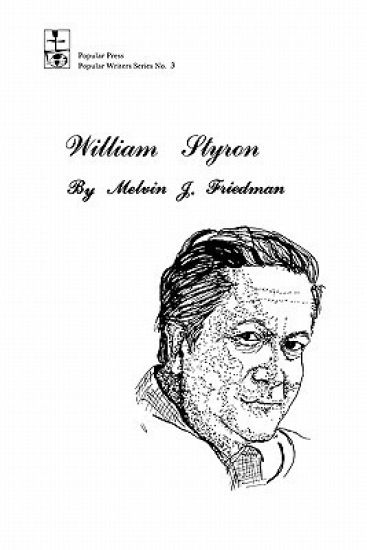
Examines the broad and far-ranging sympathies of this versatile and least parochial of contemporary American writers.
Despite the burgeoning literature on the role of the father in child development and on fathering as a developmental stage, surprisingly little has been written about the psychiatrically impaired father. In Fathers Who Fail, Melvin Lansky remedies this glaring lacuna in the literature. Drawing on contemporary psychoanalysis, family systems theory, and the sociology of conflict, he delineates the spectrum of psychopathological predicaments that undermine the ability of the father to be a father. Out of his sensitive integration of the intrapsychic and intrafamilial contexts of paternal failure emerges a richly textured portrait of psychiatrically impaired fathers, of fathers who fail. Lansky's probing discussion of narcissistic equilibrium in the family system enables him to chart the natural history common to the symptomatic impulsive actions of impaired fathers. He then considers specific manifestations of paternal dysfunction within this shared framework of heightened familial conflict and the failure of intrafamilial defenses to common shame. Domestic violence, suicide, the intensification of trauma, posttraumatic nightmares, catastrophic reactions in organic brain syndrome, and the murder of a spouse are among the major "symptoms" that he explores. In each instance, Lansky carefully sketches the progression of vulnerability and turbulence from the father's personality, to the family system, and thence to the symptomatic eruption in question. In his concluding chapter, he comments tellingly on the unconscious obstacles - on the part of both patients and therapists - to treating impaired fathers. The obstacles cut across different clinical modalities, underscoring the need for multimodal responses to fathers who fail.
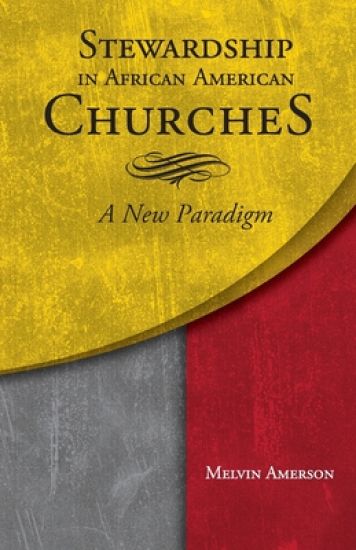
Stewardship in African American Churches: A New Paradigm
Melvin Amerson
Discipleship Resources
2015
nidottu
"When the church embraces the responsibility of living as faith managers of God's vast resources as Psalm 24:1 teaches], the community of faith will prosper."So begins this practical and theological study of stewardship, both in the context of the African-American church tradition and beyond. After all, a systematic approach to stewardship undergirds the ministry and mission of the church universal.A stewardship consultant, Amerson draws upon his experience to help churchesdevelop a theology of generosity;define stewardship leadership roles;celebrate the offering each week; andestablish endowment giving.While recognizing still-relevant traditions, he also points to newer tactics and strategies convenient to both members and congregations-including electronic giving, contribution statements, and year-end giving.A highlight of the book is Amerson's explanation of the development of a narrative budget/narrative spending plan. He also writes about stewardship education at multiple levels. This book is a solid resource for financial stewardship education.
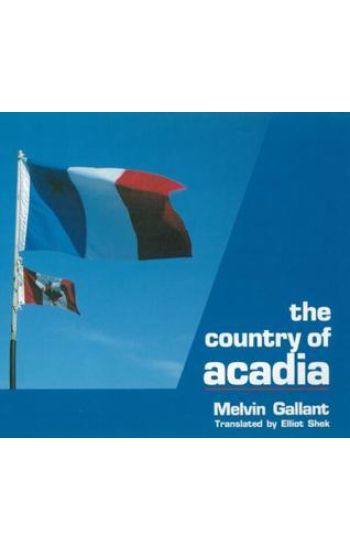
Country Of Acadia was originally published in french. Melvin Gallant has authored more than a dozen book-length works including volumes of poetry, collections of stories, books for children, and historical works on Acadian culture.
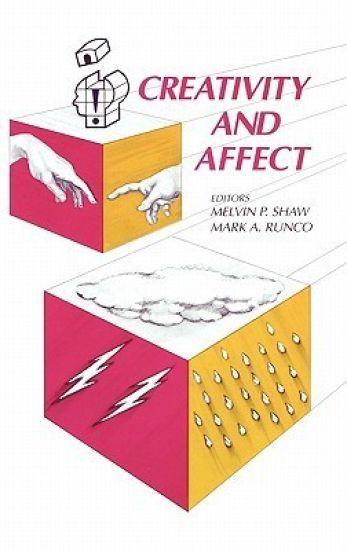
The authors of this volume attempt to cohere the field of creativity and affect in a scholarly fashion by categorizing and characterizing some of its major features, including environmental influences; underlying processes; specific affective states; the role of atypical or pathological personalities; unconscious processes; physiological components; proactive and reactive stimuli; intrinsic motivation; eminence versus everyday creativity; and testing of assessing the affective component of creativity. The authors also examine and discuss the role that emotions, feelings and moods play in the creative process. This volume also provides a vehicle for students and psychotherapists, with which they can fully appreciate the feelings generated by the creative process and the various stages of it. How does a creator feel during its more mundane phases? Can he or she tolerate the frustration of failing and being unsuccessful most of the time? What is the real joy of achievement, success, and ultimate acceptance by one's peers in a given field? Do we have to exhibit major psychopathological features in order to achieve eminence in specific fields? What is the role of mind altering substances, mood disorders, and the like? This volume answers these questions and more.
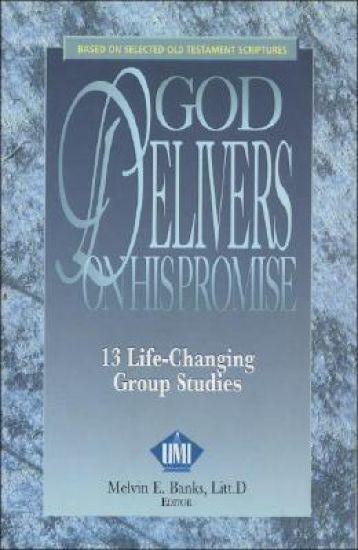
This study focuses on passages from Exodus, Leviticus, Numbers, Deuteronomy, and Joshua. Follow the dramatic events of God's recruitment of Moses to lead His people out of Egyptian bondage through until the death of his successor, Joshua. It includes 13 lessons.