Kirjojen hintavertailu. Mukana 12 083 983 kirjaa ja 12 kauppaa.

Kirjahaku

Etsi kirjoja tekijän nimen, kirjan nimen tai ISBN:n perusteella.

1000 tulosta hakusanalla Moore Stephanie Perry

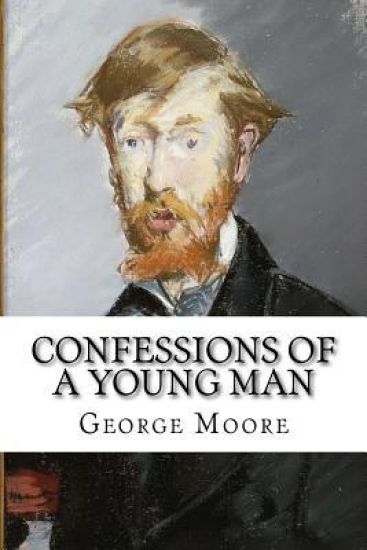
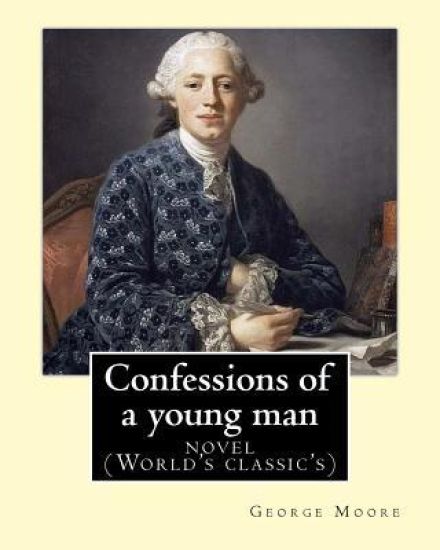
Confessions of a young man. By: George Moore: is a memoir by Irish novelist George Moore who spent about 15 years in his teens and 20s in Paris and la
The Confessions of a Young Man (1886 in French; 1888 in English) is a memoir by Irish novelist George Moore who spent about 15 years in his teens and 20s in Paris and later London as a struggling artist. The book is notable as being one of the first English writings which named important emerging French Impressionists; for its literary criticism; and depictions of bohemian life in Paris during the 1870s and 1880s.In writing style The Confessions of a Young Man is presented as a novel, with a hero named Dayne, but the reader assumes in essence it is an autobiography, a true "confession".Dayne (i.e. Moore) went to Paris as a teenager, and almost becomes a full Parisian nearly forgetting the English language after 15 years. He sketches, with a frankness now jubilant, now cynical, the luscious "vie de Boheme" that Paris alone could offer the young man of health and wealth who loved art.Amid scenes splendid, squalid, or bizarre, move students, cabotins, painters, poets, pale enthusiasts starving for the sake of an idea, actresses, women of fashion, courtesans, clubmen, and spectators.Artistic endeavour and perfumed vice mingle in fraternity; everything is unusual, irregular, fantastic.Dayne emerges from the ordeal of this environment but little changed.For him the enticements of the flesh are not more powerful than those of art.One week he is beguiling the hours in some salon or alcove, the next he is incandescent with aspiration.So the years pass; and at last, having saturated himself with the French theories of literary and graphic art which are bound up with the names of Flaubert, Goncourts, Zola, Degas, and Manet, he one day learns with tragic certainty that he is not destined to be a painter, and he courageously admits that all this periodic, frenzied effort has been misdirected. 1] Then we have interludes of philosophy and literary criticism; the philosophy perhaps not of much account; the criticism often original, epigrammatic, sometimes of an astounding penetration, and always literary. Later, Dayne is driven by adverse circumstances to London and to a lodging in the Strand, where the book ends.Dayne's ideas about art and his temperament can be seen in characteristic passages like the following: "For art was not for us then as it is now-a mere emotion, right or wrong only in proportion to its intensity; we believed then in the grammar of art, perspective, anatomy, and la jambe qui forte.".... George Augustus Moore (24 February 1852 - 21 January 1933) was an Irish novelist, short-story writer, poet, art critic, memoirist and dramatist. Moore came from a Roman Catholic landed family who lived at Moore Hall in Carra, County Mayo.He originally wanted to be a painter, and studied art in Paris during the 1870s. There, he befriended many of the leading French artists and writers of the day. As a naturalistic writer, he was amongst the first English-language authors to absorb the lessons of the French realists, and was particularly influenced by the works of mile Zola. His writings influenced James Joyce, according to the literary critic and biographer Richard Ellmann, and, although Moore's work is sometimes seen as outside the mainstream of both Irish and British literature, he is as often regarded as the first great modern Irish novelist. George Moore was born in Moore Hall in 1852. As a child, Moore enjoyed the novels of Walter Scott, which his father read to him.He spent a good deal of time outdoors with his brother, Maurice George Moore, and also became friendly with the young Willie and Oscar Wilde, who spent their summer holidays at nearby Moytura. Oscar was to later quip of Moore: "He conducts his education in public". His father had again turned his attention to horse breeding and in 1861 brought his champion horse, Croagh Patrick, to England for a successful racing season, together with his wife and nine-year-old son......
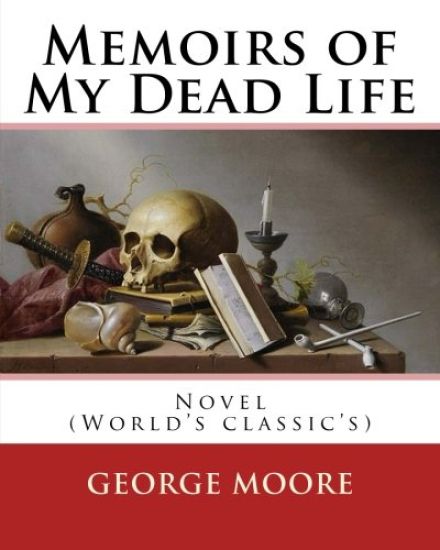
Memoirs of My Dead Life(1906). By: George Moore: Novel (World's classic's)

Memoirs of My Dead Life(1906). By: George Moore: Novel (World's classic's)

George Moore

Createspace Independent Publishing Platform
2016
nidottu
George Augustus Moore (24 February 1852 - 21 January 1933) was an Irish novelist, short-story writer, poet, art critic, memoirist and dramatist. Moore came from a Roman Catholic landed family who lived at Moore Hall in Carra, County Mayo. He originally wanted to be a painter, and studied art in Paris during the 1870s. There, he befriended many of the leading French artists and writers of the day. As a naturalistic writer, he was amongst the first English-language authors to absorb the lessons of the French realists, and was particularly influenced by the works of mile Zola.His writings influenced James Joyce, according to the literary critic and biographer Richard Ellmann, and, although Moore's work is sometimes seen as outside the mainstream of both Irish and British literature, he is as often regarded as the first great modern Irish novelist.George Moore was born in Moore Hall in 1852. As a child, Moore enjoyed the novels of Walter Scott, which his father read to him. He spent a good deal of time outdoors with his brother, Maurice George Moore, and also became friendly with the young Willie and Oscar Wilde, who spent their summer holidays at nearby Moytura. Oscar was to later quip of Moore: "He conducts his education in public". His father had again turned his attention to horse breeding and in 1861 brought his champion horse, Croagh Patrick, to England for a successful racing season, together with his wife and nine-year-old son. For a while George was left at Cliff's stables until his father decided to send George to his alma mater facilitated by his winnings. Moore's formal education started at St. Mary's College, Oscott, a Catholic boarding school near Birmingham where he was the youngest of 150 boys. He spent all of 1864 at home, having contracted a lung infection brought about by a breakdown in his health. His academic performance was poor while he was hungry and unhappy. In January 1865, he returned to St. Mary's College with his brother Maurice, where he refused to study as instructed and spent time reading novels and poems.That December the principal, Spencer Northcote, wrote a report that: "he hardly knew what to say about George." By the summer of 1867 he was expelled, for (in his own words) 'idleness and general worthlessness', and returned to Mayo. His father once remarked, about George and his brother Maurice: "I fear those two redheaded boys are stupid", an observation which proved untrue for all four boys.
The brook Kerith; a Syrian story. By: George Moore: Novel (World's classic's)

The brook Kerith; a Syrian story. By: George Moore: Novel (World's classic's)

George Moore

Createspace Independent Publishing Platform
2016
nidottu
1916. Irish novelist, playwright, poet and critic, his epic The Brook Kerith begins: It was at the end of a summer evening, long after his usual bedtime, that Joseph, sitting on his grandmother's knee, heard her tell that Kish having lost his asses sent Saul, his son, to seek them in the land of the Benjamites and the land of Shalisha, whither they might have started. But they were not in these lands, Son, she continued, nor in Zulp, whither Saul went afterwards, and being then tired out with looking for them he said to the servant: we shall do well to forget the asses, lest my father should ask what has become of us. See other titles by this author available from Kessinger Publishing............... George Augustus Moore (24 February 1852 - 21 January 1933) was an Irish novelist, short-story writer, poet, art critic, memoirist and dramatist. Moore came from a Roman Catholic landed family who lived at Moore Hall in Carra, County Mayo. He originally wanted to be a painter, and studied art in Paris during the 1870s. There, he befriended many of the leading French artists and writers of the day. As a naturalistic writer, he was amongst the first English-language authors to absorb the lessons of the French realists, and was particularly influenced by the works of mile Zola.His writings influenced James Joyce, according to the literary critic and biographer Richard Ellmann, and, although Moore's work is sometimes seen as outside the mainstream of both Irish and British literature, he is as often regarded as the first great modern Irish novelist.George Moore was born in Moore Hall in 1852. As a child, Moore enjoyed the novels of Walter Scott, which his father read to him. He spent a good deal of time outdoors with his brother, Maurice George Moore, and also became friendly with the young Willie and Oscar Wilde, who spent their summer holidays at nearby Moytura. Oscar was to later quip of Moore: "He conducts his education in public". His father had again turned his attention to horse breeding and in 1861 brought his champion horse, Croagh Patrick, to England for a successful racing season, together with his wife and nine-year-old son. For a while George was left at Cliff's stables until his father decided to send George to his alma mater facilitated by his winnings. Moore's formal education started at St. Mary's College, Oscott, a Catholic boarding school near Birmingham where he was the youngest of 150 boys. He spent all of 1864 at home, having contracted a lung infection brought about by a breakdown in his health. His academic performance was poor while he was hungry and unhappy. In January 1865, he returned to St. Mary's College with his brother Maurice, where he refused to study as instructed and spent time reading novels and poems.That December the principal, Spencer Northcote, wrote a report that: "he hardly knew what to say about George." By the summer of 1867 he was expelled, for (in his own words) 'idleness and general worthlessness', and returned to Mayo. His father once remarked, about George and his brother Maurice: "I fear those two redheaded boys are stupid", an observation which proved untrue for all four boys.............
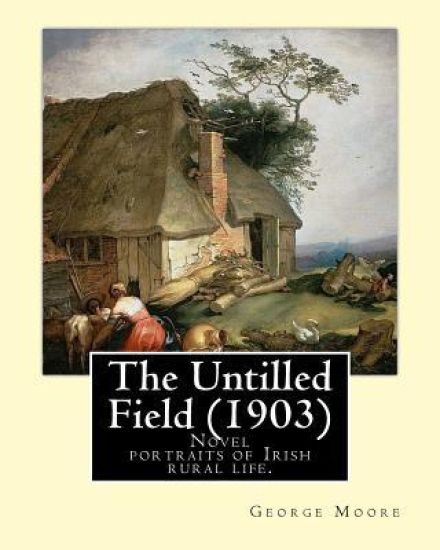
The Untilled Field (1903). By: George Moore: Novel (Original Classics) portraits of Irish rural life.
Originally published in 1903, The Untilled Field proved to be one of Moore's works that pleased Moore best for its affectionate portraits of Irish rural life. Though modeled initially on Turgenev's Tales of a Sportsman, the stories soon became original inspirations woven out of Moore's memories of the peasants who lived and worked on his family estate in Mayo. It is one of the richest and most perfectly written of his works. ........ George Augustus Moore (24 February 1852 - 21 January 1933) was an Irish novelist, short-story writer, poet, art critic, memoirist and dramatist. Moore came from a Roman Catholic landed family who lived at Moore Hall in Carra, County Mayo. He originally wanted to be a painter, and studied art in Paris during the 1870s. There, he befriended many of the leading French artists and writers of the day. As a naturalistic writer, he was amongst the first English-language authors to absorb the lessons of the French realists, and was particularly influenced by the works of mile Zola.His writings influenced James Joyce, according to the literary critic and biographer Richard Ellmann, and, although Moore's work is sometimes seen as outside the mainstream of both Irish and British literature, he is as often regarded as the first great modern Irish novelist.George Moore was born in Moore Hall in 1852. As a child, Moore enjoyed the novels of Walter Scott, which his father read to him. He spent a good deal of time outdoors with his brother, Maurice George Moore, and also became friendly with the young Willie and Oscar Wilde, who spent their summer holidays at nearby Moytura. Oscar was to later quip of Moore: "He conducts his education in public". His father had again turned his attention to horse breeding and in 1861 brought his champion horse, Croagh Patrick, to England for a successful racing season, together with his wife and nine-year-old son. For a while George was left at Cliff's stables until his father decided to send George to his alma mater facilitated by his winnings. Moore's formal education started at St. Mary's College, Oscott, a Catholic boarding school near Birmingham where he was the youngest of 150 boys. He spent all of 1864 at home, having contracted a lung infection brought about by a breakdown in his health. His academic performance was poor while he was hungry and unhappy. In January 1865, he returned to St. Mary's College with his brother Maurice, where he refused to study as instructed and spent time reading novels and poems.That December the principal, Spencer Northcote, wrote a report that: "he hardly knew what to say about George." By the summer of 1867 he was expelled, for (in his own words) 'idleness and general worthlessness', and returned to Mayo. His father once remarked, about George and his brother Maurice: "I fear those two redheaded boys are stupid", an observation which proved untrue for all four boys.
Wanting Moore

Wanting Moore

Lauren Gallagher

Createspace Independent Publishing Platform
2016
pokkari
Two kinky novels -- over 200,000 words -- from EPIC Award winner Lauren Gallagher, including Reconstructing Meredith, winner of 2011 National Readers' Choice Award (Erotic Category) and 2012 finalist for both the National Leather Association Pauline Reage Novel Award and the EPIC Awards Kristen Locke is sexually frustrated and insatiably curious. Meredith Whitley is deeply traumatized and in search of a caring hand to help her heal.Two very different women with two very different stories, but their answers both come in the form of Scott Moore, a snarky Dom with an impressive dungeon and a huge heart.In Light Switch, Scott guides Kristen into the world of BDSM along with her voyeur neighbor, Matt Sommers. In Reconstructing Meredith, Scott's ex-girlfriend returns with a heartbreaking story, far too many physical and emotional scars, and a desperate need to reclaim the sexuality that another man tried to crush.Through two stories of self-discovery and rediscovery, exploring and healing, two women find love where they least expect it, and find themselves always wanting Moore...
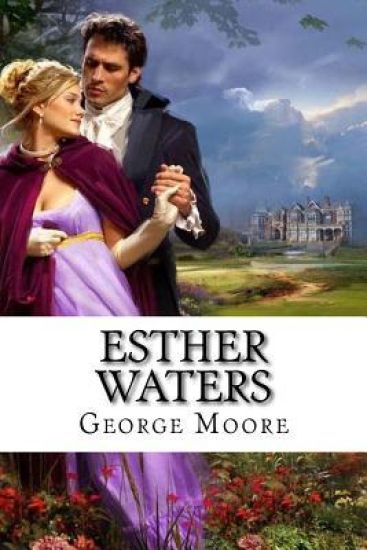
Esther Waters George Moore

Esther Waters George Moore

George Moore

Createspace Independent Publishing Platform
2017
nidottu
Set in England from the early 1870s onward, the novel is about a young, pious woman from a poor working-class family who, while working as a kitchen maid, is seduced by another employee, becomes pregnant, is deserted by her lover, and against all odds decides to raise her child as a single mother.
Confessions of a Young Man George Moore

Confessions of a Young Man George Moore

George Moore

Createspace Independent Publishing Platform
2017
nidottu
The Confessions of a Young Man is a memoir by Irish novelist George Moore who spent about 15 years in his teens and 20s in Paris and later London as a struggling artist. The book is notable as being one of the first English writings which named important emerging French Impressionists; for its literary criticism; and depictions of bohemian life in Paris during the 1870s and 80s.
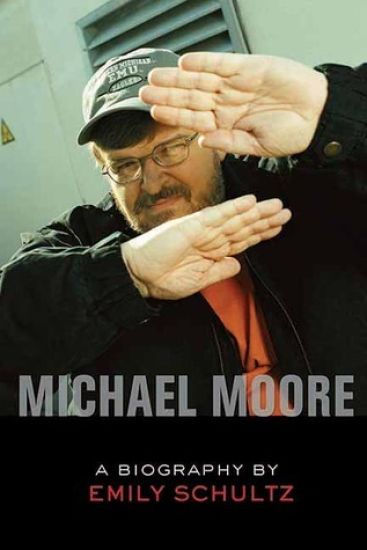
Michael Moore: A Biography

Michael Moore: A Biography

Emily Schultz

ECW PRESS
2005
sidottu
Love him or hate him, the world over cannot ignore Michael Moore. Left and right can both agree that this son of a Flint autoworker has single-handedly revitalized liberal politics, and turned his unique style of political filmmaking into an expectation-defying brand. But long before he shocked the nation on the Academy Awards stage, he was picking fights with everyone from big business to friends and compatriots. Without an agenda to prove Moore right or wrong, Michael Moore by Emily Schultz is the first book to tell Moore's life story--from the shy Eagle Scout to the most vocal critic of the Bush Presidency. Moore's detractors on both sides of the fence claim that he flubs facts, personally and professionally. Schultz sorts truth from lies with in-depth research and interviews, and presents a man honestly passionate and professionally conflicted. In his cap and windbreaker--always aware of the power of media--Moore has spent a life refining his image as the everyday rebel. He is a man who, at age 18, ran for the local school board so he could fire his principal, and who spent three years suing a magazine where he worked for two issues. With information never before revealed, Schultz looks into Moore's mysterious and disastrous jump from local muckraker to editor of Mother Jones, the runaway success of his first film Roger & Me, and the scandal it caused that lost him an Oscar. Regardless of scandal, Roger & Me became his ticket from his economically devastated hometown of Flint to Hollywood. Was he a hero or villain for his portrayal of the death of small town America? The people of Flint were as divided as the rest of the world would soon be. As the '90s saw Moore becoming a powerhouse television producer of the cult hit TV Nation, and a best-selling author, the contradictions between success and his roots became ever more apparent. Is the ball cap and jeans uniform incongruous with his Upper West Side Manhattan life? With Fahrenheit 9/11 catapulting Moore to the front of pop cultural recognition, many from his past say that the line between the man and the myth has vanished. Moore has spent his life walking that line, and Schultz has written an incisive account that lets readers see beyond the myths surrounding one of the most important public figures of our age.
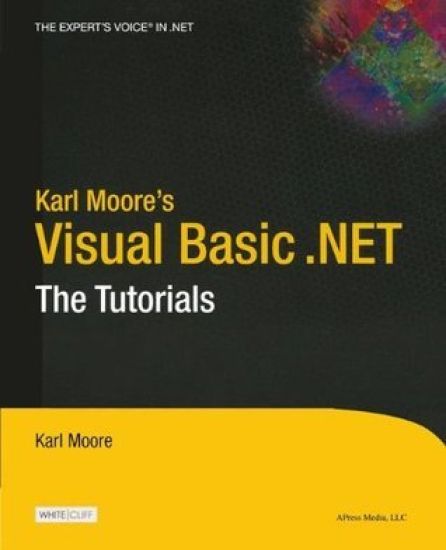
Karl Moore's Visual Basic .NET
Karl Moore's Visual Basic .NET: The Tutorials is a short, all-inclusive "career in a book". Its goals is to simplify the complex world of programming so anyone can pick it up and learn in just a few fun hours. The writing style is light and humorous, with simplified analogies introduced to explain more complicated concepts." Karl Moore's Visual Basic .NET: The Tutorials consists of a number of key tutorials, each dealing with a specific "real-life" area of programming. The tutorials are broken down into easily digestible 10-page installments, with an accompanying FAQ and review sheet at the close. Numerous "top tips" are also distributed throughout the texts to aid understanding. On marketable advantage to this publication is its length - not too long, not too short. And it still manages to cover everything the reader needs to know by cutting out the needless theory and concentrating on real world essentials. Karl Moore will take beginner VB .NET programmers to the next level.
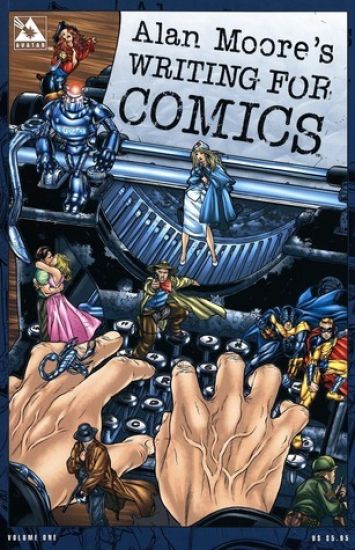
Alan Moore's Writing for Comics

Alan Moore's Writing for Comics

Alan Moore; Jacen Burrows; Mariam Ahmad

Avatar Press
2003
nidottu
The master of comic book writing shares his thoughts on how to deliver atop-notch script The main essay was originally written in 1985 and appeared inan obscure British fanzine, right as Moore was reshaping the landscape of moderncomics, and has been tragically lost ever since. Now Avatar brings it back inprint, collected for the first time as one graphic novel, and heavilyillustrated by Jacen Burrows.Moore also provides a brand new essay on how his thoughts on writing havechanged in the two decades since he first wrote it.
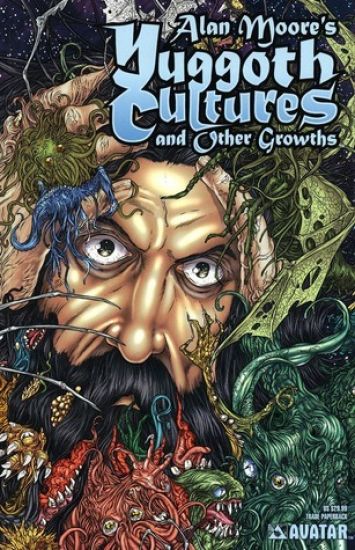
Alan Moore's Yuggoth Cultures and Other Growths

Alan Moore's Yuggoth Cultures and Other Growths

Alan Moore; Antony Johnston

Avatar Press
2007
pokkari
"Yuggoth Cultures and Other Growths" features tons of Alan's classic short sequential comic book stories that have been long out of print, stories that have never before been seen and special developmental sections with original script pages and comments from Alan and the creators. This massive volume also has an extensive interview with Moore as he discusses Yuggoth Cultures, the stories inside and some of the amazing tales the lead to their creation as well as the real magic behind the works. As if that wasn't enough, Antony Johnston's work inspired by Yuggoth Cultures and the worlds of H.P. Lovecraft is included and features all-star art by Juan Jose Ryp, Jacen Burrows, Dheeraj Verma and many more along with copious notes on the Lovecraftian origins of the tales.
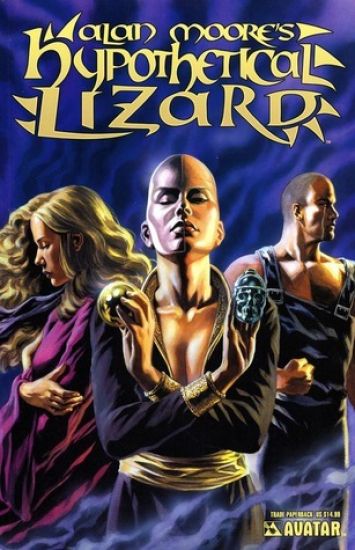
Alan Moore's Hypothetical Lizard

Alan Moore's Hypothetical Lizard

Alan Moore; Sebastian Fiumara; Lorenzo Lorente

Avatar Press
2007
nidottu
Finally collected, here is one of Alan Moore's greatest works and his mostcritically acclaimed novella of all time, painstakingly adapted to comic books.Moore's frequent collaborator Antony Johnston has carefully preserved the storyas it is presented in sequential form with stunning grey-painted art bysensations Lorenzo Lorente and Sebastian Fiumara. What would you pay to learnthe innermost secrets of wizards? Young prostitute Som Som has made the ultimatesacrifice; literally sworn to secrecy by cosmetic surgery, the two halves of SomSom's brain have been severed, leaving her able to hear and see... but not speakor act. Now Som Som's unique attributes will put her firmly in the center of animpossible dilemma, as an old friend return to The House Without Clocks, and adeadly game of domination begins... This collected volume contains the entirefour issue series, the full text of the original story, and both artist'soriginal design sketches.Also available in a limited hardcover edition (978-1-5929-1039-7)
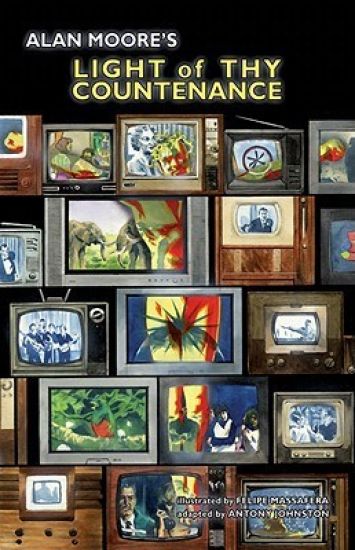
Alan Moore's Light of Thy Countenance

Alan Moore's Light of Thy Countenance

Alan Moore; Felipe Massafera; Logan Bonner

Avatar Press
2009
nidottu
Alan Moore, master and magician of storytelling, tears back the veil of oneof the most arcane of enchantments -- The Magic of Television Partgrimoire, part grim invocation of things that are all too ordinary, Light ofThy Countenance -- an original and breathtaking story by Alan Moore-- is adapted to graphic novella format by Antony Johnston, preservingevery word, with each page painstakingly painted by Felipe Massafera.Maureen Cooper is not real. She is an apparition summoned to screens, intohomes, into the hearts and mind of the viewing audience by Carol Livesly. ButCarol Livesly is not the god that creates the illusions that capture the mindand bind the soul. She is only a servant of a higher power. A higher, hungrypower, as old as the world and eternally new. As, perhaps, are we all.