Kirjojen hintavertailu. Mukana 11 244 527 kirjaa ja 12 kauppaa.

Kirjahaku

Etsi kirjoja tekijän nimen, kirjan nimen tai ISBN:n perusteella.

1000 tulosta hakusanalla Neil Root

The Universe Within

The Universe Within

Neil Shubin

Penguin Books Ltd
2014
pokkari
The Universe Within is a thrilling journey from today all the way back to the Big Bang, which shows the deep connections between the human body and the universe, from Neil Shubin, author of Your Inner FishWhat links the birth of the moon to our body clocks? How did the creation of the Atlantic Ocean affect how we have children? What does the water inside us and on Earth have to do with the deepest stretches of space? Humanity's status in the cosmos can seem insignificant. Yet, as Neil Shubin shows, the one place where the universe, solar system and planet merge is inside your body. Exploring the smallest atomic structures and vastest reaches of space, Shubin uncovers a sublime truth: that in every one of us lies the most profound story of all - how we and our world came to be.Neil Shubin is a palaeontologist in the great tradition of his mentors, Ernst Mayr and Stephen Jay Gould. He has discovered fossils around the world that have changed the way we think about many of the key transitions in evolution and has pioneered a new synthesis of expeditionary palaeontology, developmental genetics and genomics. He trained at Columbia, Harvard and Berkeley and is currently a Professor in the Department of Organismal Biology and Anatomy at the University of Chicago.'A new, fresh way of telling the story of life, the universe and everything ... hugely enjoyable' Tim Radford, Guardian'Shubin is not only a distinguished scientist, but a wonderfully lucid and elegant writer; he is an irrepressibly enthusiastic teacher ... a science writer of the first rank' Oliver Sacks'Glorious, uplifting ... It tracks the very atoms in our bodies back to the Big Bang, and shows how all the molecules that comprise us have roots in the formation of Earth ... What is special about the book is its sweep, its scope, its panorama' Wall Street Journal
Deep Country

Deep Country

Neil Ansell

Penguin Books Ltd
2012
pokkari
Deep Country is Neil Ansell's account of five years spent alone in a hillside cottage in Wales.'I lived alone in this cottage for five years, summer and winter, with no transport, no phone. This is the story of those five years, where I lived and how I lived. It is the story of what it means to live in a place so remote that you may not see another soul for weeks on end. And it is the story of the hidden places that I came to call my own, and the wild creatures that became my society.'Neil Ansell immerses himself in the rugged British landscape, exploring nature's unspoilt wilderness and man's relationship with it. Deep Country is a celebration of rural life and the perfect read for fans of Robert Macfarlane's Landmarks, Helen Macdonald's H is for Hawk orJames Rebanks' A Shepherd's Life.'A beautiful, translucent portrayal of mid-Wales' Jay Griffiths'Touching. Through Ansell's charming and thoroughly detailed stories of run-ins with red kites, curlews, sparrowhawks, jays and ravens, we see him lose himself . . . in the rhythms and rituals of life in the British wilderness' Financial Times'Remarkable, fascinating' Time Out'A gem of a book, an extraordinary tale. Ansell's rich prose will transport you to a real life Narnian world that CS Lewis would have envied. Find your deepest, most-comfortable armchair and get away from it all' CountryfileNeil Ansell spent five years living on a remote hillside in Wales, and wrote his first book, Deep Country, about the experience. Since that time, he has become an award-winning television journalist with the BBC. He has travelled in over fifty countries and has written for the Guardian, the New Statesman and the Big Issue.
Germany

Germany

Neil MacGregor

Penguin Books Ltd
2016
pokkari
From Neil MacGregor, the author of A History of the World in 100 Objects, this is a view of Germany like no otherFor the past 140 years, Germany has been the central power in continental Europe. Twenty-five years ago a new German state came into being. How much do we really understand this new Germany, and how do its people now understand themselves?Neil MacGregor argues that uniquely for any European country, no coherent, over-arching narrative of Germany's history can be constructed, for in Germany both geography and history have always been unstable. Its frontiers have constantly floated. Königsberg, home to the greatest German philosopher, Immanuel Kant, is now Kaliningrad, Russia; Strasbourg, in whose cathedral Johann Wolfgang von Goethe, Germany's greatest writer, discovered the distinctiveness of his country's art and history, now lies within the borders of France. For most of the five hundred years covered by this book Germany has been composed of many separate political units, each with a distinct history. And any comfortable national story Germans might have told themselves before 1914 was destroyed by the events of the following thirty years.German history may be inherently fragmented, but it contains a large number of widely shared memories, awarenesses and experiences; examining some of these is the purpose of this book. Beginning with the fifteenth-century invention of modern printing by Gutenberg, MacGregor chooses objects and ideas, people and places which still resonate in the new Germany - porcelain from Dresden and rubble from its ruins, Bauhaus design and the German sausage, the crown of Charlemagne and the gates of Buchenwald - to show us something of its collective imagination. There has never been a book about Germany quite like it.
The Children of Ash and Elm

The Children of Ash and Elm

Neil Price

Penguin Books Ltd
2022
pokkari
A TIMES BOOK OF THE YEAR'As brilliant a history of the Vikings as one could possibly hope to read' Tom HollandThe 'Viking Age' is traditionally held to begin in June 793 when Scandinavian raiders attacked the monastery of Lindisfarne in Northumbria, and to end in September 1066, when King Harald Hardrada of Norway died leading the charge against the English line at the Battle of Stamford Bridge. This book, the most wide-ranging and comprehensive assessment of the current state of our knowledge, takes a refreshingly different view. It shows that the Viking expansion began generations before the Lindisfarne raid, and traces Scandinavian history back centuries further to see how these people came to be who they were.The narrative ranges across the whole of the Viking diaspora, from Vinland on the eastern American seaboard to Constantinople and Uzbekistan, with contacts as far away as China. Based on the latest archaeology, it explores the complex origins of the Viking phenomenon and traces the seismic shifts in Scandinavian society that resulted from an economy geared to maritime war. Some of its most striking discoveries include the central role of slavery in Viking life and trade, and the previously unsuspected pirate communities and family migrations that were part of the Viking 'armies' - not least in England.Especially, Neil Price takes us inside the Norse mind and spirit-world, and across their borders of identity and gender, to reveal startlingly different Vikings to the barbarian marauders of stereotype. He cuts through centuries of received wisdom to try to see the Vikings as they saw themselves - descendants of the first human couple, the Children of Ash and Elm. Healso reminds us of the simultaneous familiarity and strangeness of the past, of how much we cannot know, alongside the discoveries that change the landscape of our understanding. This is an eye-opening and surprisingly moving book.
Living with the Gods

Living with the Gods

Neil MacGregor

Penguin Books Ltd
2019
pokkari
Following the award-winning BBC Radio 4 series, a panoramic exploration of peoples, objects and beliefs from the celebrated author of A History of the World in 100 Objects and Germany 'Riveting, extraordinary ... tells the sweeping story of religious belief in all its inventive variety. The emphasis is not on our differences, but on shared spiritual yearnings' Rachel Campbell-Johnston, The Times, Books of the Year One of the central facts of human existence is that every society shares a set of beliefs and assumptions - a faith, an ideology, a religion - that goes far beyond the life of the individual. These beliefs are an essential part of a shared identity. They have a unique power to define - and to divide - us, and are a driving force in the politics of much of the world today. Throughout history they have most often been, in the widest sense, religious. Yet this book is not a history of religion, nor an argument in favour of faith. It is about the stories which give shape to our lives, and the different ways in which societies imagine their place in the world. Looking across history and around the globe, it interrogates objects, places and human activities to try to understand what shared beliefs can mean in the public life of a community or a nation, how they shape the relationship between the individual and the state, and how they help give us our sense of who we are. For in deciding how we live with our gods, we also decide how to live with each other. 'The new blockbuster by the museums maestro Neil MacGregor ... The man who chronicles world history through objects is back ... examining a new set of objects to explore the theme of faith in society' Sunday Times
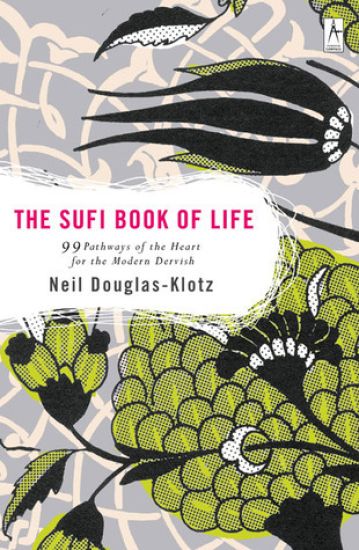
Sufi Book of Life

Sufi Book of Life

Neil Douglas-Klotz

J.P.Tarcher,U.S./Perigee Bks.,U.S.
2005
nidottu
Furnishing meditations on the ninety-nine Qualities of Unity, this reflective handbook explains how to apply Sufi principles to the challenges of modern life, with inspirational commentary on each quality and its relationship to contemporary concerns, along with timeless wisdom from the Sufi masters, stories, lore, and poetry. Original.
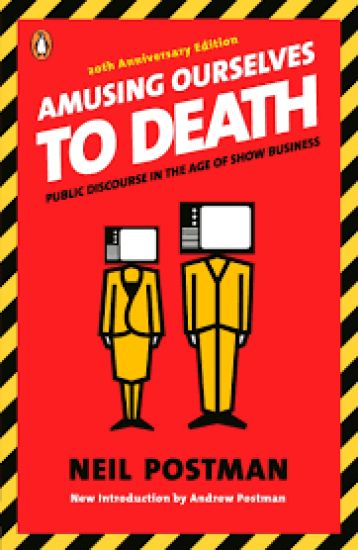
Amusing Ourselves to Death: Public Discourse in the Age of Show Business
What happens when media and politics become forms of entertainment? As our world begins to look more and more like Orwell's 1984, Neil's Postman's essential guide to the modern media is more relevant than ever. "It's unlikely that Trump has ever read Amusing Ourselves to Death, but his ascent would not have surprised Postman." -CNN Originally published in 1985, Neil Postman's groundbreaking polemic about the corrosive effects of television on our politics and public discourse has been hailed as a twenty-first-century book published in the twentieth century. Now, with television joined by more sophisticated electronic media--from the Internet to cell phones to DVDs--it has taken on even greater significance. Amusing Ourselves to Death is a prophetic look at what happens when politics, journalism, education, and even religion become subject to the demands of entertainment. It is also a blueprint for regaining control of our media, so that they can serve our highest goals. "A brilliant, powerful, and important book. This is an indictment that Postman has laid down and, so far as I can see, an irrefutable one." -Jonathan Yardley, The Washington Post Book World
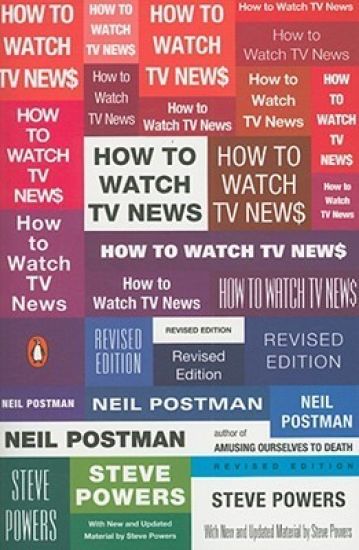
How to Watch TV News

How to Watch TV News

Neil Postman; Steve Powers

PENGUIN BOOKS
2008
nidottu
A scathing and prescient look at television news' now updated for the new tech-savvy generation Television news: genuine information or entertainment fodder? Fifteen years ago, Neil Postman, a pioneer in media education and author of the bestselling Amusing Ourselves to Death, and Steve Powers, an award-winning broadcast journalist, concluded that anyone who relies exclusively on their television for accurate world news is making a big mistake. A cash cow laden with money from advertisers, so-called news shows glut viewers with celebrity coverage at the cost of things they really should know. Today, this message is still appallingly true but the problems have multiplied, along with the power of the Internet and the abundance of cable channels. A must-read for anyone concerned with the way media is manipulating our worldview, this newly revised edition addresses the evolving technology and devolving quality of America's television news programming.
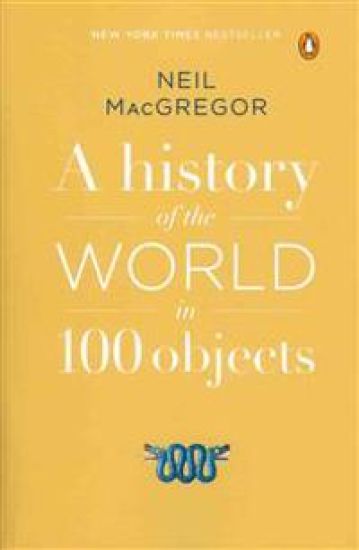
A History of the World in 100 Objects

A History of the World in 100 Objects

Neil MacGregor

PENGUIN BOOKS
2013
nidottu
"An enthralling and profoundly humane book that every civilized person should read." --The Wall Street Journal The blockbuster New York Times bestseller and the companion volume to the wildly popular radio seriesWhen did people first start to wear jewelry or play music? When were cows domesticated, and why do we feed their milk to our children? Where were the first cities, and what made them succeed? Who developed math--or invented money? The history of humanity is one of invention and innovation, as we have continually created new things to use, to admire, or leave our mark on the world. In this groundbreaking book, Neil MacGregor turns to objects that previous civilizations have left behind to paint a portrait of mankind's evolution, focusing on unexpected turning points. Beginning with a chopping tool from the Olduvai Gorge in Africa and ending with a recent innovation that is transforming the way we power our world, he urges us to see history as a kaleidoscope--shifting, interconnected, constantly surprising. A landmark bestseller, A History of the World in 100 Objects is one f the most unusual and engrossing history books to be published in years. "None could have imagined quite how the radio series would permeate the national consciousness. Well over 12.5 million podcasts have been downloaded since the first programme and more than 550 museums around Britain have launched similar series featuring local history. . . . MacGregor's voice comes through as distinctively as it did on radio and his arguments about the interconnectedness of disparate societies through the ages are all the stronger for the detail afforded by extra space. A book to savour and start over."--The Economist
The Alchemists: Three Central Bankers and a World on Fire
The inside story of the world's most powerful central bankers--and the most intense exercise in economic crisis management the world has ever seen Suddenly, without warning, in August 2007, three men who had never been elected to public office found themselves the most powerful people in the world. They were the leaders of the world's three most important central banks: Ben Bernanke of the U.S. Federal Reserve, Mervyn King of the Bank of England, and Jean-Claude Trichet of the European Central Bank. In The Alchemists, Washington Post reporter Neil Irwin presents the truly global story of the central bankers' role in the world economy that we have been missing. Definitive, revelatory, and riveting, it shows us where money comes from--and where it may well be going.
The American Senate

The American Senate

Neil MacNeil; Richard A. Baker

Oxford University Press Inc
2015
nidottu
Winner of the Society for History in the Federal Government's George Pendleton Prize for 2013 The United States Senate has fallen on hard times. Once known as the greatest deliberative body in the world, it now has a reputation as a partisan, dysfunctional chamber. What happened to the house that forged American history's great compromises? In this groundbreaking work, a distinguished journalist and an eminent historian provide an insider's history of the United States Senate. Richard A. Baker, historian emeritus of the Senate, and the late Neil MacNeil, former chief congressional correspondent for Time magazine, integrate nearly a century of combined experience on Capitol Hill with deep research and state-of-the-art scholarship. They explore the Senate's historical evolution with one eye on persistent structural pressures and the other on recent transformations. Here, for example, are the Senate's struggles with the presidency--from George Washington's first, disastrous visit to the chamber on August 22, 1789, through now-forgotten conflicts with Presidents Garfield and Cleveland, to current war powers disputes. The authors also explore the Senate's potent investigative power, and show how it began with an inquiry into John Brown's raid on Harpers Ferry in 1859. It took flight with committees on the conduct of the Civil War, Reconstruction, and World War II; and it gained a high profile with Joseph McCarthy's rampage against communism, Estes Kefauver's organized-crime hearings (the first to be broadcast), and its Watergate investigation. Within the book are surprises as well. For example, the office of majority leader first acquired real power in 1952--not with Lyndon Johnson, but with Republican Robert Taft. Johnson accelerated the trend, tampering with the sacred principle of seniority in order to control issues such as committee assignments. Rampant filibustering, the authors find, was the ironic result of the passage of 1960s civil rights legislation. No longer stigmatized as a white-supremacist tool, its use became routine, especially as the Senate became more partisan in the 1970s. Thoughtful and incisive, The American Senate: An Insider's History transforms our understanding of Congress's upper house.
A Theory of Fields

A Theory of Fields

Neil Fligstein; Doug McAdam

Oxford University Press Inc
2015
nidottu
Finding ways to understand the nature of social change and social order-from political movements to market meltdowns-is one of the enduring problems of social science. A Theory of Fields draws together far-ranging insights from social movement theory, organizational theory, and economic and political sociology to construct a general theory of social organization and strategic action. In a work of remarkable synthesis, imagination, and analysis, Neil Fligstein and Doug McAdam propose that social change and social order can be understood through what they call strategic action fields. They posit that these fields are the general building blocks of political and economic life, civil society, and the state, and the fundamental form of order in our world today. Similar to Russian dolls, they are nested and connected in a broader environment of almost countless proximate and overlapping fields. Fields are mutually dependent; change in one often triggers change in another. At the core of the theory is an account of how social actors fashion and maintain order in a given field. This sociological theory of action, what they call "social skill," helps explain what individuals do in strategic action fields to gain cooperation or engage in competition. To demonstrate the breadth of the theory, Fligstein and McAdam make its abstract principles concrete through extended case studies of the Civil Rights Movement and the rise and fall of the market for mortgages in the U.S. since the 1960s. The book also provides a "how-to" guide to help others implement the approach and discusses methodological issues. With a bold new approach, A Theory of Fields offers both a rigorous and practically applicable way of thinking through and making sense of social order and change-and how one emerges from the other-in modern, complex societies.
Gift and Gain

Gift and Gain

Neil Coffee

Oxford University Press Inc
2017
sidottu
The economy of ancient Rome, with its money, complex credit arrangements, and long-range shipping, was surprisingly modern. Yet Romans also exchanged goods and services within a robust system of gifts and favors, which sustained the supportive relationships necessary for survival in the absence of the extensive state and social institutions. In Gift and Gain: How Money Transformed Ancient Rome, Neil Coffee shows how a vibrant commercial culture progressively displaced systems of gift giving over the course of Rome's classical era. The change was propelled the Roman elite, through their engagement in shipping, moneylending, and other enterprises. Members of the same elite, however, remained habituated to traditional gift relationships, relying on them to exercise influence and build their social worlds. They resisted the transformation, through legislation, political movements, and philosophical argument. The result was a recurring clash across the contexts of Roman social and economic life. The book traces the conflict between gift and gain from Rome's prehistory, down through the conflicts of the late Republic, into the early Empire, showing its effects in areas as diverse as politics, government, legal representation, philosophical thought, public morality, personal and civic patronage, marriage, dining, and the Latin language. These investigations show Rome shifting, unevenly but steadily, away from its pre-historic reliance on relationships of mutual aid, and toward to the more formal, commercial, and contractual relations of modernity.
Intellectual Privacy

Intellectual Privacy

Neil Richards

Oxford University Press Inc
2017
nidottu
Most people believe that our rights to privacy and free speech are inevitably in conflict. Courts all over the world have struggled with how to reconcile the two for over a century, and the rise of the Internet has made this problem more urgent. We live in an age of corporate and government surveillance of our lives. And our free speech culture has created an anything-goes environment on the web, filled with hurtful and harmful expression and data flows. In Intellectual Privacy, Neil Richards offers a solution that ensures that our ideas and values keep pace with our technologies. Because of the importance of free speech to open societies, he argues that when privacy and free speech truly conflict, free speech should almost always win. But in sharp contrast to conventional wisdom, Richards argues that speech and privacy are only rarely in conflict. True invasions of privacy like peeping toms or electronic surveillance should almost never be protected as "free speech." And critically, Richards shows how most of the law we enact to protect online privacy poses no serious burden to public debate, and how protecting the privacy of our data is not censorship. A timely and provocative book on a subject that affects us all, Intellectual Privacy will radically reshape the debate about privacy and free speech in our digital age.
Conflict

Conflict

Neil D. Shortland; Laurence J. Alison; Joseph M. Moran

Oxford University Press Inc
2019
sidottu
Conflict: How Soldiers Make Impossible Decisions is about making hard choices--where all outcomes are potentially negative. The authors draw on interviews conducted with soldiers about the situations they faced and the decisions they made at war. These are vivid and sometimes distressing stories. They form the data from which the authors explore the cognitive processes associated with choice, commitment to action and (sometimes) error, as well as goal directed thinking, innovation and courage. By referring to real cases, Conflict invites readers to consider their own responses under extreme circumstances and ask themselves how they would choose between difficult options. In doing so this book will go some way to helping readers understand what it feels like when choosing between least-worst decisions.
New Urban Spaces

New Urban Spaces

Neil Brenner

Oxford University Press Inc
2019
sidottu
The urban condition is today being radically transformed. Urban restructuring is accelerating, new urban spaces are being consolidated, and new forms of urbanization are crystallizing. In New Urban Spaces, Neil Brenner argues that understanding these mutations of urban life requires not only concrete research, but new theories of urbanization. To this end, Brenner proposes an approach that breaks with inherited conceptions of the urban as a bounded settlement unit-the city or the metropolis-and explores the multiscalar constitution and periodic rescaling of the capitalist urban fabric. Drawing on critical geopolitical economy and spatialized approaches to state theory, Brenner offers a paradigmatic account of how rescaling processes are transforming inherited formations of urban space and their variegated consequences for emergent patterns and pathways of urbanization. The book also advances an understanding of critical urban theory as radically revisable: key urban concepts must be continually reinvented in relation to the relentlessly mutating worlds of urbanization they aspire to illuminate.
New Urban Spaces

New Urban Spaces

Neil Brenner

Oxford University Press Inc
2019
nidottu
The urban condition is today being radically transformed. Urban restructuring is accelerating, new urban spaces are being consolidated, and new forms of urbanization are crystallizing. In New Urban Spaces, Neil Brenner argues that understanding these mutations of urban life requires not only concrete research, but new theories of urbanization. To this end, Brenner proposes an approach that breaks with inherited conceptions of the urban as a bounded settlement unit-the city or the metropolis-and explores the multiscalar constitution and periodic rescaling of the capitalist urban fabric. Drawing on critical geopolitical economy and spatialized approaches to state theory, Brenner offers a paradigmatic account of how rescaling processes are transforming inherited formations of urban space and their variegated consequences for emergent patterns and pathways of urbanization. The book also advances an understanding of critical urban theory as radically revisable: key urban concepts must be continually reinvented in relation to the relentlessly mutating worlds of urbanization they aspire to illuminate.
Little Mogadishu: Eastleigh, Nairobi's Global Somali Hub

Little Mogadishu: Eastleigh, Nairobi's Global Somali Hub

Neil Carrier

Oxford University Press, USA
2017
nidottu
Nairobi's Eastleigh estate has undergone pro- found change over the past two decades. Previously a quiet residential zone, the arrival of vast numbers of Somali refugees catalyzed its trans- formation into 'Little Mogadishu', a global hub for Somali business. Dozens of malls and hotels have sprouted from its muddy streets, attracting thousands of shoppers. Nonetheless, despite boosting Kenya's economy, the estate and its residents are held in suspicion over alleged links to Islamic terrorism, especially after the 2013 Westgate Mall attack, while local and international media have suggested with little evidence that its economic boom owes much to capital derived from Indian Ocean piracy. In contrast to such sensationalized reporting, Little Mogadishu is based on detailed historical and ethnographic research and explores the social and historical underpinnings of this economic boom. It examines how transnational networks converged on Eastleigh in the wake of the collapse of the Somali state, attracting capital from the Somali diaspora, and bringing goods--especially clothes and electronics--from Dubai, China and elsewhere that are much in demand in East Africa. In so doing, Little Mogadishu provides a compelling case-study of the developmental impact diasporas and transnational trade can have, albeit in a country where many see this development as suspect.
From Maimonides to Microsoft

From Maimonides to Microsoft

Neil Weinstock Netanel

Oxford University Press Inc
2018
nidottu
Jewish copyright law is a rich body of jurisprudence that developed in parallel with modern copyright laws and the book privileges that preceded them. Jewish copyright law owes its origins to a reprinting ban that the Rome rabbinic court issued for three books of Hebrew grammar in 1518. It continues to be applied today, notably in a rabbinic ruling outlawing pirated software, issued at Microsoft's request. In From Maimonides to Microsoft, Professor Netanel traces the historical development of Jewish copyright law by comparing rabbinic reprinting bans with secular and papal book privileges and by relaying the stories of dramatic disputes among publishers of books of Jewish learning and liturgy. He describes each dispute in its historical context and examines the rabbinic rulings that sought to resolve it. Remarkably, the rabbinic reprinting bans and copyright rulings address some of the same issues that animate copyright jurisprudence today: Is copyright a property right or just a right to receive fair compensation? How long should copyrights last? What purposes does copyright serve? While Jewish copyright law has borrowed from its secular law counterpart at key junctures, it fashions strikingly different answers to those key questions. The story of Jewish copyright law also intertwines with the history of the Jewish book trade and with steadfast efforts of rabbinic leaders to maintain their authority to regulate that trade in the face of the dramatic erosion of Jewish communal autonomy in the eighteenth and nineteenth centuries. This book will thus be of considerable interest to students of Jewish law and history, as well as copyright scholars and practitioners.
Why Delegate?

Why Delegate?

Neil J. Mitchell

Oxford University Press Inc
2021
nidottu
Why Delegate? moves beyond the standard economic accounts of delegation to offer a fresh take on a wide variety of issues and shows how essential the act of delegating is to our society. From mundane tasks like choosing a plumber to weightier ones like running a country, the world turns on delegation. We delegate particular tasks to people we believe have more expertise than we do. When it is successful, delegation improves efficiency, expands the range of responsible actors, and even increases happiness. When delegation fails, though, it brings conflict, corruption, and an absence of accountability. In Why Delegate?, Neil J. Mitchell investigates the incentives to delegate and the risks we take in doing so. He demonstrates how a new, modified understanding of the simple structure of the delegation relationship-the principal-agent relationship, as economists have described it-simplifies a myriad of important and seemingly disparate problems in private and public life. Using real-world case studies including child abuse in the Catholic Church, the Volkswagen pollution scandal, and FIFA corruption, Mitchell illustrates the broad functionality of delegation logic and the wide range of incentives at work in these relationships. Diverse examples reveal the opportunism of both the leaders and the led and show how accepted accounts of the principal-agent relationship are incomplete. By drawing on multidisciplinary research to address complex questions of motivation, control, responsibility, and accountability, the book builds a broader, more useful logic of delegation. Why Delegate? moves beyond the standard economic accounts of delegation to offer a fresh take on a wide variety of issues and shows how essential the act of delegating is to our society. Mitchell's comprehensive account of the contexts, causes, and effects of delegation develops a new way to understand both the theory and practice of this critical relationship.