Kirjojen hintavertailu. Mukana 12 016 292 kirjaa ja 12 kauppaa.

Kirjahaku

Etsi kirjoja tekijän nimen, kirjan nimen tai ISBN:n perusteella.

1000 tulosta hakusanalla Paul Durand-Ruel

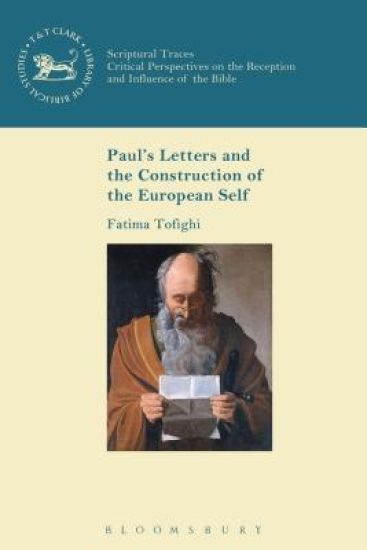
Paul's Letters and the Construction of the European Self
Even when he was a prototype of European identity, Paul transgressed the limits of Europe. It is not clear whether he was conformist or rebellious, orthodox or liberal, sexist, or egalitarian. Instead of pushing the Apostle into the arbitrary categories of modern European identity, Fatima Tofighi takes into account the challenge that Paul brings to normative conceptions of political theology (Rom 13), 'religion' (Gal 2.12-14), and women's veiling (1 Cor 11. 5-16). Alternative interpretations of these passages, with the help of postmodern theory, both solve the major problems of biblical exegesis and offer a critique of the allegedly well-defined European categories.
Paul's 'Spirit of Adoption' in its Roman Imperial Context
Robert Lewis examines Paul’s use of the phrase “Spirit of Adoption” in Romans 8:12-17 against the background of its Roman Imperial context in order to shed light on interpretation of Paul's Letter to the Romans. Whereas other scholars have explored what Paul may have meant when he uses the term “adoption” Lewis instead explores the reasons behind Paul's coupling of it with the term “spirit”. Having examined theories for a possible Jewish antecedent for Paul’s use of this phrase, and found them less than persuasive, Lewis unlocks the data within the term's Roman Imperial context that significantly clarifies what Paul means when he uses the phrase “Spirit of adoption". Lewis shows that when Paul wrote his letter to the Romans, adoption had become a feature of Imperial succession. Roman religion gave a great deal of prominence to the Roman family spirit - the genius. The Emperor’s genius became identified as a deity in Roman religion and its veneration was widespread in Rome as well as the provinces. When Romans 8.12-17 is read against this background, a very different kind of exegetical picture emerges.
Paul Among the Apocalypses?

Paul Among the Apocalypses?

J. P. Davies

T. T.Clark Ltd
2018
nidottu
A vibrant and growing field of discussion in contemporary New Testament studies is the question of ‘apocalyptic’ thought in Paul. What is often lacking in this discussion, however, is a close comparison of Paul’s would-be apocalyptic theology with the Jewish and Christian apocalyptic literature of his time, and the worldview that literature expresses. This book addresses that challenge. Covering four key theological themes (epistemology, eschatology, cosmology and soteriology), J. P. Davies places Paul ‘among the apocalypses’ in order to evaluate recent attempts at outlining an ‘apocalyptic’ approach to his letters. While affirming much of what those approaches have argued, and agreeing that ‘apocalyptic’ is a crucial category for an understanding of the apostle, Davies also raises some important questions about the dichotomies which lie at the heart of the ‘apocalyptic Paul’ movement.
Paul and the Greco-Roman Philosophical Tradition
Paul and the Greco-Roman Philosophical Tradition provides a fresh examination of the relationship of Greco-Roman philosophy to Pauline Christianity. It offers an in-depth look at different approaches employed by scholars who draw upon philosophical settings in the ancient world to inform their understanding of Paul. The volume houses an international team of scholars from a range of diverse traditions and backgrounds, which opens up a platform for multiple voices from various corridors. Consequently, some of the chapters seek to establish new potential resonances with Paul and the Greco-Roman philosophical tradition, but others question such connections. While a number of them propose radically new relationships between Paul and GrecoRoman philosophy, a few seek to tweak or modulate current discussions. There are arguments in the volume which are more technical and exegetical, and others that remain more synthetic and theological. This diversity, however, is accentuated by a goal shared by each author – to further our understanding of Paul’s relationship to and appropriation of Greco-Roman philosophical traditions in his literary and missionary efforts.
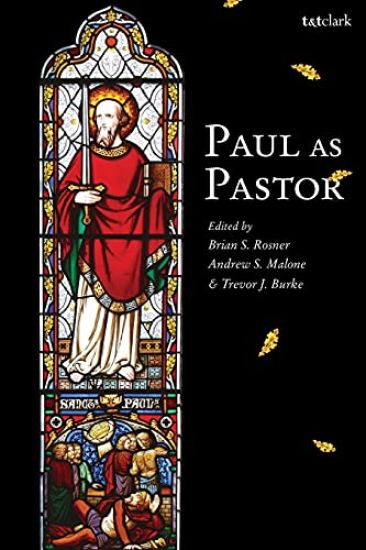
Paul as Pastor

Paul as Pastor

T. T.Clark Ltd
2019
nidottu
Paul as Pastor demonstrates the critical nature of Paul’s pastoral care to his identity and activities. Despite the fact that Paul never identifies himself as a pastor, there is much within the Pauline letters that alludes to this as a possible aspect of Paul’s vocation and commitments, and this has been a topic of relative scholarly neglect. The contributors to this volume consider the household setting of Paul’s pastoral practice, the evidence of Acts and a survey of themes in each of the letters in the traditional Pauline corpus. Additionally, three chapters supply case studies of the Wirkungsgeschichte of Paul’s pastoral practice in the pastoral offices of the Anglican Communion in the denomination’s Ordinal, and in the lives and thought of Augustine of Hippo and George Whitfield. As such Paul as Pastor provides a stimulating resource on a neglected and critical dimension of Paul and his letters and an invaluable tool for those in pastoral ministry and those responsible for their training.
Paul and Rhetoric

Paul and Rhetoric

T. T.Clark Ltd
2019
nidottu
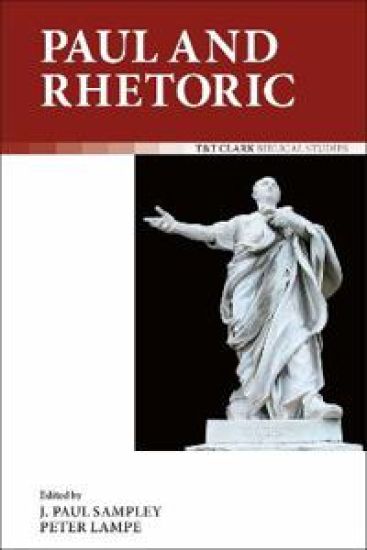
Paul and Rhetoric contains essays that have been presented in a seminar called "Paul and Rhetoric" in the annual meetings of the Studiorum Novi Testamenti Societas, the leading international forum for New Testament and Christian Origin scholars. Translated into English, these essays, by leaders in the field and in the topic, engage and represent modern scholarship on Paul and rhetorical studies.The foundational essays are listed under the heading "State of the Discussion", attempting to take the major rhetorical categories of the time contemporary with Paul (types of rhetoric, invention and arrangement, and figures and tropes) and, first, lays out where the discussion is now. They then note the problems and highlights where continued discussion and deliberation would be helpful. The "Broad Questions" section asks what can be learned about reading Paul's letters to congregations in light of ancient epistolography, how theology and rhetoric are related (because the two are often treated as if they are alien to one another), and how ancient rhetoric and ancient psychology are associated with one another.All in all a volume that illustrates, examines and assesses where we are now in the study of rhetorical traditions in Pauline scholarship, and in some instances suggests the direction of future studies.
Paul's Utilization of Preformed Traditions in 1 Timothy
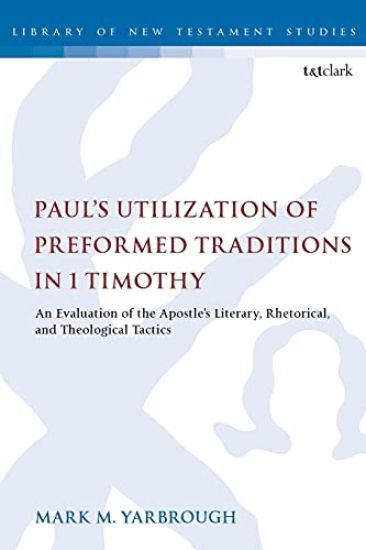
Mark Yarbrough assesses the question of whether traditional ‘preformed' material contributes to the message and understanding of Paul's first letter to Timothy. The issue is addressed in three sections. Part one evaluates previous works interacting with ‘traditional' material in the New Testament. Through a critique of historically proposed criteria, Yarbrough identifies eight criteria as the primary tools by which to discern units of preformed material. In the second part of the book Yarbrough evaluates nineteen passages in 1 Timothy according to the criteria previously determined. From this base he embraces twelve of the nineteen passages as preformed material. These passages are subsequently examined in depth according to the author's distinct methodology. Part three demonstrates four functions of the preformed traditions in 1 Timothy. Firstly, that they may be seen as strengthening the literary cohesion of the letter. Secondly, that the traditional units afford the author rhetorical leverage which may be best identified as the provision of authority, the establishment of an instant rapport with the primary audience, and the assistance conferred in addressing this implied audience. Thirdly, they present theological directives that confront the character and belief of the false teachers. Finally, Yarbrough asserts that the preformed traditions exist as a combatant against counter-mission doctrine. In conclusion, this study displays that the traditional material which may be discerned within the letter contributes significantly to the overall message and understanding of 1 Timothy.
Paul and Epictetus on Law

Paul and Epictetus on Law

Niko Huttunen

T. T.Clark Ltd
2019
nidottu
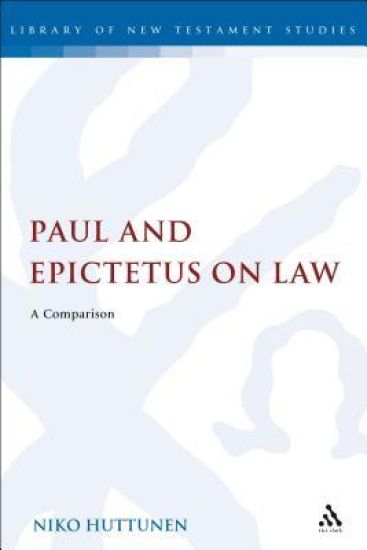
Paul's relationship with covenantal nomism has long been the subject of lively discussion. In this book Niko Huttunen presents a challenging new path to complement the general scholarly picture of Paul's teaching on law. Acknowledging that Stoicism permeated Paul's intellectual milieu, Huttunen compares Paul's sayings of law with those of Epictetus drawing comparisons as a result of careful methodological considerations. Pauline law is generally focused upon Paul's sayings on and relationship with the Torah. It is Huttunen's contention that Paul's ideas on law have clearer affinities with Stoic ideas than with the Torah. Throughout the course of the book Huttunen displays Paul's interpretation of the Torah with Stoic methods (1 Cor. 7-9), asserts that in some passages (Rom. 1-2 and Rom. 7) Paul's thinking is Stoic, not Platonic and demonstrates that Paul's famous "I"-passage (Rom. 7.7-25) owes much to Stoic anthropology and psychology. Where the latter is concerned Huttunen suggests that Epictetus' use of the first person presents a good analogy for Paul's employment of "I" as a rhetorical device. In further passages (e.g. Rom. 13-15) the comparison with Epictetus opens a window into ancient intellectual thinking in general. Epictetus' ideas of moral progress present an analogy both to the "works of law" and to Paul's moral exhortation. There are also similarities between Paul's figure of Christ and Epictetus' figure of Heracles. The comparison suggests further comparisons between Paul's treatment of law and other philosophers and schools.
Paul and Matthew Among Jews and Gentiles
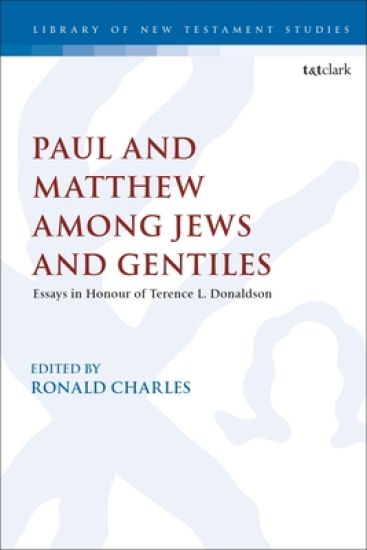
Terence L. Donaldson’s scholarship in the field of New Testament studies is vital, as he has pressed scholars to pay closer attention to the complex relations between early Christ-followers—who were mostly non-Jews—and the Jewish matrix from which the narrative of the Christian proclamation comes from. This volume allows prominent New Testament scholars to engage Donaldson’s contributions, both to sharpen some of his conclusions and to honour him for his work. These essays are located at the intersections of three bodies of literature—Matthew, Paul and Second Temple Jewish Literature—and themes and questions that have been central to Donaldson’s work: Christian Judaism and the Parting of the Ways; Gentiles in Judaism and early Christianity; Anti-Judaism in early Christianity. With contributions ranging from remapping Paul within Jewish ideologies, and Paul among friends and enemies, to socio-cultural readings of Matthew, and construction of Christian Identity through stereotypes of the Scribes and Pharisees, this book provides a multi-scholar tribute to Donaldson’s accomplishments.
Paul’s Emotional Regime

Paul’s Emotional Regime

Ian Y. S. Jew

T. T.Clark Ltd
2020
sidottu
In his letters Paul speaks often of his emotions, and also promotes certain feelings while banishing others. This indicates that for Paul, emotion is vital. However, in New Testament studies, the study of emotions is still nascent; current research in the social sciences highlights its cognitive and social dimensions. Ian Y. S. Jew combines rigorous social-scientific analysis and exegetical enquiry to argue that emotions are intrinsic to the formation of the Pauline communities, as they encode belief structures and influence patterns of social experience. By taking joy in Philippians and grief in 1 Thessalonians as representative emotions, and contrasting Paul’s approach with that of his Stoic contemporaries, Jew demonstrates that authorized feelings have socially integrating and differentiating functions; by reinforcing the shared theological realities upon which emotional norms are based, group belonging is bolstered. Simultaneously, authorized emotions fortify the theological boundaries between Christians and others, which strengthens group solidarity in the Church by accentuating its members’ insider status. Using this framework heuristically, Jew explores how the interplay of symbolic, ritual, and social elements within Paul’s eschatological worldview reinforces emotional norms, and demonstrates that attention to emotion can only deepen our understanding of the social formation of the early believers.
Paul’s Emotional Regime

Paul’s Emotional Regime

Ian Y. S. Jew

BLOOMSBURY PUBLISHING PLC
2022
nidottu
In his letters Paul speaks often of his emotions, and also promotes certain feelings while banishing others. This indicates that for Paul, emotion is vital. However, in New Testament studies, the study of emotions is still nascent; current research in the social sciences highlights its cognitive and social dimensions. Ian Y. S. Jew combines rigorous social-scientific analysis and exegetical enquiry to argue that emotions are intrinsic to the formation of the Pauline communities, as they encode belief structures and influence patterns of social experience. By taking joy in Philippians and grief in 1 Thessalonians as representative emotions, and contrasting Paul’s approach with that of his Stoic contemporaries, Jew demonstrates that authorized feelings have socially integrating and differentiating functions; by reinforcing the shared theological realities upon which emotional norms are based, group belonging is bolstered. Simultaneously, authorized emotions fortify the theological boundaries between Christians and others, which strengthens group solidarity in the Church by accentuating its members’ insider status. Using this framework heuristically, Jew explores how the interplay of symbolic, ritual, and social elements within Paul’s eschatological worldview reinforces emotional norms, and demonstrates that attention to emotion can only deepen our understanding of the social formation of the early believers.
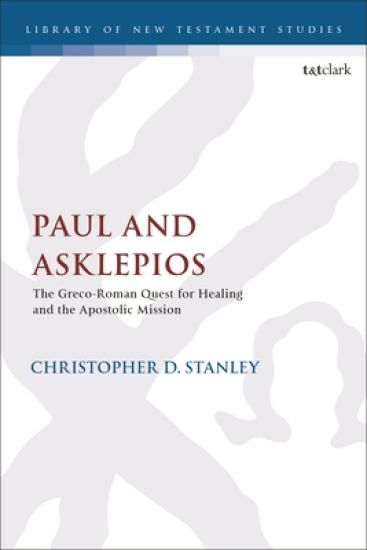
Paul and Asklepios

Paul and Asklepios

Christopher D. Stanley

BLOOMSBURY PUBLISHING PLC
2022
sidottu
What role did offers of physical healing (or the hope of receiving it) play in the missionary program of the apostle Paul? What did he do to treat the many illnesses and injuries that he endured while pursuing his mission? What did he advise his followers to do regarding their health problems? Such questions have been broadly neglected in studies of Paul and his churches, but Christopher D. Stanley shows how vital they truly become once we recognize how thoroughly “pagan” religion was implicated in all aspects of Greco-Roman health care. What did Paul approve, and what did he reject?Given Paul’s silence on these subjects, Stanley relies on a cross-cultural and interdisciplinary approach to develop informed judgments about what Paul might have thought, said, and done with regard to his own and his followers’ health care. He begins by exploring the nature and extent of sickness in the Roman world and the four overlapping health care systems that were available to Paul and his followers: home remedies, “magical” treatments, religious healing, and medical care. He then examines how Judeans and Christians in the centuries before and after Paul viewed and engaged with these systems. Finally, he speculates on what kinds of treatments Paul might have approved or rejected and whether he might have used promises of healing to attract people to his movement. The result is a thorough and nuanced analysis of a vital dimension of Greco-Roman social life and Paul’s place within it.
Paul and Matthew Among Jews and Gentiles
Terence L. Donaldson’s scholarship in the field of New Testament studies is vital, as he has pressed scholars to pay closer attention to the complex relations between early Christ-followers—who were mostly non-Jews—and the Jewish matrix from which the narrative of the Christian proclamation comes from. This volume allows prominent New Testament scholars to engage Donaldson’s contributions, both to sharpen some of his conclusions and to honour him for his work. These essays are located at the intersections of three bodies of literature—Matthew, Paul and Second Temple Jewish Literature—and themes and questions that have been central to Donaldson’s work: Christian Judaism and the Parting of the Ways; Gentiles in Judaism and early Christianity; Anti-Judaism in early Christianity. With contributions ranging from remapping Paul within Jewish ideologies, and Paul among friends and enemies, to socio-cultural readings of Matthew, and construction of Christian Identity through stereotypes of the Scribes and Pharisees, this book provides a multi-scholar tribute to Donaldson’s accomplishments.
Paul and the Corinthians

Paul and the Corinthians

Jonathan B. Ensor

BLOOMSBURY PUBLISHING PLC
2022
sidottu
Jonathan B. Ensor revisits the scholarly consensus concerning Paul’s intermediate visit to the Corinthians between his first and second epistles. Ensor re-evaluates the textual evidence, interpreting the event through a socio-historical lens that focuses upon ancient trial by ordeal and exit in the context of communal conflict, shedding significant light upon the social behaviours involved in this event and its interpretation.Beginning with a review of relational and social-spacial dynamics and sources of conflict, Ensor then explores the politics of displacement in Graeco-Roman antiquity to analyse the relational contours of Paul’s intermediate visit to Corinth. From these insights, Ensor interprets Paul’s autobiographical narrations of apostolic ordeal and Paul’s announcement of imminent return to Corinth in 2 Corinthians. Ensor concludes that Paul, through the ordeal accounts, aimed both to reverse the judgments against him emerging from the intermediate visit, and to undermine the evaluative structure of his detractors who viewed him as impotent, illegitimate, and displaced.
Paul and the Corinthians

Paul and the Corinthians

Jonathan B. Ensor

BLOOMSBURY PUBLISHING PLC
2023
nidottu
Jonathan B. Ensor revisits the scholarly consensus concerning Paul’s intermediate visit to the Corinthians between his first and second epistles. Ensor re-evaluates the textual evidence, interpreting the event through a socio-historical lens that focuses upon ancient trial by ordeal and exit in the context of communal conflict, shedding significant light upon the social behaviours involved in this event and its interpretation.Beginning with a review of relational and social-spacial dynamics and sources of conflict, Ensor then explores the politics of displacement in Graeco-Roman antiquity to analyse the relational contours of Paul’s intermediate visit to Corinth. From these insights, Ensor interprets Paul’s autobiographical narrations of apostolic ordeal and Paul’s announcement of imminent return to Corinth in 2 Corinthians. Ensor concludes that Paul, through the ordeal accounts, aimed both to reverse the judgments against him emerging from the intermediate visit, and to undermine the evaluative structure of his detractors who viewed him as impotent, illegitimate, and displaced.
Paul, The Apostle of Obedience

Paul, The Apostle of Obedience

Jason A. Myers

BLOOMSBURY PUBLISHING PLC
2022
sidottu
Jason A. Myers reconsiders the meaning and context of the phrase “the obedience of faith” in Rom 1:5 and how it contributes to the theme of obedience in Romans. In contrast to previous studies that have nearly exclusively focused on the obedience language in light of the Hebrew Bible and Second Temple literature, Myers instead investigates how this language functioned within the Greco-Roman world, particularly in the discourse of the Roman Empire.By studying both the Greco-Roman contexts and the use of obedience language during the Empire, Myers sheds fresh light on the meaning of “the obedience of faith,” and concludes that such examination helps contemporary readers understand how Gentiles in Paul’s audience would have heard and received the terms and images relating to obedience. In addition, he argues that Paul’s use of obedience language, both at the beginning and end of Romans (1:5; 15:18), serves as rhetorical bookends, and signals a theme that is central to Paul’s purpose in Romans and integral to his calling as an apostle to the Gentiles.
Paul, The Apostle of Obedience

Paul, The Apostle of Obedience

Jason A. Myers

BLOOMSBURY PUBLISHING PLC
2024
nidottu
Jason A. Myers reconsiders the meaning and context of the phrase “the obedience of faith” in Rom 1:5 and how it contributes to the theme of obedience in Romans. In contrast to previous studies that have nearly exclusively focused on the obedience language in light of the Hebrew Bible and Second Temple literature, Myers instead investigates how this language functioned within the Greco-Roman world, particularly in the discourse of the Roman Empire.By studying both the Greco-Roman contexts and the use of obedience language during the Empire, Myers sheds fresh light on the meaning of “the obedience of faith,” and concludes that such examination helps contemporary readers understand how Gentiles in Paul’s audience would have heard and received the terms and images relating to obedience. In addition, he argues that Paul’s use of obedience language, both at the beginning and end of Romans (1:5; 15:18), serves as rhetorical bookends, and signals a theme that is central to Paul’s purpose in Romans and integral to his calling as an apostle to the Gentiles.
Paul’s Use of the Old Testament in Romans 9:19-24

Paul’s Use of the Old Testament in Romans 9:19-24

Brian J. Abasciano

BLOOMSBURY PUBLISHING PLC
2024
nidottu
Brian Abasciano continues his project examining the use of the Old Testament in Romans 9, building upon his previous two volumes and their intertextual methodology. This method incorporates into a thorough traditional exegesis a comprehensive analysis of Paul's use of Scripture against the background of interpretive traditions surrounding the texts alluded to, with great emphasis placed on analyzing the original contexts of Paul's citations and allusions. Such an intertextual exegesis is conducted in Romans 9:19-24 with an awareness of the broader unit of chapters 9-11 especially, and also the epistle as a whole. Conclusions for the meaning of these passages and their theological significance are drawn.
Paul and Asklepios

Paul and Asklepios

Christopher D. Stanley

BLOOMSBURY PUBLISHING PLC
2024
nidottu
What role did offers of physical healing (or the hope of receiving it) play in the missionary program of the apostle Paul? What did he do to treat the many illnesses and injuries that he endured while pursuing his mission? What did he advise his followers to do regarding their health problems? Such questions have been broadly neglected in studies of Paul and his churches, but Christopher D. Stanley shows how vital they truly become once we recognize how thoroughly “pagan” religion was implicated in all aspects of Greco-Roman health care. What did Paul approve, and what did he reject?Given Paul’s silence on these subjects, Stanley relies on a cross-cultural and interdisciplinary approach to develop informed judgments about what Paul might have thought, said, and done with regard to his own and his followers’ health care. He begins by exploring the nature and extent of sickness in the Roman world and the four overlapping health care systems that were available to Paul and his followers: home remedies, “magical” treatments, religious healing, and medical care. He then examines how Judeans and Christians in the centuries before and after Paul viewed and engaged with these systems. Finally, he speculates on what kinds of treatments Paul might have approved or rejected and whether he might have used promises of healing to attract people to his movement. The result is a thorough and nuanced analysis of a vital dimension of Greco-Roman social life and Paul’s place within it.
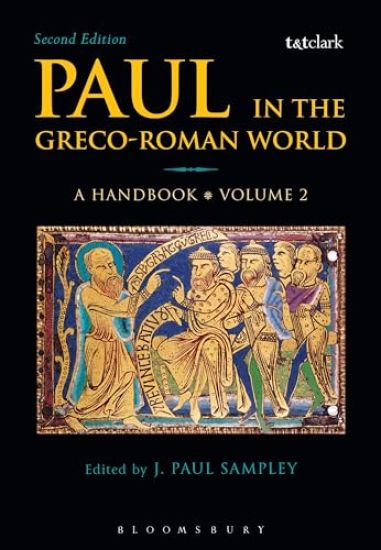
Paul in the Greco-Roman World: A Handbook

Paul in the Greco-Roman World: A Handbook

J. Paul Sampley

BLOOMSBURY PUBLISHING PLC
2024
nidottu
This landmark handbook, written by distinguished Pauline scholars, and first published in 2003, remains the first and only work to offer lucid and insightful examinations of Paul and his world in such depth. Together the two volumes that constitute the handbook in its much revised form provide a comprehensive reference resource for new testament scholars looking to understand the classical world in which Paul lived and work. Each chapter provides an overview of a particular social convention, literary of rhetorical topos, social practice, or cultural mores of the world in which Paul and his audiences were at home. In addition, the sections use carefully chosen examples to demonstrate how particularly features of Greco-Roman culture shed light on Paul's letters and on his readers' possible perception of them.For the new edition all the contributions have been fully revised to take into account the last ten years of methodological change and the helpful chapter bibliographies fully updated. Wholly new chapters cover such issues as Paul and Memory, Paul's Economics, honor and shame in Paul's writings and the Greek novel.