
Kirjahaku
Etsi kirjoja tekijän nimen, kirjan nimen tai ISBN:n perusteella.
1000 tulosta hakusanalla Paul Mathieu
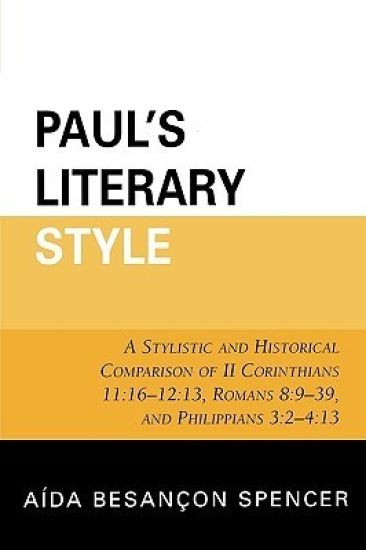
Paul's Literary Style determines quantitatively how Paul varies the style of his writing to assist communication with different communities and to ascertain some constant characteristics of his writing. Using 2 Corinthians 11:16-12:13, Romans 8:9-39, and Philippians 3:2-4:13, the author uncovers the performance of ten stylistic operations: sentence changes, complexity of the writing, adverbs and adverbial clauses, propositional reduction; logical diagrams, abstract versus concrete nouns, imagery, Leo Spitzer's philological circle, verb density, and variety of sentence length. In this study, stylistics denotes the use of linguistics as a tool of literary criticism by which to investigate the aesthetic effects of language. This methodology produces an investigation to compare Paul's style of communication to three different communities and discover his adaptations to different audiences.
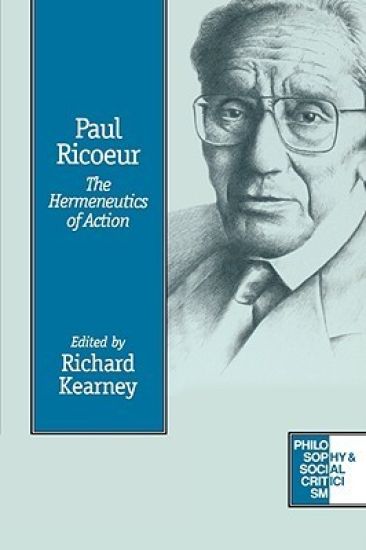
Paul Ricoeur
SAGE Publications Inc
1996
nidottu
Paul Ricoeur's work is of seminal importance to the development of hermeneutics, phenomenology and ideology critique in the human sciences. This major volume assembles leading scholars to address and explain the significance of this extraordinary body of work. Opening with three key essays from Ricoeur himself, the book offers a fascinating tour of his work ranging across topics such as the hermeneutics of action, narrative force, the other and deconstruction while discussing his work in the context of such contemporary figures as including Heidegger, L[ac]evinas, Arendt and Gadamer. Paul Ricoeur is also published as Volume 21 Issue 5/6 of Philosophy and Social Criticism.
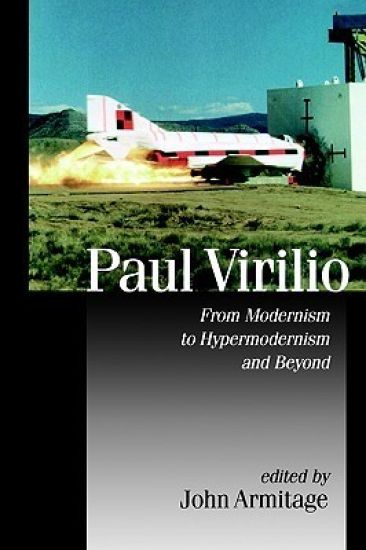
Paul Virilio
SAGE Publications Inc
2000
nidottu
Paul Virilio is one of the most significant and stimulating French cultural theorists writing today. Increasingly hailed as the 'archaeologist of the future', Virilio is noted for his proclamation that the logic of ever increasing acceleration lies at the heart of the organization and transformation of the contemporary world. The first book to afford a properly critical evaluation of Virilio's cultural theory, it includes an interview with Virilio; a recently translated example of his work; and a select bibliography of his writings. The commissioned contributions by leading cultural and social theorists examine Virilio's work from his early speculations on military and urban space to his current writings on dromology, politics, new communications technologies, disappearance, and the fallout from `the information bomb'.
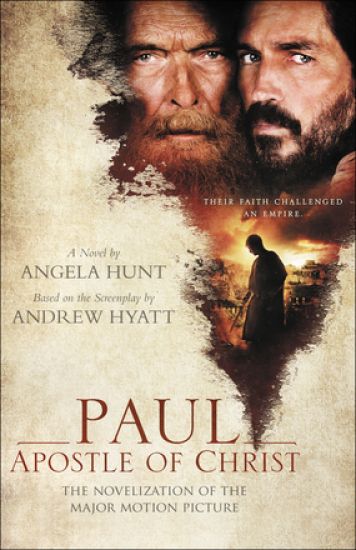
Paul, Apostle of Christ – The Novelization of the Major Motion Picture
Angela Hunt
Bethany House Publishers, a division of Baker Publishing Group
2018
nidottu
Paul, Apostle of Christ is the story of two men. Luke, as a friend and physician, risks his life every time he ventures into the city of Rome to visit Paul, held captive in Nero's bleakest prison cell. Before Paul's execution, Luke resolves to write another book, one that details the beginnings of "The Way" and the birth of what will come to be known as the church. But Nero is determined to rid Rome of Christians.Paul has survived so much--floggings, shipwreck, starvation, stoning, hunger and thirst, cold and exposure--yet as he waits for his appointment with death, he is haunted by the shadows of his past. He wonders if he has been forgotten . . . and if he has the strength to finish well. Two men struggle against a determined emperor and the frailties of the human spirit in order to bequeath the Gospel of Jesus Christ to the world.
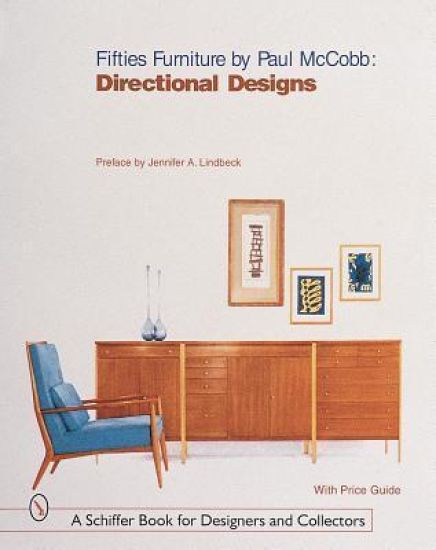
A visual look at Paul McCobb's furniture and interior designs of the 1950's. Today Paul McCobb's furniture and interior designs of the 1950s rank alongside Russell Wright, Gustav Stickley, and Heywood-Wakefield as marked staples in modern design. Paul McCobb's Directional Designs furniture line exhibits the low-cost, functional, and versatile furniture components, storage units, and interiors that earned McCobb the title of "America's decorator" during the mid-twentieth century. Containing over 100 coordinating room settings, including chairs, sofas, desks, benches, shelves, interiors, and much more, with information on McCobb's achievements and design principles, up-to-date price guide, and index, this book presents one of the backbones of modern design.

Raised as a Quaker in Eastern Pennsylvania, designer and sculptor Paul Evans is known for his highly unusual and yet completely functional furniture designs. Evans produced more than a dozen lines of furniture and countless design variations during his thirty-year career as a mid- to late 20th century artist and designer. Regardless of his materials, whether metal, wood, or even cardboard, his work continues to defy easy categorization. It is modern and yet independent of recognizable influences. Other designers and manufacturers openly copied his work, though these copies lacked the presence Evans easily achieved. At the height of his popularity in the mid-1970s, Evans employed nearly ninety people. Several museums and galleries exhibited his work, including the Museum of Modern Art in New York. Today, his work is sought by collectors, who value its style and quality. His unusual furniture and sculpture stand the test of time and are displayed here in over 220 vivid photos. It appears classic and contemporary at the same time. This book will be treasured by all who have a passion for design.

Inspiration from the Art of Paul J. Stankard
Paul Joseph Stankard
Schiffer Publishing Ltd
2022
sidottu
Gorgeous photos of glass master Paul Stankard's work, paired with insights on his process and artistic philosophy. This striking gift book features luminous photos of world-renowned glass artist Paul Stankard’s astonishing art paired with insightful writing for all who seek out and appreciate creative energy. Stunning, full-page photos of Stankard’s paperweights show fascinating worlds: bees captured in flight, botanically exact bouquets, and miniature humanlike creatures are captured in bursting color. Stankard's unmatched technical skill is one-half of what has made him a master in glass art; the other half is his artistry, which he explores his insights on, sharing his thoughts about the energy behind the pieces. Stankard discusses key topics for all artists, such as building a routine, learning from failure, and fusing spirituality and art making. Stories of his own challenges and successes through the decades offer examples of how to navigate both with an open mind and readiness to learn. Collectors and aficionados of fine craft will enjoy this immersive experience in fine art, and especially in what leads up to it.
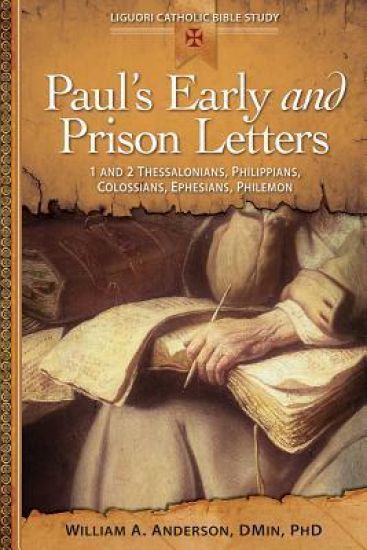
Paul's Early and Prison Letters: 1 & 2 Thessalonians, Philippians, Colossians, Ephesians, Philemon
William Anderson
Liguori Publications
2013
nidottu
In many ways, Paul was an activist with the message to live as peaceful followers of Christ. Unfortunately, Paul had to confront others who believed he was rejecting his Jewish roots, and his message of peace caused him a great deal of suffering.Paul preaches of unity, love for Christ, moral living, and the Second Coming. He warns of false teachers, promotes vigilance in the wait for Christ, and blesses these communities throughout his letter writing, from his earliest letters through those he penned shortly before his death. Paul's encouragement, his advice for faithful living, and his love for Christ speak to us today as clearly as they did for the early Christians.

Paul Heussenstamm Mandala Fruit Tree 500-Piece Jigsaw Puzzle
POMEGRANATE COMMUNICATIONS INC,US
2016
muu
Heussenstamm American, b. 1949 believes that soul patterns are manifested in mandalas, which have played a role in Eastern spiritual development for centuries and are widely favored as meditational focal points.

Paul Heussenstamm Chakra Boxed Notecard Assortment
Pomegranate Communications Inc,US
2016
muu

Paul Heussenstamm Tapestry Mandala 1000-Piece Jigsaw Puzzle
Pomegranate Communications Inc,US
2019
muu
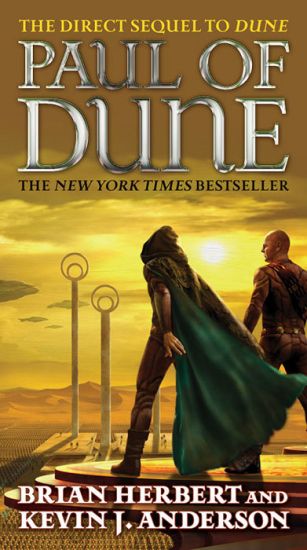
Paul of Dune: Book One of the Heroes of Dune
Brian Herbert; Kevin J. Anderson
Tor Books
2009
pokkari
How does a hero become a tyrant? At the end of DUNE, Paul "Muad'Dib" Atreides gathered his Fremen warriors and embarked on a great prophecy-driven jihad that will sweep across the Imperium. PAUL OF DUNE is the epic story of that jihad: the planet-spanning battles, the breathtaking discoveries, the bloody treacheries. As the Fremen legions march from victory to victory, far from their beloved desert homeworld of Dune, Paul's rule becomes harsher. Betrayals harden his spirit, old allies become enemies, and the Bene Gesserit Sisterhood and the remnants of Shaddam's Imperium work to bring about his downfall. And Paul himself begins to have doubts: Is the jihad getting out of his control? Has he created anarchy? Has he been betrayed by those he loves and trusts the most? He must rely on his beloved Chani, his loyal friend Gurney Halleck, and his mother Jessica and sister Alia to survive. A must-read before the events of DUNE MESSIAH.
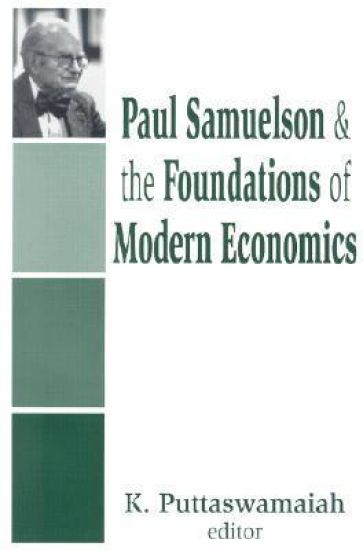
Paul Samuelson and the Foundations of Modern Economics
K. Puttaswamaiah
Transaction Publishers
2001
sidottu
Paul A. Samuelson was the first American Nobel Laureate in economics, and the second overall. He was credited for "the scientific work through which he has developed static and dynamic economic theory and actively contributed to raising the level of analysis in economic science." That recognition is now thirty years old and Samuelson remains at work in the cutting edge of the discipline. He is also widely known for a basic textbook that became a landmark learning tool throughout the second half of the twentieth century. This excellent collegial appreciation focuses heavily on Samuelson's Foundations of Economic Analysis. In that work, and a series of brief essays, he has contributed to an integration of statics and dynamics by way of the correspondence principle. He has also combined the multiplier and accelerator mechanisms in a model of economic fluctuations; he has reformed the foundations of consumption theory by his concept of revealed preferences; he has developed or improved several major theorems within international trade; and created theories of maximum efficiency and maximum growth rate. Finally, he has clarified the role of collective goods in resource allocation. In considering the work and life of Samuelson, editor Puttaswamaiah, has assembled a worthy group of brilliant commentators. Among the analytic papers in this volume are "An essay on the Accuracy of Economic Prediction" by L.R. Klein, "Analytical Aspects of Anti-Inflation Policy" by Robert M. Solow, a paper by Vittorangelo Orati on Samuelson's linkage to Schumpeter and Keynes, "Money and Price Theory by Carlo Benetti and Jean Cartelier, and a concluding essay on "The Role of Samuelson's Economics" by Michael Emmett Brady. Most unusual in works of this kind are some strong critical statements, including a pungent examination of vanity as well as creativity in Samuelson's work. What emerges is a clear picture of a special scholar. Scholars and students will welcome it alike-a result that well fits the purpose and character of Samuelson. The festschrift has its origins in several issues of the International Journal of Applied Economics and Econometrics. Professor K. Puttaswamaiah has more than three decades of editing journals in economics. He is a member of the journal; Savings and Development issued at the University of Milan. He is author of Economic Development of Karnataka, Cost-Benefit Analysis, and Nobel Economists: Lives and Contributions.

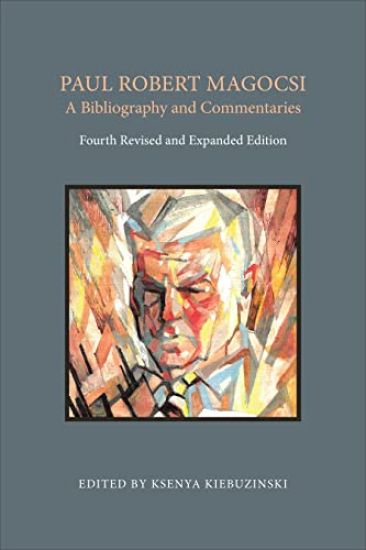
Paul Robert Magocsi
UNIVERSITY OF TORONTO PRESS
2021
sidottu
Paul Robert Magocsi: A Bibliography and Commentaries provides an introduction to the scholarly career of the world renowned Canadian academic. It includes a complete list of his 876 publications (books, articles, chapters, brochures, etc.) in the fields of history, sociolinguistics, ethnic studies, bibliography, and cartography that have appeared in 21 languages from 1964 through 2020. Also included are references to the 844 reviews of many of those publications as well as a separate bibliographical list of 80 works (books, articles, and encyclopedic entries) about Professor Magocsi. The fourth revised and expanded edition includes a bibliographic update since the last edition in 2011 as well as an entirely new 110-page section, Commentaries in Periodicals and the Media, about Professor Magocsi as a public advocate and the impact of his writings on fellow scholars and on political and social developments, particularly in central and eastern Europe since the collapse of Communist rule in 1989. Appended are comprehensive subject and personal indexes.
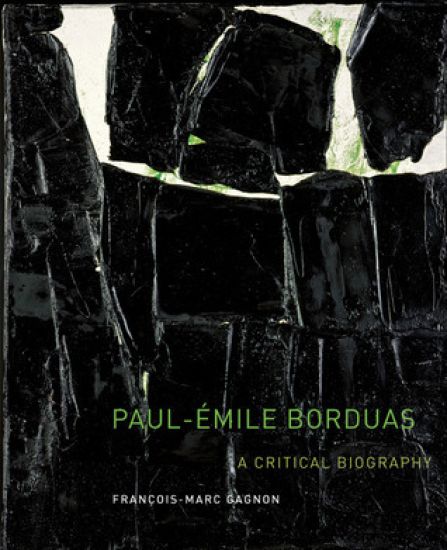
From his beginnings as a rural church decorator, to his role as catalyst of the social and artistic manifesto the Refus global, to a career as Canada's pre-eminent practitioner of radical abstraction abroad, Paul-Emile Borduas's short life encompassed the reversals and contradictions of the modern condition. Drawing on a lifetime of published research, Francois-Marc Gagnon's comprehensive biography is a far-reaching exploration of a Quebec cultural figure renowned for both his art and his thought. Gagnon details each period of Borduas's dynamic career - his apprenticeship with Ozias Leduc, his teaching in Montreal and the role within the Automatiste group, his move to New York at the height of the Abstract Expressionist movement, and then, against the current of the times, to Paris, where he created the iconic images of his "cosmic" period. Borduas's relentless search for an authentic art often put him at odds with his surroundings. As an avant-garde artist in a Montreal art world bound by tradition, his most important work had to be exhibited in makeshift venues; as a surrealist-influenced francophone in New York, he recognized the importance of the major figures of Abstract Expressionism but maintained an independent style and method. A full appreciation of Borduas's radical stance - an artistic and intellectual orientation that was always towards the universal - transforms a Canadian cultural landscape where the narrative of artistic modernism centres on figurative landscape art. An original and rigorously researched work, Paul-Emile Borduas: A Critical Biography provides an English-language readership with a much-needed understanding of a seminal modernist, an exemplary figure in Canadian art, and the origins of modern art in North America.
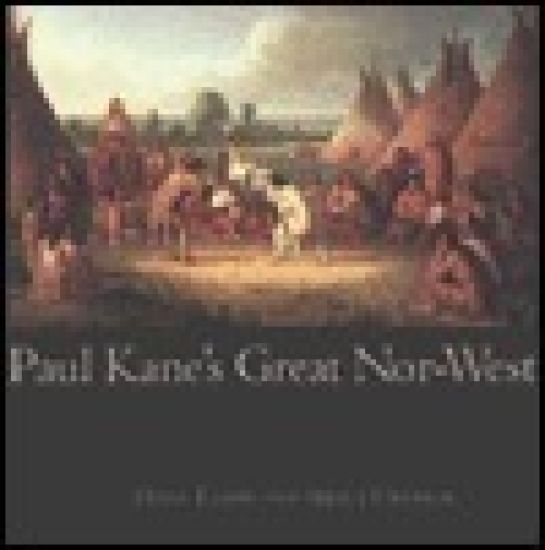
In this beautifully designed and richly illustrated book, Diane Eaton and Sheila Urbanek re-create Paul Kane's heroic journey across Canada and bring to life the people, places, and events he experienced. Determined to document the lives and customs of the Indians of the Northwest, Paul Kane set out in 1845 to cross the continent "with no companions but my portfolio and a box of paints, my gun and a stock of ammunition."Travelling via the Hudson's Bay Company fur brigade routes, he made his way from the Great Lakes to the Pacific coast and back again. When he returned to Toronto in the fall of 1848, he brought back some 500 field sketches as well as a remarkable collection of Indian "curiosities," which he used as raw material for one hundred oil paintings depicting scenes of Indian life.While the carefully executed oil paintings are deliberately romanticized images of the west, the original field sketches convey Kane's immediate impressions and offer tantalizing glimpses of what he describes as the "wild scenes amongst which I strayed almost alone." A fascinating complement to the sketches is contained in a small diary Kane kept while on his journey – brief and plainspoken, these entries were jotted down in his own idiosyncratic spelling and punctuation.Illustrated with a wide selection of the field sketches as well as his better-known oil paintings, this book reintroduces this remarkable artist to a modern audience.
In this beautifully designed and richly illustrated book, Diane Eaton and Sheila Urbanek re-create Paul Kane's heroic journey across Canada and bring to life the people, places, and events he experienced. Determined to document the lives and customs of the Indians of the Northwest, Paul Kane set out in 1845 to cross the continent "with no companions but my portfolio and a box of paints, my gun and a stock of ammunition."Travelling via the Hudson's Bay Company fur brigade routes, he made his way from the Great Lakes to the Pacific coast and back again. When he returned to Toronto in the fall of 1848, he brought back some 500 field sketches as well as a remarkable collection of Indian "curiosities," which he used as raw material for one hundred oil paintings depicting scenes of Indian life.While the carefully executed oil paintings are deliberately romanticized images of the west, the original field sketches convey Kane's immediate impressions and offer tantalizing glimpses of what he describes as the "wild scenes amongst which I strayed almost alone." A fascinating complement to the sketches is contained in a small diary Kane kept while on his journey – brief and plainspoken, these entries were jotted down in his own idiosyncratic spelling and punctuation.Illustrated with a wide selection of the field sketches as well as his better-known oil paintings, this book reintroduces this remarkable artist to a modern audience.