Kirjojen hintavertailu. Mukana 12 390 323 kirjaa ja 12 kauppaa.

Kirjahaku

Etsi kirjoja tekijän nimen, kirjan nimen tai ISBN:n perusteella.

1000 tulosta hakusanalla Roberto Podda

Strangers Among Us: Latino Lives in a Changing America
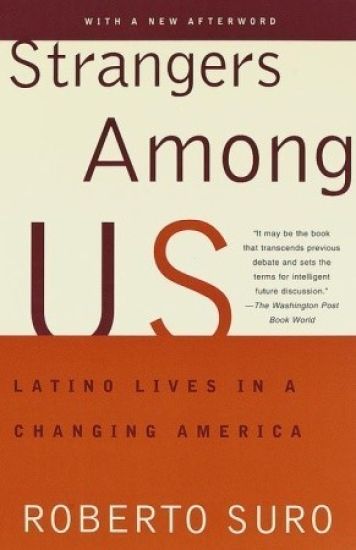
Strangers Among Us is a lucid, informed, and clich -shattering examination of Latino immigration to the United States--its history, the vast transformations it is fast producing in American society, and the challenges it will present for decades to come. In making vivid an array of people, places, and events that are little known to most Americans, the author--an American journalist who is himself the son of Latino immigrants--makes an often bewildering phenom-enon vastly more understandable.He tells the stories of a number of large Latino communities, linked in a chronological narrative that starts with the Puerto Rican migration to East Harlem in the 1950s and continues through the California-bound rush of Mexicans and Central Americans in the 1990s. He takes us into the world of Mexican-American gang members; Guatemalan Mayas in suburban Houston; Cuban businessmen in Miami; Dominican bodega owners in New York. We see people who represent a unique transnationalism and a new form of immigrant assimilation--foreigners who come from close by and visit home frequently, so that they virtually live in two lands.Like other groups of immigrants who preceded them onto American shores, Latinos, as they begin to find a place for themselves here, are changing the way this nation thinks of itself. These are people who defy easy categorization: they are neither white nor black; their households often include both legal and illegal immigrants; most struggle toward some kind of economic stability, but so many others fall short that they have become the new face of the urban poor. Some Latinos endure the special poverty of people who work long hours for wages that barely ensure survival. Their children grow up learning more from their televisions than from their teachers, knowing what they want from America but not how to get it.Looking to the future, we see clearly that the sheer number of Latino newcomers will force the United States to develop new means of managing relations among diverse ethnic groups and of creating economic opportunity for all. But we also see a catalog of conflict and struggle: Latinos in confrontation with blacks; Latinos wrestling with the strain of illegal immigration on their communities; Latinos fighting the backlash that is denying legal immigrants access to welfare programs. Critical both of incoherent government policies and of the failures of minority-group advocacy, the author proposes solutions of his own, including a rejection of illegal immigration by Latinos themselves paired with government efforts to deter unlawful journeys into the United States, and a new emphasis on English-language training as an aid to successful assimilation.Roberto Suro has written a timely, controversial, and hugely illuminating book.
Ka: Stories of the Mind and Gods of India
In "the very best book about Hindu mythology that anyone has ever written" (The New Republic) Calasso plunges Western readers into the mind of ancient India. He begins with a mystery: Why is the most important god in the Rg Veda, the oldest of India's sacred texts, known by a secret name--"Ka," or Who? What ensues is not an explanation, but an unveiling. Here are the stories of the creation of mind and matter; of the origin of Death, of the first sexual union and the first parricide. We learn why Siva must carry his father's skull, why snakes have forked tongues, and why, as part of a certain sacrifice, the king's wife must copulate with a dead horse. A tour de force of scholarship and seduction, Ka is irresistible.
Free Trade Reimagined

Free Trade Reimagined

Roberto Mangabeira Unger

Princeton University Press
2010
pokkari
Free Trade Reimagined begins with a sustained criticism of the heart of the emerging world economy, the theory and practice of free trade. Roberto Mangabeira Unger does not, however, defend protectionism against free trade. Instead, he attacks and revises the terms on which the traditional debate between free traders and protectionists has been joined. Unger's intervention in this major contemporary debate serves as a point of departure for a proposal to rethink the basic ideas with which we explain economic activity. He suggests, by example as well as by theory, a way of understanding contemporary economies that is both more realistic and more revealing of hidden possibilities for transformation than are the established forms of economics. One message of the book is that we need not choose between accepting and rejecting globalization; we can have a different globalization. Traditional free trade doctrine rests on shaky empirical and theoretical ground. Unger takes a new approach to show when international trade is likely to be useful or harmful to the socially inclusive economic growth that every nation wants. Another message is that the movement of people and ideas is more important than the movement of things and money, and that freedom to change the institutions defining a market economy is just as important as freedom to exchange goods on the basis of those institutions. Free Trade Reimagined ranges broadly within and outside economics. Presenting technical issues in plain language, it appeals to the general reader. It puts a disciplined imagination in the service of rebellion against the dictatorship of no alternatives that characterizes life and thought today.
American Mirror

American Mirror

Roberto Saba

PRINCETON UNIVERSITY PRESS
2021
sidottu
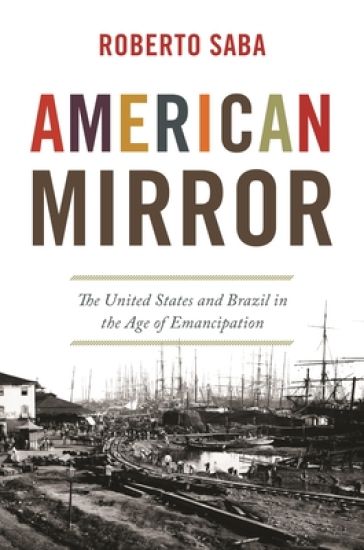
How slave emancipation transformed capitalism in the United States and BrazilIn the nineteenth century, the United States and Brazil were the largest slave societies in the Western world. The former enslaved approximately four million people, the latter nearly two million. Slavery was integral to the production of agricultural commodities for the global market, and governing elites feared the system’s demise would ruin their countries. Yet, when slavery ended in the United States and Brazil, in 1865 and 1888 respectively, what resulted was immediate and continuous economic progress. In American Mirror, Roberto Saba investigates how American and Brazilian reformers worked together to ensure that slave emancipation would advance the interests of capital.Saba explores the methods through which antislavery reformers fostered capitalist development in a transnational context. From the 1850s to the 1880s, this coalition of Americans and Brazilians—which included diplomats, engineers, entrepreneurs, journalists, merchants, missionaries, planters, politicians, scientists, and students, among others—consolidated wage labor as the dominant production system in their countries. These reformers were not romantic humanitarians, but cosmopolitan modernizers who worked together to promote labor-saving machinery, new transportation technology, scientific management, and technical education. They successfully used such innovations to improve production and increase trade.Challenging commonly held ideas about slavery and its demise in the Western Hemisphere, American Mirror illustrates the crucial role of slave emancipation in the making of capitalism.
American Mirror

American Mirror

Roberto Saba

PRINCETON UNIVERSITY PRESS
2024
pokkari
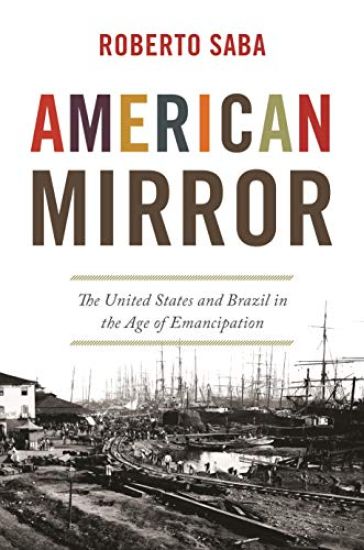
How slave emancipation transformed capitalism in the United States and BrazilIn the nineteenth century, the United States and Brazil were the largest slave societies in the Western world. The former enslaved approximately four million people, the latter nearly two million. Slavery was integral to the production of agricultural commodities for the global market, and governing elites feared the system’s demise would ruin their countries. Yet, when slavery ended in the United States and Brazil, in 1865 and 1888 respectively, what resulted was immediate and continuous economic progress. In American Mirror, Roberto Saba investigates how American and Brazilian reformers worked together to ensure that slave emancipation would advance the interests of capital.Saba explores the methods through which antislavery reformers fostered capitalist development in a transnational context. From the 1850s to the 1880s, this coalition of Americans and Brazilians—which included diplomats, engineers, entrepreneurs, journalists, merchants, missionaries, planters, politicians, scientists, and students, among others—consolidated wage labor as the dominant production system in their countries. These reformers were not romantic humanitarians, but cosmopolitan modernizers who worked together to promote labor-saving machinery, new transportation technology, scientific management, and technical education. They successfully used such innovations to improve production and increase trade.Challenging commonly held ideas about slavery and its demise in the Western Hemisphere, American Mirror illustrates the crucial role of slave emancipation in the making of capitalism.
The Difficult Days

The Difficult Days

Roberto Sosa

Princeton University Press
2014
pokkari
Roberto Sosa was born in Honduras in 1930. Expressing the oppression and poverty of his country, the poems in The Difficult Days are from Un Mutido Para Todos Dividido and Los Pobres, which won the Adonais Prize for Poetry in Madrid in 1968. Originally published in 1983. The Princeton Legacy Library uses the latest print-on-demand technology to again make available previously out-of-print books from the distinguished backlist of Princeton University Press. These editions preserve the original texts of these important books while presenting them in durable paperback and hardcover editions. The goal of the Princeton Legacy Library is to vastly increase access to the rich scholarly heritage found in the thousands of books published by Princeton University Press since its founding in 1905.
The Difficult Days

The Difficult Days

Roberto Sosa

Princeton University Press
2016
sidottu
Roberto Sosa was born in Honduras in 1930. Expressing the oppression and poverty of his country, the poems in The Difficult Days are from Un Mutido Para Todos Dividido and Los Pobres, which won the Adonais Prize for Poetry in Madrid in 1968. Originally published in 1983. The Princeton Legacy Library uses the latest print-on-demand technology to again make available previously out-of-print books from the distinguished backlist of Princeton University Press. These editions preserve the original texts of these important books while presenting them in durable paperback and hardcover editions. The goal of the Princeton Legacy Library is to vastly increase access to the rich scholarly heritage found in the thousands of books published by Princeton University Press since its founding in 1905.
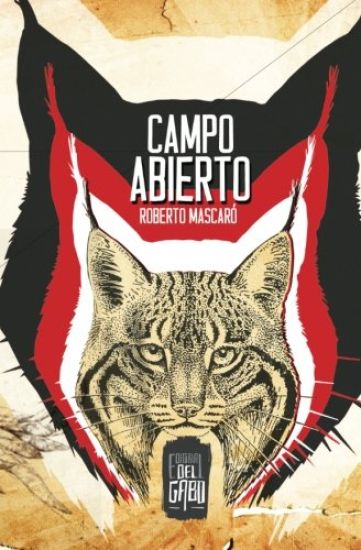
Campo Abierto

Campo Abierto

Roberto Mascaro

Editorial del Gabo
2014
nidottu
Roberto Mascar , a trav s de su obra, construye su propio puente entre dos culturas y nos brinda la ocasi n de vivenciarlo con l. Es as como compartimos sus asombros, sus nevadas, sus campos, sus calles de Montevideo. Las geograf as de su vida se entrecruzan dejando los intensos rastros que podemos seguir, p gina a p gina, en este grupo de poemas escogidos para el presente libro. Dicha selecci n ha sido realizada sin seguir el criterio cronol gico que por lo general constituye el hilo unitivo de los textos que conforman un volumen de este tipo, sino siguiendo la intuici n po tica de quienes, al hacerla, nos hemos identificado con el ritmo interior de estos asombros, que fuimos encontrando en los diferentes t tulos del autor. De all que su lectura refleje, como un espejo, la emoci n personal que ellos han suscitado en nosotros y de all tambi n nuestra confianza en que su tensi n espiritual y lo justo de su forma despertar n otros ecos en sus futuros lectores. Es el fundamento humano de esta extensa obra lo que podemos vislumbrar en las p ginas de esta selecci n que ofrecemos hoy a los lectores de habla hispana para quienes Roberto Mascar representa una tensa voz en nuestra lengua madre, a la vez que un puente inestimable hacia la poes a de Suecia. Alexis Romero / Alfredo Herrera Caracas, 2004
65 Horas con la Muerte

65 Horas con la Muerte

Roberto Morales

Roberto Morales
2015
pokkari
Tras dos a os de ardua y secreta preparaci n, cinco j venes emprenden un viaje de ida sin regreso siguiendo una ruta desolada y hostil. Esta peligrosa ruta -bautizada como el Estrecho de la Muerte por los pobladores que habitan a ambos extremos de la misma- ya ha cobrado muchas vidas en expediciones anteriores. Seg n reportes de socorristas y autoridades, s lo uno de cada cuatro que lo intentan logra llegar al otro extremo del camino... con vida.65 Horas con la Muerte no es fruto de la imaginaci n, sino el relato de un drama de la vida real. En esta historia de aventura, suspenso y supervivencia, la voluntad de sus protagonistas por alcanzar sus objetivos es puesta a prueba constantemente.65 Horas con la Muerte es, adem s de un impresionante testimonio, un reportaje nico captado por la c mara fotogr fica que acompa a la expedici n en todo momento. Las imagenes incluidas en esta edici n son originales y nicas en cuanto a que fueron tomadas por los propios expedicionarios.Esta historia de sacrificio e inspiraci n es tambi n un llamado a la reflexi n para aquellas personas que se sientan a esperar a que las cosas pasen; ellos son presas f cil del fracaso.Presentado bajo un formato de novela (52 000 palabras), este libro est dirigido a los amantes de la aventura, el suspenso y la acci n.
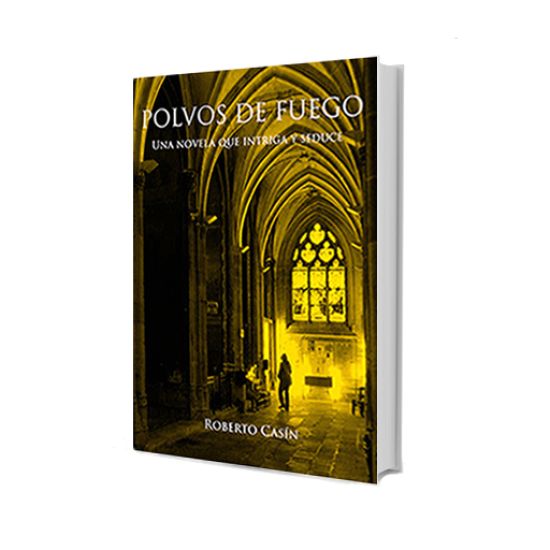
Polvos de fuego

Polvos de fuego

Roberto Casín

Rc Letras
2016
pokkari
Un enigma de siglos. Sue os indescifrables. Una avioneta que se estrella cargada de droga en una playa. Asesinatos, misterio e intriga en un peque o pueblo que vive herm ticamente atado a su pasado. Una historia de pasiones, amor y venganza con un inesperado desenlace y en la que lo m gico se funde con lo real. Todo de la mano de personajes fascinantes: el intr pido patriarca don Anselmo Montero, el vehemente cura Aristeo, el pintoresco cuatrero Indalecio o la ingeniosa prostituta Mariang lica.
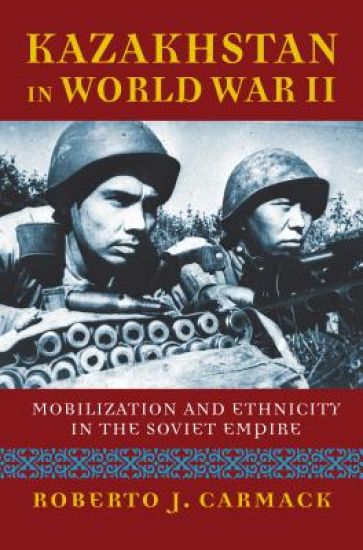
Kazakhstan in World War II

Kazakhstan in World War II

Roberto J. Carmack

University Press of Kansas
2019
sidottu
In July 1941, the Soviet Union was in mortal danger. Imperiled by the Nazi invasion and facing catastrophic losses, Stalin called on the Soviet people to “subordinate everything to the needs of the front.” Kazakhstan answered that call. Stalin had long sought to restructure Kazakh life to modernize the local population—but total mobilization during the war required new tactics and produced unique results. Kazakhstan in World War II analyzes these processes and their impact on the Kazakhs and the Soviet Union as a whole. The first English-Language study of a non-Russian Soviet republic during World War II, the book explores how the war altered official policies toward the region’s ethnic groups—and accelerated Central Asia’s integration into Soviet institutions.World War II is widely recognized as a watershed for Russia and the Soviet Union—not only did the conflict legitimize prewar institutions and ideologies, it also provided a medium for integrating some groups and excluding others. Kazakhstan in World War II explains how these processes played out in the ethnically diverse and socially “backward” Kazakh republic. Roberto J. Carmack marshals a wealth of archival materials, official media sources, and personal memoirs to produce an in-depth examination of wartime ethnic policies in the Red Army, Soviet propaganda for non-Russian groups, economic strategies in the Central Asian periphery, and administrative practices toward deported groups. Bringing Kazakhstan’s previously neglected role in World War II to the fore, Carmack’s work fills an important gap in the region’s history and sheds new light on our understanding of Soviet identities.
Yo Soy Duran: Mi Autobiografia

Yo Soy Duran: Mi Autobiografia

Roberto Duran

Blue Rider Press
2016
nidottu
Lo llamaban «Manos de Piedra y fue uno de los mejores boxeadores de todos los tiempos. Ahora, por primera vez, Roberto Dur n cuenta su incre ble historia: desde las calles de Panam a ser coronado como uno de los «cuatro reyes junto con Hearns, Leonard y Hagler, a medida que fue abri ndose camino en la era dorada del boxeo. Nacido en la pobreza extrema y casi incapaz de leer o escribir, muy pronto Dur n se dio cuenta de que sus pu os pod an protegerlo en las calles y ayudarlo a poner comida en la mesa. Su reputaci n se estableci el d a que, por una apuesta, derrib un caballo con un solo golpe. A los veinti n a os gan su primer t tulo mundial contra Ken Buchanan en el Madison Square Garden. En ese momento naci la leyenda de Manos de Piedra, pero su momento m s glorioso a n estaba por venir. En 1980 Dur n protagoniz una de las grandes sorpresas de la historia del boxeo al derrotar al previamente imbatible Sugar Ray Leonard. Pero mayor fama trajo mayores distracciones y el andar de fiesta constantemente tuvo su efecto antes de que las dos superestrellas se volvieran a encontrar. Esta vez, y por primera vez en su vida, enfrent a la debacle de la revancha que entr a formar parte del folclore deportivo y la verdad detr s del momento en el que se le escuch pronunciar dos palabras infames: «No m s . Las explosivas actuaciones de Dur n fueron de la mano con su volatilidad fuera del ring. Pas de vivir como la realeza a caer en bancarrota y, despu s de haber sido desestimado por el mundo del boxeo, tuvo un retorno sangriento y legendario que marc el final de su carrera y le trajo por fin la redenci n tan anhelada. Vino de la nada y cambi el mundo. Yo soy Dur n es la autobiograf a de una de las leyendas m s emblem ticas del boxeo.
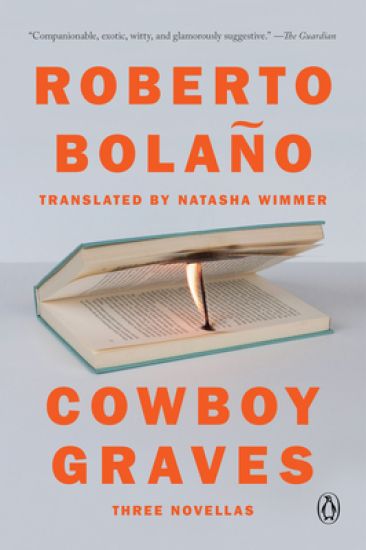
Cowboy Graves: Three Novellas

Cowboy Graves: Three Novellas

Roberto Bolaño

PENGUIN BOOKS
2022
nidottu
One more journey to the universe of Roberto Bola o, an essential voice of contemporary Latin American literature Cowboy Graves is an unexpected treasure from the vault of a revolutionary talent. Roberto Bola o's boundless imagination and seemingly inexhaustible gift for shaping the chaos of his reality into fiction is unmistakable in these three novellas. In "Cowboy Graves," Arturo Belano--Bola o's alter ego--returns to Chile after the coup to fight with his comrades for socialism. "French Comedy of Horrors" takes the reader to French Guiana on the night after an eclipse where a seventeen year old answers a pay phone and finds himself recruited into the Clandestine Surrealist Group, a secret society of artists based in the sewers of Paris. And in "Fatherland," a young poet reckons with the fascist overthrow of his country, as the woman he is obsessed with disappears in the ensuing violence and a Third Reich fighter plane mysteriously writes her poetry in the sky overhead. These three fiercely original tales bear the signatures of Bola o's extraordinary body of work, echoing the strange characters and uncanny scenes of his triumphs, while deepening our reverence for his gifts.
Tarot of Marseille Mini

Tarot of Marseille Mini

Roberto de Angelis

Llewellyn Publications
2020
muu
This fun mini-edition of the bestselling Tarot of Marseille is perfect for on-the-go readings. Small enough to fit in a pocket or a purse, you can carry your deck everywhere. Mini tarot decks also make great gifts and stocking stuffers for tarotists. Whether you are an expert reader or just starting your tarot journey, a tarot mini will be an exciting and practical addition to your collection. Cards are 44mm x 80mm (1.7" x 3.1"), smaller than a traditional tarot deck.
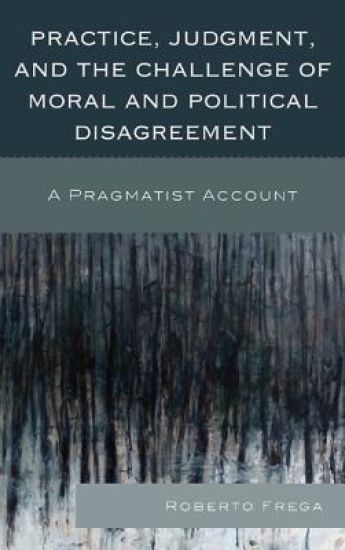
Practice, Judgment, and the Challenge of Moral and Political Disagreement
Practice, Judgment, and the Challenge of Moral and Political Disagreement: A Pragmatist Account offers an account of moral and political disagreement, explaining its nature and showing how we should deal with it. In so doing it strikes a middle path between troublesome dualisms such as those of realism and relativism, rationality and imagination, power and justification. To do so, the book draws on the resources of the pragmatist tradition, claiming that this tradition offers solutions that have for the most part been neglected by the contemporary debate. To prove this claim, the book provides a large account of debates within this tradition and engages its best solutions with contemporary philosophical theories such as perfectionism, critical theory, moral realism, and liberalism. The question of the nature of disagreement is addressed both at the general theoretical level and more specifically with reference to moral and political forms of disagreement. At the more general level, the book proposes a theory of practical rationality based upon the notion of rationality as inquiry. At the second, more specific, level, it aims to show that this conception can solve timely problems that relates to the nature of moral and political reasoning.
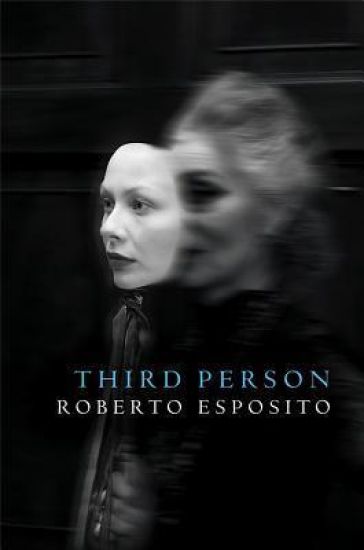
The Third Person

The Third Person

Roberto Esposito

Polity Press
2012
sidottu
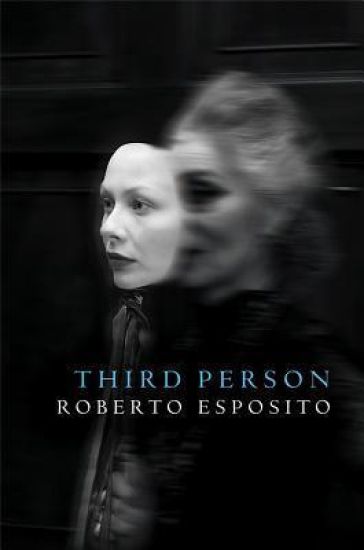
All discourses aimed at asserting the value of human life as such—whether philosophical, ethical, or political—assume the notion of personhood as their indispensable point of departure. This is all the more true today. In bioethics, for example, Catholic and secular thinkers may disagree on what constitutes a person and its genesis, but they certainly agree on its decisive importance: human life is considered to be untouchable only when based on personhood. In the legal sphere as well the enjoyment of subjective rights continues to be increasingly linked to the qualification of personhood, which appears to be the only one capable of bridging the gap between human being and citizen, right and life, and soul and body opened up at the very origins of Western civilization. The radical and alarming thesis put forward in this book is that the notion of person is unable to bridge this gap because it is precisely what creates this breach. Its primary effect is to create a separation in both the human race and the individual between a rational, voluntary part endowed with particular value and another, purely biological part that is thrust by the first into the inferior dimension of the animal or the thing. In opposition to the performative power of the person, whose dual origins can be traced back to ancient Rome and Christianity, Esposito pursues his strikingly original and innovative philosophical inquiry by inviting reflection on the category of the impersonal: the third person, in removing itself from the exclusionary mechanism of the person, points toward the orginary unity of the living being.
The Third Person

The Third Person

Roberto Esposito

Polity Press
2012
nidottu
All discourses aimed at asserting the value of human life as such—whether philosophical, ethical, or political—assume the notion of personhood as their indispensable point of departure. This is all the more true today. In bioethics, for example, Catholic and secular thinkers may disagree on what constitutes a person and its genesis, but they certainly agree on its decisive importance: human life is considered to be untouchable only when based on personhood. In the legal sphere as well the enjoyment of subjective rights continues to be increasingly linked to the qualification of personhood, which appears to be the only one capable of bridging the gap between human being and citizen, right and life, and soul and body opened up at the very origins of Western civilization. The radical and alarming thesis put forward in this book is that the notion of person is unable to bridge this gap because it is precisely what creates this breach. Its primary effect is to create a separation in both the human race and the individual between a rational, voluntary part endowed with particular value and another, purely biological part that is thrust by the first into the inferior dimension of the animal or the thing. In opposition to the performative power of the person, whose dual origins can be traced back to ancient Rome and Christianity, Esposito pursues his strikingly original and innovative philosophical inquiry by inviting reflection on the category of the impersonal: the third person, in removing itself from the exclusionary mechanism of the person, points toward the orginary unity of the living being.