

Kirjahaku
Etsi kirjoja tekijän nimen, kirjan nimen tai ISBN:n perusteella.
1000 tulosta hakusanalla S. Field

S N A R E S AND TARES SLEEP! THE ENEMY OF YOUR FIELD Michael M Jones
Michael M Jones
Xulon Press
2016
pokkari
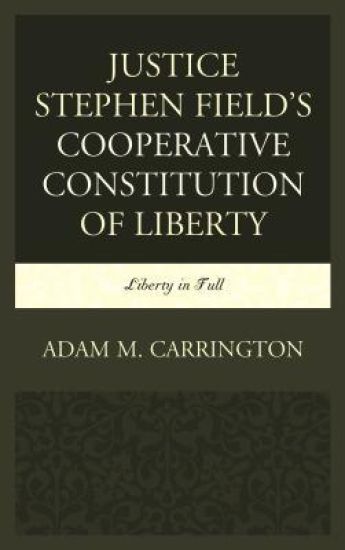
Justice Stephen Field's Cooperative Constitution of Liberty
Adam M. Carrington
Lexington Books
2017
sidottu
This book examines liberty’s Constitutional meaning through the jurisprudence of Justice Stephen Field, one of the late-Nineteenth Century’s most influential Supreme Court Justices. A Lincoln appointee who served on the Court from 1863-1897, Field articulated a view of Constitutional liberty that speaks to contemporary disputes. Today, some see liberty as protection through government regulation against private oppression. Others see liberty as protection from government through limits on governmental power. Justice Field is often viewed as siding against government power to regulate, acting as a pre-cursor to the infamous “Lochner” Era of the Court. This work explains how Field instead saw both these competing conceptions of liberty as legitimate. In fact, the two cooperated toward a common end. In his opinions, Field argued that protections through and from government worked in tandem to guard fundamental individual rights. In describing this view of liberty, Field addressed key Constitutional provisions that remain a source of debate, including some of the earliest interpretations of the Due Process Clause, its relationship to state police power and civil rights, and some of the earliest assertions of a national police power through the Commerce Clause. This work furthermore addresses the underpinnings of Field’s views, namely that he grounded his reading of the Constitution in the context of the common law and the Declaration of Independence. In his principles as well as his approach, this book argues, Justice Field presents a helpful discussant in ongoing debates regarding the meaning of liberty and of the Constitution.
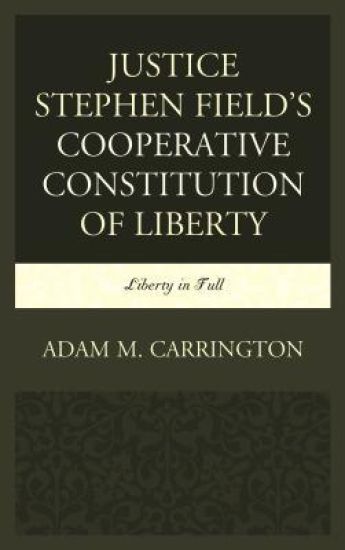
Justice Stephen Field's Cooperative Constitution of Liberty
Adam M. Carrington
Lexington Books
2019
nidottu
This book examines liberty’s Constitutional meaning through the jurisprudence of Justice Stephen Field, one of the late-Nineteenth Century’s most influential Supreme Court Justices. A Lincoln appointee who served on the Court from 1863-1897, Field articulated a view of Constitutional liberty that speaks to contemporary disputes. Today, some see liberty as protection through government regulation against private oppression. Others see liberty as protection from government through limits on governmental power. Justice Field is often viewed as siding against government power to regulate, acting as a pre-cursor to the infamous “Lochner” Era of the Court. This work explains how Field instead saw both these competing conceptions of liberty as legitimate. In fact, the two cooperated toward a common end. In his opinions, Field argued that protections through and from government worked in tandem to guard fundamental individual rights. In describing this view of liberty, Field addressed key Constitutional provisions that remain a source of debate, including some of the earliest interpretations of the Due Process Clause, its relationship to state police power and civil rights, and some of the earliest assertions of a national police power through the Commerce Clause. This work furthermore addresses the underpinnings of Field’s views, namely that he grounded his reading of the Constitution in the context of the common law and the Declaration of Independence. In his principles as well as his approach, this book argues, Justice Field presents a helpful discussant in ongoing debates regarding the meaning of liberty and of the Constitution.
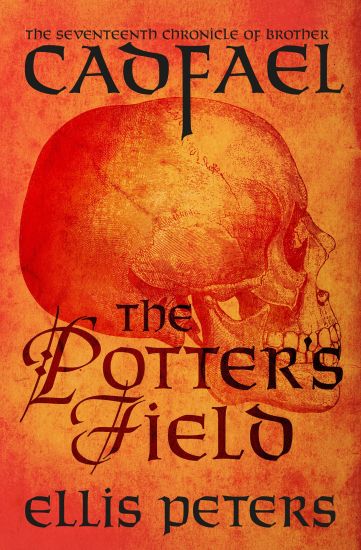
The medieval monk digs for clues when a body is unearthed by a plow: "His detecting talents are as dazzling as ever" (Publishers Weekly).When a newly plowed field recently given to the Benedictine Abbey of Saint Peter and Saint Paul yields the body of a young woman, Brother Cadfael is quickly thrown into a delicate situation. The field was once owned by a local potter named Ruald, who had abandoned his beautiful wife, Generys, to take monastic vows.Generys was said to have gone away with a lover, but now it seems as if she had been murdered. With the arrival at the abbey of young Sulien Blount, a novice fleeing homeward from the civil war raging in East Anglia, the mysteries surrounding the corpse start to multiply.
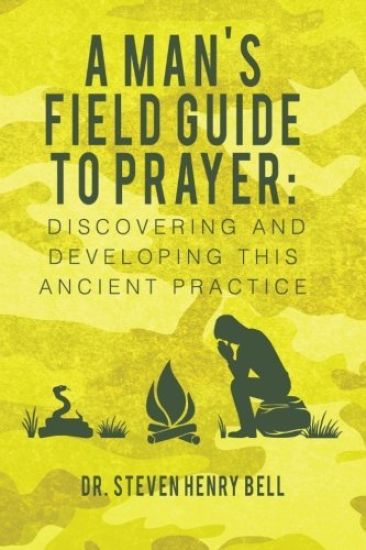
A Man's Field Guide to Prayer: Discovering and Developing This Ancient Practice
Steven Henry Bell
Createspace Independent Publishing Platform
2015
nidottu
Understanding Special Relativity and Maxwell's Equations: With Implications for a Unified Field Theory
Richard E. Haskell
Createspace Independent Publishing Platform
2016
nidottu
Book Highlights: Graphical approach to special relativityQuaternion representation of the Lorentz transformationRelativistic dynamicsDerivation of Maxwell's equations from Coulomb's law and special relativityA different approach to gravitational fieldsDetails of a little-known unified field theor

Basic Field Manuel Soldier's Handbook
United States War Department
Createspace Independent Publishing Platform
2015
nidottu
From the Italian crime legend, Andrea Camilleri, comes The Potter's Field, winner of the CWA International Dagger Award and the thirteenth instalment in the Inspector Montalbano series.While Vigàta is wracked by storms, Inspector Montalbano is called to attend the discovery of a dismembered body in a field of clay. Bearing all the marks of an execution style killing, it seems clear that this is, once again, the work of the notorious local mafia. But who is the victim? Why was the body divided into thirty pieces? And what is the significance of the Potter's Field?Working to decipher these clues, Montalbano must also confront the strange and difficult behaviour exhibited by his old colleague Mimi, and avoid the distraction of the enchanting Dolores Alfano – who seeks the inspector's help in locating her missing husband. But like the Potter's Field itself, Montalbano is on treacherous ground and only one thing is certain – nothing is quite as it seems . . .'Among the most exquisitely crafted pieces of crime writing available today . . . Simply superb' - Sunday TimesThe Potter's Field is followed by The Age of Doubt, the fourteenth in the series.
Marshall Field's: The Store That Helped Build Chicago
Gayle Soucek
History Press Library Editions
2010
sidottu
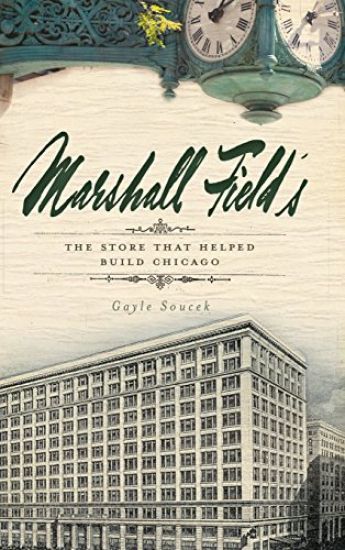
Anyone who has waited in a Christmas line for the Walnut Room's Great Tree can attest that Chicago's loyalty to Marshall Field's is fierce. Dayton-Hudson even had to take out advertising around town to apologize for changing the Field's hallowed green bags. And with good reason, the store and those who ran it shaped the city's streets, subsidized its culture and heralded its progress. The resulting commercial empire dictated wholesale trade terms in Calcutta and sponsored towns in North Carolina, but its essence was always Chicago. So when the Marshall Field name was retired in 2006 after the stores were purchased by Macy's, protest slogans like Field's is Chicago"? and "Field's: as Chicago as it gets"? weren't just emotional hype. Many still hope that name will be resurrected like the city it helped support during the Great Fire and the Great Depression. Until then, fans of Marshall Field's can celebrate its history with this warm look back at the beloved institution."

Wrigley Field's Amazing Vendors
Lloyd Rutzky; Joel Levin
Arcadia Publishing Library Editions
2018
sidottu
In 1970, a vendor at Wrigley Field had an amazing idea to turn his personal camera away from the baseball diamond and toward his fellow ballpark hawkers as they went about their daily jobs of selling souvenirs, programs, hot dogs, ice cream, and soft drinks. Along the way, he also captured images of other employees--ushers, security staff, commissary workers, and union officials. The result, Wrigley Field's Amazing Vendors, offers a never-before-seen perspective of major-league baseball that Arcadia Publishing is proud to include in its Images of Modern America series. The subjects themselves are amazing: a blind Frosty Malt vendor; a singing peanut vendor; a Coca-Cola vendor who went on to become an economic adviser to the president of the United States. Many of the vendors photographed in the 1970s are still in the aisles of Wrigley Field today. Others left for new career opportunities. A few became legends in vending history.

From Confusion to Zen: The Real Story of Field Education An Instructor's Guide
Anne Martine Pierre-Pierre
Createspace Independent Publishing Platform
2017
nidottu
If you have chosen to become a field instructor, you have decided to support and further social work education. Now, Anne Martine Pierre-Pierre, PhD, LCSW, wants to provide you with your own support as you guide students through the program. From Confusion to Zen gives you the real story about field education from someone who has seventeen years of experience. Pierre-Pierre, who served as a director of field education, gives you an honest look at the situations you may face as a field instructor. In this guide, Pierre-Pierre covers the purpose of field education, the role of field education as the signature pedagogy, the ground rules for field instruction, the many realities of your role as an educator, the teaching personas you may possess, the challenges of teaching beyond the classroom the way to use your own personal work story to inspire students. Pierre-Pierre also includes a series of case studies to prepare you for different scenarios in the field course. Her questions and prompts at the end of each chapter encourage you to reflect on your own journey and your role as a source of support and inspiration for your students.
Montana Women Homesteaders: A Field of One's Own
Farcountry Press
2009
nidottu
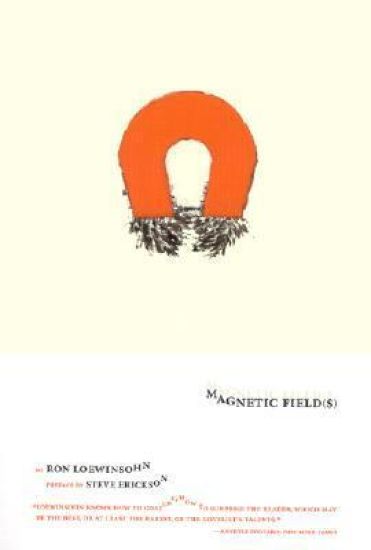
Organized around the idea that "you can't know what a magnetic field is like unless you're inside of it, " Ron Loewinsohn's first novel opens from the disturbing perspective of a burglar in the midst of a robbery and travels through the thoughts and experiences (both real and imaginary) of a group of characters whose lives are connected both coincidentally and intimately. All of the characters have a common desire to imagine and invent rather horrifying stories about the lives of people around them. As the novel develops, certain phrasings and images recur improbably, drawing the reader into a subtle linguistic game that calls into question the nature of authorship, the ways we inhabit and invade each other's lives, and the shape of fiction itself.

Hugh McDougall's Field Guide to the World of Gomes
David Kennedy McCulloch
Windstorm Creative,US
2023
pokkari

The Artist's Field Guide to Yellowstone
TRINITY UNIVERSITY PRESS,U.S.
2025
nidottu
The Artist’s Field Guide to Yellowstone introduces readers to the wildlife of the Greater Yellowstone Ecosystem through the works of fifty of the region’s distinguished writers and artists. This robust anthology of eclectic artwork and inspiring storytelling offers an enlivened take on the traditional field guide and argues for the intrinsic value of this world-renowned ecosystem.Yellowstone naturalist and artist Katie Shepherd Christiansen has compiled this sensible field guide and elegant art book to highlight the unique biodiversity of the Greater Yellowstone Ecosystem, organized across four habitat strata: sky, earth, soil, and water. Writers and artists pair up to reveal new ways of understanding key species through prose, poetry, and artwork. The addition of scientific descriptions provides a natural history frame, and Christiansen’s illustrations of ecologically connected species bring life to every page.Contributors hail from the Greater Yellowstone area. Writers are Elise Atchison, Rick Bass, Todd Burritt, Tom Campbell, Lyn Dalebout, Matt Daly, Joanne Dornan, Gary Ferguson, Matt Hart, Geneen Marie Haugen, Susan Marsh, Craig Mathews, Arthur Middleton, Doug Peacock, Karen Reinhart, Kelsey Sather, Jack Turner, Rebecca Watters, Tina Welling, Marylee White, Connie Wieneke, Todd Wilkinson, and Terry Tempest Williams. Artists are Kalon Baughan, Tamara Callens, Meredith Campbell, Sue Cedarholm, Derek DeYoung, Loretta Domaszewski, Katy Ann Fox, Dave Hall, Dwayne Harty, Laney Hicks, DG House, Will Hunter, S. J. Karikó, Laney, Jennifer Lowe-Anker, Mimi Matsuda, James Prosek, Robert Schlenker, Jocelyn Slack, Tucker Smith, Kay Stratman, Kara Tripp, Shannon Troxler, Kathryn Mapes Turner, John Wasson, Carrie Wild, and Monte Yellow Bird Sr.

The Artist's Field Guide to Yellowstone
Trinity University Press,U.S.
2021
sidottu
The Artist’s Field Guide to Yellowstone introduces readers to the wildlife of the Greater Yellowstone Ecosystem through the works of fifty of the region’s distinguished writers and artists. This robust anthology of eclectic artwork and inspiring storytelling offers an enlivened take on the traditional field guide and argues for the intrinsic value of this world-renowned ecosystem.Yellowstone naturalist and artist Katie Shepherd Christiansen has compiled this sensible field guide and elegant art book to highlight the unique biodiversity of the Greater Yellowstone Ecosystem, organized across four habitat strata: sky, earth, soil, and water. Writers and artists pair up to reveal new ways of understanding key species through prose, poetry, and artwork. The addition of scientific descriptions provides a natural history frame, and Christiansen’s illustrations of ecologically connected species bring life to every page.Contributors hail from the Greater Yellowstone area. Writers are Elise Atchison, Rick Bass, Todd Burritt, Tom Campbell, Lyn Dalebout, Matt Daly, Joanne Dornan, Gary Ferguson, Matt Hart, Geneen Marie Haugen, Susan Marsh, Craig Mathews, Arthur Middleton, Doug Peacock, Karen Reinhart, Kelsey Sather, Jack Turner, Rebecca Watters, Tina Welling, Marylee White, Connie Wieneke, Todd Wilkinson, and Terry Tempest Williams. Artists are Kalon Baughan, Tamara Callens, Meredith Campbell, Sue Cedarholm, Derek DeYoung, Loretta Domaszewski, Katy Ann Fox, Dave Hall, Dwayne Harty, Laney Hicks, DG House, Will Hunter, S. J. Karikó, Laney, Jennifer Lowe-Anker, Mimi Matsuda, James Prosek, Robert Schlenker, Jocelyn Slack, Tucker Smith, Kay Stratman, Kara Tripp, Shannon Troxler, Kathryn Mapes Turner, John Wasson, Carrie Wild, and Monte Yellow Bird Sr.