

Kirjahaku
Etsi kirjoja tekijän nimen, kirjan nimen tai ISBN:n perusteella.
1000 tulosta hakusanalla Seth Neblett
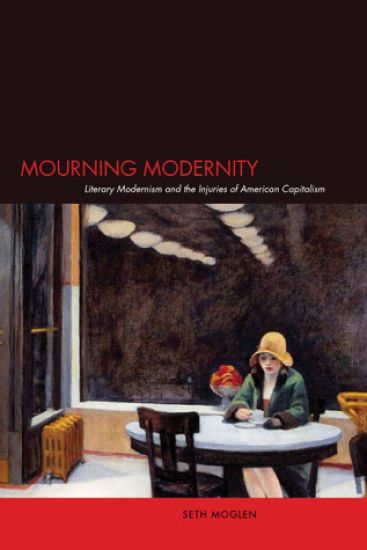
In Mourning Modernity, Seth Moglen argues that American literary modernism is, at its heart, an effort to mourn for the injuries inflicted by modern capitalism. He demonstrates that the most celebrated literary movement of the 20th century is structured by a deep conflict between political hope and despair—between the fear that alienation and exploitation were irresistible facts of life and the yearning for a more just and liberated society. He traces this conflict in the works of a dozen novelists and poets – ranging from Eliot, Hemingway, and Faulkner to Hurston, Hughes, and Tillie Olsen. Taking John Dos Passos' neglected U.S.A. trilogy as a central case study, he demonstrates how the struggle between reparative social mourning and melancholic despair shaped the literary strategies of a major modernist writer and the political fate of the American Left. Mourning Modernity offers a bold new map of the modernist tradition, as well as an important contribution to the cultural history of American radicalism and to contemporary theoretical debates about mourning and trauma.
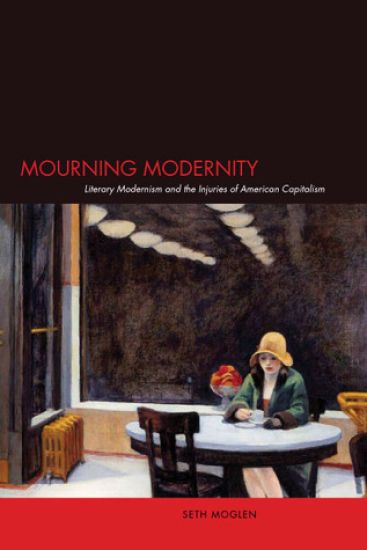
In Mourning Modernity, Seth Moglen argues that American literary modernism is, at its heart, an effort to mourn for the injuries inflicted by modern capitalism. He demonstrates that the most celebrated literary movement of the 20th century is structured by a deep conflict between political hope and despair—between the fear that alienation and exploitation were irresistible facts of life and the yearning for a more just and liberated society. He traces this conflict in the works of a dozen novelists and poets – ranging from Eliot, Hemingway, and Faulkner to Hurston, Hughes, and Tillie Olsen. Taking John Dos Passos' neglected U.S.A. trilogy as a central case study, he demonstrates how the struggle between reparative social mourning and melancholic despair shaped the literary strategies of a major modernist writer and the political fate of the American Left. Mourning Modernity offers a bold new map of the modernist tradition, as well as an important contribution to the cultural history of American radicalism and to contemporary theoretical debates about mourning and trauma.
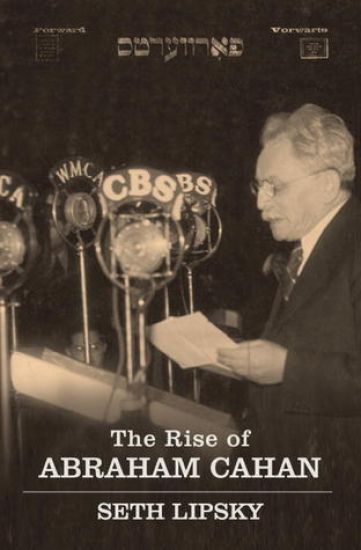
The first general-interest biography of the legendary editor of "The Jewish Daily Forward," the iconic Yiddish-language newspaper of the laboring masses that inspired, educated, and entertained millions of readers, helped redefine journalism during its golden age, and transformed American culture. Abraham Cahan took the helm of a failing Yiddish Socialist daily in New York City in 1902 and over the next fifty years turned it into a national newspaper that changed American politics and earned him the adulation of millions of Jewish immigrants and the friendship of the greatest newspapermen of his day, from Lincoln Steffens to H. L. Mencken. Cahan--whose tenure at the Forward spanned the Russian Revolution, the First World War, the rise of political Zionism, the Second World War, the Holocaust, and the creation of the State of Israel--did more than cover the news. He led revolutionary reforms--spreading social democracy, organizing labor unions, battling communism, and assimilating immigrant Jews into American society, most notably via his groundbreaking advice column, "A Bintel Brief." Cahan was also a celebrated novelist whose works are read and studied to this day as brilliant examples of fiction that turned the immigrant narrative into an art form. Acclaimed journalist Seth Lipsky, creator of the English-language successor to Cahan's "Forward," gives us the fascinating story of a man of profound contradictions: an avowed socialist who wrote fiction with transcendent sympathy for a wealthy manufacturer; an internationalist who turned against the anti-Zionism of the left; an assimilationist whose final battle was against religious apostasy. Lipsky's Cahan is a prism through which to understand the paradoxes and transformations of American Judaism itself. A towering newspaperman in the manner of Horace Greeley and Joseph Pulitzer, Abraham Cahan revolutionized our idea of what newspapers could accomplish. This biography is part of the critically-acclaimed JEWISH ENCOUNTERS series, a collaboration between Schocken Books and Nextbook Press.

This book provides a comprehensive overview of behavioral interventions to prevent HIV-AIDS risk-related behaviors. It synthesizes the empirical literature on individual, group, and community-level interventions and provides an objective and detailed assessment of intervention outcomes. Factors associated with behavioral risk for HIV transmission, theories of HIV risk behavior change, and the state of HIV prevention technology transfer are also reviewed. Additionally, behavioral interventions for adolescents and adults of diverse ethnic and sexual backgrounds are discussed with respect to each intervention type. Although the focus is on sexual risk reduction, interventions for sexual behavior of substance abusing populations are also covered.

This book provides a comprehensive overview of behavioral interventions to prevent HIV-AIDS risk-related behaviors. It synthesizes the empirical literature on individual, group, and community-level interventions and provides an objective and detailed assessment of intervention outcomes. Factors associated with behavioral risk for HIV transmission, theories of HIV risk behavior change, and the state of HIV prevention technology transfer are also reviewed. Additionally, behavioral interventions for adolescents and adults of diverse ethnic and sexual backgrounds are discussed with respect to each intervention type. Although the focus is on sexual risk reduction, interventions for sexual behavior of substance abusing populations are also covered.
The Scroll of Isaiah: Its Unity, Structure, and Message
Seth Erlandsson
Northwestern Publishing House
2025
sidottu
Written by Dr. Seth Erlandsson, a frequently-published former Director of the Bible Research Centre of the Biblicum Foundation, this one-volume commentary defends the unity of the book of Isaiah and points to evidence of divine inspiration. Known for its key messianic prophecies and importance among the Major Prophets, the book of Isaiah has faced decades of ongoing debate over its authorship and authenticity. Many modern Bible scholars assert that the book of Isaiah had multiple authors over the centuries. These theories seemingly cast doubt on the Bible's claims of divine inspiration and the integrity of Jesus' claims about himself. Dr. Seth Erlandsson addresses these theories, including the Deutero-Isaiah theory, and provides evidence for Isaiah's unified writing style. He focuses especially on interpreting Isaiah chapter 41, the epicenter of the authorship debate. His straightforward and organized writing style creates a clear guide through Isaiah's many historical and linguistic details.

In his original new study, Seth Graham analyzes a rich and forgotten vein of humor in an otherwise bleak environment. The late Soviet period (1961-1986) hardly seems fertile ground for humor, but Russian jokes (anekdoty) about life in the Soviet Union were ubiquitous. The cultural and political relaxation in the decade following Stalin's death produced considerable optimism among Soviet citizens. The anekdot exploited and exposed what Graham calls 'Soviet diglossia' (official Sovietese vs. Russian everyday language) and emphasized the distance between official myths and quotidian reality. While the dissidents of this period have been much written about, Graham's work on the anekdoty - written in the third person, ironic, and engaged with everything Soviet - fills a hole that has been overlooked in cultural history.
Family Values and the Rise of the Christian Right
Seth Dowland
University of Pennsylvania Press
2018
pokkari
During the last three decades of the twentieth century, evangelical leaders and conservative politicians developed a political agenda that thrust "family values" onto the nation's consciousness. Ministers, legislators, and laypeople came together to fight abortion, gay rights, and major feminist objectives. They supported private Christian schools, home schooling, and a strong military. Family values leaders like Jerry Falwell, Phyllis Schlafly, Anita Bryant, and James Dobson became increasingly supportive of the Republican Party, which accommodated the language of family values in its platforms and campaigns. The family values agenda created a bond between evangelicalism and political conservatism. Family Values and the Rise of the Christian Right chronicles how the family values agenda became so powerful in American political life and why it appealed to conservative evangelical Christians. Conservative evangelicals saw traditional gender norms as crucial in cultivating morality. They thought these gender norms would reaffirm the importance of clear lines of authority that the social revolutions of the 1960s had undermined. In the 1970s and 1980s, then, evangelicals founded Christian academies and developed homeschooling curricula that put conservative ideas about gender and authority front and center. Campaigns against abortion and feminism coalesced around a belief that God created women as wives and mothers-a belief that conservative evangelicals thought feminists and pro-choice advocates threatened. Likewise, Christian right leaders championed a particular vision of masculinity in their campaigns against gay rights and nuclear disarmament. Movements like the Promise Keepers called men to take responsibility for leading their families. Christian right political campaigns and pro-family organizations drew on conservative evangelical beliefs about men, women, children, and authority. These beliefs-known collectively as family values-became the most important religious agenda in late twentieth-century American politics.
Family Values and the Rise of the Christian Right
Seth Dowland
University of Pennsylvania Press
2015
sidottu
During the last three decades of the twentieth century, evangelical leaders and conservative politicians developed a political agenda that thrust "family values" onto the nation's consciousness. Ministers, legislators, and laypeople came together to fight abortion, gay rights, and major feminist objectives. They supported private Christian schools, home schooling, and a strong military. Family values leaders like Jerry Falwell, Phyllis Schlafly, Anita Bryant, and James Dobson became increasingly supportive of the Republican Party, which accommodated the language of family values in its platforms and campaigns. The family values agenda created a bond between evangelicalism and political conservatism. Family Values and the Rise of the Christian Right chronicles how the family values agenda became so powerful in American political life and why it appealed to conservative evangelical Christians. Conservative evangelicals saw traditional gender norms as crucial in cultivating morality. They thought these gender norms would reaffirm the importance of clear lines of authority that the social revolutions of the 1960s had undermined. In the 1970s and 1980s, then, evangelicals founded Christian academies and developed homeschooling curricula that put conservative ideas about gender and authority front and center. Campaigns against abortion and feminism coalesced around a belief that God created women as wives and mothers-a belief that conservative evangelicals thought feminists and pro-choice advocates threatened. Likewise, Christian right leaders championed a particular vision of masculinity in their campaigns against gay rights and nuclear disarmament. Movements like the Promise Keepers called men to take responsibility for leading their families. Christian right political campaigns and pro-family organizations drew on conservative evangelical beliefs about men, women, children, and authority. These beliefs-known collectively as family values-became the most important religious agenda in late twentieth-century American politics.

This book, in the tradition of Thomas Szasz, R. D. Laing, and Erving Goffman, is a challenge to the belief-system of psychiatry and to the brutal and disrespectful treatment frequently given to the "mentally ill". The author, a qualified psychologist and psychotherapist and a prominent activist in the fight for mental patients' rights, presents a cogent critique of the medical model as applied to individuals undergoing spiritual or emotional crises. The core of the book consists of seven case histories or "true stories", depicting the impact of the mental health system on very different individuals, who all suffered psychiatric abuse before winning their own struggle for self-determination. These stories are shocking, poignant, alarming, sometimes disgusting, yet ultimately heartening. They expose the "crime against humanity" that is organised coercive psychiatry in the United States today, but they also show that it is sometimes possible to break free from psychiatric oppression and make something worthwhile out of one's own life. In most cases, the heroes of these case histories experienced glimpses of another reality, a vision of a higher power or of the interconnectedness of all things. Although these can be classified as unconventional religious experiences, there is no justification for assuming that they are worthless or that they are symptoms of mysterious "mental illnesses". By the use of an ironic narrative technique, Dr. Farber relates these stories while counterposing the "official" Mental Health Establishment interpretation of what is going on with his own and with the "patient's". The case histories are followed by interviews with five dissident therapists, of varying theoretical persuasions, all engaged in different ways in resisting the Mental Health Establishment.
This book, in the tradition of Thomas Szasz, R. D. Laing, and Erving Goffman, is a challenge to the belief-system of psychiatry and to the brutal and disrespectful treatment frequently given to the "mentally ill". The author, a qualified psychologist and psychotherapist and a prominent activist in the fight for mental patients' rights, presents a cogent critique of the medical model as applied to individuals undergoing spiritual or emotional crises. The core of the book consists of seven case histories or "true stories", depicting the impact of the mental health system on very different individuals, who all suffered psychiatric abuse before winning their own struggle for self-determination. These stories are shocking, poignant, alarming, sometimes disgusting, yet ultimately heartening. They expose the "crime against humanity" that is organised coercive psychiatry in the United States today, but they also show that it is sometimes possible to break free from psychiatric oppression and make something worthwhile out of one's own life. In most cases, the heroes of these case histories experienced glimpses of another reality, a vision of a higher power or of the interconnectedness of all things. Although these can be classified as unconventional religious experiences, there is no justification for assuming that they are worthless or that they are symptoms of mysterious "mental illnesses". By the use of an ironic narrative technique, Dr. Farber relates these stories while counterposing the "official" Mental Health Establishment interpretation of what is going on with his own and with the "patient's". The case histories are followed by interviews with five dissident therapists, of varying theoretical persuasions, all engaged in different ways in resisting the Mental Health Establishment.

Hard News: Twenty-One Brutal Months at the New York Times and How They Changed the American Media
Seth Mnookin
Random House Trade
2005
nidottu
Offers an inside account of the Jayson Blair plagiarism scandal that rocked The New York Times, the autocratic leadership style of the newspaper's executive editor, Howell Raines, the turmoil surrounding the scandal and its repercussions, and the implications of the episode in terms of the rapidly changing world of modern journalism. Reprint. 25,000 first printing.
p class="MsoNormal" style="margin: 0in 0in 0pt"Tremendous transformation marks the last three decades of American politics, and nowhere has this change been as distinctive and penetrating as in the American South. After 120 consecutive years of minority status, the rapid ascendancy of Southern House Republicans in the 1990s has reshaped the contours of contemporary American politics: increasing party polarization, making a Republican House majority possible, and, most recently, contributing to the revival of Democratic fortunes in national congressional elections. Southern Republican ascendancy constitutes an exemplar of party system change, made possible by three sequential factors: increasing Republican identification, redistricting, and the emergence of viable Republican candidates. p class="MsoNormal" style="margin: 0in 0in 0pt" p class="MsoNormal" style="margin: 0in 0in 0pt"Relying on existing and original data sources, this text presents the most recent example of large-scale partisan change. Beyond serving as a primer for the study of political parties, campaigns and elections, and Southern politics, Republican Ascendancy in Southern U.S. House Elections provides an original theoretical argument and an expansive view of why political change in the South has such strong implications for national politics.

Tom Paine’s America explores the vibrant, transatlantic traffic in people, ideas, and texts that profoundly shaped American political debate in the 1790s. In 1789, when the Federal Constitution was ratified, “democracy” was a controversial term that very few Americans used to describe their new political system. That changed when the French Revolution - and the wave of democratic radicalism that it touched off around the Atlantic World - inspired a growing number of Americans to imagine and advocate for a wide range of political and social reforms that they proudly called “democratic.”One of the figureheads of this new international movement was Tom Paine, the author of Common Sense. Although Paine spent the 1790s in Europe, his increasingly radical political writings from that decade were wildly popular in America. A cohort of democratic printers, newspaper editors, and booksellers stoked the fires of American politics by importing a flood of information and ideas from revolutionary Europe. Inspired by what they were learning from their contemporaries around the world, the evolving democratic opposition in America pushed their fellow citizens to consider a wide range of radical ideas regarding racial equality, economic justice, cosmopolitan conceptions of citizenship, and the construction of more literally democratic polities.In Europe such ideas quickly fell victim to a counter-Revolutionary backlash that defined Painite democracy as dangerous Jacobinism, and the story was much the same in America’s late 1790s. The Democratic Party that won the national election of 1800 was, ironically, the beneficiary of this backlash; for they were able to position themselves as the advocates of a more moderate, safe vision of democracy that differentiated itself from the supposedly aristocratic Federalists to their right and the dangerously democratic Painite Jacobins to their left.

America's authors and the unfulfilled desire to escape the state From hippie culture to neoliberalism to Black Lives Matter, anti-state sentiment and rhetoric persists through varying—sometimes and electorally opposed—forms in American politics and culture. Examining the work of some of the leading authors of the twentieth and twenty-first centuries—including William Carlos Williams, Charles Olson, Richard Wright, Thomas Pynchon, Don DeLillo, Joan Didion, Karen Tei Yamashita, Junot DÍaz, Juliana Spahr, and Nathaniel Mackey—Seth McKelvey offers a new perspective on American literature’s many conceptions of an escape from the political state. Through close readings of texts varied in their political orientations, historical concerns, literary genres, and aesthetic commitments, No Exit reveals a provocative overlap between literary and political representation, showing just how urgent yet difficult it has been for American literature to imagine leaving the state behind.

America's authors and the unfulfilled desire to escape the state From hippie culture to neoliberalism to Black Lives Matter, anti-state sentiment and rhetoric persists through varying—sometimes and electorally opposed—forms in American politics and culture. Examining the work of some of the leading authors of the twentieth and twenty-first centuries—including William Carlos Williams, Charles Olson, Richard Wright, Thomas Pynchon, Don DeLillo, Joan Didion, Karen Tei Yamashita, Junot DÍaz, Juliana Spahr, and Nathaniel Mackey—Seth McKelvey offers a new perspective on American literature’s many conceptions of an escape from the political state. Through close readings of texts varied in their political orientations, historical concerns, literary genres, and aesthetic commitments, No Exit reveals a provocative overlap between literary and political representation, showing just how urgent yet difficult it has been for American literature to imagine leaving the state behind.
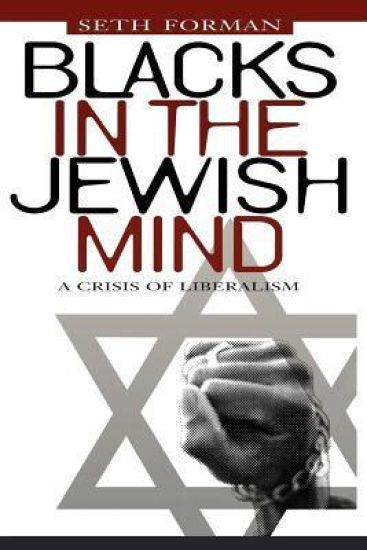
Since the 1960s the relationship between Blacks and Jews has been a contentious one. While others have attempted to explain or repair the break-up of the Jewish alliance on civil rights, Seth Forman here sets out to determine what Jewish thinking on the subject of Black Americans reveals about Jewish identity in the U.S. Why did American Jews get involved in Black causes in the first place? What did they have to gain from it? And what does that tell us about American Jews? In an extremely provocative analysis, Forman argues that the commitment of American Jews to liberalism, and their historic definition of themselves as victims, has caused them to behave in ways that were defined as good for Blacks, but which in essence were contrary to Jewish interests. They have not been able to dissociate their needs--religious, spiritual, communal, political--from those of African Americans, and have therefore acted in ways which have threatened their own cultural vitality. Avoiding the focus on Black victimization and white racism that often infuses work on Blacks and Jews, Forman emphasizes the complexities inherent in one distinct white ethnic group's involvement in America's racial dilemma.

Since the 1960s the relationship between Blacks and Jews has been a contentious one. While others have attempted to explain or repair the break-up of the Jewish alliance on civil rights, Seth Forman here sets out to determine what Jewish thinking on the subject of Black Americans reveals about Jewish identity in the U.S. Why did American Jews get involved in Black causes in the first place? What did they have to gain from it? And what does that tell us about American Jews? In an extremely provocative analysis, Forman argues that the commitment of American Jews to liberalism, and their historic definition of themselves as victims, has caused them to behave in ways that were defined as good for Blacks, but which in essence were contrary to Jewish interests. They have not been able to dissociate their needs--religious, spiritual, communal, political--from those of African Americans, and have therefore acted in ways which have threatened their own cultural vitality. Avoiding the focus on Black victimization and white racism that often infuses work on Blacks and Jews, Forman emphasizes the complexities inherent in one distinct white ethnic group's involvement in America's racial dilemma.

The Big Onion Guide to New York City
Seth I. Kamil; Eric Wakin; Kenneth Jackson
New York University Press
2002
pokkari
A guide to a variety of witty, informative walking tours in New York City Whether you're a tourist or a native New Yorker, you will appreciate this witty, informative walking guide to New York City, as authors Seth Kamil and Eric Wakin peel back the layers of New York's most popular neighborhoods. Here in one volume are their award-winning tours. In their "Immigrant New York" tour you can take a walk on the Bowery, the most infamous street in the city and learn how the city's finest roadway became America's "Skid Row." In "Before Stonewall" you'll discover the many facets of gay and lesbian history and trace the development of Greenwich Village as a cultural mecca. From SoHo to the Upper West Side; from Harlem to Brooklyn there's something in The Big Onion Guide for everyone. The authors show how it was nothing new when Mayor Giuliani was unable to ban sales by immigrant mobile food vendors. The Guide takes us to the place where the Dutch tried to ban street side sales by Scottish peddlers 350 years ago, and where the great Fiorello La Guardia banned most of the pushcart salesmen at midcentury. But Kamil and Wakin are not nostalgists or preservationists. Instead, their historical tours connect today's city with the snapshots of yesterday, blending social and cultural history with the evolution of different ethnic and cultural communities. The Big Onion Guide includes ten walking tours, plus a 5-borough driving tour, peppered with informative sidebars, illustrations, and photos from the collection at the New-York Historical Society. Visit the Big Onion Guide to New York City site at www.nyupress.org/bigonion