Kirjojen hintavertailu. Mukana 12 390 323 kirjaa ja 12 kauppaa.

Kirjahaku

Etsi kirjoja tekijän nimen, kirjan nimen tai ISBN:n perusteella.

1000 tulosta hakusanalla Steven J. Howell

V-2 Ballistic Missile 1942–52

V-2 Ballistic Missile 1942–52

Steven J. Zaloga

Osprey Publishing
2003
nidottu
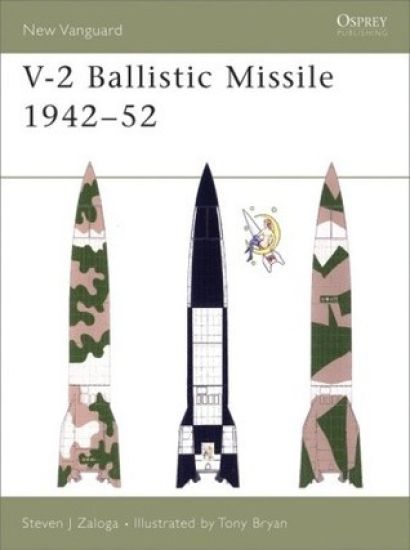
The German A-4 ballistic missile, better known by its propaganda name of V-2, was the world's first successful ballistic missile, breaking through the atmosphere to reach its target quicker. It was a forerunner of Cold War ballistic missiles and its combat use in 1944-45 set the pattern for the use of Scud ballistic missiles in recent decades. The V-2 offensive lasted from September 1944 until March 1945 with over 3,000 rockets being launched. This book will examine the combat record of the V-2 in World War II, with a special focus on how a German missile battalion actually prepared and fired its missiles.
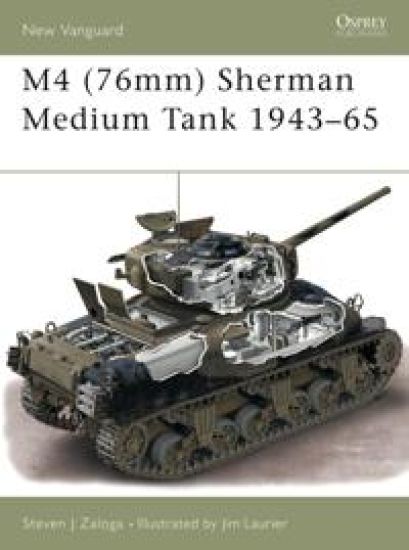
M4 (76mm) Sherman Medium Tank 1943–65

M4 (76mm) Sherman Medium Tank 1943–65

Steven J. Zaloga

Osprey Publishing
2003
nidottu
The M4 Sherman tank was the mainstay of the Western allies between 1942 and 1945. Fast and modern it was a big success and was transported as far afield as Russia and North Africa. The American Chief of Staff claimed in November 1943 it was 'hailed widely as the best tank on the battlefield today...'. However, by the Normandy invasion of June 1944 this was not the case: the new German heavy tanks such as the Panther and Tiger were completely outclassing the Sherman. This title covers the M4 version armed with the 76 mm gun, examining developments such as the HVSS suspension, using much new archive material.
US Army Tank Crewman 1941–45

US Army Tank Crewman 1941–45

Steven J. Zaloga

Osprey Publishing
2004
nidottu
This title is structured around the career of a single tanker from 37th Tank Battalion, 4th Armored Division, revealing what it was like to live and fight in a medium tank. The focus is largely on the crew of an M4 Sherman, though light tank service is also studied. Tank operation required a well trained and well coordinated crew. The crew positions and roles of tank commander, gunner, driver, loader, and assistant driver are all covered in detail, together with recruitment procedure, specialist training, and the variety of specialised clothing and personal weaponry.
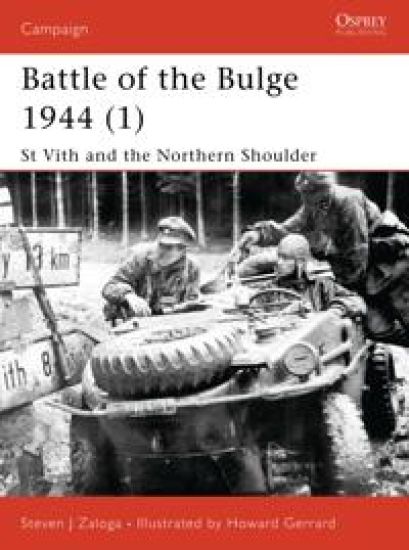
Battle of the Bulge 1944 (1)

Battle of the Bulge 1944 (1)

Steven J. Zaloga

Osprey Publishing
2003
nidottu
The Battle of the Bulge was the largest and most costly battle fought by the US Army in World War II.The Ardennes fighting was Hitler’s last gamble on the Western Front, crippling the Wehrmacht for the remainder of the war. In the first of two volumes on the Ardennes campaign Steven Zaloga details the fighting in the northern sector around St Vith and the Elsenborn Ridge. The Sixth Panzer Army, containing the bulk of German Panzer strength, was expected to achieve the breakthrough here.It was the failure around St Vith that forced the Germans to look south towards Bastogne.
US Armored Divisions

US Armored Divisions

Steven J. Zaloga

Osprey Publishing
2004
nidottu
The armored division were the shock force of the US Army's combat formulations during the fighting in northwest Europe in the final year of the war. This book examines the combat mission of the armored division in the US Army wartime doctrine. The organization of the US armored division is examined, with special attention to the "Combat Command" concept. The order of battle of each of the divisions is provided, along with a brief summary of the unit's combat record. This account is rounded out by relevant statistical data including divisional strength and losses. Based on new archival material, this book provides information not previously available in published accounts.
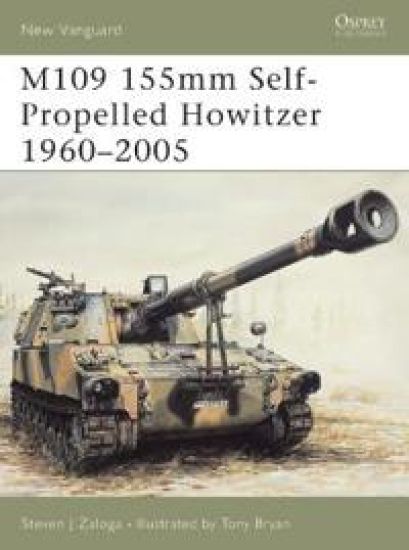
M109 155mm Self-Propelled Howitzer 1960–2005

M109 155mm Self-Propelled Howitzer 1960–2005

Steven J. Zaloga

Osprey Publishing
2005
nidottu
Entering service in the early 1960s, the M109 Self-Propelled Howitzer has been in production for 34 years and forms the backbone of US Army and Reserve artillery units. The M109A6 is the latest development of the M109 series and incorporates advanced fire control systems that enable it to have the first rounds on target in less than 60 seconds after arriving at the firing location. This ability to quickly shift from travel to firing to moving again is to avoid counter battery fire and ensures battlefield survivability of the weapon. This book details the versatile M109, which has served around the globe, seeing service in Southeast Asia, Desert Shield and Desert Storm.
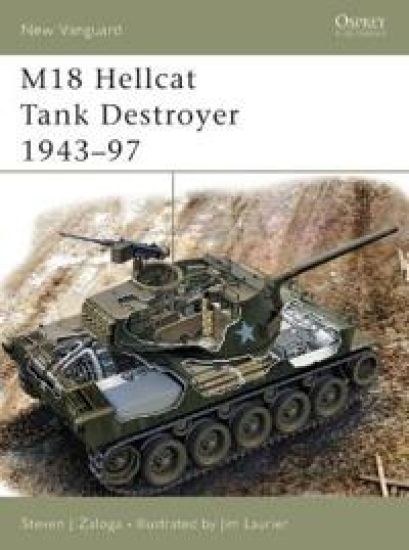
M18 Hellcat Tank Destroyer 1943–97

M18 Hellcat Tank Destroyer 1943–97

Steven J. Zaloga

Osprey Publishing
2004
nidottu
The M18 76mm Gun Motor Carriage was developed for the US Army's Tank Destroyer Command. It was the only tank destroyer deployed during World War II actually based on their requirements for speed and firepower. This book examines the development of this vehicle, the controversies over the need for high-speed tank destroyers, and its actual performance during World War II. Special emphasis is placed on examining its performance in its intended mission. Coverage also includes derivative vehicles of the M18 such as the M39 armored utility vehicle.
US Anti-tank Artillery 1941–45

US Anti-tank Artillery 1941–45

Steven J. Zaloga

Osprey Publishing
2005
nidottu
The US Army's development of the 37mm anti-tank gun began in response to needs identified during the Spanish Civil War. By the time it entered service in Tunisia in 1943, the gun was already obsolete, and the US began the licensed manufacture of the British 6-pdr in the hope of finding a quick solution to their artillery requirements. This in tum proved unequal to the demands of warfare in France, 1944, and further anti-tank measures were developed - rocket propelled grenades for infantry use, and weapons designed specifically for use by the Tank Destroyer Force. The development of America's anti-tank weapons is detailed here, and the organisation and operation of Tank Destroyer Battalions is discussed.
Modelling the M3/M5 Stuart Light Tank

Modelling the M3/M5 Stuart Light Tank

Steven J. Zaloga

Osprey Publishing
2003
nidottu
The M3 and M5 family of light tanks were the culmination of American tank development of the 1930s. However, by the time of the outbreak of World War II, they were approaching obsolescence. First entering combat in the autumn of 1941 in the Western Desert with the British Army, the Stuart quickly showed that it was inadequate in tank fighting. They proved more suitable in the Pacific theater than in Europe, and fought successfully in many of the major battles. This title shows three different ways of building these popular tanks, covering construction, painting and weathering, as well as illustrating the vehicles in diorama settings.
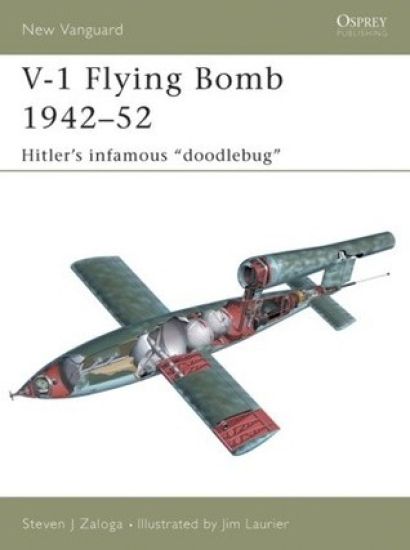
V-1 Flying Bomb 1942–52

V-1 Flying Bomb 1942–52

Steven J. Zaloga

Osprey Publishing
2005
nidottu
The first deployment of the V-1 was in June 1944 when, following two years of tests, Hitler gave the order to attack England. Known to the Allies as the "Buzz Bomb" or "Doodlebug", the V-1 was the world's first cruise missile. This book explores the V-1 in detail, from its initial concept, first use in 1944, the various Allied counter-measures, and the later use of the V-1 during the Battle of the Bulge. The major foreign derivatives, including the US copy "JB-2 Loon" and numerous post-war Soviet variants, are also covered.
T-54 and T-55 Main Battle Tanks 1944–2004

T-54 and T-55 Main Battle Tanks 1944–2004

Steven J. Zaloga

Osprey Publishing
2004
nidottu
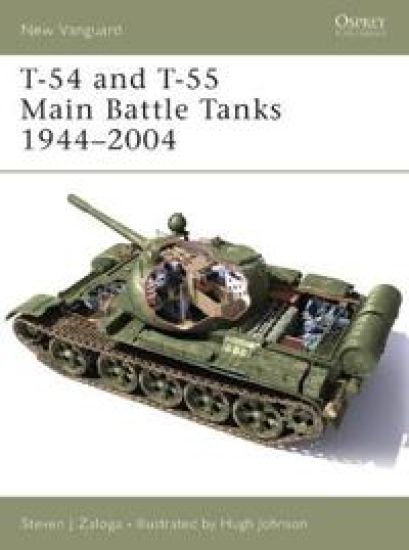
The T-54 and T-55 tanks are the most widely manufactured tanks of all time. They have become ubiquitous to wars around the globe since the 1950s, starting with Hungary in 1956, and including the Arab-Israeli wars of 1967, 1973 and 1982, the Vietnam war of 1967-75, the Iran-Iraq War of 1980-88, the Afghanistan conflict, Operation Desert Storm, the Yugoslav Civil Wars, and the recent conflict in Iraq. This book will examine the roots of this prolific tank family, starting with the Sovet Army's first attempts to replace the legendary T-34 during World War II, and covering the T-43 and the T-44, the more successful T-54, and its ultimate evolution into the T-55.
US Tank and Tank Destroyer Battalions in the ETO 1944–45
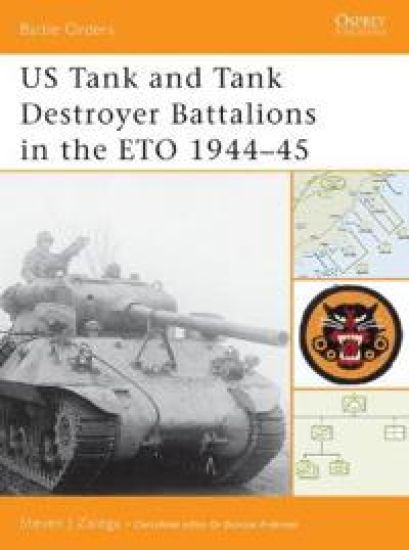
Although they are less well known than the more glamorous armored divisions, vast numbers of separate tank and tank destroyer battalions were in service in the European Theater of Operations from 1944 to 1945, engaged in supporting the infantry divisions. This title focuses on these units: the standard tank battalions, tank battalions (light), tank battalions (mine exploder) and tank battalions (Special) - secret CDL night fighting battalions. Self-propelled and towed tank destroyer battalions are also covered, as well as a list of all the battalions that took part in the Northwest Europe campaign.
Modelling US Army Tank Destroyers of World War II

Modelling US Army Tank Destroyers of World War II

Steven J. Zaloga

Osprey Publishing
2004
nidottu
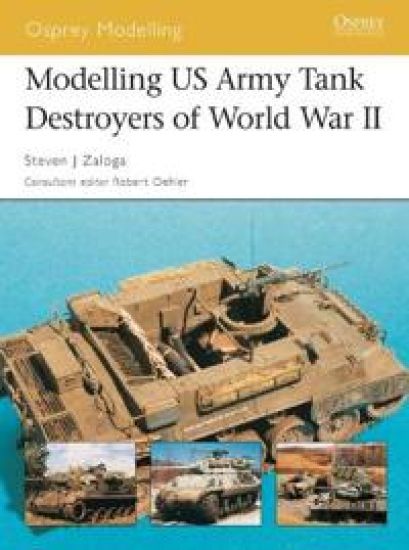
The US Tank Destroyer program was introduced as a cost-effective way of dealing with German armour. As opposed to most of the other combatant powers of WWII, the US did not want to use its tank battalions to confront opposing armour. Rather, specialised tank destroyer battalions, both towed and self-propelled, were raised to do the job. This book covers, among others, such types as the M18 Hellcat, the M3 / M5 Stuart Light Tank and the M4 Sherman and is packed with information useful to modellers of all standards.
Battle of the Bulge 1944 (2)

Battle of the Bulge 1944 (2)

Steven J. Zaloga

Osprey Publishing
2004
nidottu
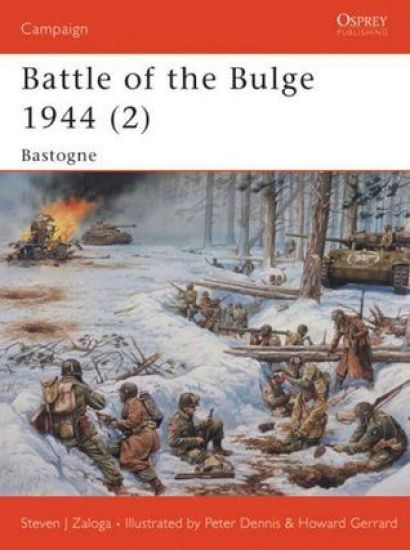
The Ardennes offensive in December 1944, known to history as the 'Battle of the Bulge', was the decisive campaign of the war in North-West Europe.When the attack in the north by 6th Panzer Army failed, Hitler switched the focus of the offensive to General Manteuffel’s 5th Panzer Army farther south. Overwhelming the green US 106th Division, German Panzers flooded towards the River Meuse.Barring their way was the crossroads town of Bastogne, reinforced at the last minute by the paratroopers of the 101st Airborne, the ‘Screaming Eagles'. The stage was set for one of the epic struggles of the war – the battle for Bastogne.
D-Day Fortifications in Normandy

D-Day Fortifications in Normandy

Steven J. Zaloga

Osprey Publishing
2005
nidottu
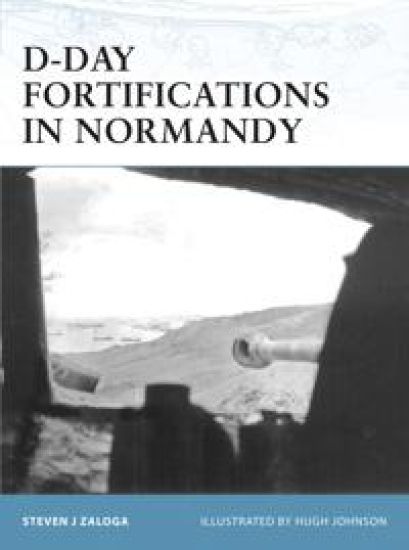
The coastal defenses in Normandy along the D-Day beaches were less thorough than other Atlantic Wall defenses, such as the Pas de Calais, where the Germans expected the main attack. However, they still proved to be formidable obstacles for the Allied invasion force. Rommel stressed the need to defeat the invasion on the beach, and therefore the Normandy beach fortifications took on a significant role in German tactical thinking. This book covers the different levels of passive and active fortifications that were designed to stop the Allied assaults on the beaches of Normandy.
Jeeps 1941–45

Jeeps 1941–45

Steven J. Zaloga

Osprey Publishing
2005
nidottu
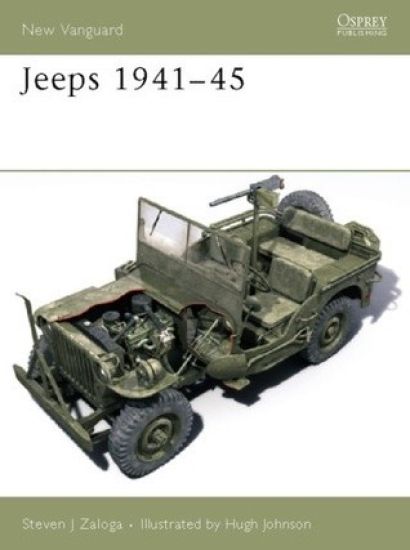
The Jeep was the most famous military vehicle of World War II, and the name has become synonymous with a whole class of military and civilian all-terrain vehicles. The Jeep originated in a pre-war US Army requirement for a simple, inexpensive, and robust vehicle for basic utility chores. Its simple design proved to be adaptable to a host of military tasks including use as a scout vehicle, battlefield ambulance, communications vehicle, and staff car. This book, covering the saviour of World War II, focuses the design and development of an infamous vehicle used on nearly every front of World War II.
M3 Lee/Grant Medium Tank 1941–45

M3 Lee/Grant Medium Tank 1941–45

Steven J. Zaloga

Osprey Publishing
2005
nidottu
The highly successful 'stop-gap' M3 medium tank was designed in 1941, and as adequate turret casting facilities were not yet ready, the M3 used an unusual armament configuration patterned after a French tank. British lend-lease demands led to the design of a second turret type with the US version called the Lee and the British version the Grant. It could penetrate Panzer armor, and its explosive firepower was excellent for dealing with German anti-tank guns. This book covers the design, development, service and variants of a vehicle that was the backbone of many World War II forces.
Anzio 1944

Anzio 1944

Steven J. Zaloga

Osprey Publishing
2005
nidottu
Anzio 1944 covers the amphibious landing which has become one of the most controversial campaigns of World War II. In January 1944, the Allies decided to land at Anzio in order to overcome the stalemate at Cassino. Questionable decisions by the Allied leadership led to three months of World War I-style trench warfare, and the entire beachhead suffered from continuous German observation and bombardment.Vividly describing each thrust and counter-thrust, this book takes us through the agonizing struggle as each side sought to retain or regain mastery. It shows how Anzio proved to be a stepping stone not only to Rome but also to the liberation of Italy.
Kasserine Pass 1943

Kasserine Pass 1943

Steven J. Zaloga

Osprey Publishing
2005
nidottu
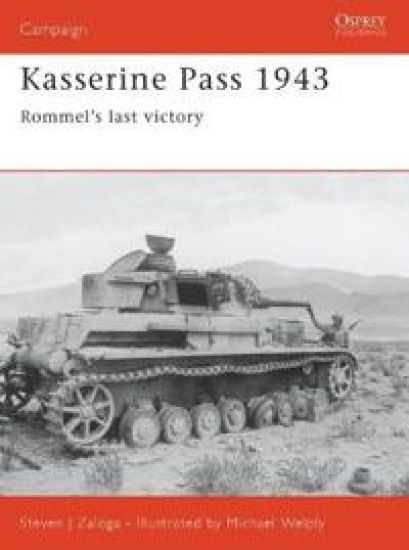
A highly illustrated account of The North African campaign of November 1942-May 1943 during World War II.This campaign was a baptism of fire for the US Army. After relatively straightforward landings, the US II Corps advanced into Tunisia to support operations by the British 8th Army. Rommel, worried by the prospect of an attack, decided to exploit the inexperience of the US Army and strike a blow against their overextended positions around the Kasserine Pass.However, the Germans were unable to exploit their initial success, and later attacks were bloodily repulsed. The fighting in Tunisia taught the green US Army vital combat lessons, and brought to the fore senior commanders such as Eisenhower, Patton, and Bradley.
German Panzers 1914–18

German Panzers 1914–18

Steven J. Zaloga

Osprey Publishing
2006
nidottu
Panzer warfare is synonymous with the Wehrmacht of World War II. This book examines the story of the Panzer's more mysterious ancestors, the little-known panzers of the Great War. Germany was very slow to develop armored vehicles compared to Britain and France. Efforts to catch-up proved difficult, and only a few dozen German A7V tanks were completed in time to take part in the final campaigns of 1918. As a result, the majority of German panzer units actually used captured British tanks, the Beutepanzer. This book traces the development of German panzers of the World War One, including the A7V and its intended but unfinished stablemates.