

Kirjahaku
Etsi kirjoja tekijän nimen, kirjan nimen tai ISBN:n perusteella.
1000 tulosta hakusanalla Thomas W. Foley

101 Ways to use Technology to be Closer with your Child: For the divorced or working parent, older sibling, aunt, uncle or grandparent
Thomas W. Harmke II
Createspace Independent Publishing Platform
2017
nidottu
Are you missing your child in a time of quarantine? You're not alone. But technology can help in ways you've never thought of It isn't easy to be away from the children we love. There are so many moments we miss when we're far away. And not only does it affect us, but it affects them, too. But there are ways to cultivate these relationships even when we can't be there with them. These 101 innovative uses of technology can help you have fun, real, meaningful, and lasting closeness with the children in your lives, no matter how far away they are.Make some memories that they will never forget, all with the help of technology

Cleek: the Man of the Forty Faces
Thomas W. Hanshew
Createspace Independent Publishing Platform
2017
nidottu



Among the ambiguities, superficialities, uncertainties, and temporality of a contemporary day-to-day, rush-here, rush-there world, Mann beams a revelatory light on the ordinary things--bathing the baby or visiting an elderly day care center--and makes them glow with significance. It is a special gift to be able to uncover the spirituality in the familiar, to disclose the sacred in the ordinary, and the author effortlessly uncovers the epiphanies that wait patiently in the everyday for discovery. The reality of faith is at the core of these meditational explorations. To Taste and See not only illustrates how to think theologically about the ordinary events of life--it is a gentle challenge to do so. Mann draws his insights and inspirations from a variety of sources: the Bible, contemporary literature, swamp frogs, the life of the congregation, scholarly studies--all made accessible in a lively, informal, thought-provoking style. The riches of wisdom and the abundance of what it means to be Christian surround us. All we must do to partake of these gifts is to ""taste and see."" Thomas W. Mann, a widely published author, is the minister of the Parkway United Church of Christ, Winston-Salem, North Carolina.


Winner of the Pulitzer Prize for American Primitive, Mary Oliver has published twelve books of poetry and five books of essays. Her poems are quoted in everything from Web sites to hymn books. Earthlight, a “Magazine of Spiritual Ecology,” has declared her an “earth saint.” In this engaging study, Mann shows Oliver to have keen eyes and ears for reading the book of nature. Readers will discover that the correspondence between Oliver’s poetry and traditional religious language provides a fresh perspective from which to enjoy her work. Here there is a god, but one who at first seems unrecognizable, at least to Judeo-Christian religious tradition. We know of the “God of heaven,” and even the “God of heaven and earth,” but a god of dirt? Oliver’s reading of the Other Book of God invites us into nature’s “temple” where we may come into the presence of the holy and from which we may leave rejuvenated and blessed. God of Dirt is an important study of a contemporary poet whose work is as likely to be read by a preacher in a pulpit as by an activist at an environmental rally, and will help us experience a new vision of the beauty of our world.
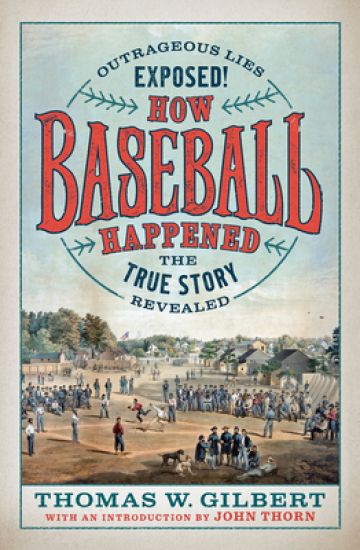
The fascinating, true, story of baseball’s amateur origins. “Explores the conditions and factors that begat the game in the 19th century and turned it into the national pastime....A delightful look at a young nation creating a pastime that was love from the first crack of the bat.”—Paul Dickson, The Wall Street JournalBaseball’s true founders don’t have plaques in Cooperstown. The founders were the hundreds of uncredited amateurs — ordinary people — who played without gloves, facemasks or performance incentives in the middle decades of the 19th century. Unlike today’s pro athletes, they lived full lives outside of sports. They worked, built businesses and fought against the South in the Civil War.But that’s not the way the story has been told. The wrongness of baseball history can be staggering. You may have heard that Abner Doubleday or Alexander Cartwright invented baseball. Neither did. You may have been told that a club called the Knickerbockers played the first baseball game in 1846. They didn’t. You have read that baseball’s color line was uncrossed and unchallenged until Jackie Robinson in 1947. Nope. You have been told that the clean, corporate 1869 Cincinnati Red Stockings were baseball’s first professional club. Not true. They weren’t the first professionals; they weren’t all that clean, either. You may have heard Cooperstown, Hoboken, or New York City called the birthplace of baseball, but not Brooklyn. Yet Brooklyn was the home of baseball’s first fans, the first ballpark, the first statistics—and modern pitching.Baseball was originally supposed to be played, not watched. This changed when crowds began to show up at games in Brooklyn in the late 1850s. We fans weren’t invited to the party; we crashed it. Professionalism wasn’t part of the plan either, but when an 1858 Brooklyn versus New York City series accidentally proved that people would pay to see a game, the writing was on the outfield wall.When the first professional league was formed in 1871, baseball was already a fully formed modern sport with championships, media coverage, and famous stars. Professional baseball invented an organization, but not the sport itself. Baseball’s amazing amateurs had already done that.Thomas W. Gilbert’s history is for baseball fans and anyone fascinating by history, American culture, and how great things began.
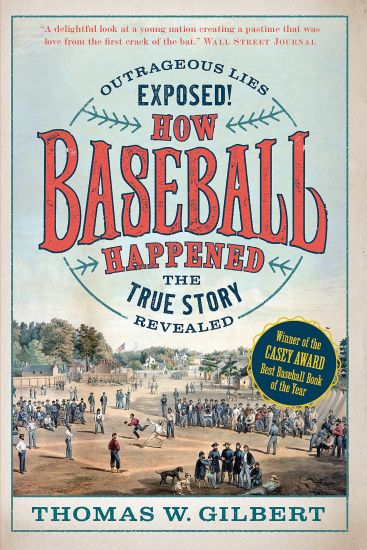
The fascinating, true, story of baseball’s amateur origins. “Explores the conditions and factors that begat the game in the 19th century and turned it into the national pastime....A delightful look at a young nation creating a pastime that was love from the first crack of the bat.”—Paul Dickson, The Wall Street JournalBaseball’s true founders don’t have plaques in Cooperstown. The founders were the hundreds of uncredited amateurs — ordinary people — who played without gloves, facemasks or performance incentives in the middle decades of the 19th century. Unlike today’s pro athletes, they lived full lives outside of sports. They worked, built businesses and fought against the South in the Civil War.But that’s not the way the story has been told. The wrongness of baseball history can be staggering. You may have heard that Abner Doubleday or Alexander Cartwright invented baseball. Neither did. You may have been told that a club called the Knickerbockers played the first baseball game in 1846. They didn’t. You have read that baseball’s color line was uncrossed and unchallenged until Jackie Robinson in 1947. Nope. You have been told that the clean, corporate 1869 Cincinnati Red Stockings were baseball’s first professional club. Not true. They weren’t the first professionals; they weren’t all that clean, either. You may have heard Cooperstown, Hoboken, or New York City called the birthplace of baseball, but not Brooklyn. Yet Brooklyn was the home of baseball’s first fans, the first ballpark, the first statistics—and modern pitching.Baseball was originally supposed to be played, not watched. This changed when crowds began to show up at games in Brooklyn in the late 1850s. We fans weren’t invited to the party; we crashed it. Professionalism wasn’t part of the plan either, but when an 1858 Brooklyn versus New York City series accidentally proved that people would pay to see a game, the writing was on the outfield wall.When the first professional league was formed in 1871, baseball was already a fully formed modern sport with championships, media coverage, and famous stars. Professional baseball invented an organization, but not the sport itself. Baseball’s amazing amateurs had already done that.Thomas W. Gilbert’s history is for baseball fans and anyone fascinating by history, American culture, and how great things began.
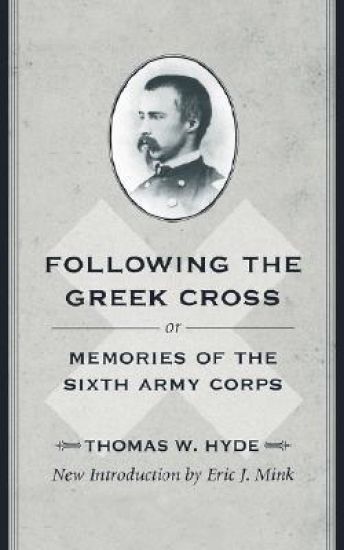
Following the Greek Cross; or, Memories of the Sixth Army Corps
Thomas W. Hyde
University of South Carolina Press
2005
nidottu
Rare recollections of combat and camaraderie from the Army of the Potomac. Thomas W. Hyde, a native of Maine who rose rapidly through the Union ranks and eventually received the Medal of Honor for his actions at the Battle of Antietam, published his portrait of the Army of the Potomac in 1894. More than a mere personal remembrance, ""Following the Greek Cross"" tells the story of an illustrious army unit and offers rare glimpses into the Northern perspective on the war and its significance in U.S. history. One of the most cited - and most difficult to find - Union memoirs, this volume returns to print with an expanded edition featuring new information about the author, more than a dozen photographs, and a complete index. Hyde began his military career in 1861 as a major of the Seventh Maine Infantry Regiment. When that unit became part of the Sixth Corps of the massive Army of the Potomac, Hyde was promoted to a staff post. He served on the staffs of several prominent Union officers, including John Sedgwick and Horatio G. Wright, major generals who between them commanded the Sixth Corps in several important campaigns in the Virginia theater. Hyde's unit was also among those who followed General Lee's army into Pennsylvania and fought at Gettysburg. In his correspondence Hyde writes engagingly about the war, his fellow soldiers, strategy and tactics, and daily life in the Union forces. He elaborates on their motivation for fighting, the strength of their camaraderie, and their unflagging determination to preserve the Union. Eric J. Mink's new introduction provides fresh insights on Hyde's origins, perspectives, and postwar achievements, which include the establishment of one of North America's most important shipyards, in Hyde's hometown of Bath, Maine.

This book explores how the East German Writers Union became a site for the contestation of writers' roles in GDR society with consequences well beyond the literary community. In the German Democratic Republic words and ideas mattered, both for legitimizing and criticizing the regime. No wonder, then, that the ruling SED party created a Writers Union to mold what writers publicly wrote and said. Its chief task was ideological: creating a socialist and antifascist culture. But it was also supposed to advance its members' professional interests and enable them to act as public intellectuals with a say in the direction of socialism. Many writers demanded that it pursue this second function as well, which brought it into conflict with the SED. This book explores how the union became a site for the contestation of writers' roles in GDR society with consequences well beyond the literary community. Union leaders, pressured by the SED or the secret police, usually acquiesced in enforcing regime demands, but by the 1980s many authors had adapted to the rules of the game, exploiting theirunion membership to insulate themselves from reprisal for their carefully worded critiques and in so doing beginning to break down limitations on public speech. The book explores how and why in the 1970s the Writers Union helped normalize relations between writers and state, yet over the course of the 1980s inadvertently aided the expansion of permissible speech, ultimately helping destabilize the East German system. Thomas W. Goldstein is Assistant Professor of History at the University of Central Missouri.

Following the dramatic Bay of Pigs fiasco in 1961, President John F. Kennedy moved to repair the damage the invasion had done to his image and to his relations with the press. Thomas W. Benson examines two speeches and a press conference held by JFK in the days after the crisis, shedding light on how the structures of speech writing influence the texts of the speeches and policy formation, as well as the ways the press mediates and even helps to formulate presidential rhetoric. Writing JFK provides the full text of both speeches and the press conference, as well as Benson's analysis of what would come to be known as ""spin control."" He demonstrates how the speeches display the implicit collaboration of Kennedy with his speech writers and the press to create a depiction of Kennedy as a political and moral agent. A central feature of the book is Benson's exploration of ""the enormous power of the presidency to compel press restraint and to command the powers of publicity."" The resulting insight into the relationship among the press, politics, and public policy will appeal to all those interested in political communication, the power of the American president, and the legacy of JFK.

Following the dramatic Bay of Pigs fiasco in 1961, President John F. Kennedy moved to repair the damage the invasion had done to his image and to his relations with the press. Thomas W. Benson examines two speeches and a press conference held by JFK in the days after the crisis, shedding light on how the structures of speech writing influence the texts of the speeches and policy formation, as well as the ways the press mediates and even helps to formulate presidential rhetoric. Writing JFK provides the full text of both speeches and the press conference, as well as Benson's analysis of what would come to be known as ""spin control."" He demonstrates how the speeches display the implicit collaboration of Kennedy with his speech writers and the press to create a depiction of Kennedy as a political and moral agent. A central feature of the book is Benson's exploration of ""the enormous power of the presidency to compel press restraint and to command the powers of publicity."" The resulting insight into the relationship among the press, politics, and public policy will appeal to all those interested in political communication, the power of the American president, and the legacy of JFK.

This edition of Channels of Prophecy: The Social Dynamics of Prophetic Activity by Thomas Overhold, published in 2003, is a digitally scanned reprint of the 1989 Augsburg Fortress Press edition.

"There is little dispute that the Internet should continue as an open platform," notes the Federal Communications Commission. Yet in a curious twist of logic, the FCC has moved to upend the rules yielding that outcome, imposing "network neutrality" regulations on broadband-access providers. The new mandates purport to prevent Internet "gatekeepers" by prohibiting networks from favoring certain applications. In this comprehensive Broadside, Thomas W. Hazlett explains the faulty economic logic behind the FCC's regulations. The "open Internet"--thriving without such mandates--allows consumers, investors, and entrepreneurs to choose the best platforms and products, testing rival business models. Networks are actively (and efficiently) involved in managing traffic and promoting popular applications, making the entire ecosystem more valuable. This is a spontaneous market process, not a planned structure, and the commission's restrictions threaten to stifle innovation and economic growth.

Dr. Tom Shinder’s ISA Server 2006 Migration Guide provides a clear, concise, and thorough path to migrate from previous versions of ISA Server to ISA Server 2006. ISA Server 2006 is an incremental upgrade from ISA Server 2004, this book provides all of the tips and tricks to perform a successful migration, rather than rehash all of the features which were rolled out in ISA Server 2004. Also, learn to publish Exchange Server 2007 with ISA 2006 and to build a DMZ. * Highlights key issues for migrating from previous versions of ISA Server to ISA Server 2006. * Learn to Publish Exchange Server 2007 Using ISA Server 2006. * Create a DMZ using ISA Server 2006.

The Second Edition of the Best Damn Firewall Book Period is completely revised and updated to include all of the most recent releases from Microsoft, Cisco, Juniper Network, and Check Point. Compiled from the best of the Syngress firewall library and authored by product experts such as Dr. Tom Shinder on ISA Server, this volume is an indispensable addition to a serious networking professionals toolkit. Coverage includes migrating to ISA Server 2006, integrating Windows Firewall and Vista security into your enterprise, successfully integrating Voice over IP applications around firewalls, and analyzing security log files. Sections are organized by major vendor, and include hardware, software and VPN configurations for each product line.

Of all the countries in the world that are vital to the strategic and economic interests of the United States, Saudi Arabia is the least understood by the American people. Saudi Arabia's unique place in Islam makes it indispensable to a constructive relationship between the non-Muslim West and the Muslim world. For all its wealth, the country faces daunting challenges that it lacks the tools to meet: a restless and young population, a new generation of educated women demanding opportunities in a closed society, political stagnation under an octogenarian leadership, religious extremism and intellectual backwardness, social division, chronic unemployment, shortages of food and water, and troublesome neighbors.Today's Saudi people, far better informed than all previous generations, are looking for new political institutions that will enable them to be heard, but these aspirations conflict with the kingdom's strict traditions and with the House of Saud's determination to retain all true power. Meanwhile, the country wishes to remain under the protection of American security but still clings to a system that is antithetical to American values.Basing his work on extensive interviews and field research conducted in the kingdom from 2008 through 2011 under the auspices of the Council on Foreign Relations, Thomas W. Lippman dissects this central Saudi paradox for American readers, including diplomats, policymakers, scholars, and students of foreign policy.