Kirjojen hintavertailu. Mukana 12 016 292 kirjaa ja 12 kauppaa.

Kirjahaku

Etsi kirjoja tekijän nimen, kirjan nimen tai ISBN:n perusteella.

1000 tulosta hakusanalla Trebor Healey

Shakespeare's Tremor and Orwell's s

Shakespeare's Tremor and Orwell's s

John J. Ross

St. Martin's Griffin
2014
nidottu
The doctor suddenly appeared beside Will, startling him. He was sleek and prosperous, with a dainty goatee. Though he smiled reassuringly, the poet noticed that he kept a safe distance. In a soothing, urbane voice, the physician explained the treatment: stewed prunes to evacuate the bowels; succulent meats to ease digestion; cinnabar and the sweating tub to cleanse the disease from the skin. The doctor warned of minor side effects: uncontrolled drooling, fetid breath, bloody gums, shakes and palsies. Yet desperate diseases called for desperate remedies, of course. Were Shakespeare's shaky handwriting, his obsession with venereal disease, and his premature retirement connected? Did John Milton go blind from his propaganda work for the Puritan dictator Oliver Cromwell, as he believed, or did he have a rare and devastating complication of a very common eye problem? Did Jonathan Swift's preoccupation with sex and filth result from a neurological condition that might also explain his late-life surge in creativity? What Victorian plague wiped out the entire Bront family? What was the cause of Nathaniel Hawthorne's sudden demise? Were Herman Melville's disabling attacks of eye and back pain the product of "nervous affections," as his family and physicians believed, or did he actually have a malady that was unknown to medical science until well after his death? Was Jack London a suicide, or was his death the product of a series of self-induced medical misadventures? Why did W. B. Yeats's doctors dose him with toxic amounts of arsenic? Did James Joyce need several horrific eye operations because of a strange autoimmune disease acquired from a Dublin streetwalker? Did writing Nineteen Eighty-Four actually kill George Orwell? The Bard meets House, M.D. in this fascinating untold story of the impact of disease on the lives and works of some the finest writers in the English language. In Shakespeare's Tremor and Orwell's Cough, John Ross cheerfully debunks old biographical myths and suggests fresh diagnoses for these writers' real-life medical mysteries. The author takes us way back, when leeches were used for bleeding and cupping was a common method of cure, to a time before vaccinations, sterilized scalpels, or real drug regimens. With a healthy dose of gross descriptions and a deep love for the literary output of these ten greats, Ross is the doctor these writers should have had in their time of need.
Shakespeare in the Theatre: Trevor Nunn

Shakespeare in the Theatre: Trevor Nunn

Russell Jackson

The Arden Shakespeare
2020
nidottu
Sir Trevor Nunn is one of the most versatile and accomplished directors in the English-speaking theatre. This book examines his achievements as a director of Shakespeare within the wider context of debates on the cultural politics of Britain’s theatrical institutions in the twentieth and twenty-first centuries. His approach has been marked by the combination of close textual analysis with inventive theatricality, in performance spaces ranging from the large stages of the Royal Shakespeare Company and the National Theatre to the intimacy of the companies’ studio theatres. The principal focus of the book is on Nunn’s work as director of Shakespeare during his artistic directorship of the RSC and the NT. The four core chapters focus in detail on major productions that can be said to have challenged and changed perceptions of the plays, including The Winter’s Tale (RSC, 1969), the ‘Roman Plays’ season (RSC, 1972) and All’s Well That Ends Well (RSC, 1982), and the studio productions of Macbeth (RSC 1976), Othello (RSC, 1989) and The Merchant of Venice (NT, 1999). The study draws on archive material, as well as reviews and other published commentary, including that of actors who have worked with him.
Without the Least Tremor

Without the Least Tremor

M. Ross Romero

State University of New York Press
2016
sidottu
A reading of the death of Socrates as a self-sacrifice, with implications for ideas about suffering, wisdom, and the soul's relationship to the body.In Without the Least Tremor, M. Ross Romero considers the death of Socrates as a sacrificial act rather than an execution, and analyzes the implications of such an understanding for the meaning of the Phaedo. Plato's recounting of Socrates's death fits many of the conventions of ancient Greek sacrificial ritual. Among these are the bath, the procession, Socrates's appearance as a bull, the libation, the offering of a rooster to Asclepius, the treatment of Socrates's body and corpse, and Phaedo's memorialization of Socrates. Yet in a powerful moment, Socrates's death deviates from a sacrifice as he drinks the pharmakon "without the least tremor." Developing the themes of suffering and wisdom as they connect to this scene, Romero demonstrates how the embodied Socrates is setting forth an eikôn of the death of the philosopher. Drawing on comparisons with tragedy and comedy, he argues that Socrates's death is more fittingly described as self-sacrifice than merely an execution or suicide. After considering the implications of these themes for the soul's immortality and its relationship to the body, the book concludes with an exploration of the place of sacrifice within ethical life.
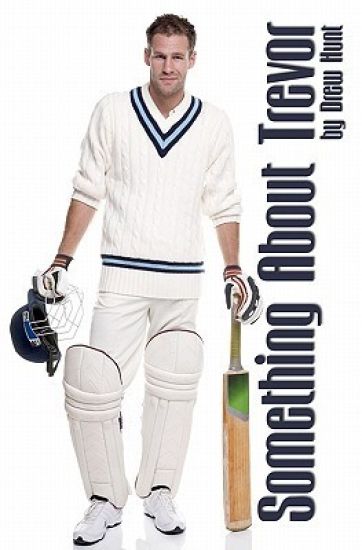
Something About Trevor

Something About Trevor

Drew Hunt

Createspace Independent Publishing Platform
2010
pokkari
Paul Harrison is completely straight. His house will not flood again. And gay men don't play cricket. Eventually Paul will find out just how incorrect these preconceived notions are. When the river overflows its banks, Paul is forced to find temporary accommodation. The only practical suggestion comes from Trevor, an out and proud work colleague. Despite Paul's hesitancy regarding Trevor's offer of hospitality, he accepts and soon grows to admire Trevor, his humanity, his determination, and his abilities with a cricket ball. In order to protect his fragile emotions, Trevor keeps people at a distance by wearing gaudy clothing and behaving outrageously. He had no way of knowing that doing the right thing by offering Paul his spare room will lead to such a big change in his life. A tenuous connection develops between the two men. But misunderstandings and in-born prejudices threaten to derail their growing friendship. Things get even more complicated when Gary, Trevor's ex-lover, shows up. Can Trevor learn to trust again? Will Paul listen to his heart and discover that, despite first impressions, there's just something about Trevor he can't deny?