Kirjahaku
Etsi kirjoja tekijän nimen, kirjan nimen tai ISBN:n perusteella.
1000 tulosta hakusanalla VOLTAIRE

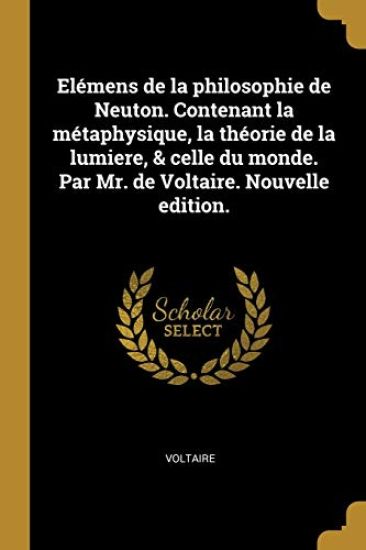
Elémens de la philosophie de Neuton. Contenant la métaphysique, la théorie de la lumiere, & celle du monde. Par Mr. de Voltaire. Nouvelle edition.
Voltaire
Creative Media Partners, LLC
2018
pokkari
Elémens de la philosophie de Neuton. Contenant la métaphysique, la théorie de la lumiere, & celle du monde. Par Mr. de Voltaire. Nouvelle edition.
Voltaire
Creative Media Partners, LLC
2018
sidottu
Amelie ou le Duc de Foix tragedie de Monsieur de Voltaire ...
Voltaire
Creative Media Partners, LLC
2018
pokkari
Voici la premi re dition jamais parue des crits conomiques de Voltaire, compil s, dit s, et annot s par Beno t Malbranque. On y retrouve un Voltaire vivement attach au noble id al de la libert du commerce, et passionn par l' conomie politique. S'il ferraille l'occasion avec les conomistes physiocrates, ce n'est que pour plus vanter leur oeuvre par la suite, et c l brer l'arriv e au minist re de Turgot.
Voltaire
OmniScriptum
2026
pokkari
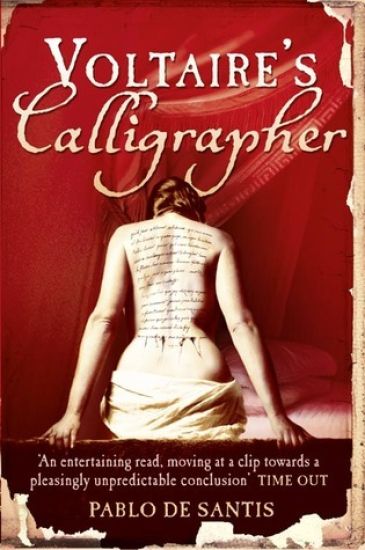
An elegant and atmospheric literary thriller that will delight fans of The Interpretation of Murder and The Shadow of the Wind
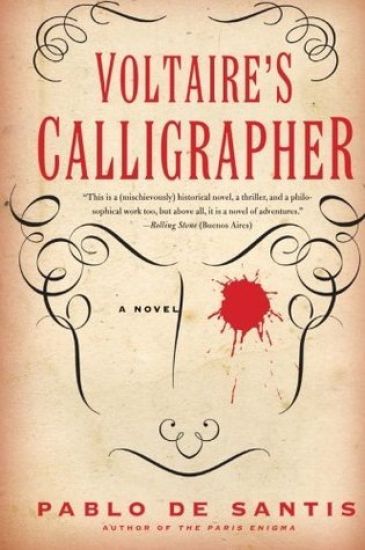
"Richly reminiscent of Umberto Eco, the headlong pace of this dark fantasy--combining elements of mystery, historical fiction, horror and the splinter genre clockpunk--will let readers swallow the entrancing story in a single gulp." --Kirkus ReviewsPablo DeSantis, the internationally acclaimed author of The Paris Enigma, is back with a wonderfully inventive, deliciously sinister thriller set in the chaos and opulence of 18th century Paris, where the malevolent remnants of the Dark Ages battle the progressive elements of the modern age. Anyone wondering where to turn after Neal Stephenson's Anathem and The Baroque Cycle or Matthew Pearl's The Dante Club will thrill for the exquisite language and deep intrigue of Pablo De Santis' Voltaire's Calligrapher.
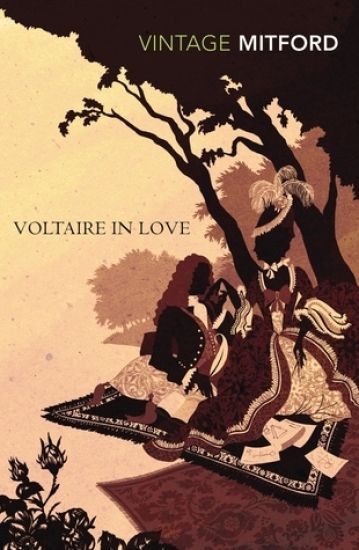
The meeting of Voltaire, successful financier, famous poet and troublemaker, and the enchanting amateur physicist and countess �milie du Châtelet, was a meeting of both hearts and minds.
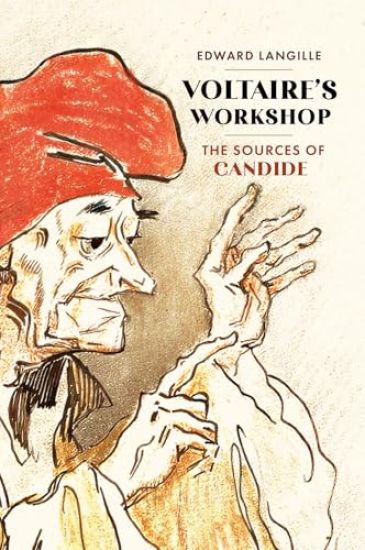
Candide is the best-known, most singular expression of Voltaire's thought, standing out not only within the author's tremendous output but also within the thousand-year tradition of French literature. It is studied in every major language and its phrases are a part of everyday speech, in English and in French. Yet Voltaire didn't keep any records about how and when he composed Candide or any hints to its underlying meaning. Beyond popular acclaim, Candide's status is cemented by the work of critics concerned with the circumstances of its composition. Their research has led to a wealth of secondary literature but surprisingly few conclusions. In Voltaire's Workshop Edward Langille argues that the 1750 French translation of Henry Fielding's Tom Jones by Pierre-Antoine de La Place was Candide's most important source. Langille uncovers a range of similarities – of vocabulary and phrasing, overarching narrative structures, and composition of characters – and pertinent commentary in other works by Voltaire. Through the La Place translation, he argues, Fielding furnished Voltaire with a plot, a framework, and a set of characters that he could rewrite into a text that struck contemporary readers as entirely original. Voltaire's Workshop addresses one of literature's greatest mysteries, raising larger questions about how Voltaire worked and wrote fiction and, more broadly, about textual filiations in the eighteenth century.

Voltaire and the Theatre of the Eighteenth Century
Marvin A. Carlson
Praeger Publishers Inc
1998
sidottu
Born in the final years of the seventeenth century, and dying a decade before the beginning of the French Revolution, Voltaire was a quintessential figure of the eighteenth century, so much so that this era is sometimes called the Age of Voltaire. At a time when French culture dominated Europe, Voltaire dominated French culture. His influence was broad and powerful, and he made major contributions to almost every sphere of intellectual activity, including the sciences, trade and commerce, politics, and especially the arts. Despite the astonishing range of his literary activities, the theatre occupied a central position in his life from the beginning of his career to its close. His first and last literary triumphs were plays, the first written when he was only 17, the last completed when he was 84. He created a total of 56, and there was rarely a time in his life when he was not working on a theatrical script. At the end of his career, his works were produced more frequently on the French stage than those of any other serious dramatist and served as models for aspiring young playwrights throughout Europe.Written by a leading authority on French theatre and culture in the eighteenth century, this book traces the theatrical career of Voltaire from his college days through his final works. The most influential dramatist of the period, he successfully wrote in a number of genres, including tragedy, comedy, opera, comic opera, and court spectacle. His theatrical biography involves all aspects of acting and staging in amateur and society theatre as well as on major professional stages and performances at court. His extended visits to England and Germany are covered in chapters that also provide an introduction to the theatre in those countries, and his international interests and correspondence provide insights into the eighteenth century theatre in places such as Italy, Russia, and Denmark. Due to his literally life-long concern with the theatre, his dominance in this art, and his reputation and involvement with the theatre outside France, Voltaire's theatrical biography is also in large measure a chronicle of the European stage of the eighteenth century.
Harvey Mitchell’s book argues that a reassessment of Voltaire’s treatment of traditional Judaism will sharpen discussion of the origins of, and responses to, the Enlightenment. His study shows how Voltaire’s nearly total antipathy to Judaism is best understood by stressing his self-regard as the author of an enlightened and rational universal history, which found Judaism’s memory of its past incoherent, and, in addition, failed to meet the criteria of objective history—a project in which he failed.Calling on an array of Jewish and non-Jewish figures to reveal how modern interpretations of Judaism may be traced to the core ideas of the Enlightenment, this book concludes that Voltaire paradoxically helped to foster the ambiguities and uncertainties of Judaism’s future.
This edition of Voltaire’s political writings presents a varied selection of his most interesting and controversial texts, many of which have not previously been translated into English. They range over the nature and legitimacy of political power, law and the social order, crime and punishment, liberty and humanity, war and peace, and the growing disorder in the French economy. They also touch on specific issues and events in pre-Revolutionary France to which Voltaire responded and in which he was closely involved, including the Seven Years’ War and relations with Frederick II, the Genevan quarrels of the 1760s, and the sensational trials of Jean Calas, Sirven and the Chevalier de La Barre. A comprehensive introduction explores the background to these texts, which together reflect the full range of Voltaire’s responses to the most significant issues of his time.
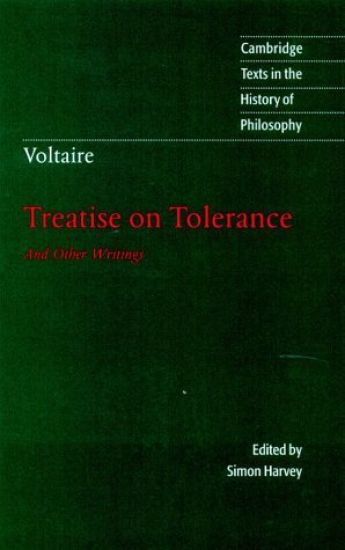
Voltaire: Treatise on Tolerance
Cambridge University Press
2000
sidottu
Voltaire is widely known as the author of a literary masterpiece, Candide, while his reputation as a thinker rests largely on his Philosophical Letters and Philosophical Dictionary. He is equally renowned as a critic of the forces of superstition and fanaticism, and a champion of freedom of thought and belief. The works presented here, in a new English translation, are among the most important and characteristic texts of the Enlightenment, and bring together all three aspects of Voltaire: the writer, the doer and the philosophe. Originating in Voltaire's campaign to exonerate Jean Calas, they are works of polemical brilliance, informed by his deism and humanism and by Enlightenment values and ideals more generally. The issues which they raise, concerning questions of tolerance and human dignity, are still highly relevant to our own times. This volume presents them together with an introduction by Simon Harvey and useful notes on further reading.