

Kirjahaku
Etsi kirjoja tekijän nimen, kirjan nimen tai ISBN:n perusteella.
1000 tulosta hakusanalla Alessandro Valsecchi

Dialogo Dove Si Ragiona Della Bella Creanza Delle Donne (1750)
Alessandro Piccolomini
KESSINGER PUBLISHING, LLC
2009
pokkari

Du Service De L'Artillerie A La Guerre (1780)
Alessandro Vittorio Papacino D'Antoni
KESSINGER PUBLISHING, LLC
2009
nidottu
Elementi Dell' Algebra (1778)
Alessandro Vittorio Papacino D'Antoni
KESSINGER PUBLISHING, LLC
2009
nidottu

Il Luminario Ecclissato (1797)
Alessandro Padovani; Giacomo Maria Gazzoli
KESSINGER PUBLISHING, LLC
2009
pokkari


In Astrologos Coniectores Libri Quinque (1615)
Alessandro De Angeli
KESSINGER PUBLISHING, LLC
2009
pokkari

Relatione Delle Rivolutioni Popolari Successe Nel Distretto E Regno Di Napoli (1648)
Alessandro Giraffi
KESSINGER PUBLISHING, LLC
2009
pokkari

Volta, A: Schriften Uber Die Thierische Elektrizitat (1793)
Alessandro Volta; Johann Mayer
KESSINGER PUBLISHING, LLC
2009
nidottu




The control of competition is designed, at best, to reconcile socioeconomic stability with innovation, and at worst, to keep competitors out of the market. In this respect, the nineteenth century was no more liberal than the eighteenth century. Even during the presumed liberal nineteenth century, legal regulation played a major role in the economy, and the industrial revolution was based on market institutions and organisations formed during the second half of the seventeenth century. If indeed there is a break in the history of capitalism, it should be situated at the turn of the nineteenth and twentieth centuries, with the irruption of mass production, consumption and the welfare state, which introduced new forms of regulation. This book provides a new intellectual, economic and legal history of capitalism from the eighteenth century to the early twentieth century. It analyzes the interaction between economic practices and legal constructions in France and compares the French case with other Western countries during this period, such as the United Kingdom, the United States, Germany and Italy.
Distributional semantics develops theories and methods to represent the meaning of natural language expressions, with vectors encoding their statistical distribution in linguistic contexts. It is at once a theoretical model to express meaning, a practical methodology to construct semantic representations, a computational framework for acquiring meaning from language data, and a cognitive hypothesis about the role of language usage in shaping meaning. This book aims to build a common understanding of the theoretical and methodological foundations of distributional semantics. Beginning with its historical origins, the text exemplifies how the distributional approach is implemented in distributional semantic models. The main types of computational models, including modern deep learning ones, are described and evaluated, demonstrating how various types of semantic issues are addressed by those models. Open problems and challenges are also analyzed. Students and researchers in natural language processing, artificial intelligence, and cognitive science will appreciate this book.
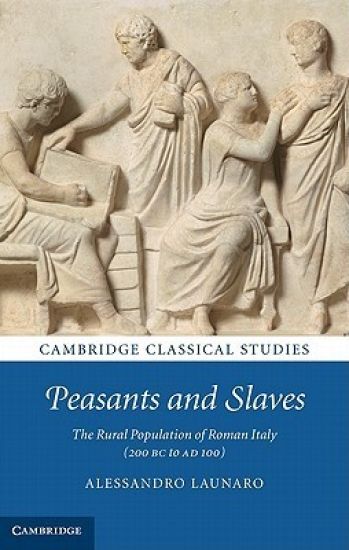
The crisis of the Roman Republic and its transformation into an Empire have fascinated generations of scholars. It has long been assumed that a dramatic demographic decline of the rural free peasantry (which was supplanted by slaves) triggered the series of social and economic developments which eventually led to Rome's political crisis during the first century BC. This book contributes to a lively debate by exploring both the textual and the archaeological evidence, and by tracing and reassessing the actual fate of the Italian rural free population between the Late Republic and the Early Empire. Data derived from a comparative analysis of twenty-seven archaeological surveys – and about five thousand sites – allow Dr Launaro to outline a radically new picture according to which episodes of local decline are placed within a much more generalised pattern of demographic growth.
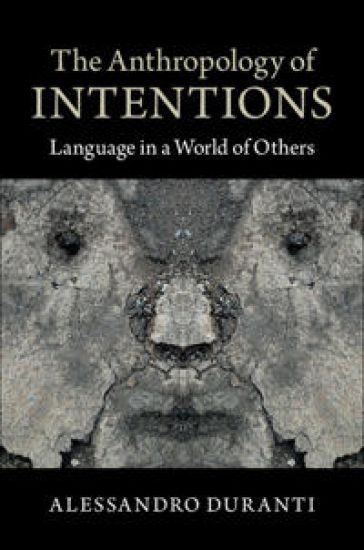
How and to what extent do people take into account the intentions of others? Alessandro Duranti sets out to answer this question, showing that the role of intentions in human interaction is variable across cultures and contexts. Through careful analysis of data collected over three decades in US and Pacific societies, Duranti demonstrates that, in some communities, social actors avoid intentional discourse, focusing on the consequences of actions rather than on their alleged original goals. In other cases, he argues, people do speculate about their own intentions or guess the intentions of others, including in some societies where it was previously assumed they avoid doing so. To account for such variation, Duranti proposes an 'intentional continuum', a concept that draws from phenomenology and the detailed analysis of face-to-face interaction. A combination of new essays and classic re-evaluations, the book draws together findings from anthropology, linguistics and philosophy to offer a penetrating account of the role of intentions in defining human action.

Compared to animals, plants have been largely neglected in evolutionary developmental biology. Mainstream research has focused on developmental genetics, while a rich body of knowledge in comparative morphology is still to be exploited. No integrated account is available. In this volume, Minelli fills this gap using the same approach he gave to animals, revisiting traditional concepts and providing an articulated analysis of genetic and molecular data. Topics covered include leaf complexity and the evolution of flower organs, handedness, branching patterns, flower symmetry and synorganization, and less conventional topics such as fractal patterns of plant organization. Also discussed is the hitherto neglected topic of the evolvability of temporal phenotypes like a plant's annual, biennial or perennial life cycle, flowering time and the timing of abscission of flower organs. This will be informative reading for anyone in the field of plant evo-devo, from students to lecturers and researchers.
Alessandro Ferrara explains what he terms 'the democratic horizon' - the idea that democracy is no longer simply one form of government among others, but is instead almost universally regarded as the only legitimate form of government, the horizon to which most of us look. Professor Ferrara reviews the challenges under which democracies must operate, focusing on hyperpluralism, and impresses a new twist onto the framework of political liberalism. He shows that distinguishing real democracies from imitations can be difficult, responding to this predicament by enriching readers' understanding of the spirit of democracy; clearing readers' views of pluralism from residues of ethnocentrism; and conceiving multiple versions of democratic culture, rooted in the diversity of civilizational contexts.
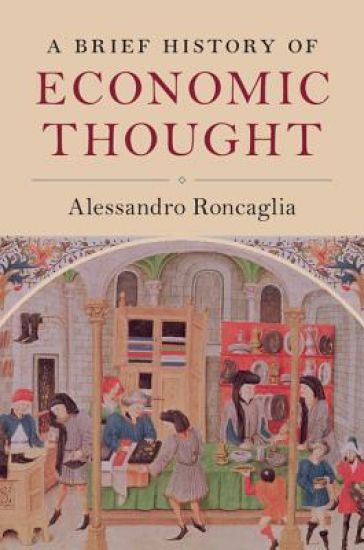
The evolution of economic thought can be traced back from its beginnings in classical antiquity up to the present day. In this book, Professor Alessandro Roncaglia offers a clear, concise and updated version of his award-winning The Wealth of Ideas, studying the development of economic thought through perspectives and debates on the economy and society over time. With chapters on prominent economic theorists, including William Petty, Karl Marx, and John Maynard Keynes, as well as on other important figures and key debates of each period, Roncaglia critically evaluates the foundations of the marginalist–neoclassical (scarcity–utility) approach in comparison to the Classical–Keynes approach. A comprehensive guide to the history of economic thought, this book will be of value not only to undergraduate and postgraduate students studying economic thought, but also to any readers desiring to study how economics has evolved up to the present day.