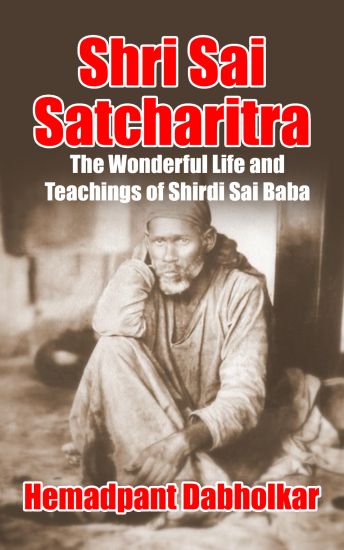
Who was Shirdi Sai Baba? Baba lived all his adult life in Shirdi, a small village in India. To the unknowing, He seemed a simple beggar, dressed in torn clothes, having no need for any material item. Claiming neither the Hindu nor Muslim religion, nor any religion. He lived in an abandoned Mosque with no roof and every day took his food from a few people, making his rounds with his begging bowl, door to door.What really was happening; He was burning the karmas of everyone who came to Him, in the dhuni (Divine Fire) Baba kept burning at all times. Healing and giving guidance on every level. Hundreds of thousands of miracles are attributed to Him in His life and they have multiplied now after His Mahasamadhi. Baba left His physical form in 1918, but his Divine Energy and Intention and Power is always available and at work in the world.The Shri Sai Satcharitra is a discourse based on experiences Baba's devotees had with Him during His life on earth. It is said that Shirdi Sai Baba caused it to be written through Shri Anna Saheb Dabholkar - Hemadpant - by giving inner motivation to him. Baba had clearly told him: "I Myself write my own life. Hearing My stories and teachings will create faith in devotees' hearts and they will easily get self-realization and bliss...." Every chapter is a mixture of philosophy, anecdotes, and teachings. His book is akin to the Vedas for Sai's devotees." To many people, The Divine Truth imparted by this book is even greater than the knowledge contained in the Vedas and the Gita, because all the characters and events in it are real and authentic and have been recorded in detail by many devotees.We have attempted to remain true to N.V. Gunaji's original English translation. While some of the sentence structure and references may be slightly obscure for the Western reader, what is clear is that since the original English translation by N.V. Gunaji was published, that it has in its unaltered state, been a core component of the spread of knowledge and devotion to Shirdi Sai Baba in the English-speaking world. To help the reader with some of the obscure Hindi words and references in the Satcharitra, we have added an extensive Glossary.
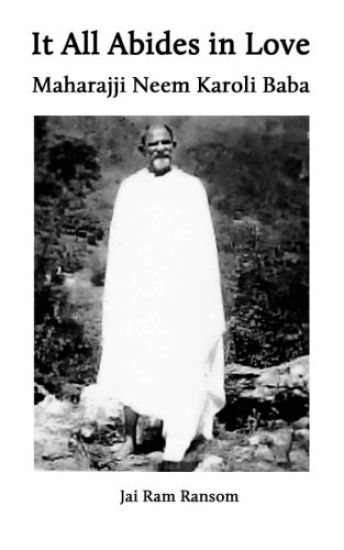
Ram Dass introduced Maharajji Neem Karoli Baba to Western spiritual seekers of the 60s and 70s. "It All Abides in Love" offers a contemporary view of this remarkable and completely enigmatic Indian sadhu, a spiritual renunciate who had more of an impact on America than anyone knows. Maharajji is known as the Miracle of Love. Maharajji raised the dead, turned water into milk or gasoline, made Himself and others with Him to become invisible, cured many diseases, and never really gave any formal 'teachings'. And it is still happening. Who is Maharajji Neem Karoli Baba? That is explored by the author in this thought provoking book. All of us have so much that we can learn from Maharajji about how to be a force for good in the world. This is about finding the most precious lotus flower jewel amazing person of light and love. A little man in a little world who was actually bigger than all of the universe, if one believes the reports. Maharajji's images and stories ARE The Story, and they are worthy of the deepest contemplation. Indeed, perhaps you can learn to do your own miracles. Maharajji manipulated this game in such perfect ways, and yet He always remains hidden, as even now. "It All Abides in Love (Hindi Version)" is also available with the title "Prem MeN Sarvasava Basti Hai".
Iknew Rev. (Dr.) Panya Baba since 1981 when I was working at the ECWA headquarters as an assistant to the then administrator, Rev. Simon Ibrahim, who is now an ECWA trustee. At that time, Baba was the EMS director. He took over from Rev. Musa Jibo. My father served as an EMS Missionary under Rev. Panya Baba and Rev. Musa Jibo. I knew who Baba was and what he was doing. You could not separate Panya Baba and Simon Ibrahim. They were highly motivated and committed. Baba was very passionate about Missions. I remember, when Baba went to Israel for the first time and saw all the evidences and the places that Jesus went, he came back and shared this experience saying: "Yesu da na ba da gaskiya, amma inna kara ba da gaskiya" (meaning, "Lord Jesus, I believed and I am believing again and again"). Seest thou a man diligent in his business? He shall stand before kings; he shall not stand before mean men (Prov 22:29 KJV) This work is heavily tilted towards the love of Baba's life i.e., Missions. In this biography, bringing out the Missions in Baba's life takes the upper hand in preference to the many other aspects of his life in which he also excelled. This is deliberate. Baba's yearning is for the legacy which Jesus bequeathed him and others of his time, to be preserved and passed on from one generation to the other. Baba longs for the undiluted Gospel of Jesus Christ to be preached to the uttermost parts of the world before the end comes. He clearly sees the end of the world nearer than you think. Baba desires that this work remains one of the powerful tools to use in preserving and promoting the legacy of Jesus Christ which He dearly paid with His blood on the cross of Calvary.
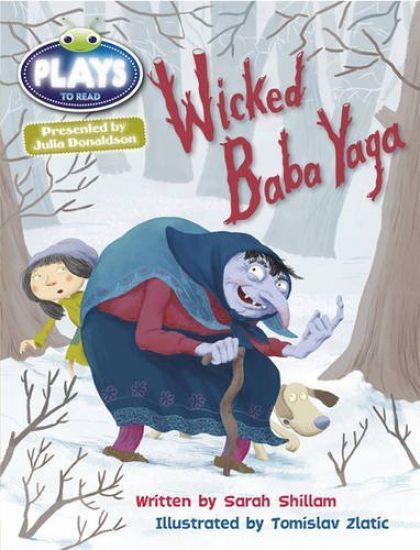
"Yulianka knew her grandmother was a witch, so when Baba showed up that gray and boring day, the young girl thought Baba must have read her mind."... with these words a young girl embarks on a journey of discovery to find out about her Slavic heritage. If you have never quite connected with the religion you were taught, it may be that your soul calls you back to the Old Ways. Learn the secrets that have been hidden for a thousand years; the secrets of the Earth and Stars that have persisted since before written history. Long before Christianity, the Indigenous people in the Slavic lands lived in harmony with nature. They listened to the nature spirits of water and woods, learning the healing properties of plants. They could see that life was circular, just like the seasons. Spring transformed into the lush season of summer and fruits, berries and grains were harvested. Then the Wheel of the Year turned and the winter was upon them; a time to pull inward and rest. Yet with the coming spring, the world was reborn The God and Goddess of the Slavs were joyful providers; giving their people golden apples, grapes and ripe grain. Their God and Goddess transformed with the seasons. When the indigenous religion was forced to go underground, the teachings were kept alive in tales. This is such a tale.
Este recuento resalta experiencias personales de una aspirante espiritual que a trav s de su vida ha sido guiada por Sri Sathya Sai Baba como gur y ngel guardi n, a quien conoci desde hace 40 a os. La autora ha superado una enfermedad terminal por medio de su fe y amor por la vida. Ahora quiere compartir sus experiencias con aquellos que est n en una b squeda espiritual.
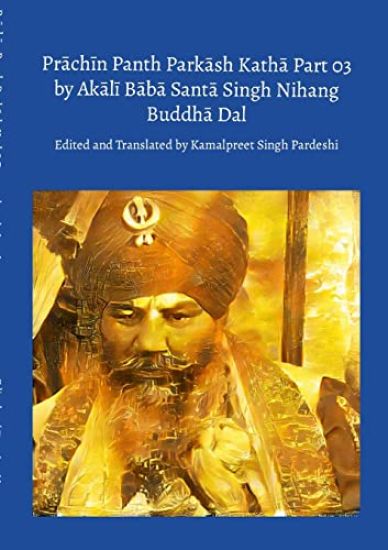
This publication is an edited English commentary to the text known as the 'Prāchīn Panth Parkāsh'. This text is an early historical text into the tales of the Sikhs which was dictated to the British by Bhāī Rattan Singh Bhangū. The text predominantly deals with the various wars involving the Sikhs following the lives of the ten Gurū's. However, this third part to the text covers the details of the battles faced by Srī Gurū Gobind Singh Jī and the martyrdoms of the Sāhibzādās. This text is a translation of the commentary provided by Akālī Bābā Santā Singh Nihang of the Buddhā Dal. The reason for creating this translation is twofold: The first is to provide an English translation linked to the warrior sect of Sikhism known as the Nihangs. The Nihangs have a colourful history and added so much to the Khālsā order however, there is a lack of literature produced by the order. The second is to bring you a different perspective in English. There are currently two English translations of this text by Kulwant Singh and Gurtej Singh but both of them are basic whilst this is a translation of a commentary where further details are given by the Saint-Soldier. Providing information and comments you will not find anywhere else. Although I must say after reading through the initial text the commentary given by Bābā Santā Singh does not always follow the lines being quoted in the original text it is still a very interesting read. I can personally say that I have been impressed with the amount that I have learned through this commentary both about the schism of the Nihangs and Sikh history.
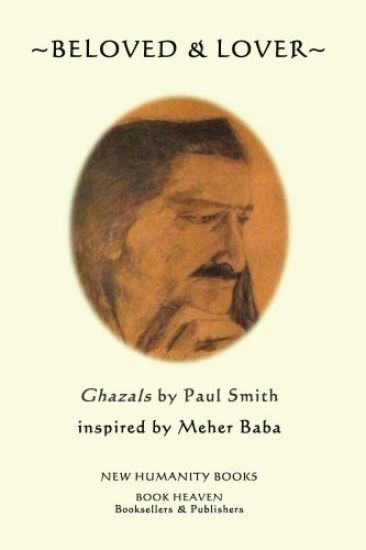
BELOVED & LOVER Ghazals by Paul Smith... inspired by Meher Baba From the 1920's into the late sixties the great Indian God-Realized Spiritual Master Meher Baba (1894-1969), who composed unique ghazals under the pen-name of Huma, occasionally gave to his disciples who were also poets the first couplet or line of ghazals he wished them to compose. Now after 40 years his disciple and poet from the mid-sixties, Paul Smith, carries on the tradition and completes the task of over 300 poems with love and dedication and the experience of writing hundreds of his own (the first in English) and translating for over 40 years those of Huma, Hafiz, Sadi, Nesimi, 'Attar and many others. Included are biographies of both poets and an article on Form, Function and History of the oldest, most mysterious, most beautiful poetic form... the still popular ghazal. Pages 410. COMMENTS ON PAUL SMITH'S VERSION OF HAFIZ'S 'DIVAN'."It is not a joke... the English version of ALL the ghazals of Hafiz is a great feat and of paramount importance. I am astonished." Dr. Mir Mohammad Taghavi (Dr. of Literature) Tehran. "Superb translations. 99% Hafiz 1% Paul Smith." Ali Akbar Shapurzman, translator into Persian and knower of Hafiz's Divan off by heart.Paul Smith is a poet, author and translator of many books of Sufi poets of Persian, Arabic, Urdu, Turkish, Pashtu and other languages, including Hafiz, Sadi, Nizami, Rumi, 'Attar, Sana'i, Jahan, Obeyd Zakani, Nesimi, Kabir, Anvari, Ansari, Jami, Khayyam, Rudaki, Yunus Emre, Lalla Ded, Iqbal, Ghalib and many others, as well as poetry, fiction, plays, biographies and screenplays. amazon.com/author/smithpa Published by New Humanity Books
Ghazals Inspired by the Poems of Huma (Meher Baba), Hafiz & other Sufi Master Poets by Paul Smith In 1974 Australian poet Paul Smith began a 12 year journey translating his acclaimed Divan of Hafiz (many 'greats' say the world's finest poet). To do this he had to learn the ancient form of the ghazal in which Hafiz was considered the 'Master'. So, for the first time in the English language he composed real ghazals and would continue to do so for the following forty years, inspired by his Spiritual Master Meher Baba (Huma) and Hafiz and many great poets of this form that he would put into beautiful correct rhyming English... including Sadi, Rumi, 'Attar, Amir Khusrau, Makhfi and about 60 others... all great poets of this wonderful, mystical, most ancient and most difficult form of poetry. He would even create a number of books of anthologies of the ghazal from Adam to the latest. Introduction on his life & that of Huma & Hafiz and a chapter on the ghazal. 805 pages. COMMENTS ON PAUL SMITH'S TRANSLATION OF HAFIZ'S 'DIVAN'."It is not a joke... the English version of ALL the ghazals of Hafiz is a great feat and of paramount importance." Dr. Mir Mohammad Taghavi (Dr. of Literature) Tehran."Superb translations. 99% Hafiz 1% Paul Smith." Ali Akbar Shapurzman, translator in English into Persian and knower of Hafiz's Divan off by heart."I was very impressed with the beauty of these books." Dr. R.K. Barz. Faculty of Asian Studies, Australian National University. "Smith has probably put together the greatest collection of literary facts and history concerning Hafiz." Daniel Ladinsky (Penguin Books author). Paul Smith is a poet, author and translator of many books of Sufi poets from the Persian, Arabic, Urdu, Turkish and other languages... including Hafiz, Sadi, Nizami, Rumi, 'Attar, Sana'i, Obeyd Zakani, Nesimi, Kabir, Anvari, Ansari, Jami, Khayyam, Rudaki, Yunus Emre, Baba Farid, Mu'in, Lalla Ded, Mahsati and others and his own poetry, fiction, plays, biographies, children's books and screenplays. New Humanity Books amazon.com/author/smithpa
Poems written for Sri Sathya Sai Baba by then 19-year-old devotee Laura Tattoo. Includes the story of her early spiritual journey, the meeting of her spiritual mother, and the miraculous delivery of the poems to Puttaparthi during Sivarathri, 1977. Little Flowers blog: https: //littleflowersoftheheart.blogspot.com
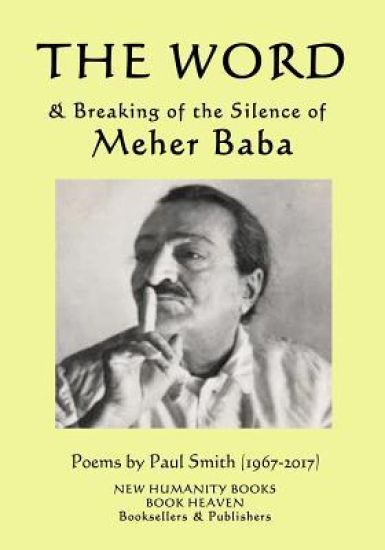
THE WORD & Breaking of the Silence of Meher Baba Poems by Paul Smith (1967-2017) From July 10, 1925 until shortly before his passing in 1969, The Perfect Spiritual Master, Avatar Meher Baba, was silent. He communicated first by using an alphabet board, and later by unique hand gestures that were interpreted and spoken out by one of his mandali, usually by his close disciple Eruch Jessawala. Meher Baba said that his silence was not undertaken as a spiritual exercise but solely in connection with his inner universal work. 'Man's inability to live God's words makes the Avatar's teaching a mockery. Instead of practicing the compassion he taught, man has waged wars in his name. Instead of living the humility, purity, and truth of his words, man has given way to hatred, greed, and violence. Because man has been deaf to the principles and precepts laid down by God in the past, in this present Avataric form, I observe silence.' He declared that he would 'break his silence' with the Word of words that would be heard by all and begin a New Humanity on earth. Here are free-form poems and ghazals by Paul Smith for over 50 years about Meher Baba's Silence and the Word, along with quotes by Avatar Meher Baba and his closest disciples on his Silence and the Divine Word. Large Format Paperback 7" x 1o" Pages 318. Paul Smith (b. 1945) is an Australian poet and translator of many books of Sufi poets of the Persian, Arabic, Urdu, Turkish, Pashtu, Kashmiri and other languages including Hafiz, Sadi, Nizami, Dard, Nazir, Rumi, 'Attar, Sana'i, 'Iraqi, Jahan Khatun, Obeyd Zakani, Nesimi, Kabir, Anvari, Ansari, Jami, Khayyam, Ghalib, Iqbal, Rahman Baba, Huma and many others, as well as his own poetry, fiction, plays, biographies, children's books and a dozen screenplays. amazon.com/author/smithpa
This publication is an edited English commentary to the text known as the 'Prāchīn Panth Parkāsh'. This text is an early historical text into the tales of the Sikhs which was dictated to the British by Bhāī Rattan Singh Bhangū. The text predominantly deals with the various wars involving the Sikhs following the lives of the ten Gurū's. However, this second part to the text only covers the details of the Gurūs, from the second Gurū to the emergence of the Nihangs under the Khālsā propagated by Srī Gurū Gobind Singh Jī. This text is a translation of the commentary provided by Akālī Bābā Santā Singh Nihang of the Buddhā Dal.