Kirjojen hintavertailu. Mukana 12 002 983 kirjaa ja 12 kauppaa.

Kirjahaku

Etsi kirjoja tekijän nimen, kirjan nimen tai ISBN:n perusteella.

1000 tulosta hakusanalla Basil Hall

Letters, Volume II
Correspondence of a Cappadocian Father.Basil the Great was born ca. AD 330 at Caesarea in Cappadocia into a family noted for piety. He was at Constantinople and Athens for several years as a student with Gregory of Nazianzus and was much influenced by Origen. For a short time he held a chair of rhetoric at Caesarea, and was then baptized. He visited monasteries in Egypt and Palestine and sought out the most famous hermits in Syria and elsewhere to learn how to lead a pious and ascetic life; but he decided that communal monastic life and work were best. About 360 he founded in Pontus a convent to which his sister and widowed mother belonged. Ordained a presbyter in 365, in 370 he succeeded Eusebius in the archbishopric of Caesarea, which included authority over all Pontus. He died in 379. Even today his reform of monastic life in the east is the basis of modern Greek and Slavonic monasteries. The Loeb Classical Library edition of Basil’s Letters is in four volumes.
Letters, Volume III: Letters 186–248
Correspondence of a Cappadocian Father.Basil the Great was born ca. AD 330 at Caesarea in Cappadocia into a family noted for piety. He was at Constantinople and Athens for several years as a student with Gregory of Nazianzus and was much influenced by Origen. For a short time he held a chair of rhetoric at Caesarea, and was then baptized. He visited monasteries in Egypt and Palestine and sought out the most famous hermits in Syria and elsewhere to learn how to lead a pious and ascetic life; but he decided that communal monastic life and work were best. About 360 he founded in Pontus a convent to which his sister and widowed mother belonged. Ordained a presbyter in 365, in 370 he succeeded Eusebius in the archbishopric of Caesarea, which included authority over all Pontus. He died in 379. Even today his reform of monastic life in the east is the basis of modern Greek and Slavonic monasteries. The Loeb Classical Library edition of Basil’s Letters is in four volumes.
Letters, Volume IV
Correspondence of a Cappadocian Father.Basil the Great was born ca. AD 330 at Caesarea in Cappadocia into a family noted for piety. He was at Constantinople and Athens for several years as a student with Gregory of Nazianzus and was much influenced by Origen. For a short time he held a chair of rhetoric at Caesarea, and was then baptized. He visited monasteries in Egypt and Palestine and sought out the most famous hermits in Syria and elsewhere to learn how to lead a pious and ascetic life; but he decided that communal monastic life and work were best. About 360 he founded in Pontus a convent to which his sister and widowed mother belonged. Ordained a presbyter in 365, in 370 he succeeded Eusebius in the archbishopric of Caesarea, which included authority over all Pontus. He died in 379. Even today his reform of monastic life in the east is the basis of modern Greek and Slavonic monasteries. The Loeb Classical Library edition of Basil’s Letters is in four volumes.
Exegetic Homilies

Exegetic Homilies

Basil

The Catholic University of America Press
2003
nidottu
In a relatively short life time St. Basil (ca. 330-379) bequeathed to posterity a rich literary heritage. He intended the nine homilies on the Hexaemeron, probably delivered extemporaneously, to be an explanation of the literal meaning of the biblical account of creation. As a matter of fact these homilies show us a person who had mastered the philosophical and scientific knowledge of his times and applied it to his explanations of Sacred Scripture. St. Ambrose, bishop of Milan, admired this work of St. Basil so much that he imitated it in his own Hexaemeron and even inserted Latin translations of Basil's work. The Latin translations of these homilies of St. Basil that were made within a generation after the saint's death bear witness to their popularity and importance. The homilies on the Psalms presented here in translation differ considerably in their methodology from the homilies on creation. Influenced by the scriptural interpretations given by Origen and Eusebius of Caesarea, Basil stresses the allegorical meaning of the psalms without, however, totally disregarding the literal meaning. Patristic scholars are fairly well agreed that the homilieson the Psalms antedate the homilies on creation which were probably delivered after Basil had become bishop of Caesarea in Cappadocia.
Letters, Volume 1 (1-185)

Letters, Volume 1 (1-185)

Basil

The Catholic University of America Press
2008
nidottu
The letters of St. Basil, three hundred and sixty-eight in number, which comprise the most vivid and most personal portion of his works, give us, perhaps, the clearest insight into the wealth of his rich and varied genius. They were written within the years from 357, shortly before his retreat to the Pontus, until his death in 378, a period of great unrest and persecution of the orthodox Catholic Church in the East. Their variety is striking, ranging from simple friendly greetings to profound explanations of doctrine, from playful reproaches to severe denunciations of transgressions, from kindly recommendations to earnest petitions for justice, from gentle messages of sympathy to bitter lamentations over the evils inflicted upon or existent in the churches.As may be expected, the style in these letters is as varied as their subject matter. Those written in his official capacity as pastor of the Church, as well as the letters of recommendation and the canonical letters, are naturally more formal in tone, while the friendly letters, and those of appeal, admonition, and encouragement, and, more especially, those of consolation, show St. Basil's sophistic training, although even in these he uses restraint. He had the technique of ancient rhetoric at his fingertips, but he also had a serious purpose and a sense of fitness of things. To St. Basil's letters can be ascribed the qualities he attributed to the heartily approved book written by Diodorus, which qualities may be summed up as fullness of thought, clearness, simplicity, and naturalness of style. He himself disapproved of a too ornate style and carefully avoided it. His early education, however, had trained him for the use of rich diction and varied and charming figures, and, when the occasion warranted it, he proved himself a master in their use.Whether we look at them from an historical, an ecclesiastical, or a theological point of view, the letters are an important contribution.
Letters, Volume 2 (186-368)

Letters, Volume 2 (186-368)

Basil

The Catholic University of America Press
2008
nidottu
This is the second volume of the letters of Bishop Basil of Caesarea in the Fathers of the Church series (Letters 186-368). It includes the correspondence from the year 374 until the end of his life in 379, as well as his undated letters and some letters of dubious or spurious authorship. The majority of this collection consists of authenticated letters, many of which Basil has devoted to the details of church discipline as well as to theological questions and to his own self-defense against the informal accusations of heresy that he suffered.
The Manitous

The Manitous

Basil H. Johnston

HarperNewYork
1996
nidottu
A comprehensive collection of the spiritual stories of the Ojibway introduces the tricksters, giants, spirits, and humans who fostered the Chippewa Native American beliefs about life, nature, and morality. Reprint. K.
Statistical Aspects of the Microbiological Examination of Foods
Statistical Aspects of the Microbiological Examination of Foods, Third Edition, updates some important statistical procedures following intensive collaborative work by many experts in microbiology and statistics, and corrects typographic and other errors present in the previous edition. Following a brief introduction to the subject, basic statistical concepts and procedures are described including both theoretical and actual frequency distributions that are associated with the occurrence of microorganisms in foods. This leads into a discussion of the methods for examination of foods and the sources of statistical and practical errors associated with the methods. Such errors are important in understanding the principles of measurement uncertainty as applied to microbiological data and the approaches to determination of uncertainty. The ways in which the concept of statistical process control developed many years ago to improve commercial manufacturing processes can be applied to microbiological examination in the laboratory. This is important in ensuring that laboratory results reflect, as precisely as possible, the microbiological status of manufactured products through the concept and practice of laboratory accreditation and proficiency testing. The use of properly validated standard methods of testing and the verification of ‘in house’ methods against internationally validated methods is of increasing importance in ensuring that laboratory results are meaningful in relation to development of and compliance with established microbiological criteria for foods. The final chapter of the book reviews the uses of such criteria in relation to the development of and compliance with food safety objectives. Throughout the book the theoretical concepts are illustrated in worked examples using real data obtained in the examination of foods and in research studies concerned with food safety.
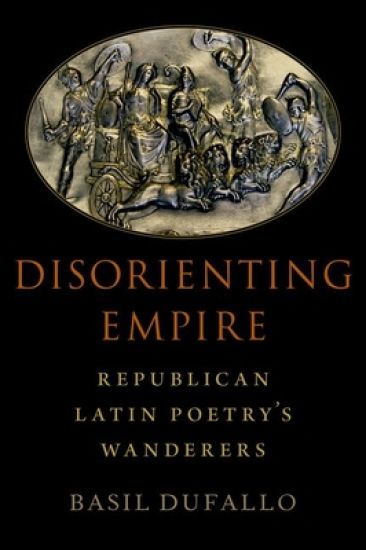
Disorienting Empire

Disorienting Empire

Basil Dufallo

Oxford University Press Inc
2021
sidottu
Disorienting Empire is the first book to examine Republican Latin poetry's recurring interest in characters who become lost. Basil Dufallo explains the prevalence of this theme with reference to the rapid expansion of Rome's empire in the Middle and Late Republic. It was both a threatening and an enticing prospect, Dufallo argues, to imagine the ever-widening spaces of Roman power as a place where one could become disoriented, both in terms of geographical wandering and in a more abstract sense connected with identity and identification, especially as it concerned gender and sexuality. Plautus, Terence, Lucretius, and Catullus, as well as the "triumviral" Horace of Satires, book 1, all reveal an interest in such experiences, particularly in relation to journeys into the Greek world from which these writers drew their source material. Fragmentary authors such as Naevius, Ennius, and Lucilius, as well as prose historians including Polybius and Livy, add depth and context to the discussion. Setting the Republican poets in dialogue with queer theory and postcolonial theory, Dufallo brings to light both anxieties latent in the theme and the exuberance it suggests over new creative possibilities opened up by reorienting oneself toward new horizons, new identifications-by discovering with pleasure that one could be other than one thought. Further, in showing that the Republican poets had been experimenting with such techniques for generations before the Augustan Age, Disorienting Empire offers its close readings as a means of interpreting afresh Aeneas' wandering journey in Vergil's Aeneid.
Faith and Criticism

Faith and Criticism

Basil Mitchell

Clarendon Press
1995
sidottu
Faith and Criticism addresses a central problem in the church today - the tension between traditionalists and progressives. Traditionalists want above all to hold fast to traditional foundations in belief and ensure that nothing of value is lost, even at the risk of a clash with "modern knowledge". Progressives are concerned above all to proclaim a faith that is credible today, even at the risk of sacrificing some elements of traditional doctrine. They are often locked in uncomprehending conflict. Basil Mitchell argues that, not only in theology but in any other serious intellectual pursuit, faith and criticism are interdependent. A tradition which is not open to criticism will eventually ossify; and without faith in some established tradition criticism has nothing to fasten upon. This interdependence of faith and criticism has implications for society at large. Religious education can be Christian without ceasing to be critical, and a liberal society can espouse Christian values.
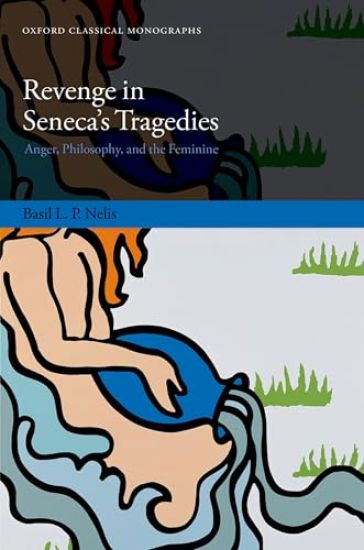
Revenge in Seneca's Tragedies

Revenge in Seneca's Tragedies

Basil L. P. Nelis

Oxford University Press
2026
sidottu
This book surveys all the instances of revenge in the eight tragedies written by the Roman philosopher Lucius Annaeus Seneca. It focuses especially on the following six plays: Agamemnon, Phaedra, Medea, Troades, Hercules furens, and Thyestes. The most significant result of this survey is that most of the characters who desire revenge and enact it, or try to do so, are female. On this basis, the book argues that it is primarily through the revenge of female characters that Seneca interrogates the boundary between proportionate and excessive revenge and explores the problems inherent in like-for-like violence. It then goes on to highlight, and analyse, the connections between the parameters of revenge as depicted in the tragedies and the role of revenge in Seneca's Stoic philosophical treatise On Anger, emphasizing the extent to which revenge is central in both parts of the Senecan corpus, the tragedies and the philosophy. Finally, it presents an innovative argument in favour of the unity of the two parts of the corpus. This argument consists in showing how, both in the tragedies and in On Anger, Seneca incorporates elements of Stoic readings of Greek tragedy, and Euripides' Medea in particular, a tragedy which by Seneca's time already had a long reception history in Greco-Roman literature and philosophy. Medea's revenge is therefore a special case which proves essential not only for assessing properly the dynamics of revenge in Seneca's tragedies, but also for gaining a holistic understanding of Senecan revenge.
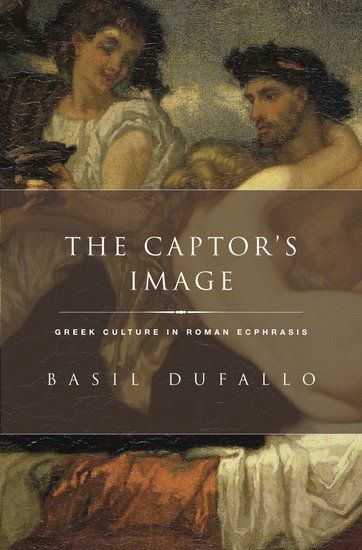
The Captor's Image

The Captor's Image

Basil Dufallo

Oxford University Press Inc
2013
sidottu
An influential view of ecphrasis--the literary description of art objects--chiefly treats it as a way for authors to write about their own texts without appearing to do so, and even insist upon the aesthetic dominance of the literary text over the visual image. However, when considering its use in ancient Roman literature, this interpretation proves insufficient. The Captor's Image argues for the need to see Roman ecphrasis, with its prevalent focus on Hellenic images, as a site of subtle, ongoing competition between Greek and Roman cultures. Through close readings of ecphrases in a wide range of Latin authors--from Plautus, Catullus, and Horace to Vergil, Martial, and Ovid, among others--Dufallo contends that Roman ecphrasis reveals an uncertain receptivity to Greek culture that includes implications for the shifting notions of Roman identity in the Republican and Imperial periods. Individual chapters explore how the simple assumption of a self-asserting ecphrastic text is called into question by comic performance, intentionally inconsistent narrative, satire, Greek religious iconography, the contradictory associations of epic imagery, and the author's subjection to a patron. Visual material such as wall painting, statuary, and drinkware vividly contextualizes the discussion. As the first book-length treatment of artistic ecphrasis at Rome, The Captor's Image resituates a major literary trope within its hybrid cultural context while advancing the idea of ecphrasis as a cultural practice through which the Romans sought to redefine their identity with, and against, Greekness.