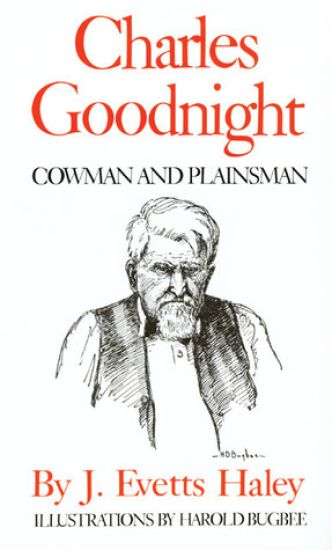
An exciting story of a Texas Ranger, adventurer, and immigration officer who became a symbol of his age while gambling with death in the wild frontier regions of Texas, Arizona, and Old and New Mexico. Charles Goodnight knew the West of Jim Bridger, Kit Carson, Dick Wooton, St. Vrain, and Lucien Maxwell. He ranged a country as vast as Bridger ranged. He rode with the boldness of Fremont, guided by the craft of Carson. His vigorous zest for life enabled him to live intensely and amply, and in this book by J. Evetts Haley, himself no stranger to the West, provides a fully readable and important western biography, vividly told, thrilling, witty, and completely authentic.
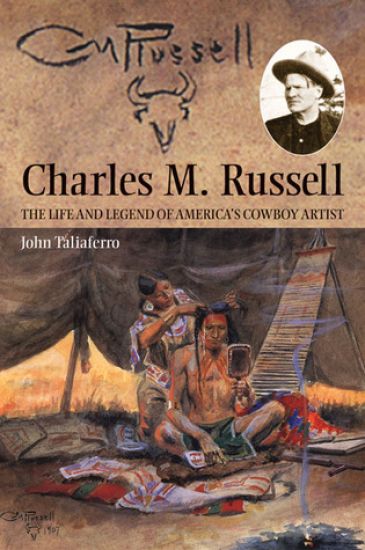
This first comprehensive biography of Charles M. Russell examines the colorful life and times of Montana's famed Cowboy Artist. Born to an affluent St. Louis family in 1864, young Russell read thrilling tales of the West and filled sketchbooks with imagined frontier scenes.
Charles Deas (1818-67), an enigmatic figure on the edge of mainstream artistic circles in mid-nineteenth-century New York, went west to explore new opportunities and subjects in 1840. From his adopted hometown of St. Louis, Deas sent his iconic paintings of fur trappers and Indians back east for exhibition and sale, briefly winning the recognition that had earlier eluded him.This handsome volume - featuring more than 150 illustrations, 70 in color - is the first book exclusively devoted to Deas. In two major essays, Carol Clark presents Deas's haunting biography and complex art - works that embodied Americans' uncertainty about the future of their rapidly expanding nation, especially in the contested spaces of the West. Ranging from Indian genre scenes to more violent and bizarre themes drawn from literature and his own imagination, Deas's images reverberate with the racial tensions and cut-throat economic competition of the period. Three additional essayists examine the historical, political, and social context of Deas's art and discuss in detail two of his major paintings, Walking the Chalk and Long Jakes, ""the Rocky Mountain Man.""The volume also includes Clark's catalogue of Deas's paintings, watercolors, and drawings - the most extensive recovery and documentation to date of the work of this important but little-known artist. Charles Deas and 1840s America will constitute the definitive reference on the painter for years to come.
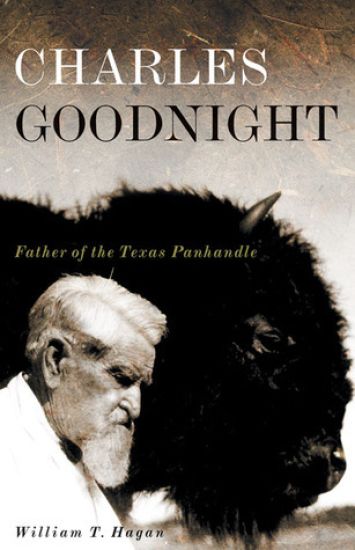
Charles Goodnight was a pioneer of the early range cattle industry - an opinionated and profane but energetic and well-liked rancher.Goodnight's story is now re-examined by William T. Hagan in this brief, authoritative account that considers the role of ranching in general - and Goodnight in particular - in the development of the Texas Panhandle. The first major reassessment of his life in seventy years, Charles Goodnight: Father of the Texas Panhandle traces its subject's life from hardscrabble farmer to cattle baron, giving close attention to lesser-known aspects of his last thirty years.Goodnight came up in the days when much of Texas was free range and open to occupancy by any cattleman brave enough to stake a claim. Hagan shows how Goodnight learned the cattle business and became one of the most famous ranchers of the Southwest. Hagan also presents a clearer picture than ever before of Goodnight's business arrangements and investments, including the financial setbacks of his later life.As entertaining as it is informative, Hagan's account takes readers back to the Palo Duro Canyon and the Staked Plains to share insights into the cattleman's life - riding the range, fighting grass fires, driving cattle to the nearest railhead - the very stuff of cowboy legend and lore. This fascinating biography enriches our understanding of a Texas icon.
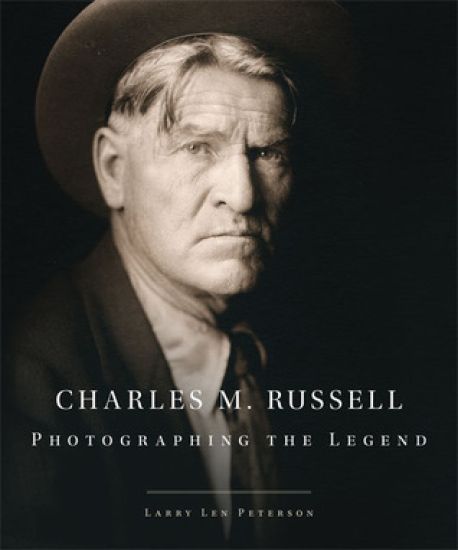
Almost as familiar as the images of the American West he painted and sculpted is the figure of Charles M. Russell himself. Standing or mounted, in boots and wide-brimmed hat, sash knotted at his waist, gaze steady under a hank of unruly hair: he is the one and only ""Cowboy Artist."" What is not so well known is the story that unfolds in the myriad photographs of Russell, pictures that document a remarkable life while also reflecting the evolution of photography and the depiction of the American West at the turn of the twentieth century. This biography makes use of hundreds of images of Russell, many never before published, to explore the role of photography in shaping the artist's public image and the making and selling of his art. More than that, the book shows how the Cowboy Artist personified what he portrayed. Born in 1864 to a well-to-do family in St. Louis, Russell was smitten early on by the burgeoning art of photography and the images of the West that were proliferating as rapidly as the frontier was disappearing. When he moved to Helena at sixteen, his passions came together, as professional and amateur photographers made their way to the Montana Territory to document the cowboy life that Charlie was embracing and beginning to paint. Larry Len Peterson traces Russell's image and his career from these first adventures to his apotheosis as an artist, and then to his California period and his final days as the grand statesman of the American West. Along the way we meet some of the most interesting photographers of the era, as Russell posed for Edward S. Curtis, Roland Reed, Clarence S. Bull, Hildore C. Eklund, and Dorothea Lange, among others. Because Nancy Russell used photographs to promote her artist husband's career and artistic identity, we also see the medium's early application as a marketing tool in the hands of a surprisingly savvy businesswoman. Alongside Peterson's engrossing tale of the life of this American icon, the hundreds of photographs of Russell, his friends, family members, business associates, colleagues, and celebrities of his time offer a unique view of the artist's historic and cultural milieu - a view at once panoramic and intimate.
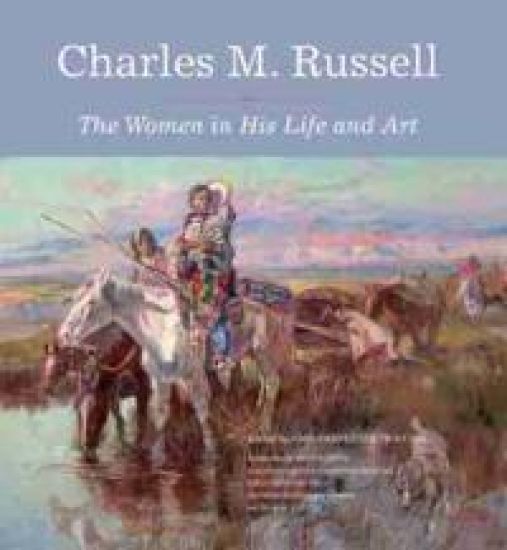
Charles M. Russell has long been recognized for his action-packed paintings, drawings, and sculpture of cowboys, fur trappers, Native American buffalo hunters and warriors, and other heroes of the Old West. Russell's best-known works capture the excitement and deadly risk of men battling nature and one another in a majestic landscape of mountains and plains. Less well known are Russell's hundreds of depictions of western women. As renowned author and art historian Ginger K. Renner observed thirty-five years ago, no other artist of the West devoted more of his time and talent to the portrayal of women. But few have followed Renner's lead - until now. Lavishly illustrated with full-color illustrations, Charles M. Russell: The Women in His Life and Art presents groundbreaking essays essential to understanding the role of western women in Russell's art. This volume is both a tribute to the women who nurtured Russell's artistic development and a landmark in the study of the role of women in a genre all too often identified almost exclusively with a masculine world. The catalogue essays examine the exhibition's theme from four unique perspectives. Joan Carpenter Troccoli provides an overview of the works in the exhibition and the social, cultural, and personal values that influenced them. Emily Crawford Wilson explores Russell's interest in the feminine ideal, tying it to wider artistic trends of the late nineteenth and early twentieth centuries. Jennifer Bottomly-O'looney describes Russell's friendship with Ben and Lela Roberts, who introduced the artist to Nancy Cooper, the woman who would become his wife and indispensable business partner. Thomas A. Petrie employs extended excerpts from Nancy's unpublished biographical memoir to illuminate the Russells' marriage, a relationship sustained by affection and mutual respect, as well as shrewd creative and marketing decisions.
Charles Cornelius Coffin Painter (1833-89), clergyman turned reformer, was one of the foremost advocates and activists in the late-nineteenth-century movement to reform U.S. Indian policy. Very few individuals possessed the influence Painter wielded in the movement, and Painter himself published numerous pamphlets for the Indian Rights Association (IRA) on the Southern Utes, Eastern Cherokees, California Indians, and other Native peoples. Yet this is the first book to fully consider his unique role and substantial contribution. Born in Virginia, Painter spent most of his life in Great Barrington, Massachusetts, commuting to New York City and Washington, D.C., initially as an agent of the American Missionary Association (AMA), later as an appointed member of the Board of Indian Commissions (BIC), and most significant, as the Indian Rights Association's D.C. agent. In these capacities he lobbied presidents and Congress for reform, conducted extensive investigations on reservations, and shaped deliberations in such reform bodies as the BIC and the influential Lake Mohonk conferences. Mining an extraordinary wealth of archival material, Valerie Sherer Mathes crafts a compelling account of Painter as a skilled negotiator with Indians and policymakers and as a tireless investigator who traveled to far-flung reservations, corresponded with countless Indian agents, and drafted scrupulously researched reports on his findings. Recounted in detail, his many adventures and behind-the-scenes activities - promoting education, striving to prevent the removal of the Southern Utes from Colorado, investigating reservation fraud, working to save the Piegans of Montana from starvation - afford a clear picture of Painter's importance to the overall reform effort to incorporate Native Americans into the fabric of American life. No other book so effectively captures the day-to-day and exhausting work of a single individual on the front lines of reform. Like most of his fellow advocates, Painter was an unapologetic assimilationist, a man of his times whose story is a key chapter in the history of the Indian reform movement.
Charles Cornelius Coffin Painter (1833–89), clergyman turned reformer, was one of the foremost advocates and activists in the late-nineteenth-century movement to reform U.S. Indian policy. Very few individuals possessed the influence Painter wielded in the movement, and Painter himself published numerous pamphlets for the Indian Rights Association (IRA) on the Southern Utes, Eastern Cherokees, California Indians, and other Native peoples. Yet this is the first book to fully consider his unique role and substantial contribution. Born in Virginia, Painter spent most of his life in Great Barrington, Massachusetts, commuting to New York City and Washington, D.C., initially as an agent of the American Missionary Association (AMA), later as an appointed member of the Board of Indian Commissions (BIC), and, most significant, as the Indian Rights Association’s D.C. agent. In these capacities he lobbied presidents and Congress for reform, conducted extensive investigations on reservations, and shaped deliberations in such reform bodies as the BIC and the influential Lake Mohonk conferences. Mining an extraordinary wealth of archival material, Valerie Sherer Mathes crafts a compelling account of Painter as a skilled negotiator with Indians and policymakers and as a tireless investigator who traveled to far-flung reservations, corresponded with countless Indian agents, and drafted scrupulously researched reports on his findings. Recounted in detail, his many adventures and behind-the-scenes activities—promoting education, striving to prevent the removal of the Southern Utes from Colorado, investigating reservation fraud, working to save the Piegans of Montana from starvation—afford a clear picture of Painter’s importance to the overall reform effort to incorporate Native Americans into the fabric of American life. No other book so effectively captures the day-to-day and exhausting work of a single individual on the front lines of reform. Like most of his fellow advocates, Painter was an unapologetic assimilationist, a man of his times whose story is a key chapter in the history of the Indian reform movement.
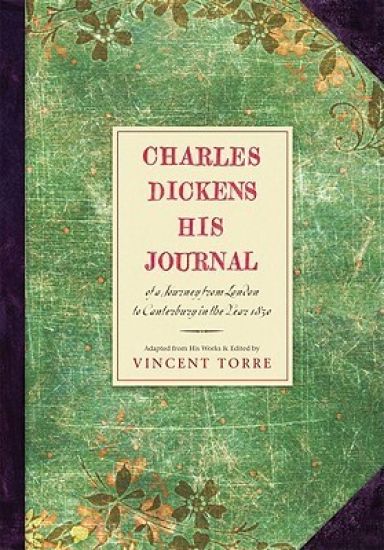
Before finding a place as a celebrated author and household name, Charles Dickens was the beleaguered son of a perpetually impoverished family, proving a failure at everything from court reporting to pot polishing. This story, adapted from his cherished works of fiction, imagines his life at this young age. In the entries of "Charles Dickens: His Journal", we meet a floundering Dickens just as he throws up his hands, withdraws his paltry savings, and sets out for Canterbury like the pilgrims of old. He places himself in the hands of the world, depending in part on the strength of his last shillings, in part on his own quick wits, but most of all upon the patchy hospitality of unforgettable characters he meets along the way. Can we believe what we read? According to Dickens, all of his tales are true reflections of life - fragmentary and highly improbable. For readers unfamiliar with the author's work, this is a remarkable introduction to Dickens' brilliant humour and to his indelible characters, who come to life as soon as we read their names.For Dickens enthusiasts, this is a smart, exhilarating romp through the pages of a timeless writer, celebrating caricatures and scenes too often overlooked.
United States poet laureate & Pulitzer Prize winner, Charles Simic adds a new introduction to the most comprehensive collection of his early poetry from 1963-1983.
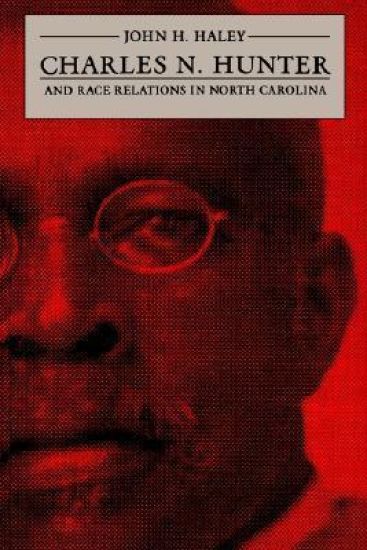
Charles N. Hunter, one of North Carolina's outstanding black reformers, was born a slave in Raleigh around 1851, and he lived there until his death in 1931. As public school teacher, journalist, and historian, Hunter devoted his long life to improving opportunities for blacks. A political activist, but never a radical, he skillfully used his journalistic abilities and his personal contacts with whites to publicize the problems and progress of his race. He urged blacks to ally themselves with the best of the white leaders, and he constantly reminded whites that their treatment of his race ran counter to their professed religious beliefs and the basic tenets of the American liberal tradition. By carefully balancing his efforts, Hunter helped to establish a spirit of passive protest against racial injustice. John Haley's compelling book, largely based on Hunter's voluminous papers, affords a unique opportunity to view race relations in North Carolina through the eyes of a black man. It also provides the first continuous survey of the black experience in the state from the end of the Civil War to the Great Depression, an account that critiques the belief that race relations were better in North Carolina than in other southern states.
Orr traces Aycock's growth from farm boy to practicing lawyer and on to that final eminence in which his fame spread beyond the state in connection with his brilliant oratory, his interest in public education, and his devotion to the Democratic party. His life became a legend long before he died, at the age of fifty-two, delivering an address titled Universal Education.Originally published in 1961.A UNC Press Enduring Edition -- UNC Press Enduring Editions use the latest in digital technology to make available again books from our distinguished backlist that were previously out of print. These editions are published unaltered from the original, and are presented in affordable paperback formats, bringing readers both historical and cultural value.
This is a critical bibliography of the Nodier studies and editions of his works that appeared between 1923 and 1967. Part I presents a chronological bibliography of studies on Nodier and annotates each entry. Part II comprises a tentative list of the republications of works by Nodier, indicating those of special interest.
The driving force in Chesnutt's life was the wish to help his race. Long before the days of the NAACP, which he later joined, and to the end of his life, he lectured, wrote,and corresponded on the everlasting problem."" His letters reveal courage and good sense with which he faced racial discrimination.""A UNC Press Enduring Edition -- UNC Press Enduring Editions use the latest in digital technology to make available again books from our distinguished backlist that were previously out of print. These editions are published unaltered from the original, and are presented in affordable paperback formats, bringing readers both historical and cultural value.
Hibbard begins by setting court Catholicism in the context of English court alignments on domestic and foreign policy. She then describes public reaction to royal policy and court Catholicism and the use parliamentary leaders made of anti-Catholicism from 1640 to 1642. In this first study to focus on both the perceptions and the reality of popish plotting,"" Hibbard concludes that behind the exaggerated claims lay genuine anxieties that historians should begin to take seriously.""A UNC Press Enduring Edition -- UNC Press Enduring Editions use the latest in digital technology to make available again books from our distinguished backlist that were previously out of print. These editions are published unaltered from the original, and are presented in affordable paperback formats, bringing readers both historical and cultural value.
Pinckney's lifetime as a leading member of the southern oligarchy is important to an understanding of that group's assumptions about itself, its aspirations, and its exacting standards of public and private conduct for its leaders. It also provides insight into the development of the Federalist and Republican parties in the South and vividly demonstrates the effects of the national party system on the old regime of state politics in South Carolina.A UNC Press Enduring Edition -- UNC Press Enduring Editions use the latest in digital technology to make available again books from our distinguished backlist that were previously out of print. These editions are published unaltered from the original, and are presented in affordable paperback formats, bringing readers both historical and cultural value.
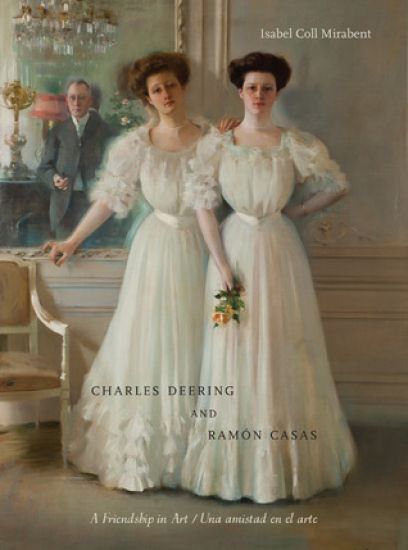
This lavishly illustrated, bilingual art book presents drawings by Ramón Casas in the Charles Deering McCormick Library of Special Collections at the Northwestern University Library and oil paintings by Casas from private collections and the Art Institute of Chicago. Charles Deering and Ramón Casas follows the development and dramatic dissolution of a three-way friendship that connected the Spanish painter Ramón Casas (1866–1932); the Chicago industrialist Charles Deering (1852–1927), who was a collector and admirer of Casas’s work as well as a patron of Northwestern University; and the Spanish artist Miguel Utrillo (1862–1934), Casas’s lifelong friend and the father of the French painter Maurice Utrillo. Casas introduced Deering to Sitges, a beach town near Barcelona, Spain, where the latter created a palatial estate with a museum to house his art collection. Miguel Utrillo served as director of the museum. The text explores the treasures housed at Maricel and what happened among the three men that led Casas to abandon Utrillo and Deering to depart Spain, taking his art collection with him.