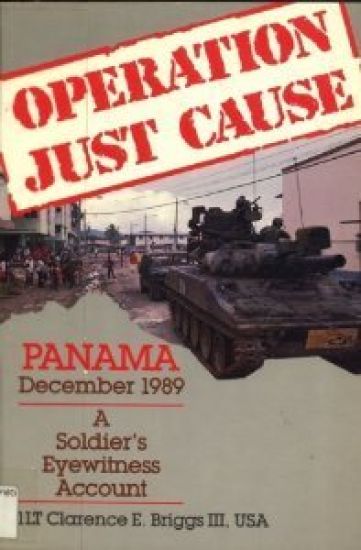
Who is the enemy? Who is an innocent bystander? When can I use force and how much force should I use? The answers to these questions vary according to the role of the soldier and the rules of engagement under which he is operating at a particular time and in a particular place on the battlefield. We owe the American solder, who for future conflicts must be equally prepared to direct traffic and to close with and destroy the enemy, answers to these questions. But most important, after we determine the answers, we must be willing to train on them.
"Men enjoy justice steadily and by design only when they live in a society that affords opportunities to all . . . to form aspirations for their society."-From the Introduction "The crux about which this book revolves is theory of justice," writes Clarence Morris. In its simplest form, his theory is this: the more the law implements the public's genuine and important aspirations-not its desires for individual gratification but the social, deep-seated unselfish, nonexploitable aspirations-the more just the legal system becomes. "Man's capacity for justice does not flow from divine reason or divine revelation. Men enjoy justice steadily and by design only when they live in a society that affords opportunities in all its inhabitants to develop their capacity to form aspirations for their society." Up to now the world's capacity for justice, so defined, has been small. Some believe that the Western world is still too suppressed for such aspirations and that true justice will emerge only after its liberation. Herbert Marcuse calls for liberation through revolution; John Stuart Mill, relying on man's reason, urged peaceful nonconformity. Both, says Morris, are wrong-but we should learn from Marcuse that every aspiration has an emotional dimension, and we should not allow Mill to persuade us that justice is only a matter of factual discovery. And, since justices are always in flux, the justice of one time or place can become the clumsy legalistics of another. In the light of this theory of justice the author examines the complex logic with which the law must tread its way through the maze of human existence; the need for general rules ("enacted law" and judicial precedents); the function of sociological insights in the development of common law; and the role of statutory penal law, strikingly illustrated from the Chinese Imperial Code.
Barack Obama's inauguration as the first African American president of the United States has caused many commentators to conclude that America has entered a postracial age. ""The Preacher and the Politician"" argues otherwise, reminding us that, far from inevitable, Obama's nomination was nearly derailed by his relationship with Jeremiah Wright, the outspoken former pastor of Trinity United Church of Christ on the South Side of Chicago. The media storm surrounding Wright's sermons, the historians Clarence E. Walker and Gregory D. Smithers suggest, reveals that America's fraught racial past is very much with us, only slightly less obviously so. With meticulous research and insightful analysis, Walker and Smithers take us back to the Democratic primary season of 2008, viewing the controversy surrounding Wright in the context of key religious, political, and racial dynamics in American history. In the process they expose how the persistence of institutional racism, and racial stereotypes, became a significant hurdle for Obama in his quest for the presidency. The authors situate Wright's preaching in African American religious traditions dating back to the eighteenth century, but they also place his sermons in a broader prophetic strain of Protestantism that transcends racial categories. This latter connection was consistently missed or ignored by pundits on the right and the left who sought to paint the story in simplistic, and racially defined, terms. Obama's connection with Wright gave rise to criticism that, according to Walker and Smithers, sits squarely in the American political tradition, where certain words are meant to incite racial fear, in the case of Obama with charges that the candidate was unpatriotic, a Marxist, a Black Nationalist, or a Muslim. Once Obama became the Democratic nominee, the day of his election still saw ballot measures rejecting affirmative action and undermining the civil rights of other groups. ""The Preacher and the Politician"" is a concise and timely work that reminds us of the need to continue to confront the legacy of racism even as we celebrate advances in racial equality and opportunity.
Barack Obama's inauguration as the first African American president of the United States has caused many commentators to conclude that America has entered a post racial age. The Preacher and the Politician argues otherwise, reminding us that, far from inevitable, Obama's nomination was nearly derailed by his relationship with Jeremiah Wright, the outspoken former pastor of Trinity United Church of Christ on the South Side of Chicago. The media storm surrounding Wright's sermons, the historians Clarence E. Walker and Gregory D. Smithers suggest, reveals that America's fraught racial past is very much with us, only slightly less obvious. With meticulous research and insightful analysis, Walker and Smithers take us back to the Democratic primary season of 2008, viewing the controversy surrounding Wright in the context of enduring religious, political, and racial dynamics in American history. In the process they expose how the persistence of institutional racism, and racial stereotypes, became a significant hurdle for Obama in his quest for the presidency. The authors situate Wright's preaching in African American religious traditions dating back to the eighteenth century, but they also place his sermons in a broader prophetic strain of Protestantism that transcends racial categories. This latter connection was consistently missed or ignored by pundits on the right and the left who sought to paint the story in simplistic, and racially defined, terms. Obama's connection with Wright gave rise to criticism that, according to Walker and Smithers, sits squarely in the American political tradition, where certain words are meant to incite racial fear, in the case of Obama with charges that the candidate was unpatriotic, a Marxist, a Black Nationalist, or a Muslim. Once Obama became the Democratic nominee, the day of his election still saw ballot measures rejecting affirmative action and undermining the civil rights of other groups. The Preacher and the Politician is a concise and timely study that reminds us of the need to continue to confront the legacy of racism even as we celebrate advances in racial equality and opportunity.
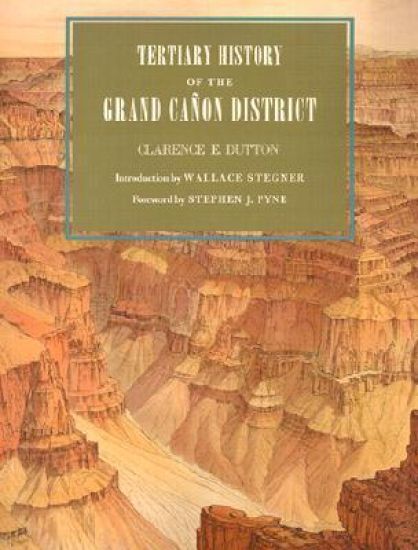
Originally published in 1882, Clarence Dutton's Tertiary History of the Grand Canon District has become one of the definitive books on the Grand Canyon. Commissioned as a study of the region's geology and issued by the fledgling U.S. Geological Survey, it is as much admired today for its literary as its scientific merits. With its beautiful illustrations by Thomas Moran and William Henry Holmes, it is a seminal work on the Canyon that has never been surpassed for its eloquence and authority. This new edition of Dutton's magnum opus makes that work available once again. Visitors to the Canyon will gain a new appreciation of its majesty as Dutton takes readers on several excursions among its castellated and cathedral-like peaks and ridges. Along the way, he explains the peculiar characteristics of different rocks, the water-sculpturing process, volcanic cones and outflows, the extent of the river's erosion, and other geological features. Dutton's Tertiary History remains arguably the most evocative and compelling geological writing ever done on the Grand Canyon region. As Stephen J. Pyne observes in his foreword, Dutton ?recast a rocky peninsula into geo-poetry, reshaped an amorphous panorama of Time into narrative History, and transformed an American scene into a universal symbol.? No one who has thrilled to the majesty of the Grand Canyon will fail to be moved by this timeless work.
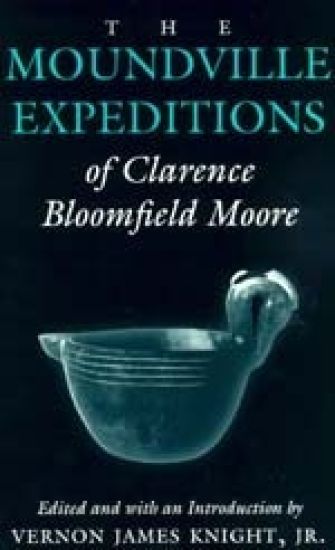
The two works included in this volume represent the pinacle of the career of Clarence Bloomfield Moore. It includes ""Certain Aboriginal Remains of the Black Warrior River"" (1905) and ""Moundville Revisited"" (1907), which brought the Moundville site in Alabama to the attention of the scholarly world.
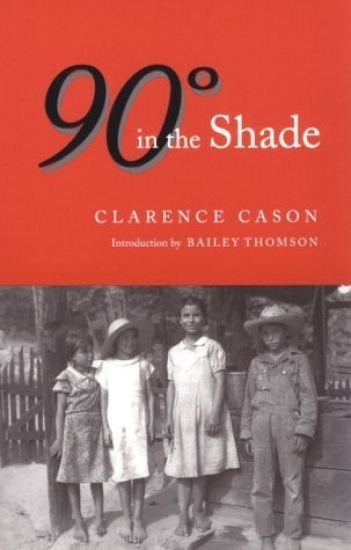
Clarence Cason belonged to that restless generation of southern intellectuals who, between the world wars, questioned the South's stubborn traditionalism, even as they tried to explain and defend its distinctiveness. From his professorial perch at The University of Alabama, Cason wrote polished essays for leading national publications while contributing weekly editorials for newspaper readers. As a journalist in academia, he cultivated a broad audience for his eloquent though tentative observations about the ""character"" of a region that seemed to be a separate province of the nation. In 1935, Cason collected his thoughts in a small book of essays titled 90[degrees] in the Shade. In it, he declared that climate and the relaxation afforded by field and stream had given southerners excellent reasons for their notoriously slow pace of life. Still, he wrote, ""there is much work that ought to be done below the Potomac."" Cason captured the pathos of race relations and other persistent problems and declared that the abominable practice of lynching would end when the best people of the South risked their personal and commercial standing to denounce it. Just days before the book's publication, however, Cason shot himself in his campus office. He left no explanation, but apparently he feared angry reaction from fellow citizens to his mild criticisms and gentle suggestions for change. The University of Alabama Press brought the book back into print in 1983. This new edition of Cason's classic features an introduction by journalist and UA professor H. Bailey Thomson, allowing yet another generation the enjoyment of Cason's perceptive writing, not so much for any remedy he proposed but rather for the open-minded and loving way in which he addressed the region's tragic experience.
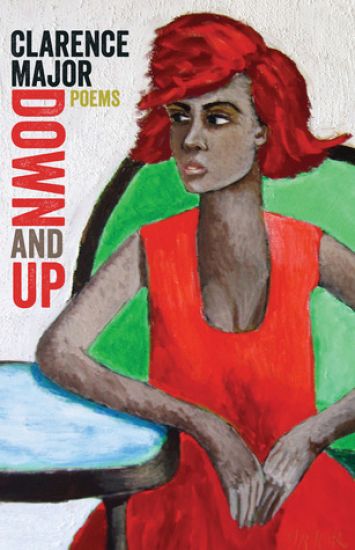
In Down and Up, Clarence Major makes use of American and European public places, their character and voice, to construct poems that explore the physical world juxtaposed sharply with the inner world. Sometimes realistic, sometimes dreamlike, these poems are dynamic, universal in theme, and acknowledge a debt to the great tradition of modern American poetry. Clear eyed and painterly, they explore wherever Major’s fancy takes him. His distinctive voice and compelling spatial and visual approach offer a connection between everyday human occurrences and the physical space they surround.
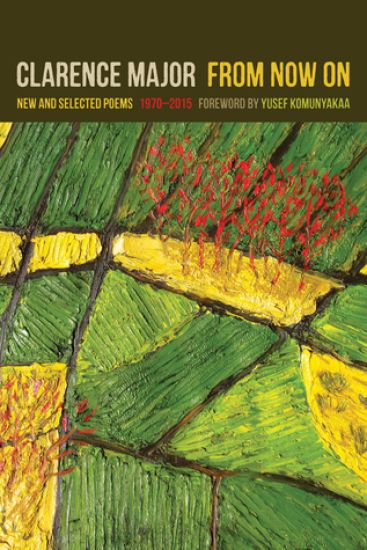
Clarence Major is a consummate artist whose work in poetry, fiction, and painting has been widely recognized. He has been part of twenty-eight group exhibitions, has had fifteen one-man shows, and has published fourteen collections of poetry and nine works of fiction. Major’s works—and this collection in particular—are distinguished by his poetic sociability and his unblinking but generous and affectionate portraiture.In From Now On, a retrospective of poems from the 1950s to the present—including selections from each of Major’s previous books of poetry as well as a generous selection of new poems—Major creates a vivid gallery of nimbly drawn characters. Here he establishes a voice that is singular and musical, one that draws witty, moving, and empathetic portraits of African American urban and country dwellers. Ultimately, this collection maintains Major’s intimate, conversational poetry while simultaneously becoming more eclectic, multicultural, and cosmopolitan. Major’s poetry is affable, but it suggests an insistence that we can connect with history and social change through the dynamic lives of the people we encounter daily.
Origins of a Southern Mosaic explores the distinct, individual, and separate states that made up the colonial South. This volume contains four expanded lectures delivered in 1974 by Clarence L. Ver Steeg, professor of history at Northwestern University, as part of the annual Lamar Memorial Lectures at Mercer University. These lectures offer insight into the unique political and social backgrounds of Georgia and the Carolinas and the ways in which the individual backgrounds of these states come together to form a “quilt-like mosaic,” with identifiable enclaves that contribute a special quality to the whole.The Georgia Open History Library has been made possible in part by a major grant from the National Endowment for the Humanities: Democracy demands wisdom. Any views, findings, conclusions, or recommendations expressed in this collection, do not necessarily represent those of the National Endowment for the Humanities.
Origins of a Southern Mosaic explores the distinct, individual, and separate states that made up the colonial South. This volume contains four expanded lectures delivered in 1974 by Clarence L. Ver Steeg, professor of history at Northwestern University, as part of the annual Lamar Memorial Lectures at Mercer University. These lectures offer insight into the unique political and social backgrounds of Georgia and the Carolinas and the ways in which the individual backgrounds of these states come together to form a “quilt-like mosaic,” with identifiable enclaves that contribute a special quality to the whole.The Georgia Open History Library has been made possible in part by a major grant from the National Endowment for the Humanities: Democracy demands wisdom. Any views, findings, conclusions, or recommendations expressed in this collection, do not necessarily represent those of the National Endowment for the Humanities.
Clarence Darrow, son of a village undertaker and coffinmaker, rose to become one of America's greatest attorneys—and surely its most famous. The Ohio native gained renown for his central role in momentous trials, including his 1924 defense of Leopold and Loeb and his defense of Darwinian principles in the 1925 Scopes "Monkey Trial." Some have traced Darrow's lifelong campaign against capital punishment to his boyhood terror at seeing a Civil War soldier buried—and no client of Darrow's was ever executed, not even black men who were accused of murder for killing members of a white mob. Closing Arguments: Clarence Darrow on Religion, Law, and Society collects, for the first time, Darrow's thoughts on his three main preoccupations, revealing a carefully conceived philosophy expressed with delightful pungency and clarity. His thoughts on social issues, especially on the dangers of religious fundamentalism, are uncannily prescient. A dry humor infuses his essays, and his reflections on himself and his philosophy reveal a quiet dignity at the core of a man better known for provoking Americans during an era of unprecedented tumult. From the wry "Is the Human Race Getting Anywhere?" to the scornful "Patriotism" and his elegiac summing up, "At Seventy-two," Darrow's writing still stimulates, pleases and challenges. A rebel who always sided intellectually and emotionally with the minority, Darrow remains a figure to contend with sixty-seven years after his death. "Inside every lawyer is the wreck of a poet," Darrow once said. Closing Arguments demonstrates that, in his case, that statement is true.
The Bibliographical Guide remains the most useful handbook of its kind now available to scholars for research in the field. The fifth revised edition includes updating and considerable but highly selective expansion as well as a section on Women's Studies. This edition includes over 100 new editions as well as more than 750 additional studies and reference works for a total of approximately 1,900 reference items, all annotated with the exception of a few with explanatory subtitles.
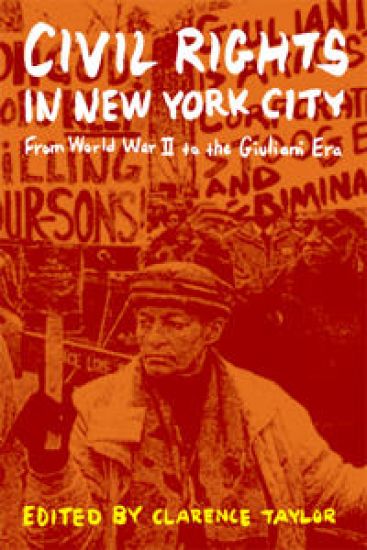
Since the 1960s, most U.S. History has been written as if the civil rights movement were primarily or entirely a Southern history. This book joins a growing body of scholarship that demonstrates the importance of the Northern history of the movement. The contributors make clear that civil rights in New York City were contested in many ways, beginning long before the 1960s, and across many groups with a surprisingly wide range of political perspectives. Civil Rights in New York City provides a sample of the rich historical record of the fight for racial justice in the city that was home to the nation's largest population of African-Americans in mid-twentiethcentury America. The ten contributions brought together here address varying aspects of New York's civil rights struggle, including the role of labor, community organizing campaigns, the pivotal actions of prominent national leaders, the movement for integrated housing, the fight for racial equality in public higher education, and the part played by a revolutionary group that challenged structural, societal inequality. Long before the Montgomery Bus Boycott, the Reverend Adam Clayton Powell Jr. helped launch the Harlem Bus Boycott of 1941. The New York City's Teachers' Union had been fighting for racial equality since 1935. Ella Baker worked with the NAACP and the city's grassroots movement to force the city to integrate its public school system. In 1962, a direct action campaign by Brooklyn CORE, a racially integrated membership organization, forced the city to provide better sanitation services to Bedford-Stuyvesant, Brooklyn's largest black community. Integrating Rochdale Village in South Jamaica, the largest middle-class housing cooperative in New York, brought together an unusual coalition of leftists, liberal Democrats, moderate Republicans, pragmatic government officials, and business executives. In reexamining these and other key events, Civil Rights in New York City reaffirms their importance to the larger national fight for equality for Americans across racial lines.
Since the 1960s, most U.S. History has been written as if the civil rights movement were primarily or entirely a Southern history. This book joins a growing body of scholarship that demonstrates the importance of the Northern history of the movement. The contributors make clear that civil rights in New York City were contested in many ways, beginning long before the 1960s, and across many groups with a surprisingly wide range of political perspectives. Civil Rights in New York City provides a sample of the rich historical record of the fight for racial justice in the city that was home to the nation's largest population of African-Americans in mid-twentiethcentury America. The ten contributions brought together here address varying aspects of New York's civil rights struggle, including the role of labor, community organizing campaigns, the pivotal actions of prominent national leaders, the movement for integrated housing, the fight for racial equality in public higher education, and the part played by a revolutionary group that challenged structural, societal inequality. Long before the Montgomery Bus Boycott, the Reverend Adam Clayton Powell Jr. helped launch the Harlem Bus Boycott of 1941. The New York City's Teachers' Union had been fighting for racial equality since 1935. Ella Baker worked with the NAACP and the city's grassroots movement to force the city to integrate its public school system. In 1962, a direct action campaign by Brooklyn CORE, a racially integrated membership organization, forced the city to provide better sanitation services to Bedford-Stuyvesant, Brooklyn's largest black community. Integrating Rochdale Village in South Jamaica, the largest middle-class housing cooperative in New York, brought together an unusual coalition of leftists, liberal Democrats, moderate Republicans, pragmatic government officials, and business executives. In reexamining these and other key events, Civil Rights in New York City reaffirms their importance to the larger national fight for equality for Americans across racial lines.
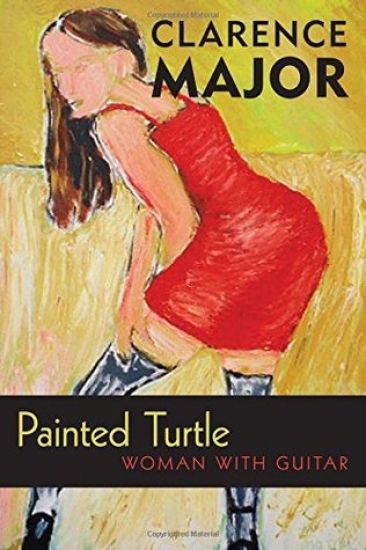
This novel, narrated by Baldy, a Navajo/Hopi guitar player, tells the story of Zuni folk singer Painted Turtle, from her childhood experiences on the reservation to her performances in cantinas in the Southwest. First published in 1988 and long out of print, this work from Clarence Major follows Painted Turtle as she seeks to assuage the spiritual sicknesses that have shaped her uneasy relationships with family, friends, and her tribe.