

Kirjahaku
Etsi kirjoja tekijän nimen, kirjan nimen tai ISBN:n perusteella.
1000 tulosta hakusanalla Cornelia Absmanner

Mache etwas Anderes! Mit diesem Buch wagt die Autorin ein Experiment. Statt den tausendundeinsten Bewerbungsratgeber zu schreiben, tut sie das Gegenteil: Sie zeigt, wie man eine Anstellung bewusst verhindert. Der Leser erfährt, welches Verhalten garantiert zur Absage führt und wie der erfolgreiche Arbeitslose trotz solcher Fehlschläge das Gesicht wahrt. Die Tipps für derlei Anti-Bewerbungen reichen vom Foto in Unterwäsche über den nichtssagenden, jedoch in Leder gebundenen Lebenslauf bis zum Einsatz eines Outplacement-Beraters, der nur als Beweis für Vergeblichkeit der Jobsuche dient. Arbeitswillige irren oftmals im Bewerbungsdschungel umher und verstehen nicht, warum sie trotz ernsthaften Bemühens keine Beschäftigung finden. Nun können sie in diesem Ratgeber beobachten, wie verschiedene Kandidaten zielsicher auf die erfolgreiche Arbeitslosigkeit zusteuern. Damit erscheint das leidige Thema Bewerben plötzlich in ganz neuem Licht. AMache etwas Anderes@ heißt der erste Schritt, um aus misslichen und unbewusst falschen Verhaltensweisen auszubrechen. Und wer weiß, ob mancher Leser hinter der ironisch überspitzten Beschreibung untauglicher Bewerbungsstrategien nicht doch den richtigen Weg zu seinem persönlichen Glück entdeckt. Dr. Cornelia Riechers betreut seit 1993 mit ihrem Unternehmen 'Quality Outplacement' erfolgreich Fach und Führungskräfte aller Hierarchiestufen bei der beruflichen Neuorientierung. Genau wie in ihrem Buch setzt sie auch in der Outplacement und Karriereberatung ungewöhnliche Methoden ein. Scharfsinnig, provokativ, amüsant - für Bewerber und Einsteller
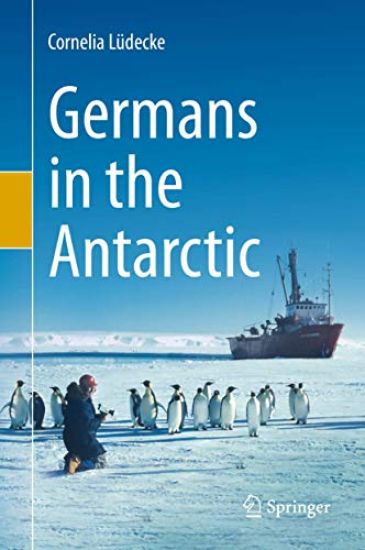
While science was usually at the forefront of German Antarctic expeditions, research into the Southern Polar region always had a political or economic component, whether it was about resource use or securing areas of influence.Cornelia Lüdecke presents the course of the three German Antarctic expeditions from 1901-03, 1911-12 and 1938/39 with their partly dramatic turns and twists and provides insights into everyday life under extreme conditions.She also evaluates unpublished material from the archives and private estates of the expedition members. She looks at the expeditions from a scientific and political point of view and also deals with the myths associated with the "Schwabenland" expedition during the National Socialist era.Finally, the author describes German south polar research after World War II, which took different paths in the German Democratic Republic and in the Federal Republic of Germany, and gives an outlook on future research. For the first time, this book presents the history of the Germans in Antarctica in a factual and informative way for the general public. With numerous pictures, some of which have never been published before.
While science was usually at the forefront of German Antarctic expeditions, research into the Southern Polar region always had a political or economic component, whether it was about resource use or securing areas of influence.Cornelia Lüdecke presents the course of the three German Antarctic expeditions from 1901-03, 1911-12 and 1938/39 with their partly dramatic turns and twists and provides insights into everyday life under extreme conditions.She also evaluates unpublished material from the archives and private estates of the expedition members. She looks at the expeditions from a scientific and political point of view and also deals with the myths associated with the "Schwabenland" expedition during the National Socialist era.Finally, the author describes German south polar research after World War II, which took different paths in the German Democratic Republic and in the Federal Republic of Germany, and gives an outlook on future research. For the first time, this book presents the history of the Germans in Antarctica in a factual and informative way for the general public. With numerous pictures, some of which have never been published before.
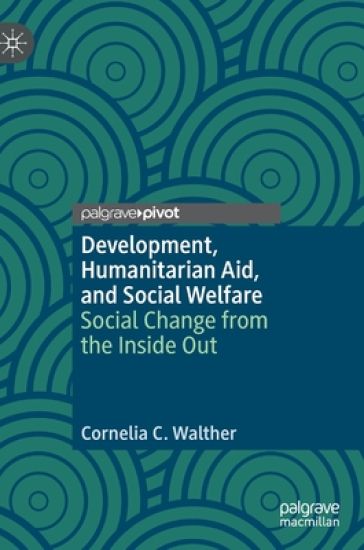
Development, Humanitarian Aid, and Social Welfare
Cornelia C. Walther
Springer Nature Switzerland AG
2020
sidottu
This book examines how human behavior is shaped by our aspirations, emotions, thoughts and sensations, and conversely, how the experiences that result from our behavior impact ourselves, others and the planet. Based on an analysis of the constant interplay between these four layers, it offers practical solutions to systematically induce sustainable social change dynamics. It shows why change, in addition to economic and political transformation at the macro level, begins with mind-shifts at the micro level. Hereby it establishes the missing link between investments in personal empowerment and collective welfare. A novel theoretical paradigm is the foundation of this book, which is anchored in the perspective of an ongoing ‘body-mind-heart-soul connection.’ Based on the premise that an equitable society is to the benefit of everyone, it is argued that efforts made for others have benefits at three levels – for the individual who acts, the one who has been acted for and for society.
Development, Humanitarian Aid, and Social Welfare
Cornelia C. Walther
Springer Nature Switzerland AG
2021
nidottu
This book examines how human behavior is shaped by our aspirations, emotions, thoughts and sensations, and conversely, how the experiences that result from our behavior impact ourselves, others and the planet. Based on an analysis of the constant interplay between these four layers, it offers practical solutions to systematically induce sustainable social change dynamics. It shows why change, in addition to economic and political transformation at the macro level, begins with mind-shifts at the micro level. Hereby it establishes the missing link between investments in personal empowerment and collective welfare. A novel theoretical paradigm is the foundation of this book, which is anchored in the perspective of an ongoing ‘body-mind-heart-soul connection.’ Based on the premise that an equitable society is to the benefit of everyone, it is argued that efforts made for others have benefits at three levels – for the individual who acts, the one who has been acted for and for society.
Humanitarian Work, Social Change, and Human Behavior
Cornelia C. Walther
Springer Nature Switzerland AG
2020
sidottu
This book is based on the view that human existence results from the interplay of four dimensions: mind, heart, body and soul, which find their expression in thoughts, emotions, sensations and aspirations. By combining theory and praxis, including personal lessons learned during the author’s two decades of humanitarian work in emergency areas, the book’s goal is to make the reader understand (thought), feel (emotion), experience (sensation) and want to be part of a paradigm shift that is geared toward local and global change (aspiration). It introduces a methodology to optimize the interplay between individuals and the institutions and societies in which they work, raise families and pursue their dreams. Further, it seeks to reposition purpose at the center of both everyday life as well as humanitarian institutions. The book’s central message is that a better world is not, and should not be, abstract and abstruse, but something that lies in everyone’s hands.
Development and Connection in the Time of COVID-19
Cornelia C. Walther
Springer Nature Switzerland AG
2020
sidottu
This book looks at the COVID-19 pandemic and its likely aftermath through a four-dimensional prism - aspirations, emotions, thoughts, and sensations to understand human behavior. That perspective opens possibilities to turn the current crisis into an opportunity for positive change; because systematically influencing the various components of our being, individually and collectively, begins by understanding their nature and interaction. Beyond influence this interplay between dimensions can be optimized; which is the purpose of the C-Core (completion, compassion, creativity, cooperation) introduced in the book. In addition, the four determinants that shape institutions: priorities, people, positions, programs - the P-Puzzle are looked at. This book combines theory and concrete suggestions both for policymakers in charge of designing the collective landscape and for individuals who must adapt to, and shape, a new ‘normal’. COVID-19 is a reminder that humans around the World are fundamentally the same. Whether in the long run the Pandemic will bring out the best or the worst in humans depends on individual and collective choices to nurture our best individual and collective selves. COVID-19 may either expand life quality by adding a new breadth of solidarity or reduce Society to mere survival.
Technology, Social Change and Human Behavior
Cornelia C. Walther
Springer Nature Switzerland AG
2021
sidottu
This book looks at the changing continuum that links individuals, communities and society. An outline of Aspirational Algorithms (AA) and Valuable Wearables is presented as tools to shift from an AI culture to the cultivation of Augmented Humanity (AH). The human mindset that is behind the design and use of technology determines the outcomes of technology. If the intended outcome is the common good, then the preceding human aspiration must be geared toward that goal. Only technology that is conceived with the aspiration of a society that lifts individuals to fulfill their potential can be a game-changer for good. Seeing the constant interplay between the four levels of human existence – soul, heart, mind, body, expressed as aspirations, emotions, thoughts and sensations, how technology may serve to systematically sway individuals from inspiration to desire, from informing to the ignition of tangible transformation. This transition is explained in the book along the scale of influence. Two convergent and mutually influencing dynamics are analyzed: first, the influence of values and aspirations on the impact of technology, and second, the influence of technology on the attitude and action of users. Both assess how hardware and software can serve a maximum of people to live a meaningful happy life.
Democratic Legitimation of Central Bank Independence in the European Union
Cornelia Manger-Nestler; Markus Gentzsch
Springer Nature Switzerland AG
2021
sidottu
This short monograph examines the tense relationship between central bank independence and democratic legitimation, which has changed as the European Central Bank (ECB) has been entrusted with new tasks and faced unprecedented challenges. The financial and sovereign debt crisis, in particular, has affected the ECB's position within the Economic and Monetary Union without substantial changes in the Union's legal framework. However, the evolution of an institution primarily obligated to maintain price stability into an actor involved in sustaining financial stability, performing banking supervision and supporting economic policy raises the question of whether the high level of autonomy granted to the ECB is justified with regard to the principle of democracy that demands adequate accountability and control. This book identifies requirements for the democratic legitimation of central bank action in relation to specific tasks. Further, it analyses other scales of independence encountered in EU law in order to allow readers to gain a better conceptual understanding of central bank independence.

Democratic Legitimation of Central Bank Independence in the European Union
Cornelia Manger-Nestler; Markus Gentzsch
Springer Nature Switzerland AG
2022
nidottu
This short monograph examines the tense relationship between central bank independence and democratic legitimation, which has changed as the European Central Bank (ECB) has been entrusted with new tasks and faced unprecedented challenges. The financial and sovereign debt crisis, in particular, has affected the ECB's position within the Economic and Monetary Union without substantial changes in the Union's legal framework. However, the evolution of an institution primarily obligated to maintain price stability into an actor involved in sustaining financial stability, performing banking supervision and supporting economic policy raises the question of whether the high level of autonomy granted to the ECB is justified with regard to the principle of democracy that demands adequate accountability and control. This book identifies requirements for the democratic legitimation of central bank action in relation to specific tasks. Further, it analyses other scales of independence encountered in EU law in order to allow readers to gain a better conceptual understanding of central bank independence.

This book investigates the close relation between quite sophisticated function spaces, the regularity of solutions of partial differential equations (PDEs) in these spaces and the link with the numerical solution of such PDEs. It consists of three parts. Part I, the introduction, provides a quick guide to function spaces and the general concepts needed. Part II is the heart of the monograph and deals with the regularity of solutions in Besov and fractional Sobolev spaces. In particular, it studies regularity estimates of PDEs of elliptic, parabolic and hyperbolic type on non smooth domains. Linear as well as nonlinear equations are considered and special attention is paid to PDEs of parabolic type. For the classes of PDEs investigated a justification is given for the use of adaptive numerical schemes. Finally, the last part has a slightly different focus and is concerned with traces in several function spaces such as Besov– and Triebel–Lizorkin spaces, but also in quite general smoothness Morrey spaces. The book is aimed at researchers and graduate students working in regularity theory of PDEs and function spaces, who are looking for a comprehensive treatment of the above listed topics.
Leadership for Social Change and Development
Cornelia C. Walther
Springer Nature Switzerland AG
2021
sidottu
The book offers perspectives from change makers. It is intended to inspire readers to get involved in the pursuit of social transformation. The objective of is to make the causes and consequences, and the added value, of inclusive social change tangible. Using real life stories that draw on the power of the human being to inspire by example, BeingChange shows that ‘purpose for power’ is not a platitude, but a principle that favors both subjective wellbeing and social progress. The selected of formal and informal agents of change show why meaning is the undercurrent of genuine empowerment, and the main ingredient of sustainable development. The goal in sharing these stories is twofold, 1) Illustrate that no matter WHO and WHERE you are, and what you have, it is possible to align your life-long aspirations and every-day actions, and 2) Inspire readers to get started (or accelerate) their quest for purpose by identifying and pursuing what matters most to them. A network of likeminded thinkers and doers, connected by the shared belief that the World must not be accepted as a given, is growing around the world. Everyone is welcome to shift their perspective from passive to active and join.
This book traces the development of the international society tradition from its origins in Grotius’ On the Law of War and Peace to its crystallization in Bull’s The Anarchical Society. It follows the idea of sociability among peoples as it was presented by Grotius and substantiated by Pufendorf, through the skepticism of Voltaire and Kant, to emerge as humanitarian warfare and human rights in the international liberal movement, ‘world society’ in the 20th century Catholic revival, and common practices and social understandings in the English School in the period of disciplinary development in international relations after the Second World War.
This book traces the development of the international society tradition from its origins in Grotius’ On the Law of War and Peace to its crystallization in Bull’s The Anarchical Society. It follows the idea of sociability among peoples as it was presented by Grotius and substantiated by Pufendorf, through the skepticism of Voltaire and Kant, to emerge as humanitarian warfare and human rights in the international liberal movement, ‘world society’ in the 20th century Catholic revival, and common practices and social understandings in the English School in the period of disciplinary development in international relations after the Second World War.

The WTO and the New Generation EU FTA Dispute Settlement Mechanisms
Cornelia Furculi?a
Springer Nature Switzerland AG
2021
sidottu
This book explores interactions between the new generation EU FTA and the WTO dispute settlement mechanisms, adopting an innovative, comprehensive approach. It investigates how the mechanisms potentially could and actually do compete, conflict, and cooperate, focusing not only on the potential negative consequences of fragmentation, but also on how synergies could be enhanced. Thus, unlike the existing literature, which chiefly focuses on conflicting interactions, it considers positive and negative interactions alike. Moreover, the book explores the topic in light of the most recent changes in and challenges to the international trade law regime. Particular attention is paid to how the multilateral and bilateral mechanisms studied interact with regard to the current WTO dispute settlement crisis and the EU-backed multi-party interim appeal arbitration arrangement. Thus, the book provides up-to-date answers to compelling questions. It also examines in detail the new generationEU FTA dispute settlement mechanisms, an aspect which has not been the subject of thorough research to date.The book pursues an interdisciplinary approach, combining legal methodology, international relations and political science theories with interviews. Given its scope, the book will appeal to researchers and scholars whose work involves international trade law issues. However, it will also be of interest to general international law academics, as it touches upon such issues as fragmentation, forum shopping, and general rules of interpretation. Furthermore, by analysing and presenting proposals with regard to the new generation EU FTAs, it will also be pertinent to the work of EU policymakers and researchers studying EU trade law.

The WTO and the New Generation EU FTA Dispute Settlement Mechanisms
Cornelia Furculi?a
Springer Nature Switzerland AG
2022
nidottu
This book explores interactions between the new generation EU FTA and the WTO dispute settlement mechanisms, adopting an innovative, comprehensive approach. It investigates how the mechanisms potentially could and actually do compete, conflict, and cooperate, focusing not only on the potential negative consequences of fragmentation, but also on how synergies could be enhanced. Thus, unlike the existing literature, which chiefly focuses on conflicting interactions, it considers positive and negative interactions alike. Moreover, the book explores the topic in light of the most recent changes in and challenges to the international trade law regime. Particular attention is paid to how the multilateral and bilateral mechanisms studied interact with regard to the current WTO dispute settlement crisis and the EU-backed multi-party interim appeal arbitration arrangement. Thus, the book provides up-to-date answers to compelling questions. It also examines in detail the new generationEU FTA dispute settlement mechanisms, an aspect which has not been the subject of thorough research to date.The book pursues an interdisciplinary approach, combining legal methodology, international relations and political science theories with interviews. Given its scope, the book will appeal to researchers and scholars whose work involves international trade law issues. However, it will also be of interest to general international law academics, as it touches upon such issues as fragmentation, forum shopping, and general rules of interpretation. Furthermore, by analysing and presenting proposals with regard to the new generation EU FTAs, it will also be pertinent to the work of EU policymakers and researchers studying EU trade law.
Entwicklung, humanitäre Hilfe und soziale Wohlfahrt
Cornelia C. Walther
Springer International Publishing AG
2023
nidottu
In diesem Buch wird untersucht, wie menschliches Verhalten durch unsere Wünsche, Emotionen, Gedanken und Empfindungen geformt wird und wie sich umgekehrt die Erfahrungen, die sich aus unserem Verhalten ergeben, auf uns selbst, andere und den Planeten auswirken. Auf der Grundlage einer Analyse des ständigen Wechselspiels zwischen diesen vier Ebenen bietet es praktische Lösungen, um systematisch eine nachhaltige gesellschaftliche Veränderungsdynamik in Gang zu setzen. Es wird aufgezeigt, warum der Wandel, zusätzlich zur wirtschaftlichen und politischen Transformation auf der Makroebene, mit einem Bewusstseinswandel auf der Mikroebene beginnt. Dabei stellt er die fehlende Verbindung zwischen Investitionen in die persönliche Befähigung und das kollektive Wohlergehen her. Ein neuartiges theoretisches Paradigma bildet die Grundlage dieses Buches, das in der Perspektive einer kontinuierlichen "Körper-Geist-Herz-Seele-Verbindung" verankert ist. Ausgehend von der Prämisse, dass eine gerechteGesellschaft allen zugute kommt, wird argumentiert, dass Anstrengungen, die für andere unternommen werden, auf drei Ebenen Vorteile bringen - für den Einzelnen, der handelt, für denjenigen, für den gehandelt wurde, und für die Gesellschaft.
Humanitäre Arbeit, sozialer Wandel und menschliches Verhalten
Cornelia C. Walther
Springer International Publishing AG
2023
sidottu
Dieses Buch basiert auf der Auffassung, dass die menschliche Existenz aus dem Zusammenspiel von vier Dimensionen resultiert: Geist, Herz, Körper und Seele, die ihren Ausdruck in Gedanken, Emotionen, Empfindungen und Bestrebungen finden. Durch die Verbindung von Theorie und Praxis, einschließlich der persönlichen Erfahrungen, die der Autor während seiner zwei Jahrzehnte währenden humanitären Arbeit in Notstandsgebieten gemacht hat, zielt das Buch darauf ab, den Leser zum Verstehen (Gedanken), Fühlen (Emotionen) und Erleben (Empfindungen) zu bringen und ihm den Wunsch zu vermitteln, Teil eines Paradigmenwechsels zu sein, der auf einen lokalen und globalen Wandel abzielt (Bestreben). Es wird eine Methodik vorgestellt, mit der das Zusammenspiel zwischen dem Einzelnen und den Institutionen und Gesellschaften, in denen er arbeitet, seine Familie aufzieht und seine Träume verfolgt, optimiert werden kann. Darüber hinaus wird versucht, den Zweck wieder in den Mittelpunkt des täglichen Lebensund der humanitären Institutionen zu stellen. Die zentrale Botschaft des Buches lautet, dass eine bessere Welt nicht abstrakt und abstrus ist und auch nicht sein sollte, sondern dass sie in den Händen eines jeden liegt.

Entwicklung und Verbindung in der Zeit von COVID-19
Cornelia C. Walther
Springer International Publishing AG
2023
sidottu
Dieses Buch betrachtet die COVID-19-Pandemie und ihre wahrscheinlichen Folgen durch ein vierdimensionales Prisma - Bestrebungen, Emotionen, Gedanken und Empfindungen, um menschliches Verhalten zu verstehen. Diese Perspektive eröffnet Möglichkeiten, die gegenwärtige Krise in eine Chance für positive Veränderungen zu verwandeln; denn die systematische Beeinflussung der verschiedenen Komponenten unseres Seins, individuell und kollektiv, beginnt mit dem Verständnis ihrer Natur und ihrer Interaktion. Über die Beeinflussung hinaus kann dieses Zusammenspiel zwischen den Dimensionen optimiert werden, was der Zweck des im Buch vorgestellten C-Core (Completion, Compassion, Creativity, Cooperation) ist. Darüber hinaus werden die vier Determinanten betrachtet, die Institutionen prägen: Prioritäten, Menschen, Positionen, Programme - das P-Puzzle. Dieses Buch verbindet Theorie und konkrete Vorschläge sowohl für politische Entscheidungsträger, die für die Gestaltung der kollektiven Landschaft verantwortlich sind, als auch für Einzelpersonen, die sich an ein neues "Normal" anpassen und es gestalten müssen. COVID-19 erinnert daran, dass die Menschen auf der ganzen Welt im Grunde genommen gleich sind. Ob die Pandemie langfristig das Beste oder das Schlimmste in den Menschen zum Vorschein bringen wird, hängt von den individuellen und kollektiven Entscheidungen ab, unser bestes individuelles und kollektives Selbst zu fördern. COVID-19 kann entweder die Lebensqualität durch ein neues Maß an Solidarität erhöhen oder die Gesellschaft auf das bloße Überleben reduzieren.