In this comprehensive history, David J. Weber draws on Spanish, Mexican, and American sources to describe the development of the Taos trade and the early penetration of the area by French and American trappers. Within this borderlands region, colorful characters such as Ewing Young, Kit Carson, Peg-leg Smith, and the Robidoux brothers pioneered new trails to the Colorado Basin, the Gila River, and the Pacific and contributed to the wealth that flowed east along the Santa Fe Trail.
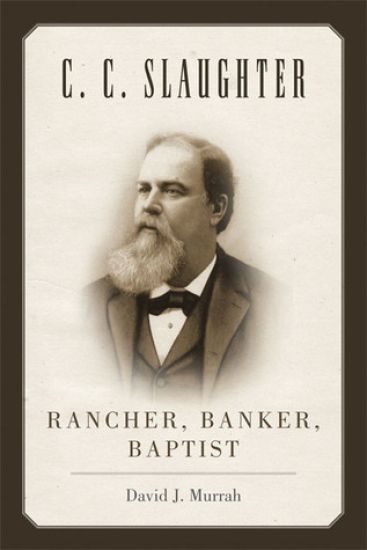
Born during the infant years of the Texas Republic, C. C. Slaughter (1837-1919) participated in the development of the southwestern cattle industry from its pioneer stages to the modern era. Trail driver, Texas Ranger, banker, philanthropist, and cattleman, he was one of America's most famous ranchers. David J. Murrah's biography of Slaughter, now available in paperback, still stands as the definitive account of this well-known figure in Southwest history.A pioneer in West Texas ranching, Slaughter increased his holdings from 1877 to 1905 to include more than half a million acres of land and 40,000 head of cattle. At one time ""Slaughter country"" stretched from a few miles north of Big Spring, Texas, northwestward two hundred miles to the New Mexico border west of Lubbock. His father, brothers, and sons rode the crest of his popularity, and the Slaughter name became a household word in the Southwest. In 1873 - almost ten years before the ""beef bonanza"" on the open range made many Texas cattlemen rich - C. C. Slaughter was heralded by a Dallas newspaper as the ""Cattle King of Texas."" Among the first of the West Texas cattlemen to make extensive use of barbed wire and windmills, Slaughter introduced new and improved cattle breeds to West Texas.In his later years, greatly influenced by Baptist minister George W. Truett of Dallas, Slaughter became a major contributor to the work of the Baptist church in Texas. He substantially supported Baylor University and was a cofounder of the Baptist Education Commission and Dallas's Baylor Hospital.Slaughter also cofounded the Texas Cattle Raisers' Association (1877) and the American National Bank of Dallas (1884), which through subsequent mergers became the First National Bank. His banking career made him one of Dallas's leading citizens, and at times he owned vast holdings of downtown Dallas property.
Sovereignty"" is perhaps the most ubiquitous term in American Indian writing today - but its meaning and function are anything but universally understood. This is as it should be, David J. Carlson suggests, for a concept frequently at the center of various - and often competing - claims to authority. In Imagining Sovereignty, Carlson explores sovereignty as a discursive middle ground between tribal communities and the United States as a settler-colonial power. His work reveals the complementary ways in which legal and literary texts have generated politically significant representations of the world, which in turn have produced particular effects on readers and advanced the cause of tribal self-determination. Drawing on western legal historical sources and American Indian texts, Carlson traces a dual genealogy of sovereignty. Imagining Sovereignty identifies the concept as a marker, one that allows both the colonizing power of the United States and the resisting powers of various American Indian nations to organize themselves and their various claims to authority. In the process, sovereignty also functions as a point of exchange where these claims compete with and complicate one another. To this end, Carlson analyzes how several contemporary American Indian writers and critics have sought to fuse literary practices and legal structures into fully formed discourses of self-determination. After charting the development of the concept of sovereignty in natural law and its permutations in federal Indian policy, Carlson maps out the nature and function of sovereignty discourses in the work of contemporary Native scholars such as Russel Barsh, Gerald Taiaiake Alfred, D'Arcy McNickle, and Vine Deloria, and in the work of more expressly literary American Indian writers such as Craig Womack, Elizabeth Cook-Lynn, Gerald Vizenor, and Francisco Patencio. Often read in opposition, the writings of these indigenous authors emerge in Imagining Sovereignty as a coherent literary and political tradition - one whose varied discourse of sovereignty aptly reflects American Indian people's diverse political contexts.
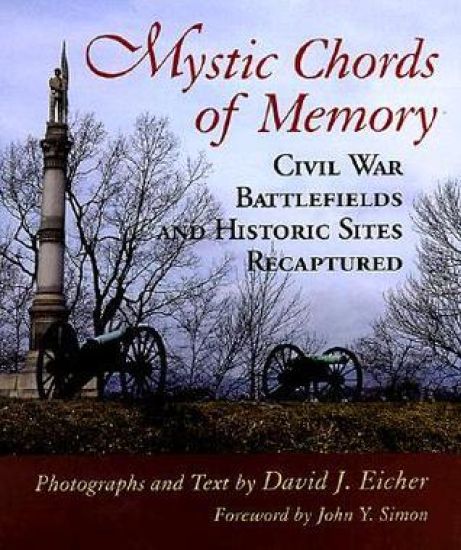
When I set foot on ground where Lincoln, Lee, Grant, or others walked, where the great battles raged, an almost magical feeling infuses me. Capturing these places on film, hopefully, in some small way, allows us to preserve that magical feeling of the special places and people of the war in our everyday lives."" These are the impassioned words of longtime Civil War aficionado David J. Eicher.Through his stunning photographs in Mystic Chords of Memory, Eicher presents many of the historical sites that evoke that ""magical feeling"" for him and thousands of other Civil War scholars and buffs. In this captivating -pictorial work, Eicher not only visits the most famous Civil War battlefields- Gettysburg, Vicksburg, Chickamauga, and Antietam among them- but also introduces readers to an array of lesser-known battle sites as well as monuments, forts, houses and farms, cemeteries, and museums. The breathtaking color photographs, chosen from Eicher's vast personal collection, are supplemented by powerful, historical black-and-white photographs that propel readers back to the Civil War era. The resulting richly illustrated work captures the most important, unusual, and interesting places associated with the war as they stand today.Eicher's probing analysis of the arduous four-year struggle provides background on its origins, interpretations of its major battles, and a summary of the war's aftermath. Peppered with more than 150 quotations from the journals, letters, and diaries of Civil War participants, the narrative allows readers to absorb the human aspects of the greatest of America's national tragedies.Eicher details the firing on Fort Sumter, the shock of First Bull Run, the carnage of Shiloh, the transformation of the war at Antietam, the turning points at Gettysburg and Vicksburg, the decisive, grueling campaigns of 1864, and the surrender at Appomattox. Contributing to the book's charm are dozens of images of forgotten places touched by the war, such as an abandoned graveyard in a Mississippi wood, the sandy strip of beach where some of the war's first black soldiers won fame, trenches along a Virginia county highway, and a brick church in Virginia pocked by artillery fire. Whether viewed as fields of death or fields of glory- and they were both- Civil War sites retain a commanding hold on the American imagination. In words as well as photographs, Eicher captures the poignant memory of our nation in conflict.
The year is 1900, and Western empires are locked in entanglements across the globe. The British are losing a bitter war against the Boers while the German Kaiser is busy building a vast new navy. The United States is struggling to put down an insurgency in the South Pacific while the upstart imperialist Japan begins to make clear to neighbouring Russia its territorial ambition. In China, a perennial pawn in the Great Game, a mysterious group of superstitious peasants is launching attacks on the Western powers they fear are corrupting their country. These ordinary Chinese - called Boxers by the West because of their martial arts showmanship - rise up seemingly out of nowhere. Foreshadowing the insurgencies of our recent past, they lack a centralized leadership and instead tap into latent nationalism and deep economic frustration to build their army. Many scholars brush off the Boxer Rebellion as an ill-conceived and easily defeated revolt, but in The Boxer Rebellion and the Great Game in China, the military historian David J. Silbey shows just how close the Boxers came to beating back the combined might of the imperial powers. Drawing on the diaries and letters of allied soldiers and diplomats, he paints a vivid portrait of the war. Although their cause ended just as quickly as it began, the Boxers would inspire Chinese nationalists-including a young Mao Zedong-for decades to come.
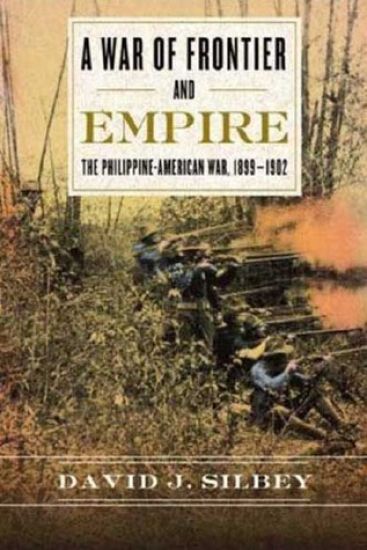
It has been termed an insurgency, a revolution, a guerrilla war, and a conventional war. As David J. Silbey demonstrates in this taut, compelling history, the 1899 Philippine-American War was in fact all of these. Played out over three distinct conflicts--one fought between the Spanish and the allied United States and Filipino forces; one fought between the United States and the Philippine Army of Liberation; and one fought between occupying American troops and an insurgent alliance of often divided Filipinos--the war marked America's first steps as a global power and produced a wealth of lessons learned and forgotten. First-rate military history, "A War of Frontier and Empire "retells an often forgotten chapter in America's past, infusing it with commanding contemporary relevance.
Written from a caring, pastoral perspective, Professor David J. Valleskey's The Splendid Task of the Ministry offers insightful, practical applications to the pastoral ministry of today from the New Testament books of 1 and 2 Timothy and Titus. Pastor Valleskey uses his extensive knowledge as a scholar of the pastoral ministry and biblical interpretation to give seminary students, theologians, and pastors a unique resource as they conduct personal study, write sermons, or prepare Bible studies related to 1 and 2 Timothy and Titus. The commentary features verse-by-verse translations from the Greek text and extensive "Thoughts for Ministry" applications throughout. It is one of the relatively few current commentaries on 1 and 2 Timothy and Titus written from a conservative Lutheran perspective. In this book, readers can expect to study the message of Paul's epistles to Timothy and Titus on the basis of the Greek text, and along the way, dwell on applicable thoughts for gospel ministry today.
In many respects, Zambia is an African success story. From a territory whose borders were drawn with minimal attention either to the ethnic geography of the day or to natural features that combined (and sometimes divided) dozens of distinct ethnic groups, rose a nation with a long record of peace that has enjoyed decades of constitutional rule, and even, in recent years, an increasingly competitive democracy. Perhaps most improbably, the country has forged a national identity. Unfortunately, peace, constitutionalism, democracy, and nationhood constantly face challenges, such as in the elections of 2006 when the ugly language of ethnic confrontation found renewed currency. Moreover, Zambia's economic record and prospects have been on the decline. After over four decades, per capita incomes are lower than they were at the dawn of independence, and 95 percent of its people live on less that $2 per day. Despite repeated efforts to diversify the economy, copper exports and foreign assistance are the main sources of the vast majority of Zambia's foreign exchange earnings. And most devastating at all, the AIDS pandemic has already lowered the average life expectancy below 40. For a country one might regard as "heading in the right direction," Zambia has a long way to go. The third edition of Historical Dictionary of Zambia, through its chronology, introductory essay, appendixes, map, bibliography, and hundreds of cross-referenced dictionary entries on important persons, places, events, and institutions and significant political, economic, social, and cultural aspects, provides an important reference on this African country.
A sometimes harrowing, often humorous, and occasionally tragic look at the Marine Corps from the inside out in its struggle with the insurgency in Iraq. Drawing from personal experience in the confusing, deadly conflict currently being fought in the streets and back alleys of Iraqi towns and villages, Danelo focuses on the young Marine leaders--corporals and sergeants--whose job it is to take even younger Marines into battle, close with and destroy an elusive enemy, and bring their boys back home again. Sadly, there are losses, but true to the Marine Corps spirit, they soldier on, earning their blood stripes the only way they know how--the hard way.
More than 250 million people cross the U.S.- Mexican border legally each year, and as many as 10 million do so illegally, making the border--la frontera to Mexicans--the most traversed national boundary on the planet. In an age of terrorism and economic uncertainty, that border is already one of the most hotly debated issues in American politics and is certain to play a prominent role in the 2008 campaign for president. In 2007, David Danelo spent three months traveling the 1,952 miles that separate the United States and Mexico, beginning at Boca Chica, Texas, and traveling to the westernmost limit at Border Field State Park in California--a journey that took him across four states and two countries through a world of rivers and canals, mountains and deserts, highways and dirt roads, fences and border towns. Here the border isn_t just an abstraction thrown around in political debates in Washington; it_s a physical reality, infinitely more complex than most politicians believe. Danelo_s reporting digs beneath the debate and attempts to explain the border and related issues--from legal and illegal immigration to NAFTA and border fences--as they are experienced by the people who live and work there: businessmen, smugglers, Minutemen, migrants, humanitarians, border patrol agents, government officials, and everyday people in the U.S. and Mexico. The divide is great, as Danelo makes clear, but so is the opportunity. Refreshing in the new perspectives it offers and captivating in its depiction of this vibrant, if troubled, region, The Border is an essential starting point for understanding this vital topic.
David Danelo spent three months traveling the 1,952 miles that separate the United States and Mexico--a journey that took him across four states and two countries through a world of rivers and canals, mountains and deserts, highways and dirt roads, fences and border towns. Here the border isn't just an abstraction thrown around in political debates in Washington; it's a physical reality, infinitely more complex than most politicians believe. Danelo’s investigative report about a complex, longstanding debate that became a central issue of the 2016 presidential race examines the border in human terms through a cast of colorful characters. As topical today as it was when Danelo made his trek, this revised and updated edition asks and answers the core questions: Should we close the border? Is a fence or wall the answer? Is the U.S. government capable of fully securing the border?
David Hufford's work exploring the experiential basis for belief in the supernatural, focusing here on the so-called Old Hag experience, a psychologically disturbing event in which a victim claims to have encountered some form of malign entity while dreaming (or awake). Sufferers report feeling suffocated, held down by some "force," paralyzed, and extremely afraid. The experience is surprisingly common: the author estimates that approximately 15 percent of people undergo this event at some point in their lives. Various cultures have their own name for the phenomenon and have constructed their own mythology around it; the supernatural tenor of many Old Hag stories is unavoidable. Hufford, as a folklorist, is well-placed to investigate this puzzling occurrence.
"This book will be extremely useful for gardeners, nurserymen, extension agents, students, and others interested in woody landscape plants of the Deep South. . . . The text contains much information based on first-hand observations of the authors in a personal style that is most attractive. The Table of Horticultural Characteristics and Landscape Planning Aids is a welcome addition."--Dr. Frederick G. Meyer, National Arboretum, Washington, D.C.Woody Ornamentals will take its place alongside the spade and trowel as an indispensable gardening tool for plant lovers in the Deep South. No other book offers such complete information about trees, shrubs, woody vines, and ground covers for USDA Zone 8, an area beginning at the Texas-Mexico border and cutting a wide swath across the Deep South. When David Rogers retired after a life's work in botany and returned to his native Deep South, he discovered that many new cultivated plants and rare species from all over the world had been introduced into the gardens and landscapes. This comprehensive work also identifies the native flora that contribute handsome, hardy plants to residential landscaping, the many subtropical trees and shrubs that do not grow in more northerly gardens, and the fruit-bearing trees such as mandarin orange, sand pear, and new varieties of apple. The plants are listed alphabetically in the book by their generic name. General information about the plants--their appearance, growth and habit, with details about geographic origin, environmental requirements, and special features--appears in easy-to-read prose. For those who designate plants by their common name, an index to the common names references the generic name, and an additional index references the family, genus, and species. Photographs of unusual species and 174 beautiful, detailed line drawings supplement the text. Extensive tables of horticultural characteristics and landscape planning aids provide an overview of each species in the categories of large, medium, and small trees, shrubs, woody vines, and woody ground covers.
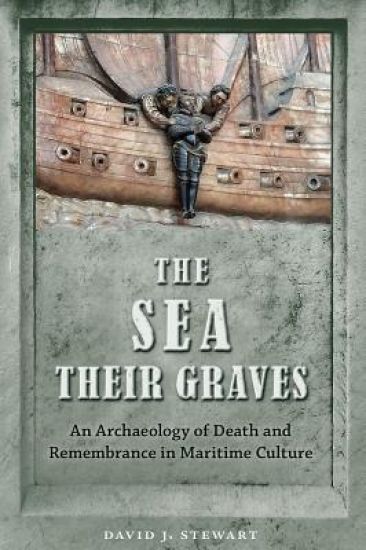
"A 'classic' of its type--the closest comparison is the legendary Weibust's Deep Sea Sailors, and I would hazard to suggest that this book may come to hold a similarly important place in the scholarship of maritime ethnography."--Joseph Flatman, author of Ships and Shipbuilding in Medieval Manuscripts"This innovative study provides an important analysis of Anglo-American mariners' attitudes toward death, the dead, and commemoration. It will be valuable to all interested in historic maritime culture and mortuary practices, and reveals a distinctive mariner subculture which also influenced their families back home."--Harold Mytum, author of Mortuary Monuments and Burial Grounds of the Prehistoric Period Like other groups with dangerous occupations, mariners have developed a close-knit culture bound by loss and memory. Death regularly disrupts the fabric of this culture and necessitates actions designed to mend its social structure. From the ritual of burying a body at sea to the creation of memorials to honor the missing, these events tell us a great deal about how sailors see their world.Based on a study of more than 2,100 gravestones and monuments in North America and the United Kingdom erected between the seventeenth and late twentieth centuries, David Stewart expands the use of nautical archaeology into terrestrial environments. He focuses on those who make their living at sea--one of the world's oldest and most dangerous occupations--to examine their distinct folkloric traditions, beliefs, and customs regarding death, loss, and remembrance. David J. Stewart, assistant professor of nautical archaeology at East Carolina University, is a contributor to Burial at Sea. A volume in the series New Perspectives on Maritime History and Nautical Archaeology, edited by James C. Bradford and Gene Allen Smith
Countering the conventional narrative that Florida’s tourism industry suffered during the Great Depression, this book shows that the 1930s were, in reality, the starting point for much that characterizes modern Florida’s tourism. David Nelson argues that state and federal government programs designed to reboot the economy during this decade are crucial to understanding the state today.Nelson examines the impact of three connected initiatives?the federal New Deal, its Civilian Conservation Corps program (CCC), and the CCC’s creation of the Florida Park Service. He reveals that the CCC designed state parks to reinforce the popular image of Florida as a tropical, exotic, and safe paradise. The CCC often removed native flora and fauna, introduced exotic species, and created artificial landscapes. Nelson discusses how Florida business leaders benefitted from federally-funded development and the ways residents and business owners rejected or supported the commercialization and shifting cultural identity of their state. A detailed look at a unique era in which the state government sponsored the tourism industry, helped commodify natural resources, and boosted mythical ideas of the “Real Florida” that endure today, this book makes the case that the creation of the Florida Park Service is the story of modern Florida.
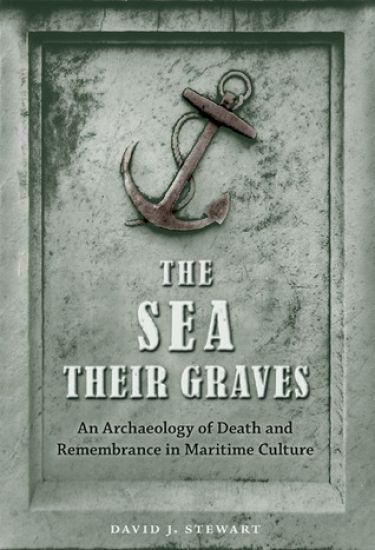
Like other groups with dangerous occupations, mariners have developed a close-knit culture bound by loss and memory. Death regularly disrupts the fabric of this culture and necessitates actions designed to mend its social structure. From the ritual of burying a body at sea to the creation of memorials to honor the missing, these events tell us a great deal about how sailors see their world. Based on a study of more than 2,100 gravestones and monuments in North America and the United Kingdom erected between the seventeenth and late twentieth centuries, David Stewart expands the use of nautical archaeology into terrestrial environments. He focuses on those who make their living at sea--one of the world's oldest and most dangerous occupations--to examine their distinct folkloric traditions, beliefs, and customs regarding death, loss, and remembrance. A volume in the series New Perspectives on Maritime History and Nautical Archaeology, edited by James C. Bradford and Gene Allen Smith.
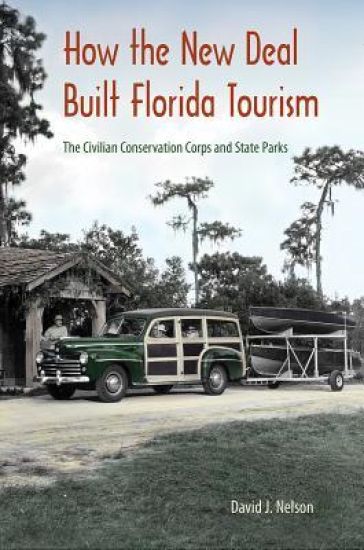
Countering the conventional narrative that Florida’s tourism industry suffered during the Great Depression, this book shows that the 1930s were, in reality, the starting point for much that characterizes modern Florida’s tourism. David Nelson argues that state and federal government programs designed to reboot the economy during this decade are crucial to understanding the state today.Nelson examines the impact of three connected initiatives—the federal New Deal, its Civilian Conservation Corps program (CCC), and the CCC’s creation of the Florida Park Service. He reveals that the CCC designed state parks to reinforce the popular image of Florida as a tropical, exotic, and safe paradise. The CCC often removed native flora and fauna, introduced exotic species, and created artificial landscapes that were then presented as natural. Nelson discusses how Florida business leaders benefitted from federally funded development and the ways residents and business owners rejected or supported the commercialization and shifting cultural identity of their state.A detailed look at a unique era in which the state government sponsored the tourism industry, helped commodify natural resources, and boosted mythical ideas of the “Real Florida” that endure today, this book makes the case that the creation of the Florida Park Service is the story of modern Florida.