The Camden volumes, published by the Royal Historical Society, offer collections of skilfully edited primary source material for historians. The Camden Miscellany collections contain a variety of shorter documents and papers. This volume comprises seventeenth-century documents on parliamentary and financial matters. These include the parliamentary papers of Nicholas Ferrar (1624), the letters of Sir Cheney Culpeper (1641–57) and the assessment lists for the Cromwellian decimation tax of 1655.
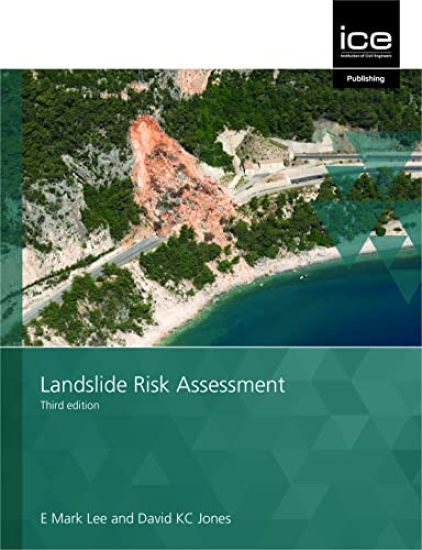
Landslide Risk Assessment, Third Edition is the essential guide on establishing the likelihood and extent to which future slope failures could adversely impact society and affect urban areas. This book examines a variety of approaches to landslide risk assessment and management. It introduces the key challenges that practitioners will need to overcome when estimating the probability and consequences of landsliding. The use of risk criteria is described, marking the important transition between risk assessment and risk management. Now updated with the latest ISO and Society for Risk Analysis guidance, and with a focus on the impact of uncertainty and strength of knowledge on assessing risk plus much more, this book is the authoritative, must-have purchase for any practitioner operating in this area. With international case studies and examples to allow you to put theory into practice, this book covers: risk concepts and modelsbasic elements of landslide risk assessmentlandslide hazardqualitative and quantitative risk assessmentsexposure and vulnerabilityconsequencesquantifying riskassessing uncertainty and strength of knowledge This title will appeal to any geotechnical or civil engineer involved in slope engineering and landslide risk. It will have additional appeal to risk analysts, geomorphologists, hydrologists, foresters, environmental consultants, students, academics and researchers.
Delve inside Windows architecture and internals - and see how core components work behind the scenes. Led by three renowned internals experts, this classic guide is fully updated for Windows 7 and Windows Server 2008 R2.
By integrating and translating the current methodological and statistical work into a practical guide, the authors of this text provide readers with a state-of-the-art introduction to the various approaches to doing meta-analysis.
By integrating and translating the current methodological and statistical work into a practical guide, the authors of this text provide readers with a state-of-the-art introduction to the various approaches to doing meta-analysis.
This is the first systematic study of modern China's military campaigns and the actual fighting conducted by the People's Liberation Army since the founding of the People's Republic. It provides a general overview of the evolution of PLA military doctrine, and then focuses on major combat episodes from the civil war with the Nationalists to the last significant combat in Vietnam in 1979, in addition to navy and air operations through 1999. In contrast to the many works on the specifics and hardware of China's military modernization, this book discusses such topics as military planning, command, and control; fighting and politics; combat tactics and performance; technological catch-up and doctrinal flexibility; the role of Mao Zedong; scale and typologies of fighting; and deterrence. The contributors include scholars from Mainland China, Taiwan, and the United States, who draw from a wealth of fresh archival sources.
This is the first systematic study of modern China's military campaigns and the actual fighting conducted by the People's Liberation Army since the founding of the People's Republic. It provides a general overview of the evolution of PLA military doctrine, and then focuses on major combat episodes from the civil war with the Nationalists to the last significant combat in Vietnam in 1979, in addition to navy and air operations through 1999. In contrast to the many works on the specifics and hardware of China's military modernization, this book discusses such topics as military planning, command, and control; fighting and politics; combat tactics and performance; technological catch-up and doctrinal flexibility; the role of Mao Zedong; scale and typologies of fighting; and deterrence. The contributors include scholars from Mainland China, Taiwan, and the United States, who draw from a wealth of fresh archival sources.
From their first pairing in Hamlet (1948) to House of the Long Shadows (1983), British film stars Christopher Lee and Peter Cushing forged perhaps the most successful collaboration in horror film history. In its revised and expanded second edition, this volume examines their 22 movie team-ups, with critical commentary, complete cast and credits, production information, details on cinematography and make-up, exhibition history and box-office figures. A wealth of background about Hammer, Amicus and other production companies is provided, along with more than 100 illustrations. Lee and Cushing describe particulars of their partnership in original interviews. Exclusive interviews with Robert Bloch, Hazel Court and nearly fifty other actors, directors and others who worked on the Lee-Cushing films are included.
This book describes and analyses the provincial government's role in municipal and regional planning. The conversion of farmland to urban and other uses is discussed, as are the issues raised by the reports of the Ontario Planning Act Review Committee and the Federal/Provincial Task Force on the Supply and Price of Serviced Residential Land and the province's Green Paper on Planning for Agriculture. The authors criticize the government's failure to conduct cost-benefit studies before setting up planning programs and show that there is little factual basis for recent alarm over the disappearance of farmland. Data gathered here for the first time show that the conversion of agricultural land to built-up urban use and non-farm rural residential use in Ontario has been taking place quite slowly in view of the rate of productivity increase in agriculture, the stock of agricultural land, and the decline in the acreage of census farms. Economists will find in this book a useful survey of recent trends and policies. Planners, policy-makers, and students will welcome this detailed case study of how economic analysis ought to be used in formulating land use policies.
Beginning in late 2010, peaceful protests against entrenched regimes unexpectedly erupted in a number of Arab countries, causing political upheaval across the region. Through contributions from noted scholars, The Arab Spring provides a comprehensive overview of the causes, key issues, and aftermath of these events. Divided into two parts, the book first examines the Arab countries most dramatically impacted by the uprisings, as well as why some of their Arab neighbors avoided large-scale protests. The second part explores other countries inside and outside the region-that have a stake and interest in the uprisings.The second edition includes a new chapter on Iraq and coverage of developments in the region since 2012 and how they have altered initial assessments of the Arab Spring's effects. New part introductions and a revised concluding chapter provide contextualization and comparative analyses of key themes and broader questions. This is an essential volume for students and scholars seeking the fullest understanding of how the Arab uprisings continue to impact the region and the world.
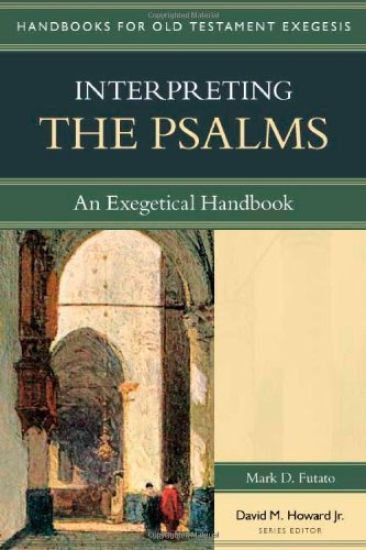
This second contribution to the Handbooks for Old Testament Exegesis series continues the admirable tradition set by Robert B. Chisholm Jr. in Interpreting the Historical Books. A valuable resource for pastors and students, Interpreting the Psalms begins by explaining the nature of Hebrew poetry and the purpose of the Psalms. An accomplished scholar of the Psalms, Mark Futato next explores issues related to properly interpreting Israel's songbook, and concludes with a sample of moving from interpretation to proclamation. A glossary is included.
An analysis of the effects of changing family characteristics and demographics on aptitude scores. The conclusions undercut the conventional wisdom about failing schools, deteriorating families, and ineffective public policies.
The evidence is undeniable. By any measure, the US spends more on healthcare than any other country in the world, yet its health outcomes as measure by longevity are in the bottom half among developed countries, and its health-related quality of life has remained constant or declined since 1998. In addition to high costs and lower than expected outcomes, the healthcare delivery system is plagues by treatment delays as it can take weeks to see a specialist, and many people have limited or no access to care. Part of the challenge is that the healthcare delivery system is a large, complex, and sophisticated value creation chain. Successfully changing this highly interconnected system is difficult and time consuming because the underlying problems are hard to comprehend, the root causes are many, the solution is unclear, and the relationships among problems, causes, and solution are multifaceted. To address these issues, the book carefully explains the underlying problems, examines their root causes using information, data, and logic, and presents a comprehensive and integrated solution that addresses these causes. These three steps are the methodological backbone of this book. A solution depends on understanding and applying the principles of patient-centered care (PCC) and resource management. PCC puts patients, supported by their primary care physicians, back in the role as decision makers and depends on patients being responsible for their health including making good life-style choices. After all, the best way to reduce healthcare costs and increase quality of life is to improve our health and wellness and as a result need less care. In addition, health insurance must be rethought and redesigned so it is less likely to lead to overuse. For many people with health insurance, the out-of-pocket cost of healthcare are small, so healthcare decision making is often biased toward consumption. Effective resource management means that healthcare providers must do a better job of acquiring and using resources in order to provide care quickly, productively, and correctly. This means improving healthcare strategy and management, accelerating the use of information technology, making drug costs affordable and fair, reducing the incidence of malpractice, and rebuilding the provider network.In addition, implementation is difficult because there are many participants in the healthcare delivery value chain, such as physicians, nurses, and medical technicians, as well as many provider organizations, such as hospitals, clinics, physician offices, and labs. Further up the value chain there are pharmaceutical companies, equipment providers, and other suppliers. These participants have diverse and sometimes conflicting goals, but each must be willing to accept change and work in a coordinated manner to improve healthcare. To overcome these problems, strong national leadership is needed to get the attention and support from the people and organizations involved in healthcare and to make the comprehensive changes that will lower healthcare costs, improve healthcare quality, eliminate delays, increase access, and enhance patient satisfaction.
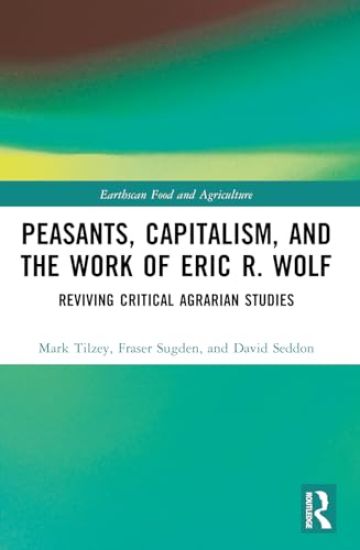
Fifty years after the publication of Eric Wolf’s celebrated Peasant Wars of the Twentieth Century, and forty years after the publication of his path-breaking Europe and the People Without History, this book offers a much-needed critical assessment and update of Wolf’s contribution to the study of the peasantry and its relationship to capitalism, the state, and imperialism.This book provides a comprehensive evaluation of Wolf’s premises, methodology, and understanding of the peasantry, and its relationship to the rise of capitalism and the modern state. The authors analyse Wolf’s theoretical approach and, by building on his work in Europe and the People Without History especially, argue their own position concerning the dynamics of the peasantry in relation to capitalism, state, class, and imperialism. Further, the text aims to answer the agrarian question more widely, focusing on agrarian society and the political role of the peasantry in contested transitions to capitalism and to modes beyond capitalism. This requires, the authors argue, an analysis of class struggle and of the resources, material and discursive, that different classes can bring to bear on this struggle. Based on well-founded theoretical premises, the book focuses on the contested rise of capitalism in the global North, the development of core–periphery relations in the global political economy, and the place of the peasantry in these dynamics. The book presents case studies of transitions to agrarian capitalism in the British Isles, France, Germany, Japan, and the USA.The book will be of great interest to students and researchers in the areas of peasant studies, rural politics, agrarian studies, development, and political ecology.
Are you a stress eater? Are you tired of dieting? If so, this book is a concise, practical guide to permanent weight loss. You will learn how to change your unhealthy eating behaviors by harnessing the power of your brain. The author, a Doctor of Chiropractic, suffered a severe stroke and subsequent depression. He was able to "rewire" his brain to make a full physical, emotional, and mental recovery. Dr. Dave and colleague Dr. Mark share powerful strategies to help you to retrain your brain to end yo-yo dieting forever. A simple 10-week plan guides you step-by-step to change your eating behaviors. No special foods, shakes, or potions to buy. Follow this program and you will discover that mindful eating and feeling healthy becomes more important to you than mindless (in the moment) eating. Learning these new techniques and habits is easier than you think; give this book an hour and it will change your life!
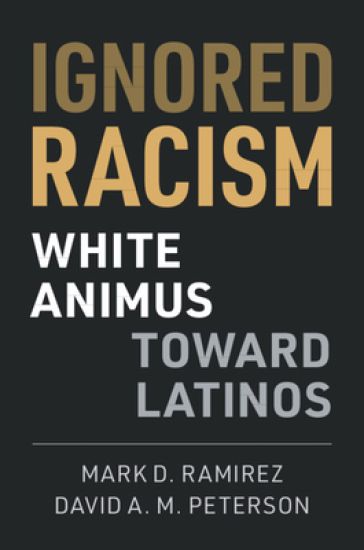
Although Latinos are now the largest non-majority group in the United States, existing research on white attitudes toward Latinos has focused almost exclusively on attitudes toward immigration. This book changes that. It argues that such accounts fundamentally underestimate the political power of whites' animus toward Latinos and thus miss how conflict extends well beyond immigration to issues such as voting rights, criminal punishment, policing, and which candidates to support. Providing historical and cultural context and drawing on rich survey and experimental evidence, the authors show that Latino racism-ethnicism is a coherent belief system about Latinos that is conceptually and empirically distinct from other forms of out-group hostility, and from partisanship and ideology. Moreover, animus toward Latinos has become a powerful force in contemporary American politics, shaping white public opinion in elections and across a number of important issue areas - and resulting in policies that harm Latinos disproportionately.
Although Latinos are now the largest non-majority group in the United States, existing research on white attitudes toward Latinos has focused almost exclusively on attitudes toward immigration. This book changes that. It argues that such accounts fundamentally underestimate the political power of whites' animus toward Latinos and thus miss how conflict extends well beyond immigration to issues such as voting rights, criminal punishment, policing, and which candidates to support. Providing historical and cultural context and drawing on rich survey and experimental evidence, the authors show that Latino racism-ethnicism is a coherent belief system about Latinos that is conceptually and empirically distinct from other forms of out-group hostility, and from partisanship and ideology. Moreover, animus toward Latinos has become a powerful force in contemporary American politics, shaping white public opinion in elections and across a number of important issue areas - and resulting in policies that harm Latinos disproportionately.
New and updated assignments and exercises meet the changing needs of mental health professionals The Child Psychotherapy Homework Planner, Fifth Edition provides you with an array of ready-to-use, between-session assignments designed to fit virtually every therapeutic mode. This easy-to-use sourcebook features: 93 ready-to-copy exercises covering the most common issues encountered by children, such as academic underachievement, low self-esteem, depression, and separation anxietyA quick-reference format—the interactive assignments are grouped by behavioral problems including blended family problems, divorce reaction, ADHD, attachment disorder, social anxiety, language disorders, and unresolved grief and lossExpert guidance on how and when to make the most efficient use of the exercisesAssignments cross-referenced to The Child Psychotherapy Treatment Planner, Fifth Edition—so you can quickly identify the right exercises for a given situation or problemDownloadable content contains all the exercises in a word-processing format—allowing you to customize them to suit your and your clients' unique styles and needs
A thought-provoking and startlingly insightful reworking of the science of prediction In Prediction Revisited: The Importance of Observation, a team of renowned experts in the field of data-driven investing delivers a ground-breaking reassessment of the delicate science of prediction for anyone who relies on data to contemplate the future. The book reveals why standard approaches to prediction based on classical statistics fail to address the complexities of social dynamics, and it provides an alternative method based on the intuitive notion of relevance. The authors describe, both conceptually and with mathematical precision, how relevance plays a central role in forming predictions from observed experience. Moreover, they propose a new and more nuanced measure of a prediction’s reliability. Prediction Revisited also offers: Clarifications of commonly accepted but less commonly understood notions of statisticsInsight into the efficacy of traditional prediction models in a variety of fieldsColorful biographical sketches of some of the key prediction scientists throughout historyMutually supporting conceptual and mathematical descriptions of the key insights and methods discussed within With its strikingly fresh perspective grounded in scientific rigor, Prediction Revisited is sure to earn its place as an indispensable resource for data scientists, researchers, investors, and anyone else who aspires to predict the future from the data-driven lessons of the past.