Kirjojen hintavertailu. Mukana 12 406 786 kirjaa ja 12 kauppaa.

Kirjahaku

Etsi kirjoja tekijän nimen, kirjan nimen tai ISBN:n perusteella.

1000 tulosta hakusanalla David a McIntee

Breve historia de la lengua española

Breve historia de la lengua española

David A. Pharies

University of Chicago Press
2015
nidottu
Since its publication in 2007, A Brief History of the Spanish Language has become the leading introduction to the history of one of the world's most widely spoken languages. Moving from the language's Latin roots to its present-day forms, this concise book offers readers insights into the origin and evolution of Spanish, the historical and cultural changes that shaped it, and its spread around the world. A Brief History of the Spanish Language focuses on the most important aspects of the development of the Spanish language, eschewing technical jargon in favor of straightforward explanations. Along the way, it answers many of the common questions that puzzle native speakers and non-native speakers alike, such as: Why do some regions use tu while others use vos? How did the th sound develop in Castilian? And why is it la mesa but el agua? David A. Pharies, a world-renowned expert on the history and development of Spanish, has updated this edition with new research on all aspects of the evolution of Spanish and current demographic information. This book is perfect for anyone with a basic understanding of Spanish and a desire to further explore its roots. It also provides an ideal foundation for further study in any area of historical Spanish linguistics and early Spanish literature. A Brief History of the Spanish Language is a grand journey of discovery, revealing in a beautifully compact format the fascinating story of the language in both Spain and Spanish America.

Dream Trippers

Dream Trippers

David A. Palmer; Elijah Siegler

University of Chicago Press
2017
nidottu
Over the past few decades, Daoism has become a recognizable part of Western "alternative" spiritual life. Now, that Westernized version of Daoism is going full circle, traveling back from America and Europe to influence Daoism in China. Dream Trippers draws on more than a decade of ethnographic work with Daoist monks and Western seekers to trace the spread of Westernized Daoism in contemporary China. David A. Palmer and Elijah Siegler take us into the daily life of the monastic community atop the mountain of Huashan and explore its relationship to the socialist state. They follow the international circuit of Daoist "energy tourism," which connects a number of sites throughout China, and examine the controversies around Western scholars who become practitioners and promoters of Daoism. Throughout are lively portrayals of encounters among the book's various characters Chinese hermits and monks, Western seekers, and scholar-practitioners as they interact with each other in obtuse, often humorous, and yet sometimes enlightening and transformative ways. Dream Trippers untangles the anxieties, confusions, and ambiguities that arise as Chinese and American practitioners balance cosmological attunement and radical spiritual individualism in their search for authenticity in a globalized world.
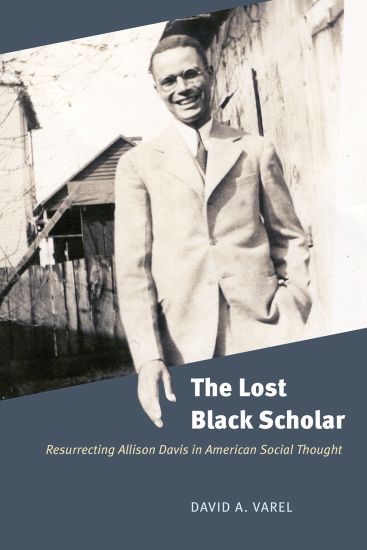
The Lost Black Scholar

The Lost Black Scholar

David A. Varel

University of Chicago Press
2018
sidottu
Allison Davis (1902–83), a preeminent black scholar and social science pioneer, is perhaps best known for his groundbreaking investigations into inequality, Jim Crow America, and the cultural biases of intelligence testing. Davis, one of America’s first black anthropologists and the first tenured African American professor at a predominantly white university, produced work that had tangible and lasting effects on public policy, including contributions to Brown v. Board of Education, the federal Head Start program, and school testing practices. Yet Davis remains largely absent from the historical record. For someone who generated such an extensive body of work this marginalization is particularly surprising. But it is also revelatory. In The Lost Black Scholar, David A. Varel tells Davis’s compelling story, showing how a combination of institutional racism, disciplinary eclecticism, and iconoclastic thinking effectively sidelined him as an intellectual. A close look at Davis’s career sheds light not only on the racial politics of the academy but also the costs of being an innovator outside of the mainstream. Equally important, Varel argues that Davis exemplifies how black scholars led the way in advancing American social thought. Even though he was rarely acknowledged for it, Davis refuted scientific racism and laid bare the environmental roots of human difference more deftly than most of his white peers, by pushing social science in bold new directions. Varel shows how Davis effectively helped to lay the groundwork for the civil rights movement.
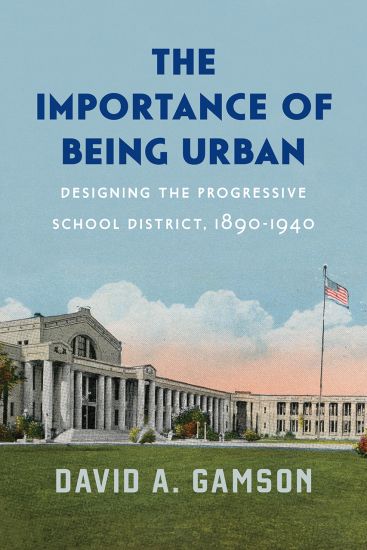
The Importance of Being Urban

The Importance of Being Urban

David A. Gamson

University of Chicago Press
2019
sidottu
From the 1890s through World War II, the greatest hopes of American progressive reformers lay not in the government, the markets, or other seats of power but in urban school districts and classrooms. The Importance of Being Urban focuses on four western school systems—in Denver, Oakland, Portland, and Seattle—and their efforts to reconfigure public education in the face of rapid industrialization and the perceived perils [GDA1] of the modern city. In an era of accelerated immigration, shifting economic foundations, and widespread municipal shake-ups, reformers argued that the urban school district could provide the broad blend of social, cultural, and educational services needed to prepare students for twentieth-century life. These school districts were a crucial force not only in orchestrating educational change, but in delivering on the promise of democracy. David A. Gamson’s book provides eye-opening views of the histories of American education, urban politics, and the Progressive Era.
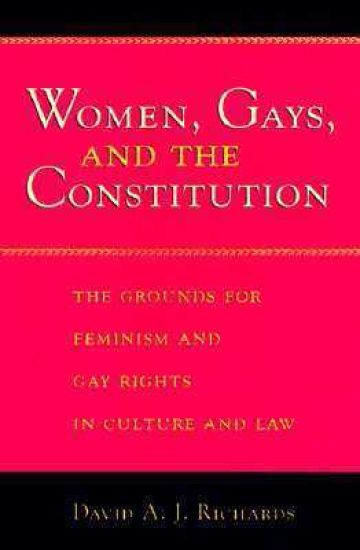
Women, Gays, and the Constitution

Women, Gays, and the Constitution

David A. J. Richards

University of Chicago Press
1998
nidottu
This study combines an interpretive history of culture and law, political philosophy and constitutional analysis to explain the background, development and growing impact of two challenging human rights movements: feminism and gay rights. The text argues that both movements are extensions of rights-based dissent, rooted in antebellum abolitionist feminism which condemns both American racism and sexism. It examines the role of dissident African Americans, Jews, women and homosexuals in forging alternative visions of rights-based democracy. The book draws attention to Walt Whitman's visionary poetry, exploring Whitman's impact on pro-gay advocates such as Havelock Ellis, Oscar Wilde and Andre Gide. It also discusses writers and reformers such as Margaret Sanger, Franz Boas, Elizabeth Stanton and Adrienne Rich. The study addresses recent controversies such as the exclusion of homosexuals from the military and from the right of marriage, and concludes with a defence of the struggle for such constitutional rights.
Identity and the Case for Gay Rights

Identity and the Case for Gay Rights

David A. J. Richards

University of Chicago Press
2000
nidottu
How should one chart a course toward legal recognition of gay rights as basic human rights? In this study, legal scholar David Richards explores the connections between gay rights and three successful civil rights movements - black civil rights, feminism and religious toleration - to determine how these might serve as analogies for the gay rights movement. Richards argues that racial and gender struggles are informative but partial models. As in these movements, achieving gay rights requires eliminating unjust stereotypes and allowing one's identity to develop free from intolerant views. Richards stresses, however, that gay identity is an ethical choice based on gender equality. Thus the right to religious freedom offers the most compelling analogy for a gay rights movement because gay identity should be protected legally as an ethical decision of conscience. David Richards argues that discrimination is like religious intolerance - denial of full humanity to individuals because of their identity and moral commitments to gender equality.
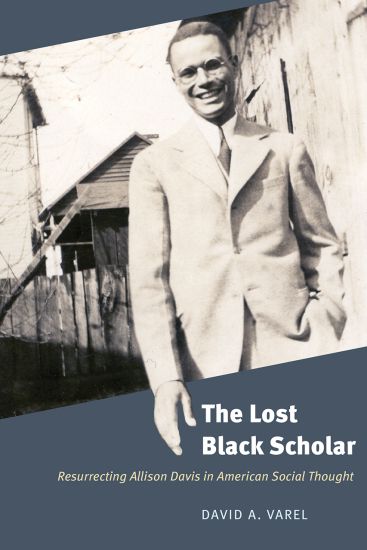
The Lost Black Scholar

The Lost Black Scholar

David A. Varel

University of Chicago Press
2020
nidottu
Allison Davis (1902–83), a preeminent black scholar and social science pioneer, is perhaps best known for his groundbreaking investigations into inequality, Jim Crow America, and the cultural biases of intelligence testing. Davis, one of America’s first black anthropologists and the first tenured African American professor at a predominantly white university, produced work that had tangible and lasting effects on public policy, including contributions to Brown v. Board of Education, the federal Head Start program, and school testing practices. Yet Davis remains largely absent from the historical record. For someone who generated such an extensive body of work this marginalization is particularly surprising. But it is also revelatory. In The Lost Black Scholar, David A. Varel tells Davis’s compelling story, showing how a combination of institutional racism, disciplinary eclecticism, and iconoclastic thinking effectively sidelined him as an intellectual. A close look at Davis’s career sheds light not only on the racial politics of the academy but also the costs of being an innovator outside of the mainstream. Equally important, Varel argues that Davis exemplifies how black scholars led the way in advancing American social thought. Even though he was rarely acknowledged for it, Davis refuted scientific racism and laid bare the environmental roots of human difference more deftly than most of his white peers, by pushing social science in bold new directions. Varel shows how Davis effectively helped to lay the groundwork for the civil rights movement.
Navigators of the Contemporary

Navigators of the Contemporary

David A. Westbrook

University of Chicago Press
2008
sidottu
As the image of anthropologists exploring exotic locales and filling in blanks on the map has faded, the idea that cultural anthropology has much to say about the contemporary world has likewise diminished. In an increasingly borderless world, how can anthropology help us to tackle the concerns of a global society? David A. Westbrook argues that the traditional tool of the cultural anthropologist - ethnography - can still function as an intellectually exciting way to understand our interconnected, yet mysterious worlds."Navigators of the Contemporary" describes the changing nature of ethnography as anthropologists use it to analyze places closer to home. Westbrook maintains that a conversational style of ethnography can help us look beyond our assumptions and gain new insight into arenas of contemporary life such as corporations, financial institutions, science, the military, and religion. Westbrook's witty, absorbing book is a friendly challenge to anthropologists to shed light on the present and join broader streams of intellectual life. And for those outside the discipline, his inspiring vision of ethnography opens up the prospect of understanding our own world in much greater depth.
Navigators of the Contemporary

Navigators of the Contemporary

David A. Westbrook

University of Chicago Press
2008
nidottu
As the image of anthropologists exploring exotic locales and filling in blanks on the map has faded, the idea that cultural anthropology has much to say about the contemporary world has likewise diminished. In an increasingly borderless world, how can anthropology help us to tackle the concerns of a global society? David A. Westbrook argues that the traditional tool of the cultural anthropologist - ethnography - can still function as an intellectually exciting way to understand our interconnected, yet mysterious worlds."Navigators of the Contemporary" describes the changing nature of ethnography as anthropologists use it to analyze places closer to home. Westbrook maintains that a conversational style of ethnography can help us look beyond our assumptions and gain new insight into arenas of contemporary life such as corporations, financial institutions, science, the military, and religion. Westbrook's witty, absorbing book is a friendly challenge to anthropologists to shed light on the present and join broader streams of intellectual life. And for those outside the discipline, his inspiring vision of ethnography opens up the prospect of understanding our own world in much greater depth.
Pensions, Labor, and Individual Choice

Pensions, Labor, and Individual Choice

David A. Wise

University of Chicago Press
1985
sidottu
In recent years a decline in the labor force participation of older workers has combined with rapid current and projected increases in the number of older Americans, producing major policy debates over looming "crises" in social security and, to a lesser extent, in the private pension system. That private system is playing an increasing role in the support of retired workers and promises to be the subject of increasing scrutiny by economists and policymakers alike. Previous books on private pensions have largely neglected behavioral implications of the features of pension plans. The papers in this volume, developed from material presented at a recent National Bureau of Economic Research conference, address two aspects of the relation between varieties of labor coverage and participation in the labor force. First, age at retirement may be correlated with kind of pension coverage. The papers, in fact, provide strong evidence that individual decisions about when to retire are directly influenced by pension options. Second, pension plans usually impose a high cost on workers who change jobs, which suggests that pension coverage reduces instances of job change. Pensions, Labor, and Individual Choice quantifies these correlations and proposes a conceptual framework within which to view them.
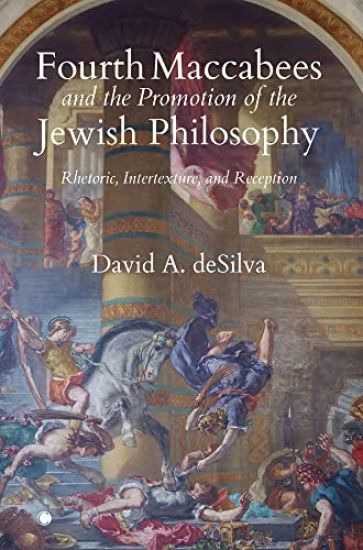
Fourth Maccabees and the Promotion of the Jewish Philosophy
Fourth Maccabees is a superbly craft­ed oration that presents a case for the Jewish way of life couched almost entirely in terms of Greek ethical ideals. Using an expansion upon previous scriptural narratives as an opportunity for philosophical exposition, its author delights in the Torah, the Law of Moses, as the divinely given path to becoming our best selves now. Moreover, drawing upon Greek logic tradition, he develops an elaborate rationalisation of that law based upon the promise of eternal life with God. In this collection of essays spanning two decades of study, David deSilva examines the formative training that produced such an author, the rhetorical craft present in his work, and the author's creative use of both Jewish and Greek literary resources. Finally, he demonstrates the book's enduring message and legacy in the Christian church, from theological influence on Origen to textual relations within Codex Sinaiticus.
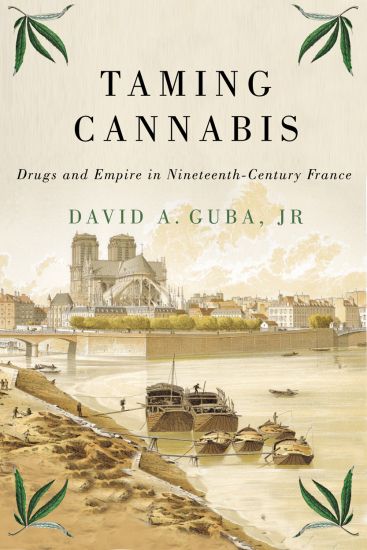
Taming Cannabis

Taming Cannabis

David A. Guba

McGill-Queen's University Press
2020
sidottu
Despite having the highest rates of cannabis use in the continent, France enforces the most repressive laws against the drug in all of Europe. Perhaps surprisingly, France was once the epicentre of a global movement to medicalize cannabis, specifically hashish, in the treatment of disease. In Taming Cannabis David Guba examines how nineteenth-century French authorities routinely blamed hashish consumption, especially among Muslim North Africans, for behaviour deemed violent and threatening to the social order. This association of hashish with violence became the primary impetus for French pharmacists and physicians to tame the drug and deploy it in the homeopathic treatment of mental illness and epidemic disease during the 1830s and 1840s. Initially heralded as a wonder drug capable of curing insanity, cholera, and the plague, hashish was deemed ineffective against these diseases and fell out of repute by the middle 1850s. The association between hashish and Muslim violence, however, remained and became codified in French colonial medicine and law by the 1860s: authorities framed hashish as a significant cause of mental illness, violence, and anti-state resistance among indigenous Algerians. As the French government looks to reform the nation's drug laws to address the rise in drug-related incarceration and the growing popular demand for cannabis legalization, Taming Cannabis provides a timely and fascinating exploration of the largely untold and living history of cannabis in colonial France.
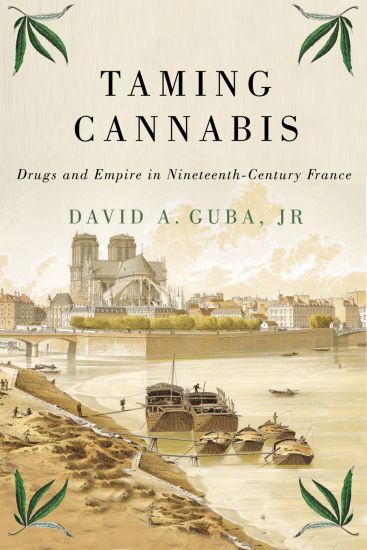
Taming Cannabis

Taming Cannabis

David A. Guba

McGill-Queen's University Press
2020
nidottu
Despite having the highest rates of cannabis use in the continent, France enforces the most repressive laws against the drug in all of Europe. Perhaps surprisingly, France was once the epicentre of a global movement to medicalize cannabis, specifically hashish, in the treatment of disease. In Taming Cannabis David Guba examines how nineteenth-century French authorities routinely blamed hashish consumption, especially among Muslim North Africans, for behaviour deemed violent and threatening to the social order. This association of hashish with violence became the primary impetus for French pharmacists and physicians to tame the drug and deploy it in the homeopathic treatment of mental illness and epidemic disease during the 1830s and 1840s. Initially heralded as a wonder drug capable of curing insanity, cholera, and the plague, hashish was deemed ineffective against these diseases and fell out of repute by the middle 1850s. The association between hashish and Muslim violence, however, remained and became codified in French colonial medicine and law by the 1860s: authorities framed hashish as a significant cause of mental illness, violence, and anti-state resistance among indigenous Algerians. As the French government looks to reform the nation's drug laws to address the rise in drug-related incarceration and the growing popular demand for cannabis legalization, Taming Cannabis provides a timely and fascinating exploration of the largely untold and living history of cannabis in colonial France.
Civilians at the Sharp End

Civilians at the Sharp End

David A. Borys

McGill-Queen's University Press
2021
sidottu
Mitigating the destruction and chaos wrought upon the civilian populations of northwest Europe during the latter years of the Second World War became the focus of Civil Affairs, a little-known branch of the First Canadian Army. Comprising a motley collection of civilians-turned-soldiers – too old for combat yet too valuable to remain off the front lines – the members of Civil Affairs served as liaisons between Canadian combat forces and the civilians they encountered on the ground.Civilians at the Sharp Endfollows the story of the Civil Affairs branch through France, Belgium, the Netherlands, and Germany in 1944-45. David Borys highlights how Civil Affairs helped civilians caught in the jaws of war by delivering food and medicine, providing shelter for refugees and displaced persons, establishing law and order, dealing with resistance groups, and aiding in the reconstruction of infrastructure in damaged urban areas. Once in Germany the branch was further challenged as it transformed into a military government and became a force of occupation, rehabilitating a war-torn Germany and purging the state of its Nazi leadership, while at times having to protect German civilians from the recently liberated prisoners of the Nazi state.Borys demonstrates that while the Canadian Army was indeed concerned for the welfare of civilians, military operations took priority over civilian needs. Civil Affairs was forced to negotiate this complex terrain, assisting civilian populations while ensuring that they never impeded the work of the Canadian military and the ultimate defeat of Nazi Germany.
Civilians at the Sharp End

Civilians at the Sharp End

David A. Borys

McGill-Queen's University Press
2021
nidottu
Mitigating the destruction and chaos wrought upon the civilian populations of northwest Europe during the latter years of the Second World War became the focus of Civil Affairs, a little-known branch of the First Canadian Army. Comprising a motley collection of civilians-turned-soldiers – too old for combat yet too valuable to remain off the front lines – the members of Civil Affairs served as liaisons between Canadian combat forces and the civilians they encountered on the ground.Civilians at the Sharp Endfollows the story of the Civil Affairs branch through France, Belgium, the Netherlands, and Germany in 1944-45. David Borys highlights how Civil Affairs helped civilians caught in the jaws of war by delivering food and medicine, providing shelter for refugees and displaced persons, establishing law and order, dealing with resistance groups, and aiding in the reconstruction of infrastructure in damaged urban areas. Once in Germany the branch was further challenged as it transformed into a military government and became a force of occupation, rehabilitating a war-torn Germany and purging the state of its Nazi leadership, while at times having to protect German civilians from the recently liberated prisoners of the Nazi state.Borys demonstrates that while the Canadian Army was indeed concerned for the welfare of civilians, military operations took priority over civilian needs. Civil Affairs was forced to negotiate this complex terrain, assisting civilian populations while ensuring that they never impeded the work of the Canadian military and the ultimate defeat of Nazi Germany.
Canadian Spy Story

Canadian Spy Story

David A. Wilson

MCGILL-QUEEN'S UNIVERSITY PRESS
2022
sidottu
In the mid-nineteenth century a group of Irish revolutionaries, known as the Fenians, set out to destroy Britain’s North American empire. Between 1866 and 1871 they launched a series of armed raids into Canadian territory.In Canadian Spy Story David Wilson takes readers into a dark and dangerous world of betrayal and deception, spies and informers, invasion and assassination, spanning Canada, the United States, Ireland, and Britain. In Canada there were Fenian secret societies in urban areas, including Quebec City, Montreal, Ottawa, and Toronto, and in some rural townships, all part of a wider North American network. Wilson tells the tale of Irishmen who attempted to liberate their country from British rule, and the Canadian secret police who infiltrated their revolutionary cells and worked their way to the top of the organization. With surprises at every turn, the story includes a sex scandal that nearly brought Canadian spy operations crashing down, as well as reports from Toronto about a plot to assassinate Queen Victoria.Featuring a cast of idealists, patriots, cynics, manipulators, and liars, Canadian Spy Story raises fundamental questions about state security and civil liberty, with important lessons for our own time.
The Man Called Teacher

The Man Called Teacher

David a Poulsen

Ebound Canada
2019
pokkari
One man. One town. One almost forgotten crime. When the stranger who has answered the ad for the teaching position at Kecking Horse School climbs down from the stage on a sleepy Montana afternoon, things are about to change.With Virgil Watt, cowboy, horse-breaker and the first black man in the history of the town by his side, the stranger quickly upsets the tranquility of the town's leading citizens, administers a vicious beating to a couple of the town's toughs and sets out to avenge a long neglected wrong. A reader of books, a lover of laughter, a lawman/lawbreaker with a .44 strapped to his leg--he is the man called Teacher.
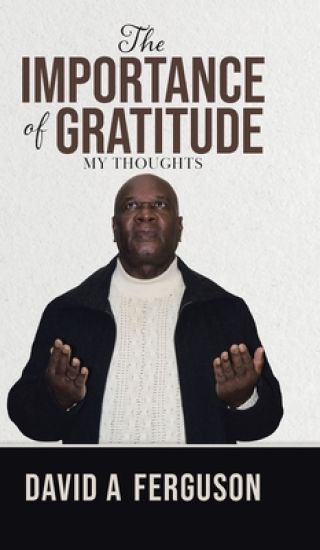
The Importance of Gratitude

The Importance of Gratitude

David A Ferguson

Tellwell Talent
2021
pokkari
The Importance of Gratitude is based on my own personal experience of how important it is to practice gratitude on a daily basis. It is about research that has been done on the benefits of making gratitude a part of your daily life. It's also based on personal stories that will hopefully inspire you. The book will describe in detail the benefits that you can get from being grateful. I guarantee that once you start reading this book you will not put it down until you are finished.
The Importance of Gratitude

The Importance of Gratitude

David A Ferguson

Tellwell Talent
2021
sidottu
The Importance of Gratitude is based on my own personal experience of how important it is to practice gratitude on a daily basis. It is about research that has been done on the benefits of making gratitude a part of your daily life. It's also based on personal stories that will hopefully inspire you. The book will describe in detail the benefits that you can get from being grateful. I guarantee that once you start reading this book you will not put it down until you are finished.
Animal Oppression and Human Violence

Animal Oppression and Human Violence

David A. Nibert

Columbia University Press
2013
sidottu
Jared Diamond and other leading scholars have argued that the domestication of animals for food, labor, and tools of war has advanced the development of human society. But by comparing practices of animal exploitation for food and resources in different societies over time, David A. Nibert reaches a strikingly different conclusion. He finds in the domestication of animals, which he renames "domesecration," a perversion of human ethics, the development of large-scale acts of violence, disastrous patterns of destruction, and growth-curbing epidemics of infectious disease. Nibert centers his study on nomadic pastoralism and the development of commercial ranching, a practice that has been largely controlled by elite groups and expanded with the rise of capitalism. Beginning with the pastoral societies of the Eurasian steppe and continuing through to the exportation of Western, meat-centered eating habits throughout today's world, Nibert connects the domesecration of animals to violence, invasion, extermination, displacement, enslavement, repression, pandemic chronic disease, and hunger. In his view, conquest and subjugation were the results of the need to appropriate land and water to maintain large groups of animals, and the gross amassing of military power has its roots in the economic benefits of the exploitation, exchange, and sale of animals. Deadly zoonotic diseases, Nibert shows, have accompanied violent developments throughout history, laying waste to whole cities, societies, and civilizations. His most powerful insight situates the domesecration of animals as a precondition for the oppression of human populations, particularly indigenous peoples, an injustice impossible to rectify while the material interests of the elite are inextricably linked to the exploitation of animals. Nibert links domesecration to some of the most critical issues facing the world today, including the depletion of fresh water, topsoil, and oil reserves; global warming; and world hunger, and he reviews the U.S. government's military response to the inevitable crises of an overheated, hungry, resource-depleted world. Most animal-advocacy campaigns reinforce current oppressive practices, Nibert argues. Instead, he suggests reforms that challenge the legitimacy of both domesecration and capitalism.