Kirjojen hintavertailu. Mukana 12 190 398 kirjaa ja 12 kauppaa.

Kirjahaku

Etsi kirjoja tekijän nimen, kirjan nimen tai ISBN:n perusteella.

1000 tulosta hakusanalla Deborah C. Pollack

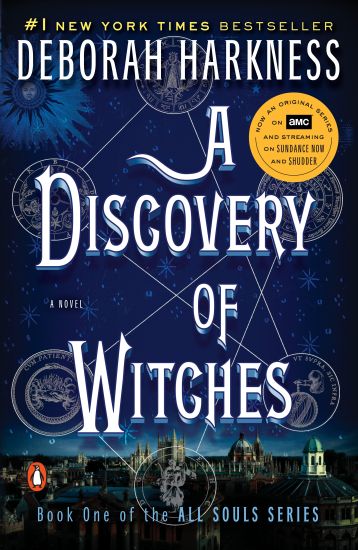
A Discovery of Witches

A Discovery of Witches

Deborah Harkness

PENGUIN BOOKS
2011
nidottu
Book one of the New York Times bestselling All Souls series, from the author of The Black Bird Oracle. Look for the hit series "A Discovery of Witches," now streaming on Netflix "A wonderfully imaginative grown-up fantasy with all the magic of Harry Potter and Twilight" (People). Deborah Harkness's sparkling debut, A Discovery of Witches, has brought her into the spotlight and galvanized fans around the world. In this tale of passion and obsession, Diana Bishop, a young scholar and a descendant of witches, discovers a long-lost and enchanted alchemical manuscript, Ashmole 782, deep in Oxford's Bodleian Library. Its reappearance summons a fantastical underworld, which she navigates with her leading man, vampire geneticist Matthew Clairmont. Harkness has created a universe to rival those of Anne Rice, Diana Gabaldon, and Elizabeth Kostova, and she adds a scholar's depth to this riveting tale of magic and suspense. The story continues in book two, Shadow of Night, book three, The Book of Life, and the fourth in the series, Time's Convert.
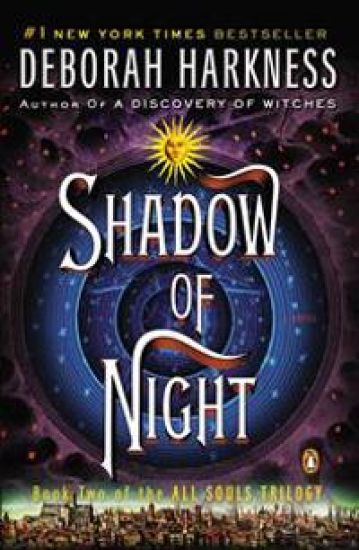
Shadow of Night

Shadow of Night

Deborah Harkness

PENGUIN BOOKS
2013
nidottu
The #1 New York Times bestselling second installment in the All Souls series, from the author of The Discovery of Witches and The Black Bird Oracle. Look for the hit series "A Discovery of Witches," now streaming on AMC+, Sundance Now, and Shudder Picking up from A Discovery of Witches' cliffhanger ending, Shadow of Night takes reluctant witch Diana Bishop and vampire geneticist Matthew Clairmont on a trip through time to Elizabethan London, where they are plunged into a world of spies, magic, and a coterie of Matthew's old friends, the School of Night. As the search for Ashmole 782--the lost and enchanted manuscript whose mystery first pulled Diana and Matthew into one another's orbit--deepens and Diana seeks out a witch to tutor her in magic, the net of Matthew's past tightens around them. Together they find they must embark on a very different--and vastly more dangerous--journey. "A captivating and romantic ripping yarn,"* Shadow of Night confirms Deborah Harkness as a master storyteller, able to cast an "addictive tale of magic, mayhem and two lovers"(Chicago Tribune).
The Book of Life

The Book of Life

Deborah Harkness

PENGUIN BOOKS
2015
nidottu
The #1 New York Times bestselling third installment in the All Souls series, from the author of The Discovery of Witches and The Black Bird Oracle. Look for the hit series "A Discovery of Witches," now streaming on AMC+, Sundance Now, and Shudder Bringing the magic and suspense of the All Souls Trilogy to a deeply satisfying conclusion, this highly anticipated finale went straight to #1 on the New York Times bestseller list. In The Book of Life, Diana and Matthew time-travel back from Elizabethan London to make a dramatic return to the present--facing new crises and old enemies. At Matthew's ancestral home, Sept-Tours, they reunite with the beloved cast of characters from A Discovery of Witches--with one significant exception. But the real threat to their future has yet to be revealed, and when it is, the search for Ashmole 782 and its missing pages takes on even more urgency.
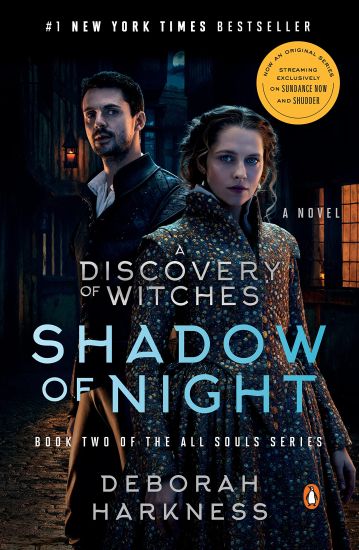
Shadow of Night (Movie Tie-In)

Shadow of Night (Movie Tie-In)

Deborah Harkness

PENGUIN BOOKS
2021
nidottu
The #1 New York Times bestselling sequel to A Discovery of Witches, book two of the All Souls series. Look for the hit series "A Discovery of Witches," now streaming on AMC+, Sundance Now, and Shudder Picking up from A Discovery of Witches' cliffhanger ending, Shadow of Night takes reluctant witch Diana Bishop and vampire geneticist Matthew Clairmont on a trip through time to Elizabethan London, where they are plunged into a world of spies, magic, and a coterie of Matthew's old friends, the School of Night. As the search for Ashmole 782--the lost and enchanted manuscript whose mystery first pulled Diana and Matthew into one another's orbit--deepens and Diana seeks out a witch to tutor her in magic, the net of Matthew's past tightens around them. Together they find they must embark on a very different--and vastly more dangerous--journey. "A captivating and romantic ripping yarn,"* Shadow of Night confirms Deborah Harkness as a master storyteller, able to cast an "addictive tale of magic, mayhem and two lovers."* *Chicago Tribune
The All Souls Trilogy Boxed Set

The All Souls Trilogy Boxed Set

Deborah Harkness

PENGUIN BOOKS
2015
nidottu
A Discovery of Witches, Shadow of Night, and The Book of Life--the first three novels in the #1 New York Times bestselling All Souls series now available in a beautiful boxed set, from the author of The Black Bird Oracle Look for the hit series "A Discovery of Witches," now streaming on AMC+, Sundance Now, Shudder, and Max A world of witches, vampires, and daemons.A manuscript that holds the secrets of their past and the key to their future.Diana and Matthew--the forbidden love at the heart of the adventure. With millions of copies sold, the novels of the #1 New York Times bestselling All Souls Series have landed on all the major bestseller lists, garnered rave reviews, and spellbound legions of loyal fans. Now, A Discovery of Witches, Shadow of Night, and The Book of Life are available in an elegantly designed boxed set that's perfect for fans and newcomers alike, and the perfect introduction to the on-going series which continues with Time's Convert and The Black Bird Oracle.
Love, Ruby Lavender

Love, Ruby Lavender

Deborah Wiles

Clarion Books
2005
nidottu
Ruby Lavender and Miss Eula are a pretty good team, for a couple of chicken thieves. What other granddaughter-grandmother duo could successfully drive the getaway car for chickens rescued from a journey to the slaughterhouse, paint a whole house shocking pink, and operate their own personal secret-letter post office? So, when Miss Eula leaves for Hawaii to visit her new grandbaby, Ruby is sure that she will have a lonely, empty, horrible summer in boring old Halleluia, Mississippi. What happens instead? She makes a new friend, saves the school play, writes plenty of letters to her favorite (and only) grandmother . . . and finally learns to stop blaming herself for her grandfather's death. Not too bad, for a nine-year-old.
Each Little Bird That Sings

Each Little Bird That Sings

Deborah Wiles

Clarion Books
2006
nidottu
Ten-year-old Comfort Snowberger has attended 247 funerals. But that's not surprising, considering that her family runs the town funeral home. And even though Great-uncle Edisto keeled over with a heart attack and Great-great-aunt Florentine dropped dead--just like that--six months later, Comfort knows how to deal with loss, or so she thinks. She's more concerned with avoiding her crazy cousin Peach and trying to figure out why her best friend, Declaration, suddenly won't talk to her. Life is full of surprises. And the biggest one of all is learning what it takes to handle them. Deborah Wiles has created a unique, funny, and utterly real cast of characters in this heartfelt, and quintessentially Southern coming-of-age novel. Comfort will charm young readers with her wit, her warmth, and her struggles as she learns about life, loss, and ultimately, triumph.
No Standard Oil

No Standard Oil

Deborah Gordon

Oxford University Press Inc
2021
sidottu
In No Standard Oil, environmental policy expert Deborah Gordon examines the widely varying climate impacts of global oils and gases, and proposes solutions to cut greenhouse gas emissions in this sector while making sustainable progress in transitioning to a carbon-free energy future. The next decade will be decisive in the fight against climate change. It will be impossible to hold the planet to a 1.5o C temperature rise without controlling methane and CO2 emissions from the oil and gas sector. Contrary to popular belief, the world will not run out of these resources anytime soon. Consumers will continue to demand these abundant resources to fuel their cars, heat their homes, and produce everyday goods like shampoo, pajamas, and paint. But it is becoming more environmentally damaging to supply energy using technologies like fracking oil and liquefying gas. Policymakers, financial investors, environmental advocates, and citizens need to understand what oil and gas are doing to our climate to inform decision-making. In No Standard Oil, Deborah Gordon shows that no two oils or gases are environmentally alike. Each has a distinct, quantifiable climate impact. While all oils and gases pollute, some are much worse for the climate than others. In clear, accessible language, Gordon explains the results of the Oil Climate Index Plus Gas (OCI+), an innovative, open source model that estimates global oil and gas emissions. Gordon identifies the oils and gases from every region of the globe-along with the specific production, processing, and refining activities-that are the most harmful to the planet, and proposes innovative solutions to reduce their climate footprints. Global climate stabilization cannot afford to wait for oil and gas to run out. No Standard Oil shows how we can take immediate, practical steps to cut greenhouse gas emissions in the crucial oil and gas sector while making sustainable progress in transitioning to a carbon-free energy future.
Mary Shepherd

Mary Shepherd

Deborah Boyle

OXFORD UNIVERSITY PRESS INC
2023
nidottu
Scottish philosopher Lady Mary Shepherd (1777-1847) wrote two books that she conceived as one unified project: Essay Upon the Relation of Cause and Effect (1824) and Essays on the Perception of an External Universe (1827). While they were well received in her day, Shepherd's insightful philosophical writings have been neglected for some 150 years and are only now receiving the scholarly attention they deserve. Mary Shepherd: A Guide by Deborah Boyle, part of the Oxford Guides to Philosophy series, navigates students of philosophy or general readers through Shepherd's two significant works. The first four chapters address topics raised in the 1824 Essay: Shepherd's arguments for two key causal principles, her objections to Hume and her alternative accounts of causation and causal inference; her theory of objects as bundles of qualities; her critique of Thomas Brown's defence of Humean causation; and her discussion of London surgeon William Lawrence's accounts of sentience and life, which Shepherd treats as a case study of how Humean theory can lead to errors in scientific reasoning. Chapter 5 covers topics central to both of Shepherd's books: what she means by "sensation," "idea," "will," "imagination," "understanding," "reasoning," and "latent reasoning." The remaining five chapters proceed systematically through Shepherd's 1827 book, where she seeks to prove, against Berkeleian idealism, that we can know that an external world of mind-independent matter exists. Boyle discusses Shepherd's proofs for such an external world, her responses to various sceptical challenges, and her specific objections to Berkeley. Each chapter ends with a list of works for further reading and a glossary of terms that explain Shepherd's sometimes idiosyncratic philosophical vocabulary, resulting in an essential guide to a philosopher who exerted considerable influence during her time.
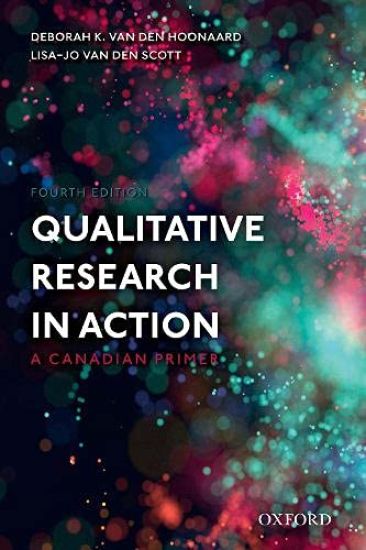
Qualitative Research in Action

Qualitative Research in Action

Deborah K. van den Hoonaard; Lisa-Jo van den Scott

OXFORD UNIVERSITY PRESS, CANADA
2021
nidottu
Now in its fourth edition, Qualitative Research in Action continues to offer students a concise, clear introduction to the diverse world of qualitative research. Throughout this compelling work, Deborah K. van den Hoonaard and new co-author Lisa-Jo ven den Scott bring the research process to life by exploring a wide array of examples drawn from actual studies, including their own research experiences. Emphasizing communication, connection, and flexibility as the cornerstones of qualitative research, this new edition offers beginner students the foundation they need to conduct their first qualitative studies. This fourth edition of Qualitative Research in Action sees the addition and emphasis of Indigenous content and methodologies, including new examples of working with Indigenous communities, along with new and expanded discussions on auto-ethnography, unobtrusive research, oral history, and talking circles.
The Trouble with Lawyers

The Trouble with Lawyers

Deborah L. Rhode

Oxford University Press Inc
2015
sidottu
By any measure, the law as a profession is in serious trouble. Americans' trust in lawyers is at a low, and many members of the profession wish they had chosen a different path. Law schools, with their endlessly rising tuitions, are churning out too many graduates for the jobs available. Yet despite the glut of lawyers, the United States ranks 67th (tied with Uganda) of 97 countries in access to justice and affordability of legal services. The upper echelons of the legal establishment remain heavily white and male. Most problematic of all, the professional organizations that could help remedy these concerns instead jealously protect their prerogatives, stifling necessary innovation and failing to hold practitioners accountable. Deborah Rhode's The Trouble with Lawyers is a comprehensive account of the challenges facing the American bar. She examines how the problems have affected (and originated within) law schools, firms, and governance institutions like bar associations; the impact on the justice system and access to lawyers for the poor; and the profession's underlying difficulties with diversity. She uncovers the structural problems, from the tyranny of law school rankings and billable hours to the lack of accountability and innovation built into legal governance-all of which do a disservice to lawyers, their clients, and the public. The Trouble with Lawyers is a clear call to fix a profession that has gone badly off the rails, and a source of innovative responses.
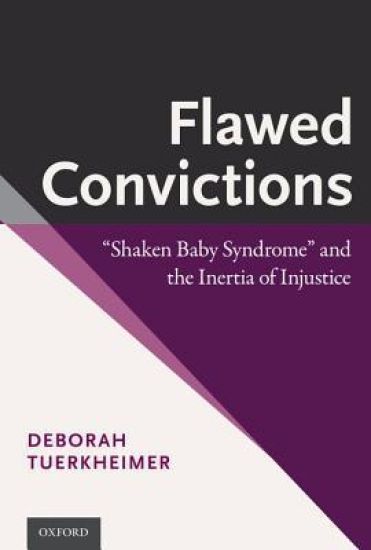
Flawed Convictions

Flawed Convictions

Deborah Tuerkheimer

Oxford University Press Inc
2015
nidottu
The emergence of Shaken Baby Syndrome (SBS) presents an object lesson in the dangers that lie at the intersection of science and criminal law. As often occurs in the context of scientific knowledge, understandings of SBS have evolved. We now know that the diagnostic triad alone does not prove beyond a reasonable doubt that an infant was abused, or that the last person with the baby was responsible for the baby's condition. Nevertheless, our legal system has failed to absorb this new consensus. As a result, innocent parents and caregivers remain incarcerated and, perhaps more perplexingly, triad-only prosecutions continue even to this day. Flawed Convictions: "Shaken Baby Syndrome" and the Inertia of Injustice is the first book to survey the scientific, cultural, and legal history of Shaken Baby Syndrome from inception to formal dissolution. It exposes extraordinary failings in the criminal justice system's treatment of what is, in essence, a medical diagnosis of murder. The story of SBS highlights fundamental inadequacies in the legal response to "science dependent prosecution." A proposed restructuring of the law contends with the uncertainty of scientific knowledge.
The Well-Ordered Universe

The Well-Ordered Universe

Deborah Boyle

Oxford University Press Inc
2017
sidottu
The prolific Margaret Cavendish (1623-1673) published books on natural philosophy as well as stories, plays, poems, orations, allegories, and letters. Her mature philosophical system offered a unique panpsychist theory of Nature as composed of a continuous, non-atomistic, perceiving, knowing matter. In contrast to the dominant philosophical thinking of her day, Cavendish argued that all matter has free will and can choose whether or not to follow Nature's rules. The Well-Ordered Universe explores the development of Cavendish's natural philosophy from the atomism of her 1653 poems to the panpsychist materialism of her 1668 Grounds of Natural Philosophy. Deborah Boyle argues that her natural philosophy, her medical theories, and her social and political philosophy are all informed by an underlying concern with order, regularity, and rule-following. This focus on order reveals interesting connections among apparently disparate elements of Cavendish's philosophical program, including her views on gender, on animals and the environment, and on sickness and health. Focusing on the role of order in Cavendish's philosophy also helps reveal key differences between her natural philosophy and her more conservative social and political philosophy. Cavendish believed that humans' special desire for public recognition often leads to an unruly ambition, causing humans to disrupt society in ways not seen in the rest of Nature. Thus, The Well-Ordered Universe defends Cavendish as a royalist who endorsed absolute monarchy and a rigid social hierarchy for maintaining order in human society.
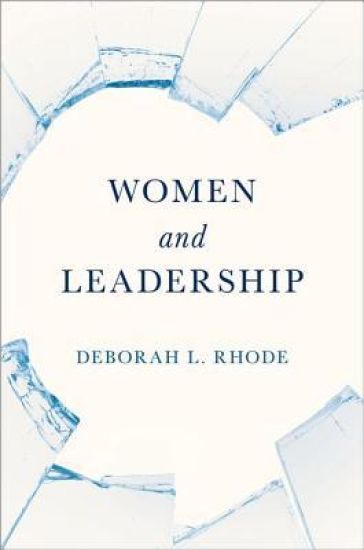
Women and Leadership

Women and Leadership

Deborah L. Rhode

Oxford University Press Inc
2016
sidottu
For most of recorded history, men have held nearly all of the most powerful leadership positions. Today, although women occupy an increasing percentage of leadership positions, in America they hold less than a fifth of positions in both the public and private sectors. The United States ranks 78th in the world for women's representation in political office. In politics, although women constitute a majority of the electorate, they account for only 18 percent of Congress, 10 percent of governors, and 12 percent of mayors of the nation's 100 largest cities. In academia, women account for a majority of college graduates, but only about a quarter of full professors and university presidents. In law, women are almost half of law school graduates, but only 17 percent of the equity partners of major firms, and 22 percent of Fortune 500 general counsels. In business, women constitute a third of MBA graduates, but only 5 percent of Fortune 500 CEOs. In Women and Leadership, the eminent legal scholar Deborah L. Rhode focuses on women's underrepresentation in leadership roles and asks why it persists and what we can do about it. Although organizations generally stand to gain from increasing gender equity in leadership, women's underrepresentation is persistent and pervasive. Rhode explores the reasons, including women's family roles, unconscious gender bias, and exclusion from professional development networks. She stresses that we cannot address the problem at the individual level; instead, she argues that we need broad-based strategies that address the deep-seated structural and cultural conditions facing women. She surveys a range of professions-politics, management, law, and academia-and draws from a survey of prominent women to develop solutions that can successfully chip away at the imbalance. These include developing robust women-to-women networks, enacting laws and policies that address work/life imbalances, and training programs that start at an earlier age. Rhode's clear exploration of the leadership gap and her compelling policy prescriptions will make this an essential book for anyone interested in leveling the playing field for women leaders in America.
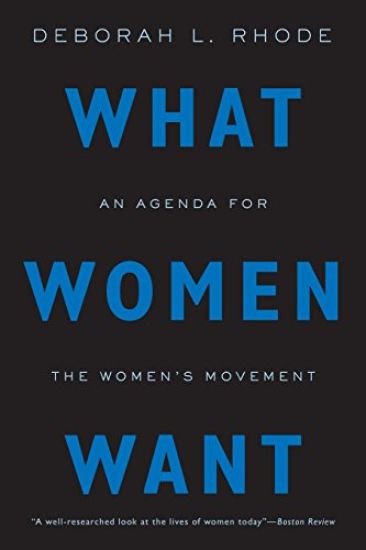
What Women Want

What Women Want

Deborah L. Rhode

Oxford University Press Inc
2017
nidottu
What Women Want is a trenchant examination of the struggle for women's equality, and a prescription for what to focus on next in order to ensure maximum success. Feminism today is a movement that lacks leadership, unity, and definition, and it has gotten stuck in a boom and bust cycle when it comes to public opinion and action. Despite significant progress over the last fifty years, equality is still a distant goal in the political, social, and economic spheres. Only by identifying the barriers (both internal and external) that remain, Deborah Rhode argues, can we begin to identify solutions. A rigorously researched and well-written answer to the glut of gender-related books that have come onto the market recently, What Women Want comprehensively analyzes the challenges the feminist movement faces today. Combining sharp academic analysis and interviews with notable figures such as Sheryl Sandberg, Rhode focuses on five main topics: employment issues such as pay discrimination, work-life balance and the government's pitiful response, the assault on women's reproductive rights and the limits it places on their economic mobility, sexual harassment and violence, and the detrimental effect that the unfashionable label "feminist" can have, especially in attracting young women to the movement. Despite these formidable obstacles, the goals and principles of feminism are widely accepted by the American mainstream, and Rhode, herself a pathbreaker in the fields of law and education, offers effective strategies for redefining and advancing the feminist agenda, thereby creating a movement that truly recognizes, and is responsive to, what all women want.
Strategic Brand Management: Lessons for Winning Brands in Globalized Markets

Strategic Brand Management: Lessons for Winning Brands in Globalized Markets

Deborah Roedder John; Carlos J. Torelli

Oxford University Press
2017
nidottu
Strategic Brand Management provides a concise, flexible, and modern take on global brand management, with cutting-edge research and mini-cases and activities to engage students. The book provides readers with an innovative framework that explains the four key aspects of strategic brand management: identifying and measuring, building, leveraging, and protecting brands.
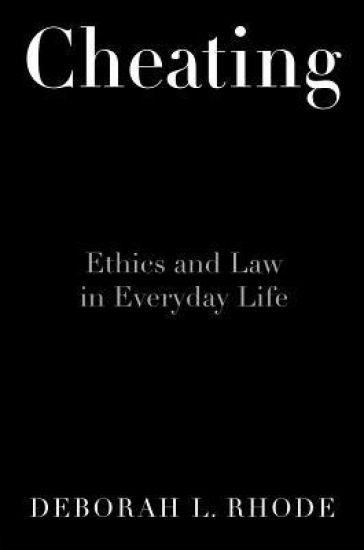
Cheating

Cheating

Deborah L. Rhode

Oxford University Press Inc
2018
sidottu
Cheating is deeply embedded in everyday life. The costs of the most common forms of cheating total close to a trillion dollars annually. Part of the problem is that many individuals fail to see such behavior as a serious problem. "Everyone does it" is a common rationalization, and one that comes uncomfortably close to the truth. That perception is also self-perpetuating. The more that individuals believe that cheating is widespread, the easier it becomes to justify. Yet what is most notable about analysis of the problem is how little there is of it. Whether or not Americans are cheating more, they appear to be worrying about it less. In Cheating, eminent legal scholar Deborah Rhode offers the only recent comprehensive account of cheating in everyday life and the strategies necessary to address it. Because cheating is highly situational, Rhode drills down on its most common forms in sports, organizations, taxes, academia, copyright infringement, marriage, and insurance and mortgages. Cheating also reviews strategies necessary to address the pervasiveness and persistence of cheating in these contexts. We clearly need more cultural reinforcement of ethical conduct. Efforts need to begin early, with values education by parents, teachers, and other role models who can display and reinforce moral behaviors. Organizations need to create ethical cultures, in which informal norms, formal policies, and reward structures all promote integrity. People also need more moral triggers that remind them of their own values. Equally important are more effective enforcement structures, including additional resources and stiffer sanctions. Finally, all of us need to take more responsibility for combatting cheating. We need not only to subject our own conduct to more demanding standards, but also to assume a greater obligation to prevent and report misconduct. Sustaining a culture that actively discourages cheating is a collective responsibility, and one in which we all have a substantial stake.
Family Secrets: Shame & Privacy in Modern Britain

Family Secrets: Shame & Privacy in Modern Britain

Deborah Cohen

Oxford University Press
2017
nidottu
We live today in a culture of full disclosure, where tell-all memoirs top the best-seller lists, transparency is lauded, and privacy seems imperiled. But how did we get here? Exploring scores of previously sealed records, Family Secrets offers a sweeping account of how shame--and the relationship between secrecy and openness--has changed over the last two centuries in Britain. Deborah Cohen uses detailed sketches of individual families as the basis for comparing different sorts of social stigma. She takes readers inside an Edinburgh town house, where a genteel maiden frets with her brother over their niece's downy upper lip, a darkening shadow that might betray the girl's Eurasian heritage; to a Liverpool railway platform, where a heartbroken mother hands over her eight-year old illegitimate son for adoption; to a town in the Cotswolds, where a queer vicar brings to his bank vault a diary--sewed up in calico, wrapped in parchment--that chronicles his sexual longings. Cohen explores what families in the past chose to keep secret and why. She excavates the tangled history of privacy and secrecy to explain why privacy is now viewed as a hallowed right while secrets are condemned as destructive. In delving into the dynamics of shame and guilt, Family Secrets explores the part that families, so often regarded as the agents of repression, have played in the transformation of social mores from the Victorian era to the present day. Written with compassion and keen insight, this is a bold new argument about the sea-changes that took place behind closed doors.
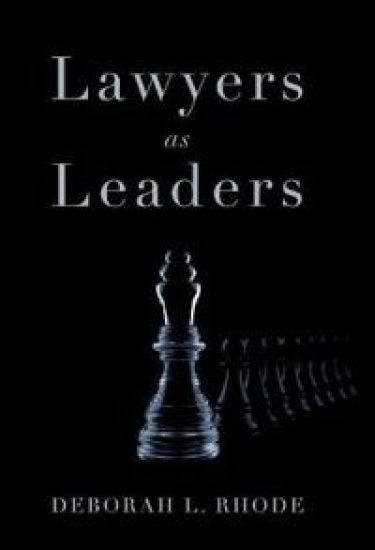
Lawyers as Leaders

Lawyers as Leaders

Deborah L. Rhode

Oxford University Press Inc
2018
nidottu
No occupation in America supplies a greater proportion of leaders than law. They obviously lead law firms, but they also sit at the helm of a vast and diverse array of businesses across America, including 10 percent of S & P 500 firms. And of course, a strikingly large percentage of our political leaders are attorneys, including half the members of Congress. This raises two obvious questions: why do we look to lawyers to lead, and why do so many of them prove to be so untrustworthy and unprepared? In Lawyers as Leaders, eminent law professor Deborah Rhode not only answers these questions but crafts an essential manual for attorneys who need to develop better leadership skills. She contends that the legal profession attracts a large number of individuals with the ambition and analytic capabilities to be leaders, but often fails to develop other qualities that are essential to their effectiveness. The focus of legal education and the reward structure of legal practice undervalue the interpersonal skills and ethical commitments necessary for successful leadership. Although some lawyers are sufficiently gifted to need little reinforcement, Rhode shows that the vast majority of law school graduates need to develop the leadership characteristics that she profiles. They know it too. According to one survey, almost 90 percent of attorneys stated that their law schools did not teach them leadership skills. Given the importance of the topic, it is surprising how little the profession has done to develop leadership skills. The first serious treatment of the subject, Lawyers as Leaders will be essential to law school instructors who teach leadership courses (a growing field) and any attorney who finds him or herself in a management position.