Kirjojen hintavertailu. Mukana 11 699 587 kirjaa ja 12 kauppaa.

Kirjahaku

Etsi kirjoja tekijän nimen, kirjan nimen tai ISBN:n perusteella.

1000 tulosta hakusanalla Deborah Cook

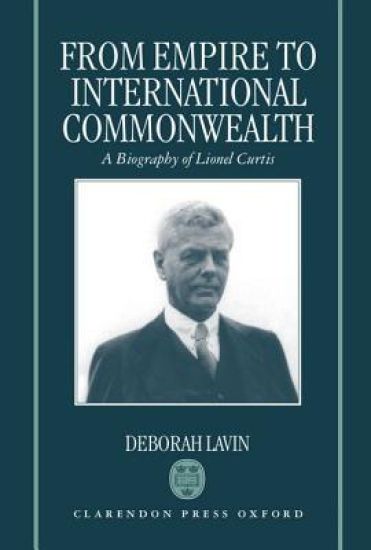
From Empire to International Commonwealth

From Empire to International Commonwealth

Deborah Lavin

Clarendon Press
1995
sidottu
Lionel Curtis C.H. once counted among the great and the good, working behind the scenes of international politics and honoured as the `pioneer of a great idea' - international federation as the natural successor to empire. He advocated federation as the way to create a new South Africa after the Boer War; he called for self-government in India in 1912; in 1921 he was instrumental in attempting to pacify the Irish Troubles by treating Eire as if it were a self-governing Commonwealth Dominion. He went on to preach the conversion of the Empire-Commonwealth into a multinational federation, which, in association with the United States, would serve as a model for a united Europe, and even for world government. He founded the Round Table think-tank, the Royal Institute of International Affairs at Chatham House, and the Oxford Society. He lobbied indefatigably for his vision of the Commonwealth as a new world order, to be more effective that the League of Nations in making wars obsolete. In the process, he exasperated nationalists and imperialists alike as a prophet of apparently lost causes. He deserves to be remembered not only for what he achieved but for what he was: the bore who never lost a friend; the optimist who stuck to his belief when all was lost, the third-class scholar who became a Fellow of All Souls; the visionary riding his hobby-horse into the drawing rooms of high political society and yet invited affectionately to return. The remarkable character of the man and the influence he exerted on the history of the Empire and Commonwealth are explored in this authoritative biography.
Xenophon's Cyropaedia

Xenophon's Cyropaedia

Deborah Levine Gera

Clarendon Press
1993
sidottu
This book is a literary study of the Cyropaedia, Xenophon's fictional account of Cyrus the Great and the founding of his empire. The Cyropaedia is a complex blend of various literary forms, and this book examines several of its literary genres. General discussions of the works of Xenophon's predecessors and contemporaries, in particular Herodotus, Plato, and Ctesias, are combined with a detailed commentary on select passages. Socrates--his life, ideas, and techniques of argument, is an indirect presence in the work, and the Socratic tenor of several of the dialogues in it is the subject of one chapter. The lovely Panthea, the fairest woman in Asia, is Xenophon's most colourful heroine and her story, along with the dramatic tales of the eunuch Gadatas, bereaved Gobyras, and defeated Croesus, are the focus of another section; special attention is paid to the question of Xenophon's originality in fashioning these tales. The symposia of the Cyropaedia, an intricate blend of Greek and Persian elements, are also investigated at length. The book concludes with an examination of Xenophon's ambivalent attitude towards his hero, Cyrus the Great: the author argues that both Xenophon and his hero are more complex than they might seem.
Streetwalking the Metropolis

Streetwalking the Metropolis

Deborah L. Parsons

Oxford University Press
2000
sidottu
Can there be a flaneuse, and what form might she take? This is the central question of Streetwalking the Metropolis, an important contribution to ongoing debates on the city and modernity in which Deborah Parsons re-draws the gendered map of urban modernism. Assessing the cultural and literary history of the concept of the flaneur, the urban observer/writer traditionally gendered as masculine, the author advances critical space for the discussion of a female 'flaneuse', focused around a range of women writers from the 1880's to World War Two. Cutting across period boundaries, this wide-ranging study offers stimulating accounts of works by writers including Amy Levy, Dorothy Richardson, Virginia Woolf, Rosamund Lehmann, Jean Rhys, Janet Flanner, Djuna Barnes, Anais Nin, Elizabeth Bowen and Doris Lessing, highlighting women's changing relationship with the social and psychic spaces of the city, and drawing attention to the ways in which the perceptions and experiences of the street are translated into the dynamics of literary texts.
Streetwalking the Metropolis

Streetwalking the Metropolis

Deborah L. Parsons

Oxford University Press
2000
nidottu
Can there be a flaneuse, and what form might she take? This is the central question of Streetwalking the Metropolis, an important contribution to ongoing debates on the city and modernity in which Deborah Parsons re-draws the gendered map of urban modernism. Assessing the cultural and literary history of the concept of the flaneur, the urban observer/writer traditionally gendered as masculine, the author advances critical space for the discussion of a female 'flaneuse', focused around a range of women writers from the 1880s to World War Two. Cutting across period boundaries, this wide-ranging study offers stimulating accounts of works by writers including Amy Levy, Dorothy Richardson, Virginia Woolf, Rosamund Lehmann, Jean Rhys, Janet Flanner, Djuna Barnes, Anais Nin, Elizabeth Bowen and Doris Lessing, highlighting women's changing relationship with the social and psychic spaces of the city, and drawing attention to the ways in which the perceptions and experiences of the street are translated into the dynamics of literary texts.
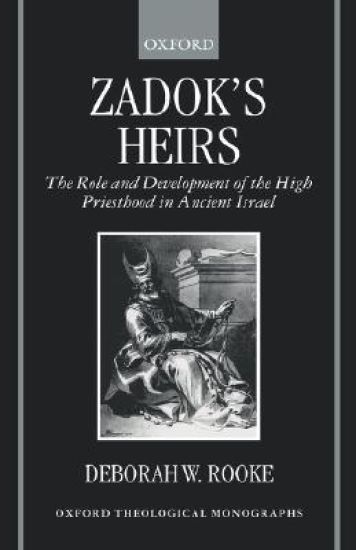
Zadok's Heirs

Zadok's Heirs

Deborah W. Rooke

Clarendon Press
2000
sidottu
This unique study is the first systematic examination to be undertaken of the high priesthood in ancient Israel, from the earliest local chief priests in the pre-monarchic period down to the Hasmonaean priest-kings in the first century BCE. Dr Rooke argues that, contrary to received scholarly opinion, the high priesthood was fundamentally a religious office which in and of itself bestowed no civil responsibilities upon its holders, and that not until the time of the Maccabean revolt does the high priest appear as the sole figure of leadership for the nation. However, even the Maccabean / Hasmonaean high priesthood was effectively a reversion to the monarchic model of sacral kingship which had existed several centuries earlier in the pre-exilic period, rather than being an extension of the powers of the high priesthood itself. The idea that high priesthood per se bestowed the power to rule should therefore be reconsidered.
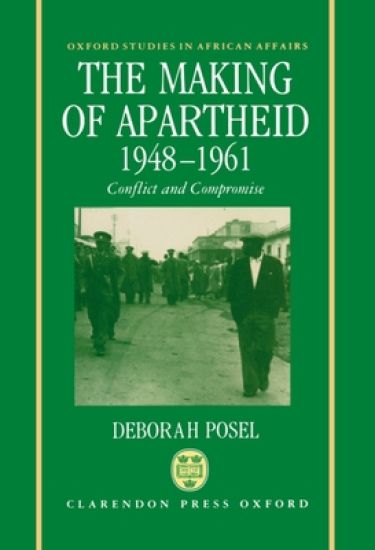
The Making of Apartheid, 1948-1961

The Making of Apartheid, 1948-1961

Deborah Posel

Clarendon Press
1991
sidottu
Deborah Posel breaks new ground in exposing some of the crucial political processes and struggles which shaped the reciprocal development of Apartheid and capitalism in South Africa. Her analysis debunks the orthodoxy view which presents apartheid as the product of a single `grand plan', created by the State in response to the pressures of capital accumulation. Using as a case study influx control during the first phase of apartheid (1948-1961), she shows that apartheid arose from complex patterns of conflict and compromise within the State, in which white capitalists, the black working class, and popular movements exercised varying and uneven degrees of influence. Her book integrates a detailed empirical analysis of the capitalist State and its relationship to class interests.
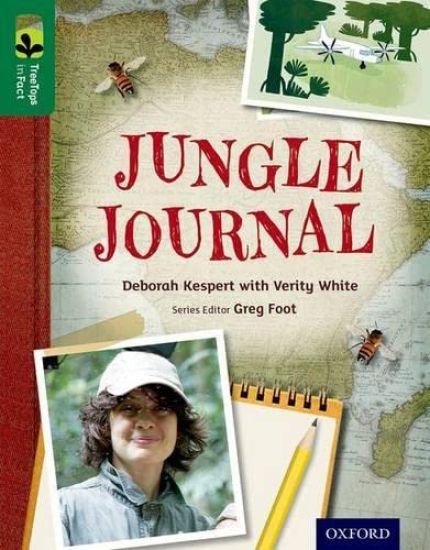
Oxford Reading Tree TreeTops inFact: Level 12: Jungle Journal
Jungle Journal takes a trip to the rainforests of the Congo with wildlife documentary producer, Verity White. TreeTops inFact is a non-fiction series that aims to engage children in reading for pleasure as powerfully as fiction does. The variety of topics means there are books to interest every child in this compelling series. The series is written by top children's authors and subject experts. The books are carefully levelled, making it easy to match every child to the right book.
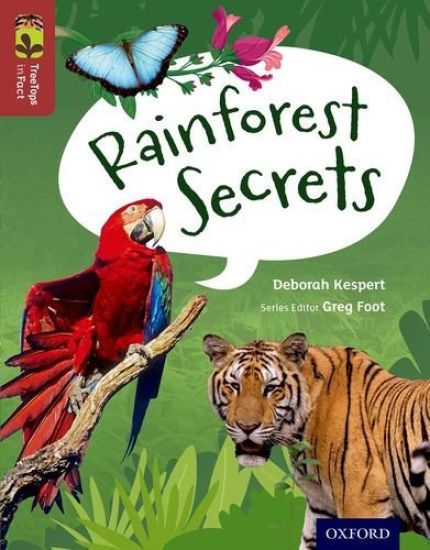
Oxford Reading Tree TreeTops inFact: Level 15: Rainforest Secrets
Rainforest Secrets takes a journey through the canopy of the Amazon rainforest, to discover the animals living in each layer. TreeTops inFact is a non-fiction series that aims to engage children in reading for pleasure as powerfully as fiction does. The variety of topics means there are books to interest every child in this compelling series. The series is written by top children's authors and subject experts. The books are carefully levelled, making it easy to match every child to the right book.
Oxford Reading Tree TreeTops inFact: Oxford Level 14/15: Pack of 6

Oxford Reading Tree TreeTops inFact: Oxford Level 14/15: Pack of 6

Deborah Kespert; Emma McFarland; Becca Heddle; Ali Sparkes; Rob Alcraft; Zoë Clarke

Oxford University Press
2016
nidottu
This pack contains one of each of the following titles: Step Away from the Kitten!, Explorers: Then and Now, William Kamkwamba: Bright Spark, Rainforest Secrets, Dance!, The Craft of Paper. TreeTops inFact\~is a non-fiction series that aims to engage children in reading for pleasure as powerfully as fiction does. The variety of topics means there are books to interest every child in this compelling series.\~The series is written by top children's authors and subject experts. The books are carefully levelled, making it easy to match every child to the right book. Each book contains inside cover notes to help children explore the content, supporting their reading development. Teaching notes on Oxford Owl offer cross-curricular links and activities to support guided reading, writing, speaking and listening.
Rollercoasters: Rollercoasters: My Name is Parvana Reader
In post-Taliban Afghanistan, fifteen-year-old Parvana waits for foreign military forces to determine her fate. Reunited with her mother and sisters, she has been living in a village where her mother has finally managed to open a school for girls. It's the life Parvan has been dreaming of. But this is Afghanistan, the war is far from over, and many continue to view the education of girls and women with suspicion and fear. And that means Parvana - and her family - are in danger.
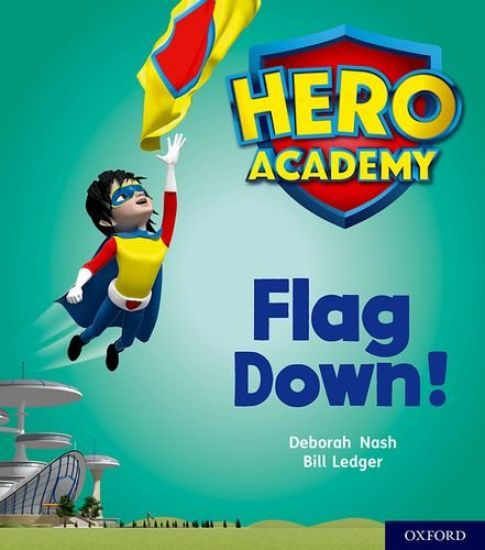
Hero Academy: Oxford Level 4, Light Blue Book Band: Flag Down!
Project X Hero Academy is a fully decodable and finely levelled reading series set in a school for superheroes, designed to captivate and motivate all young readers and turn them into reading superheroes. Flag Down! is in Light Blue Book Band, Oxford Level 4, and supports Letters and Sounds Phase 4. In this story, the school flag at Hero Academy has blown down. While Magnus, the caretaker, goes to get his ladder, Jin decides to use his superpower to fix the flag by himself. Will he manage it? Each book can be used for independent reading, but also contains inside cover notes that include help on developing vocabulary and prompt questions that can be used for guided reading and one-to-one sessions. Full guided reading notes are provided in the corresponding handbook. There are also a range of follow-up activities to support reading for pleasure.
Hero Academy: Oxford Level 4, Light Blue Book Band: Digger on the Run
Project X Hero Academy is a fully decodable and finely levelled reading series set in a school for superheroes, designed to captivate and motivate all young readers and turn them into reading superheroes. Digger on the Run is in Light Blue Book Band, Oxford Level 4, and supports Letters and Sounds Phase 4. In this story, Evan invents a digger to help Magnus, the caretaker, but when he tests it out, something goes wrong and the digger loses control. Who will stop the digger from messing up the garden? Each book can be used for independent reading, but also contains inside cover notes that include help on developing vocabulary and prompt questions that can be used for guided reading and one-to-one sessions. Full guided reading notes are provided in the corresponding handbook. There are also a range of follow-up activities to support reading for pleasure.
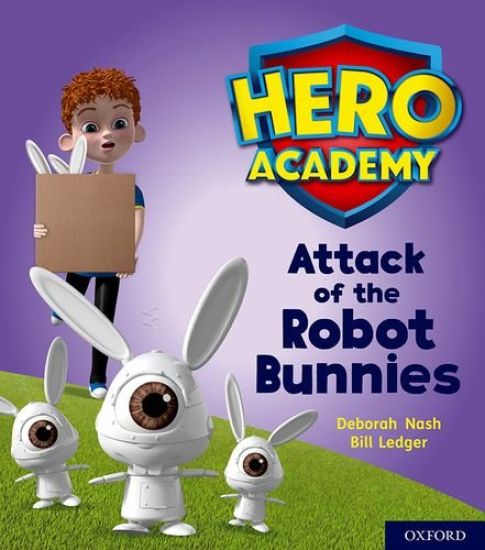
Hero Academy: Oxford Level 5, Green Book Band: Attack of the Robot Bunnies
Project X Hero Academy is a fully decodable and finely levelled reading series set in a school for superheroes, designed to captivate and motivate all young readers and turn them into reading superheroes. Attack of the Robot Bunnies is in Green Book Band, Oxford Level 5, and supports Letters and Sounds Phase 5. In this story, the intruder alarm goes off at Hero Academy. A swarm of robot bunnies, called bunny-wunnies, are trying to get into the school! Will the heroes manage to stop them? Each book can be used for independent reading, but also contains inside cover notes that include help on developing vocabulary and prompt questions that can be used for guided reading and one-to-one sessions. Full guided reading notes are provided in the corresponding handbook. There are also a range of follow-up activities to support reading for pleasure.
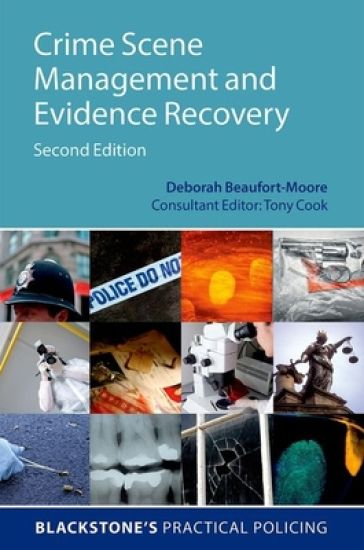
Crime Scene Management and Evidence Recovery

Crime Scene Management and Evidence Recovery

Deborah Beaufort-Moore

Oxford University Press
2015
nidottu
Crime Scene Management and Evidence Recovery is a must-have for first responders and crime scene investigators alike. Featuring step-by-step guidance on the techniques involved in crime scene management and evidence recovery, alongside hands-on advice and aide-memoirs from crime scene investigators, the second edition also includes clear scientific explanations and everyday examples for the non-specialist to recognise the importance difference that first responders can make. Whilst crime scene investigators are trained to undertake more detailed forensic examination, the actions of first responders can have a fundamental impact on the success of an examination. By increasing the awareness of forensic aspects of a crime scene investigation, this book ensures that crime scene officers are better equipped to make informed decisions about protecting and preserving scenes and recovering items for evidence. It also helps all police and forensic professionals to develop their understanding of the various analysis techniques available, as well as the pitfalls to avoid. The fifteen chapters offer structured advice on the techniques involved in the preservation, recovery, packaging, and storage of different evidential types such as fingerprints, DNA, glass, footwear, paint, and fibres. An overview of the science behind the various types of forensic analysis is presented alongside the relevant legislation, to reinforce the value of accurate crime scene management within the duration of an investigation, and practical tips, scenarios, and knowledge checks help to test understanding and root best practice within everyday policing. The Blackstone's Practical Policing Series covers a range of topical subjects of vital importance in today's policing arena. Each practical guide contains clear and detailed explanations of the relevant legislation, accompanied by practical scenarios, illustrative diagrams and useful checklists. Packed with a wealth of information, the Blackstone's Practical Policing Series ensures you have ready access to the tools you need to take on any policing challenge.
Taking Advantage of Emergence

Taking Advantage of Emergence

Deborah Dougherty

Oxford University Press
2016
sidottu
Our most pressing societal problems such as enhancing health care, developing alternate energy, revitalizing cities, and advancing the economy are complex innovation systems. Leveraging the enormous potential of sciences and technologies into better resolutions for these complex challenges requires a transformation in the social technologies we use to tap this potential. The thesis of this book is that we can grapple with complex innovation systems only by taking advantage of emergence. This book creates a theoretical framework of three new social technologies for taking advantage of emergence in infrastructures of complex innovation systems. The central social technology is abduction, the logic of discovery, for figuring out solutions to complex problems. Abductive reasoning differs significantly from deductive confirmation and simple rationality. The book details three abductive learning routines that enable innovators to grab up noisy and fragmented information, synthesize it into hypothesized configurations that capture the inherent ambiguity, evaluate these configurations by exploring consequences and contingencies, and reframe to accumulate the learning. The second social technology divides the infrastructure into four distinct but entangled subsystems of interpersonal action: the project, knowledge system, strategic, and institutional subsystems. Each subsystem is a vast multi-organizational network that must address its distinct problem if the infrastructure overall is to productively innovate. The author shows how cycling through abductive learning routines overcomes problems in each subsystem that conventional approaches cannot deal with. The third social technology is a new way of organizing based on heterarchy, not hierarchy, with roles and relations defined through heedful interrelating.
Descartes and the Ontology of Everyday Life

Descartes and the Ontology of Everyday Life

Deborah J. Brown; Calvin G. Normore

Oxford University Press
2019
sidottu
The seventeenth century was a period of extraordinary invention, discovery and revolutions in scientific, social and political orders. It was a time of expansive automation, biological discovery, rapid advances in medical knowledge, of animal trials and a questioning of the boundaries between species, human and non-human, between social classes, and of the assumed naturalness of political inequality. This book gives a tour through those objects, ordinary and extraordinary, which captivated the philosophical imagination of the single most important French philosopher of this period, René Descartes. Deborah J. Brown and Calvin G. Normore document Descartes' attempt to make sense of the complex, composite objects of human and divine invention, consistent with the fundamental tenets of his metaphysical system. Their central argument is that, far from reducing all the categories of ordinary experience to the two basic categories of substance, mind and body, Descartes' philosophy recognises irreducible composites that resist reduction, and require their own distinctive modes of explanation.
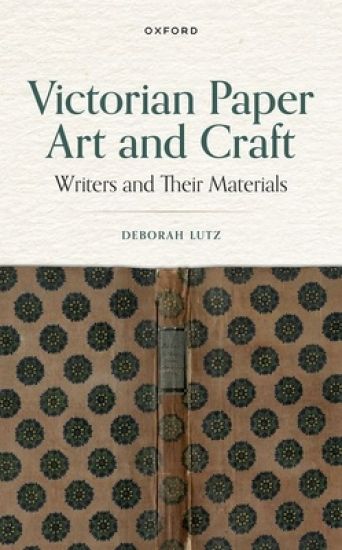
Victorian Paper Art and Craft

Victorian Paper Art and Craft

Deborah Lutz

Oxford University Press
2022
sidottu
This book shows how authors in nineteenth-century Britain used the materials of writing (and of reading, drawing, and handicraft) for inspiration and creative composition. In doing so, it reshapes the sensory history of working on and with paper. These activities were many and varied: Charlotte Brontë composed poems and doodled in the margins of school books, George Eliot recorded writing ideas on her blotter, Elizabeth Barrett Browning sewed paper to paper to edit her poems, and Jane Austen employed straight pins to "cut and paste." Albums provided a playful space to collect and to produce text-and-collage gifts for friends, circumventing print culture for a more intimate book making, as Elizabeth Gaskell and Anna Atkins knew. Notebooks and commonplace books were vital to Eliot, Michael Field, and Emily Brontë as part of a writing process. Writers experimented with crafts and needlework to compose text without paper and ink, most notably in the case of samplers. What writing and drawing happened on--including bibles, sewing patterns, and walls--mattered, as related to, and generative of, the themes of the work. This expansive field of meanings that creativity with textual (and material) things could have was common to the Victorians, but the writers explored here were extravagant even among their self-reflexive contemporaries in their undoing, remaking, miniaturizing, encrypting, reusing, and transforming. The edge of the page, the width of the margin, the covers of the book, were limiting factors, but also provocations to push on further, be radical.
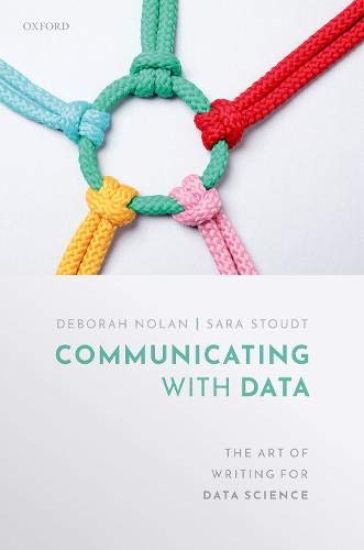
Communicating with Data

Communicating with Data

Deborah Nolan; Sara Stoudt

Oxford University Press
2021
sidottu
Communication is a critical yet often overlooked part of data science. Communicating with Data aims to help students and researchers write about their insights in a way that is both compelling and faithful to the data. General advice on science writing is also provided, including how to distill findings into a story and organize and revise the story, and how to write clearly, concisely, and precisely. This is an excellent resource for students who want to learn how to write about scientific findings, and for instructors who are teaching a science course in communication or a course with a writing component. Communicating with Data consists of five parts. Part I helps the novice learn to write by reading the work of others. Part II delves into the specifics of how to describe data at a level appropriate for publication, create informative and effective visualizations, and communicate an analysis pipeline through well-written, reproducible code. Part III demonstrates how to reduce a data analysis to a compelling story and organize and write the first draft of a technical paper. Part IV addresses revision; this includes advice on writing about statistical findings in a clear and accurate way, general writing advice, and strategies for proof reading and revising. Part V offers advice about communication strategies beyond the page, which include giving talks, building a professional network, and participating in online communities. This book also provides 22 portfolio prompts that extend the guidance and examples in the earlier parts of the book and help writers build their portfolio of data communication.
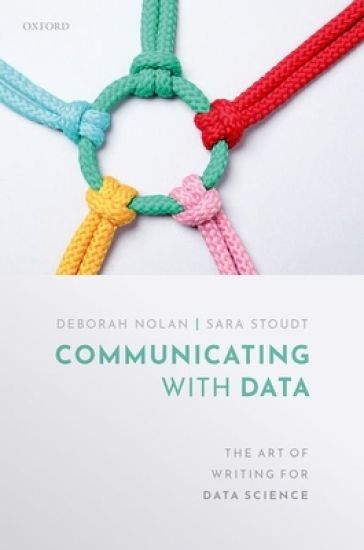
Communicating with Data

Communicating with Data

Deborah Nolan; Sara Stoudt

Oxford University Press
2021
nidottu
Communication is a critical yet often overlooked part of data science. Communicating with Data aims to help students and researchers write about their insights in a way that is both compelling and faithful to the data. General advice on science writing is also provided, including how to distill findings into a story and organize and revise the story, and how to write clearly, concisely, and precisely. This is an excellent resource for students who want to learn how to write about scientific findings, and for instructors who are teaching a science course in communication or a course with a writing component. Communicating with Data consists of five parts. Part I helps the novice learn to write by reading the work of others. Part II delves into the specifics of how to describe data at a level appropriate for publication, create informative and effective visualizations, and communicate an analysis pipeline through well-written, reproducible code. Part III demonstrates how to reduce a data analysis to a compelling story and organize and write the first draft of a technical paper. Part IV addresses revision; this includes advice on writing about statistical findings in a clear and accurate way, general writing advice, and strategies for proof reading and revising. Part V offers advice about communication strategies beyond the page, which include giving talks, building a professional network, and participating in online communities. This book also provides 22 portfolio prompts that extend the guidance and examples in the earlier parts of the book and help writers build their portfolio of data communication.
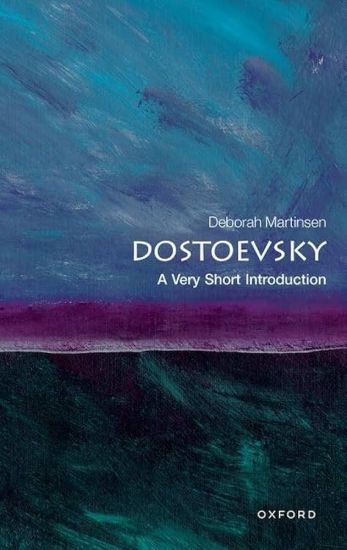
Fyodor Dostoevsky

Fyodor Dostoevsky

Deborah Martinsen

Oxford University Press
2024
nidottu
Very Short Introductions: Brilliant, Sharp, Inspiring Fyodor Dostoevsky became the writer best known for his treatment of the big questions of ethics, religion, and philosophy. In this Very Short Introduction, Deborah Martinsen explores Dostoevsky's tumultuous life story: his political imprisonment and narrow escape from execution, his Siberian exile, his gambling addiction, his romantic marriage, and his literary success. Martinsen also delves into his major works - Notes from Underground, Crime and Punishment, The Idiot, Demons, The Brothers Karamazov, The Diary of a Writer, and more. Each chapter analyzes a key theme or aspect of Dostoevsky's writing that showcases his profound insights into human nature and society: doubling, freedom, shame, social justice, scandal, aesthetics, ethics, faith, and the eternal questions. Martinsen also demonstrates how Dostoevsky's novels remain relevant today as they address pressing questions about freedom, morality, and meaning in a complex world. ABOUT THE SERIES: The Very Short Introductions series from Oxford University Press contains hundreds of titles in almost every subject area. These pocket-sized books are the perfect way to get ahead in a new subject quickly. Our expert authors combine facts, analysis, perspective, new ideas, and enthusiasm to make interesting and challenging topics highly readable.