Kirjojen hintavertailu. Mukana 12 016 292 kirjaa ja 12 kauppaa.

Kirjahaku

Etsi kirjoja tekijän nimen, kirjan nimen tai ISBN:n perusteella.

1000 tulosta hakusanalla Dide

Jacques the Fatalist

Jacques the Fatalist

Denis Diderot

Oxford University Press
2008
nidottu
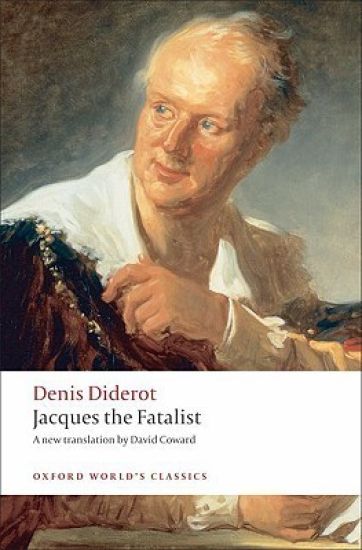
'Your Jacques is a tasteless mishmash of things that happen, some of them true, others made up, written without style and served up like a dog's breakfast.' Jacques the Fatalist is Diderot's answer to the problem of existence. If human beings are determined by their genes and their environment, how can they claim to be free to want or do anything? Where are Jacques and his Master going? Are they simply occupying space, living mechanically until they die, believing erroneously that they are in charge of their Destiny? Diderot intervenes to cheat our expectations of what fiction should be and do, and behaves like a provocative, ironic and unfailingly entertaining master of revels who finally show why Fate is not to be equated with doom. In the introduction to this brilliant new translation, David Coward explains the philosophical basis of Diderot's fascination with Fate and shows why Jacques the Fatalist pioneers techniques of fiction which, two centuries on, novelists still regard as experimental. ABOUT THE SERIES: For over 100 years Oxford World's Classics has made available the widest range of literature from around the globe. Each affordable volume reflects Oxford's commitment to scholarship, providing the most accurate text plus a wealth of other valuable features, including expert introductions by leading authorities, helpful notes to clarify the text, up-to-date bibliographies for further study, and much more.
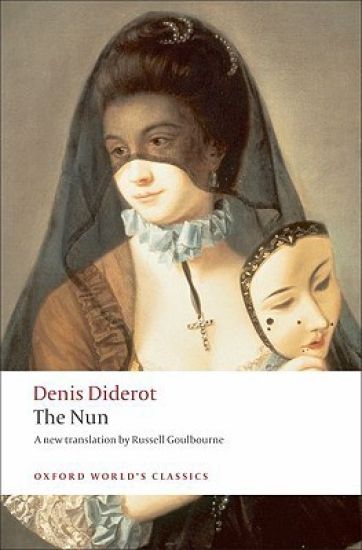
The Nun

The Nun

Denis Diderot

Oxford University Press
2008
nidottu
'You can leave a forest, but you can never leave a cloister; you are free in the forest, but you are a slave in the cloister.' Diderot's The Nun (La Religieuse) is the seemingly true story of a young girl forced by her parents to enter a convent and take holy orders. A novel mingling mysticism, madness, sadistic cruelty and nascent sexuality, it gives a scathing insight into the effects of forced vocations and the unnatural life of the convent. A succès de scandale at the end of the eighteenth century, it has attracted and unsettled readers ever since. For Diderot's novel is not simply a story of a young girl with a bad habit; it is also a powerfully emblematic fable about oppression and intolerance. This new translation includes Diderot's all-important prefatory material, which he placed, disconcertingly, at the end of the novel, and which turns what otherwise seems like an exercise in realism into what is now regarded as a masterpiece of proto-modernist fiction. ABOUT THE SERIES: For over 100 years Oxford World's Classics has made available the widest range of literature from around the globe. Each affordable volume reflects Oxford's commitment to scholarship, providing the most accurate text plus a wealth of other valuable features, including expert introductions by leading authorities, helpful notes to clarify the text, up-to-date bibliographies for further study, and much more.

Encyclopaedic Liberty

Encyclopaedic Liberty

Denis Diderot; Jean Le Rond D'Alembert

Liberty Fund Inc
2016
sidottu
Often described as the culmination of the French Enlightenment, the Encyclopédie was collected to not only serve as a comprehensive reference work, but to "change the way men think" about every aspect of the human and natural worlds. In his celebrated "Preliminary Discourse" to the compilation, d'Alembert traced an entire history of modern philosophy and science designed to chart the way toward a sweeping Baconian project of improving the world through usable knowledge. This anthology is the first endeavor to bring together the most significant political writing from the entire twenty-million-word compendium. It includes eighty-one of the most original, controversial and representative articles on political ideas, practices, and institutions, many translated into English for the first time. The articles cover such topics as the foundations of political order, the relationship between natural and civil liberty, the different types of constitutional regimes, the role of the state in economic and religious affairs, and the boundaries between manners, morals, and laws. In addition to Diderot's early and important articles "Political Authority," the "Citizen," and "Natural Right" and the substantial treatments of subjects such as the "Legislator" (by Saint-Lambert), "Representation" (by d'Holbach), "Population" (by Damilaville), and "Political Economy" (by Quesnay), the anthology will also introduce to many English-language readers the tireless figure of Chevalier Louis de Jaucourt (170480), who wrote about 18,000 articles, or about 25 percent of the Encyclopédie. Jaucourt's numerous articles on political topics did much to solidify the new political teachings of the natural-law tradition, the English Whig writers, the Huguenot diaspora, and particularly Montesquieu, whose Spirit of the Laws had appeared shortly before the first volume of the Encyclopédie itself.
Encyclopaedic Liberty

Encyclopaedic Liberty

Denis Diderot; Jean Le Rond D'Alembert

Liberty Fund Inc
2016
nidottu
Often described as the culmination of the French Enlightenment, the Encyclopédie was collected to not only serve as a comprehensive reference work, but to "change the way men think" about every aspect of the human and natural worlds. In his celebrated "Preliminary Discourse" to the compilation, d'Alembert traced an entire history of modern philosophy and science designed to chart the way toward a sweeping Baconian project of improving the world through usable knowledge. This anthology is the first endeavor to bring together the most significant political writing from the entire twenty-million-word compendium. It includes eighty-one of the most original, controversial and representative articles on political ideas, practices, and institutions, many translated into English for the first time. The articles cover such topics as the foundations of political order, the relationship between natural and civil liberty, the different types of constitutional regimes, the role of the state in economic and religious affairs, and the boundaries between manners, morals, and laws. In addition to Diderot's early and important articles "Political Authority," the "Citizen," and "Natural Right" and the substantial treatments of subjects such as the "Legislator" (by Saint-Lambert), "Representation" (by d'Holbach), "Population" (by Damilaville), and "Political Economy" (by Quesnay), the anthology will also introduce to many English-language readers the tireless figure of Chevalier Louis de Jaucourt (170480), who wrote about 18,000 articles, or about 25 percent of the Encyclopédie. Jaucourt's numerous articles on political topics did much to solidify the new political teachings of the natural-law tradition, the English Whig writers, the Huguenot diaspora, and particularly Montesquieu, whose Spirit of the Laws had appeared shortly before the first volume of the Encyclopédie itself.
Histoire GÃ(c)nÃ(c)rale Des Dogmes Et Opinions Philosophiques Depuis Les Plus Anciens Temps Jusqu'Ã Nos Jours, TirÃ(c)e Du Dictionnaire EncyclopÃ(c)di
Histoire G n rale des Dogmes et Opinions Philosophiques Depuis Les Plus Anciens Temps Jusqu' Nos Jours, Tir e Du Dictionnaire Encyclop dique Des Arts Et Des Sciences, volume 1, is a comprehensive exploration of philosophical dogmas and opinions throughout history. Compiled from the renowned Dictionnaire Encyclop dique des Arts et des Sciences, this work by Denis Diderot offers a detailed overview of philosophical thought from ancient times to the 18th century. Examining a wide range of ideas, this historical survey provides valuable insights into the development of philosophical and religious thought. It remains a crucial resource for scholars and anyone interested in the history of ideas and the evolution of human understanding. This work has been selected by scholars as being culturally important, and is part of the knowledge base of civilization as we know it. This work was reproduced from the original artifact, and remains as true to the original work as possible. Therefore, you will see the original copyright references, library stamps (as most of these works have been housed in our most important libraries around the world), and other notations in the work. This work is in the public domain in the United States of America, and possibly other nations. Within the United States, you may freely copy and distribute this work, as no entity (individual or corporate) has a copyright on the body of the work. As a reproduction of a historical artifact, this work may contain missing or blurred pages, poor pictures, errant marks, etc. Scholars believe, and we concur, that this work is important enough to be preserved, reproduced, and made generally available to the public. We appreciate your support of the preservation process, and thank you for being an important part of keeping this knowledge alive and relevant.