

Kirjahaku
Etsi kirjoja tekijän nimen, kirjan nimen tai ISBN:n perusteella.
1000 tulosta hakusanalla Doris Lessing
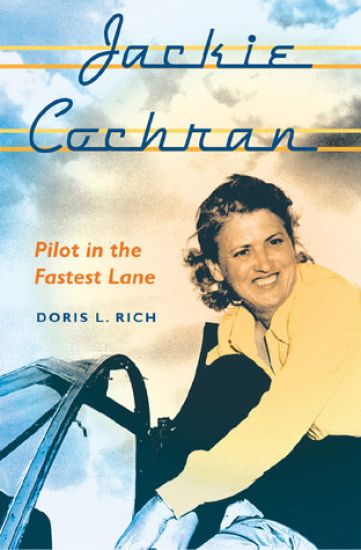
Born in 1906 in Muskokee, Florida, Jacqueline "Jackie" Cochran was America's greatest woman pilot: the first to break the sound barrier, first to fly a bomber across the Atlantic, possessor of more than 200 aviation records and the commander of the Women Airforce Service Pilots (WASP) during World War II. Cochran reached Mach 2 - twice the speed of sound - in a Lockheed F-104, having already become a colonel in the Air Force Reserve. Intelligent, brash, determined, courageous, and ambitious, she counted presidents Eisenhower and Johnson among her friends, as well as national leaders in business, Congress, and military and commercial aviation. Drawing upon previously unpublished information about Cochran's early years and her first marriage, and on her extensive correspondence with U.S. presidents, Air Force generals, aircraft designers, test pilots, and business tycoons, Rich shows Cochran's many contrasts. Seen by enemies as an egotistical master of self-promotion, she was nevertheless capable of loyal and abiding friendships. And although her personality was sometimes abrasive, she used it to accomplish impressive results, including her work on behalf of an independent Air Force. This first extensive critical biography puts Cochran's great talents and achievements in the context of her turbulent personal life to create a portrait of a remarkable, complicated woman.
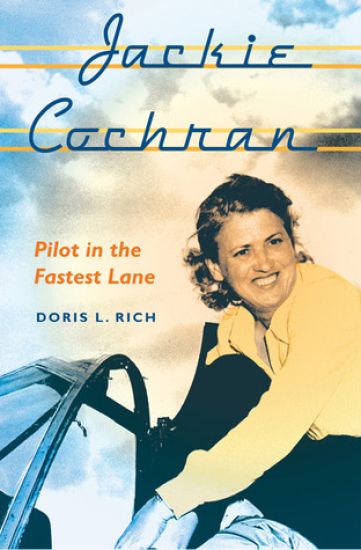
"In Doris Rich's latest aviation biography, barefoot, illiterate Bessie Pittman reinvents herself as Jacqueline Cochran, the brash beautician who set more speed and altitude records than any pilot in history. . . . Rich illuminates the lesser-known facts of this under-appreciated pioneer and lights a belated candle for her too."--Air and Space"History has proven Earhart to be the favorite, but Cochran undoubtedly was the superior pilot: determined to be not just the best woman pilot but to be the best pilot, period, she broke countless aviation records for speed, altitude, and distance. . . . Rich gives Cochran her rightful place in aviation history."--Publishers Weekly"Often combative and abrasive, Cochran is a true American legend, and Rich's biography will ensure that Cochran's contributions will not be forgotten."--Booklist"At the time of her death on August 9, 1980, Jacqueline "Jackie" Cochran--recipient of America's Distinguished Service Medal, Distinguished Flying Cross, and Legion of Merit--held more speed, altitude, and distance records (200-plus) than any other pilot, male or female, in the history of aviation. . . . Rich reminds us that this remarkable lady, despite her shortcomings, reached Mach 2--twice the speed of sound--piloting a Lockheed F-104 at the tender age of 58."--Library Journal

They Dared to Dream
Doris Weatherford; Inc. Florida Commission on the Status of Women Foundation
University Press of Florida
2015
sidottu
While many works chronicle the various facets of Florida's history, no book has revealed the myriad contributions of the state's pioneering women. Doris Weatherford presents the first comprehensive narrative of the leading ladies who shaped Florida, from prehistoric times to the present.An in-depth portrayal of Florida's guiding matriarchs, The Dared to Dream divulges the lifestyles and achievements of women throughout landmark moments in history, including European exploration, the Civil War era, and post-World War II Florida.

Children, Schools, And Inequality
Doris R Entwisle; Karl Alexander; Linda Olson
Westview Press Inc
1998
pokkari
Educational sociologists have paid relatively little attention to children in middle childhood (ages 6 to 12), whereas developmental psychologists have emphasized factors internal to the child much more than the social contexts in explaining children's development. Children, Schools, and Inequality redresses that imbalance. It examines elementary school outcomes (e.g., test scores, grades, retention rates) in light of the socioeconomic variation in schools and neighbourhoods, the organizational patterns across elementary schools, and the ways in which family structure intersects with children's school performance. Adding data from the Baltimore Beginning School Study to information culled from the fields of sociology, child development, and education, this book suggests why the gap between the school achievement of poor children and those who are better off has been so difficult to close. Doris Enwistle, Karl Alexander, and Linda Olson show why the first-grade transition,how children negotiate entry into full-time schooling,is a crucial period. They also show that events over that time have repercussions that echo throughout children's entire school careers. Currently the only study of this life transition to cover a comprehensive sample and to suggest straightforward remedies for urban schools, Children, Schools, and Inequality can inform educators, practitioners, and policymakers, as well as researchers in the sociology of education and child development.

Tests are a standard part of modern medicine. We willingly screen our blood, urine, vision, and hearing, and submit to a host of other exams with names so complicated that we can only refer to them by their initials: PET, ECG, CT, and MRI. Genetic tests of our risks for disease are the latest trend in medicine, touted as an approach to informed and targeted treatment. They offer hope for some, but also raise medical, ethical, and psychological concerns for many including when genetic information is worth having.To Test or Not to Test arms readers with questions that should be considered before they pursue genetic screening.Am I at higher risk for a disorder?Can genetic testing give me useful information?Is the timing right for testing?Do the benefits of having the genetic information outweigh the problems that testing can bring?Determining the answers to these questions is no easy task. In this highly readable book, Doris Teichler Zallen provides a template that can guide individuals and families through the decision-making process and offers additional resources where they can gain more information. She shares interviews with genetic specialists, doctors, and researchers, as well as the personal stories of nearly 100 people who have faced genetic-testing decisions. Her examples focus on genetic testing for four types of illnesses: breast/ovarian cancer (different disorders but closely connected), colon cancer, late-onset Alzheimer's disease, and hereditary hemochromatosis. From the more common diseases to the rare hereditary conditions, we learn what genetic screening is all about and what it can tell us about our risks.Given that we are now bombarded with ads in magazines and on television hawking the importance of pursuing genetic-testing, it is critical that we approach this tough issue with an arsenal of good information. To Test or Not to Test is an essential consumer tool-kit for the genetic decision-making process.

Although he is the son of J. S. Bach, C. P. E. Bach is an important composer in his own right, this long-awaited annotated bibliography presents a complete listing of the works of C. P. E. Bach. This volume in the RoutledgeMusic Bibliographies series includes many different aspects of his work: the editing of his father's masterpieces, his concertos and sonatas and theoretical essays. Doris Powers also collects writings that consider C. P. E. Bach's influence, the reception of his works and the cultural milieu in which Bach composed.

A timely exposÉ of the efforts of the religious right to influence global policyWith little fanfare and profound effect, “family values” have gone global, and the influence of the Christian Right is increasingly felt internationally. This is the first comprehensive study of the Christian Right’s global reach and its impact on international law and politics. Doris Buss and Didi Herman explore tensions, contradictions, victories, and defeats for the Christian Right’s global project, particularly in the United Nations. The authors consult Christian Right materials, from pamphlets to novels; conduct interviews with people in the movement; and provide a firsthand account of the World Congress of Families II in 1999, a key event in formulating Christian Right global policy and strategy. The result is a detailed look at a new global player-its campaigns against women’s rights, population policy, and gay and lesbian rights; its efforts to build an alliance of orthodox faiths with non-Christians; and the tensions and strains as it seeks to negotiate a role for conservative Christianity in a changing global order.

Explores the complex relationship between food and African American history In 1889, the owners of a pancake mix witnessed the vaudeville performance of a white man in blackface and drag playing a character called Aunt Jemima. This character went on to become one of the most pervasive stereotypes of black women in the United States, embodying not only the pancakes she was appropriated to market but also post–Civil War race and gender hierarchies-including the subordination of African American women as servants and white fantasies of the nurturing mammy.Using the history of Aunt Jemima as a springboard for exploring the relationship between food and African Americans, Black Hunger focuses on debates over soul food since the 1960s to illuminate a complex web of political, economic, religious, sexual, and racial tensions between whites and blacks and within the black community itself. Celebrated by many African Americans as a sacramental emblem of slavery and protest, soul food was simultaneously rejected by others as a manifestation of middle-class black “slumming.”Highlighting the importance of food for men as well as women, Doris Witt traces the promotion of soul food by New York Times food writer Craig Claiborne and its prohibition by Nation of Islam leader Elijah Muhammad and comedian-turned-diet guru Dick Gregory. A discussion of cookbook author Vertamae Grosvenor, who distanced herself from the myth of plantation mammy by reimagining soul food as "vibration cooking," sets the stage for Witt's concluding argument that the bodies and appetites of African American women should be viewed as central to contemporary conversations about eating disorders and reproductive rights.Witt draws on vaudeville, literature, film, visual art, and cookbooks to explore how food has been used both to perpetuate and to challenge racial stereotypes. Raising her fist in a Black Power salute, wielding her spatula like a sword, Aunt Jemima steps off the pancake box in a righteous fury.

Praktische Anleitung zur Interpretation von Dichtung
Doris Fulda Merrifield
University Press of America
1982
nidottu
Provides the student of German literature with a practical guide in the interpretation of poetry, drama, and prose through close textual analysis in which important literary forms, concepts, and aspects are discussed on the bases of illustrative examples. This German text includes translations of less familiar words along with a German/English, English/German glossary of literary terms and expressions.

This study draws on new and unprecedented research concerning the lives of Eugene O’Neill, his family, and his circle. It corrects and expands the biographical record on O’Neill, sharpens our understanding of his art, and distinguishes the man and his life more clearly than ever from the creations that were inspired by, and drew on, that life.In his final creative years, 1939 to 1943, O’Neill wrote The Iceman Cometh, Long Day’s Journey into Night, and A Moon for the Misbegotten. Because these plays are so intense, intimate, and evocative of the friends and family members who influenced O’Neill’s artistic development, biographers and critics have long—and mistakenly—regarded them as accurate sources for insights into the playwright’s early years.Drawing upon interviews and a staggering amount of archival research into multiple generations of the O’Neill family, Alexander sets the historical record straight by documenting the actual people and situations on which characters and scenes in O’Neill’s last plays are based. Included in her study are such topics as the playwright’s attempted suicide, his tuberculosis, and his relationship with his parents. By revealing the distinctions between O’Neill’s life and his art, Alexander’s findings make possible greater insight into the artistry that shaped these final plays and brought them to life.

Knowing a second language entails some unease; it requires a willingness to make mistakes and work through misunderstandings. The renowned literary scholar Doris Sommer argues that feeling funny is good for you, and for society. In Bilingual Aesthetics Sommer invites readers to make mischief with meaning, to play games with language, and to allow errors to stimulate new ways of thinking. Today’s global world has outgrown any one-to-one correlation between a people and a language; liberal democracies can either encourage difference or stifle it through exclusionary policies. Bilingual Aesthetics is Sommer’s passionate call for citizens and officials to cultivate difference and to realize that the precarious points of contact resulting from mismatches between languages, codes, and cultures are the lifeblood of democracy, as well as the stimulus for aesthetics and philosophy.Sommer encourages readers to entertain the creative possibilities inherent in multilingualism. With her characteristic wit and love of language, she focuses on humor-particularly bilingual jokes-as the place where tensions between and within cultures are played out. She draws on thinking about humor and language by a range of philosophers and others, including Sigmund Freud, Immanuel Kant, Ludwig Wittgenstein, Hannah Arendt, and Mikhail Bakhtin. In declaring the merits of allowing for crossed signals, Sommer sends a clear message: Making room for more than one language is about value added, not about remediation. It is an expression of love for a contingent and changing world.
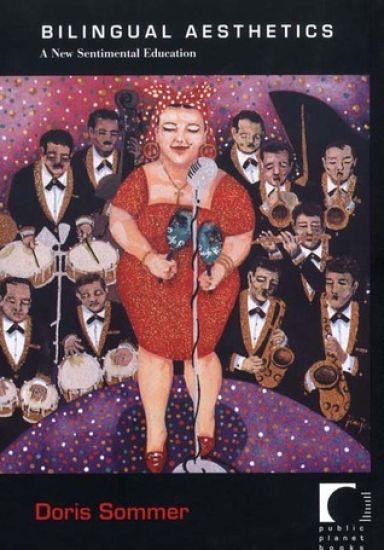
Knowing a second language entails some unease; it requires a willingness to make mistakes and work through misunderstandings. The renowned literary scholar Doris Sommer argues that feeling funny is good for you, and for society. In Bilingual Aesthetics Sommer invites readers to make mischief with meaning, to play games with language, and to allow errors to stimulate new ways of thinking. Today’s global world has outgrown any one-to-one correlation between a people and a language; liberal democracies can either encourage difference or stifle it through exclusionary policies. Bilingual Aesthetics is Sommer’s passionate call for citizens and officials to cultivate difference and to realize that the precarious points of contact resulting from mismatches between languages, codes, and cultures are the lifeblood of democracy, as well as the stimulus for aesthetics and philosophy.Sommer encourages readers to entertain the creative possibilities inherent in multilingualism. With her characteristic wit and love of language, she focuses on humor-particularly bilingual jokes-as the place where tensions between and within cultures are played out. She draws on thinking about humor and language by a range of philosophers and others, including Sigmund Freud, Immanuel Kant, Ludwig Wittgenstein, Hannah Arendt, and Mikhail Bakhtin. In declaring the merits of allowing for crossed signals, Sommer sends a clear message: Making room for more than one language is about value added, not about remediation. It is an expression of love for a contingent and changing world.

Presenting incisive original readings of French writing about the Caribbean from the inception of colonization in the 1640s until the onset of the Haitian Revolution in the 1790s, Doris Garraway sheds new light on a significant chapter in French colonial history. At the same time, she makes a pathbreaking contribution to the study of the cultural contact, creolization, and social transformation that resulted in one of the most profitable yet brutal slave societies in history. Garraway’s readings highlight how French colonial writers characterized the Caribbean as a space of spiritual, social, and moral depravity. While tracing this critique in colonial accounts of Island Carib cultures, piracy, spirit beliefs, slavery, miscegenation, and incest, Garraway develops a theory of “the libertine colony.” She argues that desire and sexuality were fundamental to practices of domination, laws of exclusion, and constructions of race in the slave societies of the colonial French Caribbean.Among the texts Garraway analyzes are missionary histories by Jean-Baptiste Du Tertre, Raymond Breton, and Jean-Baptiste Labat; narratives of adventure and transgression written by pirates and others outside the official civil and religious power structures; travel accounts; treatises on slavery and colonial administration in Saint-Domingue; the first colonial novel written in French; and the earliest linguistic description of the native Carib language. Garraway also analyzes legislation-including the Code noir-that codified slavery and other racialized power relations. The Libertine Colony is both a rich cultural history of creolization as revealed in Francophone colonial literature and an important contribution to theoretical arguments about how literary critics and historians should approach colonial discourse and cultural representations of slave societies.
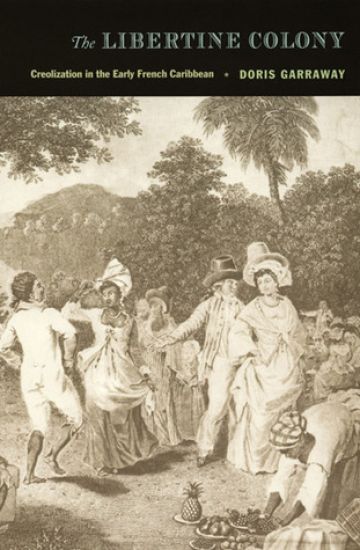
Presenting incisive original readings of French writing about the Caribbean from the inception of colonization in the 1640s until the onset of the Haitian Revolution in the 1790s, Doris Garraway sheds new light on a significant chapter in French colonial history. At the same time, she makes a pathbreaking contribution to the study of the cultural contact, creolization, and social transformation that resulted in one of the most profitable yet brutal slave societies in history. Garraway’s readings highlight how French colonial writers characterized the Caribbean as a space of spiritual, social, and moral depravity. While tracing this critique in colonial accounts of Island Carib cultures, piracy, spirit beliefs, slavery, miscegenation, and incest, Garraway develops a theory of “the libertine colony.” She argues that desire and sexuality were fundamental to practices of domination, laws of exclusion, and constructions of race in the slave societies of the colonial French Caribbean.Among the texts Garraway analyzes are missionary histories by Jean-Baptiste Du Tertre, Raymond Breton, and Jean-Baptiste Labat; narratives of adventure and transgression written by pirates and others outside the official civil and religious power structures; travel accounts; treatises on slavery and colonial administration in Saint-Domingue; the first colonial novel written in French; and the earliest linguistic description of the native Carib language. Garraway also analyzes legislation-including the Code noir-that codified slavery and other racialized power relations. The Libertine Colony is both a rich cultural history of creolization as revealed in Francophone colonial literature and an important contribution to theoretical arguments about how literary critics and historians should approach colonial discourse and cultural representations of slave societies.
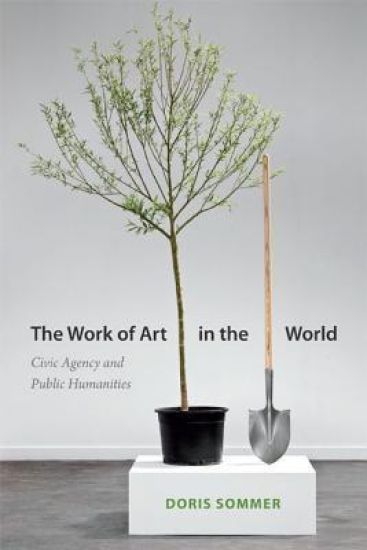
Celebrating art and interpretation that take on social challenges, Doris Sommer steers the humanities back to engagement with the world. The reformist projects that focus her attention develop momentum and meaning as they circulate through society to inspire faith in the possible. Among the cases that she covers are top-down initiatives of political leaders, such as those launched by Antanas Mockus, former mayor of Bogotá, Colombia, and also bottom-up movements like the Theatre of the Oppressed created by the Brazilian director, writer, and educator Augusto Boal. Alleging that we are all cultural agents, Sommer also takes herself to task and creates Pre-Texts, an international arts-literacy project that translates high literary theory through popular creative practices. The Work of Art in the World is informed by many writers and theorists. Foremost among them is the eighteenth-century German poet and philosopher Friedrich Schiller, who remains an eloquent defender of art-making and humanistic interpretation in the construction of political freedom. Schiller's thinking runs throughout Sommer's modern-day call for citizens to collaborate in the endless co-creation of a more just and more beautiful world.
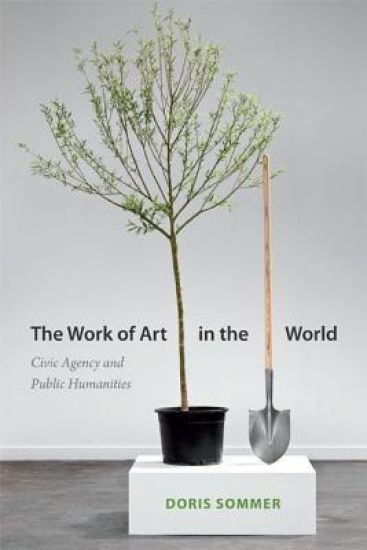
Celebrating art and interpretation that take on social challenges, Doris Sommer steers the humanities back to engagement with the world. The reformist projects that focus her attention develop momentum and meaning as they circulate through society to inspire faith in the possible. Among the cases that she covers are top-down initiatives of political leaders, such as those launched by Antanas Mockus, former mayor of Bogotá, Colombia, and also bottom-up movements like the Theatre of the Oppressed created by the Brazilian director, writer, and educator Augusto Boal. Alleging that we are all cultural agents, Sommer also takes herself to task and creates Pre-Texts, an international arts-literacy project that translates high literary theory through popular creative practices. The Work of Art in the World is informed by many writers and theorists. Foremost among them is the eighteenth-century German poet and philosopher Friedrich Schiller, who remains an eloquent defender of art-making and humanistic interpretation in the construction of political freedom. Schiller's thinking runs throughout Sommer's modern-day call for citizens to collaborate in the endless co-creation of a more just and more beautiful world.

On September 13, 1912, the day of Emperor Meiji's funeral, General Nogi Maresuke committed ritual suicide by seppuku (disembowelment). The revered military hero's wife joined in his act of junshi (""following one's lord into death""). The violence of their double suicide shocked the nation. Doris Bargen, in the first half of her book, demonstrates that the deeper significance of Nogi's action must be sought in his personal history, enmeshed as it was in the tumultuous politics of the Meiji period. In the second half of ""Suicidal Honor"", Bargen turns to the extraordinary influence of the Nogis' deaths on two of Japan's greatest writers, Mori Ogai and Natsume Soseki. Ogai's historical fiction is a profound meditation on the significance of ritual suicide in a time of historical transition. The protagonist of Kokoro, Soseki's masterpiece, refers to the general's junshi before taking his own life. Scholars routinely mention this reference, but Bargen demonstrates the ways in which Soseki's agonized response to Nogi's suicide structures the entire novel. By exploring the historical and literary legacies of Nogi, Ogai, and Soseki from an interdisciplinary perspective, ""Suicidal Honor"" illuminates Japan's prolonged and painful transition from the idealized heroic world of samurai culture to the mundane anxieties of modernity.

This volume offers a comprehensive overview of Sikhism, which originated in India's Punjab region five hundred years ago. As the numbers of Sikhs settling outside of India continues to grow, it is necessary to examine this religion both in its Indian context and as an increasingly global tradition. While acknowledging the centrality of history and text in understanding the main tenets of Sikhism, Doris Jakobsh highlights the religion's origins and development as a living spiritual tradition in communities around the world. She pays careful attention to particular events, movements, and individuals that have contributed to important changes within the tradition and challenges stereotypical notions of Sikh homogeneity and stasis, addressing the plurality of identities within the Sikh tradition, both historically and within the contemporary milieu.Extensive attention is paid to the role of women as well as the dominant social and kinship structures undergirding Punjabi Sikh society, many of which have been widely transplanted through Sikh migration. The migration patterns are themselves examined, with particular focus on Sikh communities in the U.S., Canada, and the U.K. Finally, the volume concludes with a brief exploration of Sikhs and the Internet and the future of Sikhism.
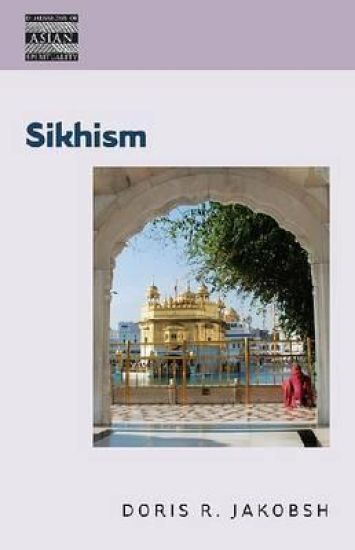
This volume offers a comprehensive overview of Sikhism, which originated in India's Punjab region five hundred years ago. As the numbers of Sikhs settling outside of India continues to grow, it is necessary to examine this religion both in its Indian context and as an increasingly global tradition. While acknowledging the centrality of history and text in understanding the main tenets of Sikhism, Doris Jakobsh highlights the religion's origins and development as a living spiritual tradition in communities around the world. She pays careful attention to particular events, movements, and individuals that have contributed to important changes within the tradition and challenges stereotypical notions of Sikh homogeneity and stasis, addressing the plurality of identities within the Sikh tradition, both historically and within the contemporary milieu.Extensive attention is paid to the role of women as well as the dominant social and kinship structures undergirding Punjabi Sikh society, many of which have been widely transplanted through Sikh migration. The migration patterns are themselves examined, with particular focus on Sikh communities in the U.S., Canada, and the U.K. Finally, the volume concludes with a brief exploration of Sikhs and the Internet and the future of Sikhism.