Kirjojen hintavertailu. Mukana 12 016 292 kirjaa ja 12 kauppaa.

Kirjahaku

Etsi kirjoja tekijän nimen, kirjan nimen tai ISBN:n perusteella.

1000 tulosta hakusanalla E. W. Simson

The Wounded World: W. E. B. Du Bois and the First World War
The dramatic story of W. E. B. Du Bois's reckoning with the betrayal of Black soldiers during World War I--and a new understanding of one of the great twentieth-century writers. When W. E. B. Du Bois, believing in the possibility of full citizenship and democratic change, encouraged African Americans to "close ranks" and support the Allied cause in World War I, he made a decision that would haunt him for the rest of his life. Seeking both intellectual clarity and personal atonement, for more than two decades Du Bois attempted to write the definitive history of Black participation in World War I. His book, however, would never be finished. In The Wounded World, Chad L. Williams tells the dramatic story of Du Bois's failed efforts to complete what would have been one of his most significant works. The surprising account of this unpublished book lends new insight into Du Bois's struggles to reckon with both the history and the troubling memory of the war, along with the broader meanings of race and democracy for Black people in the twentieth century. Drawing on a wide range of sources, most notably Du Bois's unpublished manuscript and research materials, Williams tells a sweeping story of hope, betrayal, disillusionment, and transformation, setting into motion a fresh understanding of the life and mind of arguably the most important scholar-activist in African American history. In uncovering what happened to Du Bois's largely forgotten book, Williams offers a captivating reminder of the importance of World War I, why it mattered to Du Bois, and why it continues to matter today.
The Love Songs of W. E. B. Du Bois

The Love Songs of W. E. B. Du Bois

Honoree Fanonne Jeffers

Thorndike Press
2022
sidottu
The 2020 National Book Award-nominated poet makes her fiction debut with this magisterial epic--an intimate yet sweeping novel with all the luminescence and force of Homegoing; Sing, Unburied, Sing; and The Water Dancer--that chronicles the journey of one American family, from the centuries of the colonial slave trade through the Civil War to our own tumultuous era.The great scholar, W. E. B. Du Bois, once wrote about the Problem of race in America, and what he called "Double Consciousness," a sensitivity that every African American possesses in order to survive. Since childhood, Ailey Pearl Garfield has understood Du Bois's words all too well. Bearing the names of two formidable Black Americans--the revered choreographer Alvin Ailey and her great grandmother Pearl, the descendant of enslaved Georgians and tenant farmers--Ailey carries Du Bois's Problem on her shoulders.Ailey is reared in the north in the City but spends summers in the small Georgia town of Chicasetta, where her mother's family has lived since their ancestors arrived from Africa in bondage. From an early age, Ailey fights a battle for belonging that's made all the more difficult by a hovering trauma, as well as the whispers of women--her mother, Belle, her sister, Lydia, and a maternal line reaching back two centuries--that urge Ailey to succeed in their stead.To come to terms with her own identity, Ailey embarks on a journey through her family's past, uncovering the shocking tales of generations of ancestors--Indigenous, Black, and white--in the deep South. In doing so Ailey must learn to embrace her full heritage, a legacy of oppression and resistance, bondage and independence, cruelty and resilience that is the story--and the song--of America itself.
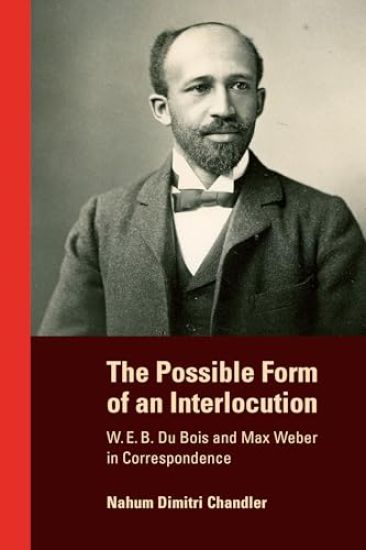
The Possible Form of an Interlocution: W. E. B. Du Bois and Max Weber in Correspondence
In The Possible Form of an Interlocution, Nahum Dimitri Chandler provides an epistemological and theoretical elaboration of the correspondence between W. E. B. Du Bois and Max Weber in 1904 and 1905. Their interlocution took place under the heading of Du Bois's famous formulation "the problem of the color line." This study takes as its incipient reference Weber's statement to Du Bois that "I am absolutely convinced that the 'color-line' problem will be the paramount problem of the time to come, here and everywhere in the world." Chandler provides a concise statement of Du Bois's idea of "the problem of the color line" as a general formulation for understanding African American matters within modern historicity on a worldwide scale. He then examines Weber's earliest writings to understand in just what way "the 'color-line' problem," served as a problematization for Weber in both his thought and itinerary, across the 1890s and through the time of his interlocution with Du Bois
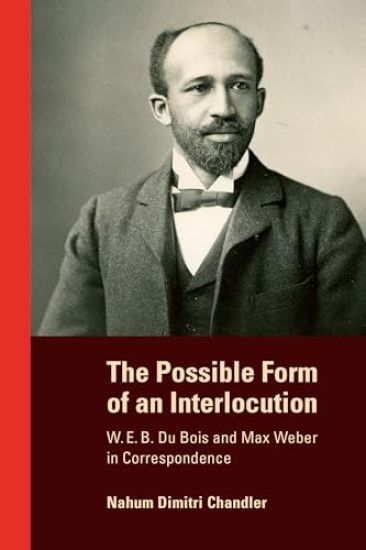
The Possible Form of an Interlocution: W. E. B. Du Bois and Max Weber in Correspondence
In The Possible Form of an Interlocution, Nahum Dimitri Chandler provides an epistemological and theoretical elaboration of the correspondence between W. E. B. Du Bois and Max Weber in 1904 and 1905. Their interlocution took place under the heading of Du Bois's famous formulation "the problem of the color line." This study takes as its incipient reference Weber's statement to Du Bois that "I am absolutely convinced that the 'color-line' problem will be the paramount problem of the time to come, here and everywhere in the world." Chandler provides a concise statement of Du Bois's idea of "the problem of the color line" as a general formulation for understanding African American matters within modern historicity on a worldwide scale. He then examines Weber's earliest writings to understand in just what way "the 'color-line' problem," served as a problematization for Weber in both his thought and itinerary, across the 1890s and through the time of his interlocution with Du Bois
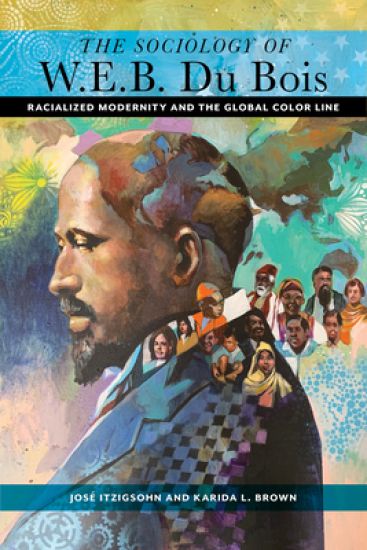
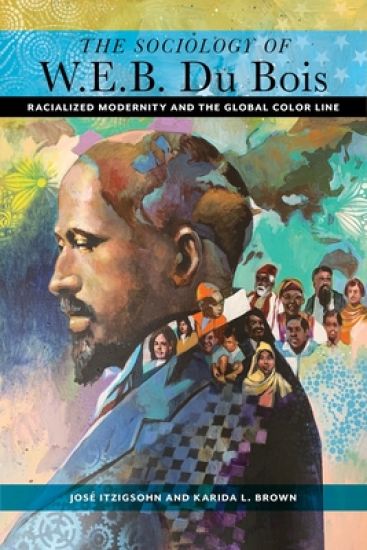
The Sociology of W. E. B. Du Bois

The Sociology of W. E. B. Du Bois

José Itzigsohn; Karida L. Brown

New York University Press
2020
pokkari
The first comprehensive understanding of Du Bois for social scientists The Sociology of W. E. B. Du Bois provides a comprehensive introduction to the founding father of American sociological thought. Du Bois is now recognized as a pioneer of American scientific sociology and as someone who made foundational contributions to the sociology of race and to urban and community sociology. However, in this authoritative volume, noted scholars José Itzigsohn and Karida L. Brown provide a groundbreaking account of Du Bois's theoretical contribution to sociology, or what they call the analysis of "racialized modernity." Further, they examine the implications of developing a Du Boisian sociology for the practice of the discipline today. The full canon of Du Bois's sociological works spans a lifetime of over ninety years in which his ideas evolved over much of the twentieth century. This broader and more systematic account of Du Bois's contribution to sociology explores how his theories changed, evolved, and even developed to contradict earlier ideas. Careful parsing of seminal works provides a much needed overview for students and scholars looking to gain a better grasp of the ideas of Du Bois, in particular his understanding of racialized subjectivity, racialized social systems, and his scientific sociology. Further, the authors show that a Du Boisian sociology provides a robust analytical framework for the multilevel examination of individual-level processes—such as the formation of the self—and macro processes—such as group formation and mobilization or the structures of modernity—key concepts for a basic understanding of sociology.
The Sociology of W. E. B. Du Bois

The Sociology of W. E. B. Du Bois

José Itzigsohn; Karida L. Brown

New York University Press
2020
sidottu
The first comprehensive understanding of Du Bois for social scientists The Sociology of W. E. B. Du Bois provides a comprehensive introduction to the founding father of American sociological thought. Du Bois is now recognized as a pioneer of American scientific sociology and as someone who made foundational contributions to the sociology of race and to urban and community sociology. However, in this authoritative volume, noted scholars José Itzigsohn and Karida L. Brown provide a groundbreaking account of Du Bois's theoretical contribution to sociology, or what they call the analysis of "racialized modernity." Further, they examine the implications of developing a Du Boisian sociology for the practice of the discipline today. The full canon of Du Bois's sociological works spans a lifetime of over ninety years in which his ideas evolved over much of the twentieth century. This broader and more systematic account of Du Bois's contribution to sociology explores how his theories changed, evolved, and even developed to contradict earlier ideas. Careful parsing of seminal works provides a much needed overview for students and scholars looking to gain a better grasp of the ideas of Du Bois, in particular his understanding of racialized subjectivity, racialized social systems, and his scientific sociology. Further, the authors show that a Du Boisian sociology provides a robust analytical framework for the multilevel examination of individual-level processes—such as the formation of the self—and macro processes—such as group formation and mobilization or the structures of modernity—key concepts for a basic understanding of sociology.
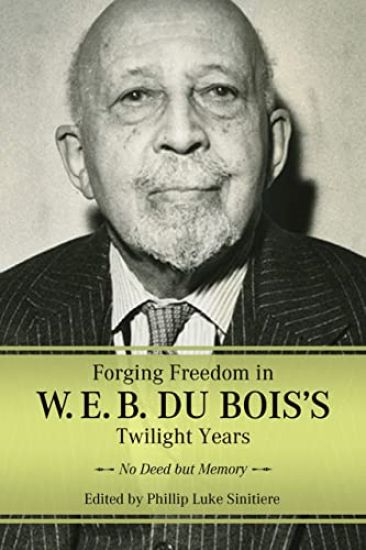
Forging Freedom in W. E. B. Du Bois's Twilight Years
Contributions by Murali Balaji, Charisse Burden-Stelly, Christopher Cameron, Carlton Dwayne Floyd, Robert Greene II, Andre E. Johnson, Werner Lange, Lisa J. McLeod, Jodi Melamed, Tyler Monson, Eric Porter, Reiland Rabaka, Thomas Ehrlich Reifer, Camesha Scruggs, and Phillip Luke Sinitiere Although the career of W. E. B. Du Bois was remarkable in its entirety, a large majority of scholarship focuses on the first five or six decades. Overlooked and understudied, the closing three decades of Du Bois’s career reflect a generative period of his life in terms of teaching, travel, activism, and publications. Forging Freedom in W. E. B. Du Bois's Twilight Years: No Deed but Memory proposes to narrate the political, social, and cultural significance of Du Bois’s career during the controversial closing three decades of his life.. Du Bois’s twilight years were tremendously controversial: his persistent criticism of the collusion between capitalism and racism and his choice to join the Communist Party in late 1961 raised the ire of many. At the time, Du Bois’s strident advocacy of socialism and turn to communism during the Cold War oriented most scholars away from delving into his late career. While only a few scholars have engaged the productivity of Du Bois’s later years, the fact is that an anticommunist, antiradical animus has followed Du Bois in the half century since his death. As a result, Du Bois scholarship remains impoverished to the extent that academics neglect his later years. The essays in Forging Freedom in W. E. B. Du Bois's Twilight Years detail selected aspects of Du Bois’s later decades and their particular connection to American social, political, and cultural history between the 1930s and the 1960s. While international concerns and a global perspective also fundamentally defined Du Bois’s latter years, chronicling his final decades in a US context presents fresh insight into his twilight years. Du Bois’s commitment to freedom’s flourishing during this period animated the Black freedom struggle’s war against white supremacy. Ultimately, this book demonstrates that the durability of Du Bois’s intellectual achievements remains relevant to the twenty-first century.