Kirjojen hintavertailu. Mukana 11 244 527 kirjaa ja 12 kauppaa.

Kirjahaku

Etsi kirjoja tekijän nimen, kirjan nimen tai ISBN:n perusteella.

1000 tulosta hakusanalla Edith Beale

The Case of Edith Cavell: A Study of the Rights of Non-Combatants

The Case of Edith Cavell: A Study of the Rights of Non-Combatants

James M. Beck

Createspace Independent Publishing Platform
2016
nidottu
Edith Louisa Cavell; 4 December 1865 - 12 October 1915) was a British nurse. She is celebrated for saving the lives of soldiers from both sides without discrimination and in helping some 200 Allied soldiers escape from German-occupied Belgium during the First World War, for which she was arrested. She was accused of treason, found guilty by a court-martial and sentenced to death. Despite international pressure for mercy, she was shot by a German firing squad. Her execution received worldwide condemnation and extensive press coverage. She is well known for her statement that "patriotism is not enough". Her strong Anglican beliefs propelled her to help all those who needed it, both German and Allied soldiers. She was quoted as saying, "I can't stop while there are lives to be saved." 1] The Church of England commemorates her in their Calendar of Saints on 12 October. Edith Cavell, who was 49 at the time of her execution, was already notable as a pioneer of modern nursing in Belgium.
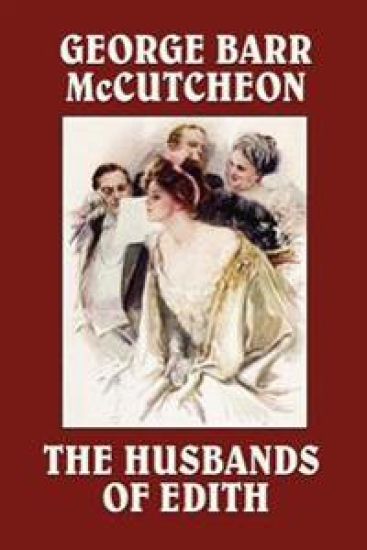
The Husbands of Edith

The Husbands of Edith

George Barr McCutcheon

Wildside Press
2025
pokkari
The fiction of George Barr McCutcheon proved so popular in his day that he, along with Anthony Hope, invented a genre called the "Graustarkian novel," a product of an innocent time when the Balkans could be the scene of adventurous romances, set in imaginary countries. This work focusses on a light romantic comedy.
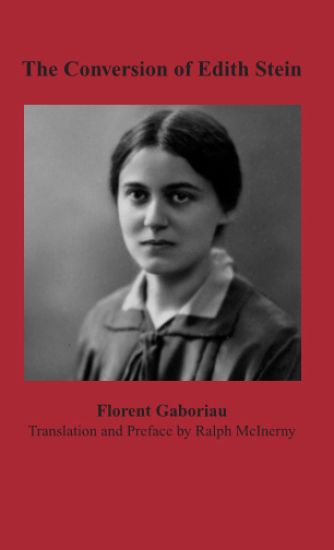
Conversion Of Edith Stein

Conversion Of Edith Stein

Florent Gaboriau

ST AUGUSTINE'S PRESS
2018
nidottu
One fateful day Edith Stein took from a friend’s bookshelf the autobiography of Saint Teresa of Avila. In it she found the simple truth about human existence. Shortly afterward, she became a Catholic, but her desire to become a Carmelite like Teresa was delayed for some time. Eventually she entered the convent in Cologne. Because of the Nazi persecution of Jews, converted or not, endangered others in her convent, she ask to be moved to a convent in the Netherlands. The German armies of occupation soon followed. It was from the Carmelite convent at Echt that she was taken in 1942, shipped to Auschwitz and executed. Florent Gaboriau sees Edith Stein’s conversion under three aspects: first the conversion of a Jew, then the conversion of a feminist, finally the conversion of a philosopher. Edith saw her conversion as the fulfillment of herself as Jewish; she saw the uniqueness of woman in the light of the faith; she saw her phenomenology as finding its home within Christian philosophy. One of the most brilliant women of her generation, she became a model of sanctity. Her canonization by Pope John Paul II was the occasion for strange reactions. Gaboriau’s account of her conversion, and of the saint she became, puts it all into perspective. "O my God, fill my soul with holy joy, courage and strength to serve You. Enkindle Your love in me and then walk with me along the next stretch of road before me. I do not see very far ahead, but when I have arrived where the horizon now closes down, a new prospect will open before me, and I shall meet it with peace." – Teresa Benedicta of the Cross
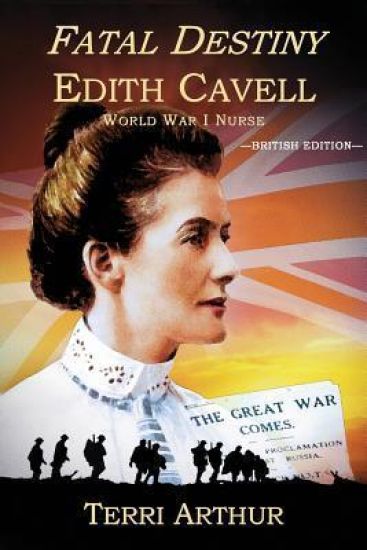
Fatal Destiny: Edith Cavell WW1 Nurse

Fatal Destiny: Edith Cavell WW1 Nurse

Terri Arthur

Henschel HAUS Publishing
2014
nidottu
Based on historical fact, this captivating novel tells the story of the legendary Edith Cavell, a British nurse whose duties as a healer clashed with the demands of a ruthless occupying regime during World War I. At the request of a brilliant, hot-headed surgeon, Edith went from London to Brussels to create Belgiums first school of nursing. At the height of her success, the German army marched into neutral Belgium and took over her hospital and school. Knowing the dangers of working against the repressive and brutal control of the German occupiers, Edith joined the Resistance movement. Her life was then plunged into the dangerous and clandestine world of the Belgian Underground, where she became a key link in the rescuing of Allied soldiers separated from their units. For nine months, this quiet, religious nurse went about saving over a thousand soldiers under the very noses of the German command.
When Marilyn Monroe Met Edith Sitwell
In this prescient collection, consisting of works gathered across the spectrum as well as new pieces, the poet shows his range from gentle satire to breathtaking poignance. Winn captures the observations of the everyday with an economy of words that ring with the depth of an unusual brilliance and a grasp of true humor and feeling. Whether you spend a few moments at a time or an afternoon, the experience within these pages delights and surprises with timely wit and compelling introspection. Inspiring and cerebral, Winn's skill with words is nothing short of ingenious. Readers will find profound breadth within these pages, leading perhaps to considerable ponderings, dialogue, and an enlightened view of the world around them.
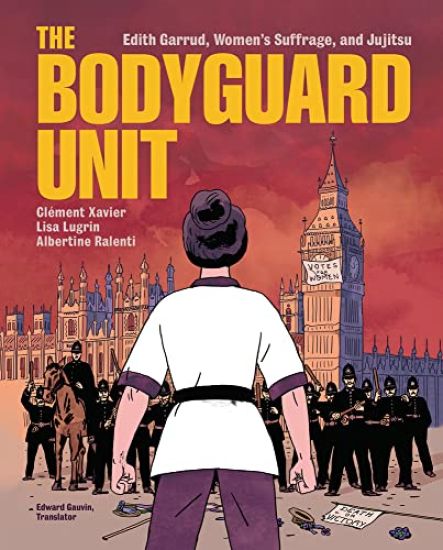
The Bodyguard Unit: Edith Garrud, Women's Suffrage, and Jujitsu
Who were the jujitsuffragettes? In the early twentieth century, women in England demanded the right to vote--and faced violent retaliation. Rather than back down, the suffragist group Women's Social and Political Union formed its own security unit. Edith Garrud, a pioneering self-defense instructor, trained them to fight back against abuse and arrest while pursuing long-overdue rights. This graphic retelling of Garrud's life reveals the resilience and (often physical) resistance of her era's voting-rights activists. Featuring an introduction from Elsa Dorlin (Self-Defense: A Philosophy of Violence), The Bodyguard Unit explores an explosive stage of the fight for suffrage.
A Peace of Edith

A Peace of Edith

Toy Taylor

Toy Taylor
2019
nidottu
Edith, like most teens, depends on her parents for her wants and needs. With good reason to. She is the daughter of upper middle class parents. Their finances and connections afford her a nice life style. They are her heroes.Life becomes contentious when her parent's past catches up with their family. There are some devils that reveal themselves with time, no matter how much we try to cover them up. The life she thought she had unfolds into the life she really had beneath the surface. This is a story of a girl who involuntary loses her innocence to embark on a journey of resilience.
Rex v Edith Thompson

Rex v Edith Thompson

Laura Thompson

Head of Zeus
2018
nidottu
'Another dark parable of society's vilification of women. Intelligent... A tantalizing investigation' Kate Colquhoun. On the night of 3 October 1922, in the quiet suburb of Ilford, Edith Thompson and her husband Percy were walking home after an evening spent at a London theatre, when a man sprang out of the darkness and stabbed Percy to death. The assailant was Frederick Bywaters, a twenty-year-old merchant seaman who had been Edith's lover. When the police learned of his relationship with Edith, she was arrested as his accomplice, despite protesting her innocence. The remarkably intense love letters Edith wrote to Freddy – some of them couched in ambiguous language – were read out at their trial for murder at the Old Bailey. They would seal her fate: Edith and Freddy were hanged for the murder of Percy Thompson in January 1923. Freddy was demonstrably guilty; but was Edith truly so? In shattering detail and with masterful emotional insight, Laura Thompson charts the course of a liaison with thrice-fatal consequences, and investigates what the trial and execution of Edith Thompson tell us about perceptions of women in early twentieth-century Britain.
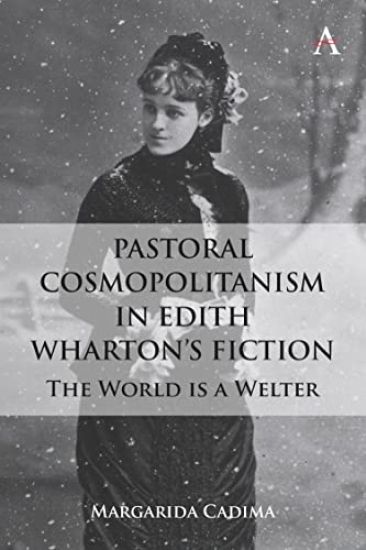
Pastoral Cosmopolitanism in Edith Wharton’s Fiction
American novelist Edith Wharton (1862–1937) is best known today for her tales of the city and the experiences of patrician New Yorkers in the “Gilded Age.” This book pushes against the grain of critical orthodoxy by prioritizing other “species of spaces” in Wharton’s work. For example, how do Wharton’s narratives represent the organic profusion of external nature? Does the current scholarly fascination with the environmental humanities reveal previously unexamined or overlooked facets of Wharton’s craft? I propose that what is most striking about her narrative practice is how she utilizes, adapts, and translates pastoral tropes, conventions, and concerns to twentieth-century American actualities. It is no accident that Wharton portrays characters returning to, or exploring, various natural localities, such as private gardens, public parks, chic mountain resorts, monumental ruins, or country-estate “follies.” Such encounters and adventures prompt us to imagine new relationships with various geographies and the lifeforms that can be found there. The book addresses a knowledge gap in Wharton and the environmental humanities, especially recent debates in ecocriticism. The excavation of Wharton's words and the background of her narratives with an eye to offering an ecocritical reading of her work is what the book focuses on.
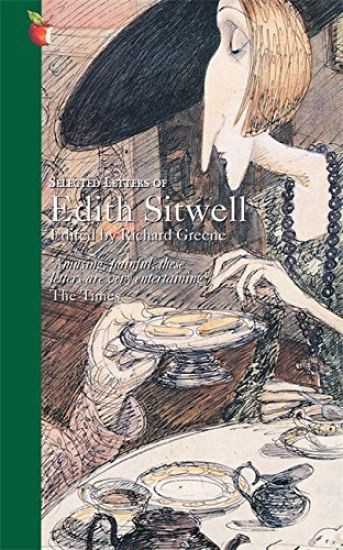
Selected Letters Of Edith Sitwell

Selected Letters Of Edith Sitwell

Richard Greene; Edith Sitwell

Virago Press Ltd
2007
nidottu
Edith Sitwell (1887-1964) was, through four decades, the most prominent and celebrated woman poet in Britain. Among the notable admirers of her work were Siegfried Sassoon, WB Yeats and Gertrude Stein, Stephen Spender and Marianne Moore. Just after her death, Allen Tate described her in The New York Times as 'one of the great poets of the twentieth century'. Even as one allows for the ebb and flow of literary reputations, Edith Sitwell will have permanent claim on the attention of readers and literary scholars. She and her two brothers, Osbert and Sacheverell, were the focus of a movement in English Literature described as an 'alternative Bloomsbury'. This volume includes unpublished letters to many significant figures, including WB Yeats, Bertrand Russell and Benjamin Britten. It also contains letters that illuminate Sitwell's relations with other women writers, among them, Gertrude Stein and Rosamond Lehmann.'I am besotted with this dotty old bat. Britain's most celebrated and eccentric female poet, she dashed off reams of witty, newsy, mischievous letters in exquisitely beautiful prose. Every letter is a gem' - Val Hennessy (one of her top ten books for 1997), Daily Mail
The Unpublished Writings of Edith Wharton

The Unpublished Writings of Edith Wharton

Laura Rattray

Pickering Chatto (Publishers) Ltd
2009
muu
During her lifetime, Edith Wharton was America's most popular and prolific writer. This book presents the unpublished writings of a canonical author, along with three stage-plays that open up a different field of Wharton studies. It also includes a general introduction, volume introductions, textual variants, headnotes and endnotes.
The Disappearance of Lady Edith

The Disappearance of Lady Edith

Christina McKnight

La Loma Elite Publishing
2017
nidottu
One tragic night changed sensible, proper Lady Edith Pelton's life: when her best friend fell to her death, pushed down a flight of stairs by a nefarious lord. Now, Edith dedicates her time to watching the man she thinks is responsible, while gathering information to expose other scoundrels posing as gentlemen of honor about London. When her spying is noticed by a perfect stranger, Edith finds herself with two mysteries--what happened to her friend, and how to win the heart of this brilliantly handsome lord. Triston Neville, Viscount Torrington, has been tasked with two duties for the upcoming Season: see that his sisters make the most of their debut, and avoid embroiling himself in another scandal. What he does not expect is the captivating, fair-haired beauty that literally falls into his path. When the mysterious Lady Edith suddenly disappears without a trace, Triston fears his past misdeeds may have returned to destroy his life once more. Can Triston piece together the puzzle in time to save Edith and prove that his love is nothing less than honorable?
Charles Sept À Jumiège Édith, Ou Le Champ d'Hastings, Poèmes Suivis de Poésies
Charles Sept a Jumiege; Edith, ou le Champ d'Hastings, poemes suivis de poesies, par Ulric GuttinguerDate de l'edition originale: 1827Ce livre est la reproduction fidele d'une oeuvre publiee avant 1920 et fait partie d'une collection de livres reimprimes a la demande editee par Hachette Livre, dans le cadre d'un partenariat avec la Bibliotheque nationale de France, offrant l'opportunite d'acceder a des ouvrages anciens et souvent rares issus des fonds patrimoniaux de la BnF.Les oeuvres faisant partie de cette collection ont ete numerisees par la BnF et sont presentes sur Gallica, sa bibliotheque numerique.En entreprenant de redonner vie a ces ouvrages au travers d'une collection de livres reimprimes a la demande, nous leur donnons la possibilite de rencontrer un public elargi et participons a la transmission de connaissances et de savoirs parfois difficilement accessibles.Nous avons cherche a concilier la reproduction fidele d'un livre ancien a partir de sa version numerisee avec le souci d'un confort de lecture optimal. Nous esperons que les ouvrages de cette nouvelle collection vous apporteront entiere satisfaction.Pour plus d'informations, rendez-vous sur www.hachettebnf.fr
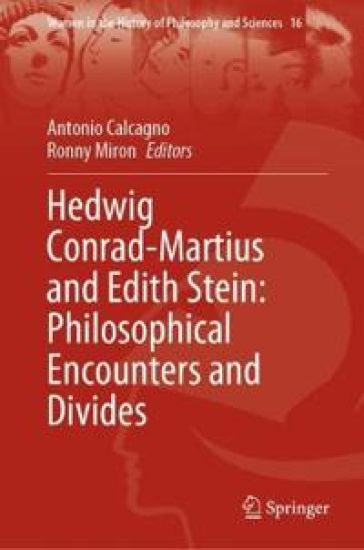
Hedwig Conrad-Martius and Edith Stein: Philosophical Encounters and Divides
This book focuses on the unique philosophical relationship between Hedwig Conrad-Martius and Edith Stein. The two phenomenologists discussed and debated insights and ideas about the nature of the soul, phenomenology, personhood and individuality, animal life, nature, being, and God. This book brings together for the first time leading international scholars of phenomenology to explore the philosophical exchange between both Conrad-Martius and Stein. This is an important book for understanding the development of the phenomenological movement and key phenomenological ideas and methods. It provides a critical and comprehensive overview of the key issues that helped frame both phenomenologists’ philosophical trajectories. Additionally, the ideas of Conrad-Martius and Stein are mined to address contemporary questions surrounding such topics as personal identity, animal versus human personhood, contemporary atheism, and the relationship between religion and science. The book will have greatappeal to phenomenologists, philosophers, and historians of philosophy.