*Includes pictures of important people, places, and events. *Includes Bibliographies for further reading. American presidents have shaped the course of global affairs for generations, but as the saying goes, behind every great man there's a great woman. While the First Ladies often remain overshadowed by their husbands, some have carved unique niches in their time and left their own lasting legacy. Abigail Adams served as a political advisor that earned her the moniker "Mrs. President", while Eleanor Roosevelt gave voice to policy issues in a way that made her a forerunner of First Ladies like Hillary Clinton. During the last 100 years, Susan B. Anthony has been one of the most venerated women in American history, but in the 80 years before that, she was one of the most hated women in American history. Anthony took note of her contemporaries' distaste for her but remained defiant, asserting, "I have encountered riotous mobs and have been hung in effigy, but my motto is: Men's rights are nothing more. Women's rights are nothing less." Though Anthony is best remembered today for working towards women's suffrage, she was an active and progressive advocate for all of the leading human rights issues of her time. Anthony was an ardent abolitionist from day one, and she spent much of the first 40 years of her life championing the cause of African-Americans, even befriending men like Frederick Douglass and William Lloyd Garrison along the way. She also championed "radical" ideas as 8 hour work days, minimum wage laws, and equal pay for women. To say Helen Keller is one of the most unique figures in American history would be an understatement. As a young child, Helen lost both her vision and hearing, leaving her deafblind, an almost hopelessly debilitating condition that left her literally trapped, unable to communicate with anyone. But Helen eventually overcame the frustration and used unimaginable perseverance to overcome her disability. With Anne Sullivan's help and the sense of touch, Helen eventually broke through and learned to communicate. Helen's story would have been remarkable enough if it had ended simply with her ability to communicate with the outside world, but "I had now the key to all language, and I was eager to learn to use it." With unbridled ambition, Helen became the first deafblind individual to earn a bachelor's degree from a college, published her own autobiography when she was just 22, and in the early 20th century became famous across the world as both an author and speaker. The Top 5 Greatest American Women profiles each and every one of these American icons, examining their contributions to history and their lasting legacies.
*Includes pictures of the First Ladies and important people, places, and events in their lives. *Includes Bibliographies for further reading. American presidents have shaped the course of global affairs for generations, but as the saying goes, behind every great man there's a great woman. While the First Ladies often remain overshadowed by their husbands, some have carved unique niches in their time and left their own lasting legacy. Abigail Adams served as a political advisor that earned her the moniker "Mrs. President", while Dolley Madison helped establish the role of the First Lady in the early 1800s, Eleanor Roosevelt gave voice to policy issues in a way that made her a forerunner of First Ladies like Hillary Clinton, and Jackie Kennedy created glamorous trends that made her more popular than her husband. Eleanor Roosevelt and Hillary Clinton may have been the most politically active First Ladies in American history, but Abigail Adams was the first to act as political advisor for her husband and the first to be dubbed "Mrs. President". Indeed, Abigail was politically inclined to degree highly unusual among women of the 18th and 19th century, and she had originally impressed her future husband John because she was so well versed in poetry, philosophy and politics. After the Constitution was ratified, George Washington went about setting all the precedents for the role of the presidency, establishing traditions like the Cabinet. But the role of being the First Lady of the United States was defined by the wife of the 4th president. James Madison may have been the Father of the Constitution, but his wife Dolley all but defined the responsibilities and customs of being the president's wife. It's possible that the world would have remembered Mary Todd Lincoln (1818-1882) if only because she was the wife of one of America's greatest presidents and present for his shocking assassination, but Mary was one of the most unique women to ever be First Lady, and she was in the White House during the country's most trying time. If Dolley Madison was instrumental in molding the role of First Lady in the 19th century, credit can be given to Eleanor Roosevelt for revolutionizing the political nature of the role in the 20th and 21st centuries and making it possible for presidents like Bill Clinton to enlist their wives to handle political duties. In 1961, President John F. Kennedy made it seem like anything was possible, and Americans were eager to believe him. The next three years would be fondly and famously labeled "Camelot," suggesting an almost mythical quality about the young President and his family. The famous label came from John's fashionable and beautiful wife, Jackie, whose elegance and grace made her the most popular woman in the world. Her popularity threatened to eclipse even her husband's, who famously quipped on one presidential trip to France that he was "the man who accompanied Jacqueline Kennedy to Paris." During the presidential campaign in 1992, Democratic challenger Bill Clinton announced that by voting for him, Americans would get two presidents "for the price of one." The reference to his wife Hillary signified that she would be no ordinary First Lady, and indeed she was employed frequently by her husband in the White House to try to push legislation through Congress. Of course, describing Hillary Clinton as just a First Lady belittles all of her accomplishments. Today she is the most powerful woman in the world and one of the most recognizable. America's Greatest First Ladies looks at the lives and legacies of all 6 of these influential and important First Ladies, while also examining the relationships each had with their husband. With pictures of important people, places, and events, you will learn about America's Greatest First Ladies like you never have before.
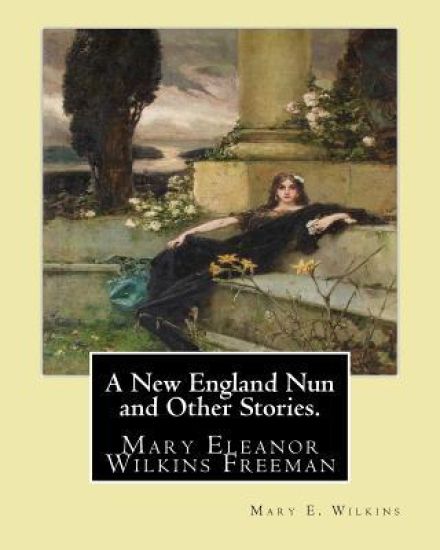
Mary Eleanor Wilkins Freeman (October 31, 1852 - March 13, 1930) was a prominent 19th-century American author She was born in Randolph, Massachusetts on October 31, 1852, to Eleanor Lothrop and Warren Edward Wilkins, who originally baptized her as "Mary Ella". Freeman's parents were orthodox Congregationalists, causing her to have a very strict childhood. Religious constraints play a key role in some of her works. LIST OF STORIES. A New England nun.--A village singer.--A gala dress.--The twelfth guest.--Sister Liddy.--Calla-lilies & Hannah.--Wayfaring couple.--A poetess.--Christmas Jenny.--Pot of gold.--Scent of the roses.--A solitary.--Gentle ghost.--A discovered pearl.--A village Lear.--Amanda & love.--Up Primrose hill.--Stolen Christmas.--Life everlastin'.--Innocent gamester. Louisa.--Church mouse.--Kitchen colonel.--The revolt of "Mother She was born in Randolph, Massachusetts on October 31, 1852, to Eleanor Lothrop and Warren Edward Wilkins, who originally baptized her as "Mary Ella". Freeman's parents were orthodox Congregationalists, causing her to have a very strict childhood.Religious constraints play a key role in some of her works. In 1867, the family moved to Brattleboro, Vermont, where Freeman graduated from the local high school before attending attended Mount Holyoke College (then, Mount Holyoke Female Seminary) in South Hadley, Massachusetts, for one year, from 1870-71. She later finished her education at Glenwood Seminary in West Brattleboro. When the family's dry goods business in Vermont failed in 1873, the family returned to Randolph, Massachusetts. Freeman's mother died three years later, and she changed her middle name to "Eleanor" in her memory. Freeman's father died suddenly in 1883, leaving her without any immediate family and an estate worth only $973. She moved in with a friend and began writing as her only source of income. During a visit to Metuchen, New Jersey in 1892, she met Dr. Charles Manning Freeman, a non-practicing medical doctor seven years younger than she. After years of courtship and delays, the two were married on January 1, 1902. Immediately after, she firmly established her name as "Mary E. Wilkins Freeman", which she asked Harper's to use on all of her work.The couple built a home in Metuchen, where Freeman was known as a local celebrity for her writing, despite having occasionally published satirical fictional representations of her neighbors. Her husband, who suffered from alcoholism and an addiction to sleeping powders, was committed to the New Jersey State Hospital for the Insane in Trenton, and the two legally separated a year later.After his death in 1923, he left the majority of his wealth to his chauffeur and only one dollar to his former wife. In April 1926, Freeman became the first recipient of the William Dean Howells Medal for Distinction in Fiction from the American Academy of Arts and Letters. She suffered a heart attack and died in Metuchen on March 15, 1930, at age 77. She was interred in Hillside Cemetery in Scotch Plains, New Jersey. Freeman began writing stories and verse for children while still a teenager to help support her family and was quickly successful. When the supernatural caught her interest, the result was a group of short stories which combined domestic realism with supernaturalism and these have proved very influential. Her best known work was written in the 1880s and 1890s while she lived in Randolph. She produced more than two dozen volumes of published short stories and novels. She is best known for two collections of stories, A Humble Romance and Other Stories (1887) and A New England Nun and Other Stories (1891). Her stories deal mostly with New England life and are among the best of their kind. Freeman is also remembered for her novel Pembroke (1894), and she contributed a notable chapter to the collaborative novel The Whole Family (1908).
Mary Eleanor Wilkins Freeman (October 31, 1852 - March 13, 1930) was a prominent 19th-century American author. She was born in Randolph, Massachusetts on October 31, 1852, to Eleanor Lothrop and Warren Edward Wilkins, who originally baptized her as "Mary Ella". Freeman's parents were orthodox Congregationalists, causing her to have a very strict childhood.Religious constraints play a key role in some of her works. In 1867, the family moved to Brattleboro, Vermont, where Freeman graduated from the local high school before attending attended Mount Holyoke College (then, Mount Holyoke Female Seminary) in South Hadley, Massachusetts, for one year, from 1870-71. She later finished her education at Glenwood Seminary in West Brattleboro. When the family's dry goods business in Vermont failed in 1873, the family returned to Randolph, Massachusetts. Freeman's mother died three years later, and she changed her middle name to "Eleanor" in her memory. Freeman's father died suddenly in 1883, leaving her without any immediate family and an estate worth only $973. She moved in with a friend and began writing as her only source of income. During a visit to Metuchen, New Jersey in 1892, she met Dr. Charles Manning Freeman, a non-practicing medical doctor seven years younger than she. After years of courtship and delays, the two were married on January 1, 1902. Immediately after, she firmly established her name as "Mary E. Wilkins Freeman", which she asked Harper's to use on all of her work.The couple built a home in Metuchen, where Freeman was known as a local celebrity for her writing, despite having occasionally published satirical fictional representations of her neighbors. Her husband, who suffered from alcoholism and an addiction to sleeping powders, was committed to the New Jersey State Hospital for the Insane in Trenton, and the two legally separated a year later.After his death in 1923, he left the majority of his wealth to his chauffeur and only one dollar to his former wife. In April 1926, Freeman became the first recipient of the William Dean Howells Medal for Distinction in Fiction from the American Academy of Arts and Letters. She suffered a heart attack and died in Metuchen on March 15, 1930, at age 77. She was interred in Hillside Cemetery in Scotch Plains, New Jersey. Freeman began writing stories and verse for children while still a teenager to help support her family and was quickly successful. When the supernatural caught her interest, the result was a group of short stories which combined domestic realism with supernaturalism and these have proved very influential. Her best known work was written in the 1880s and 1890s while she lived in Randolph. She produced more than two dozen volumes of published short stories and novels. She is best known for two collections of stories, A Humble Romance and Other Stories (1887) and A New England Nun and Other Stories (1891). Her stories deal mostly with New England life and are among the best of their kind. Freeman is also remembered for her novel Pembroke (1894), and she contributed a notable chapter to the collaborative novel The Whole Family (1908).
From the bestselling author of THE WEIRD SISTERS comes an enchanting tale of self-discovery that will strike a chord with anyone who has ever felt they've lost their way. 'I adored The Light of Paris. It's so lovely and big-hearted' JOJO MOYES 'Soulfulness and emotional insight meet laugh-out-loud humour' PAULA McLAIN, author of The Paris Wife
â??Eleanor Henderson is in possession of an enormous talentâ?? Ann Patchett â??A superb novel whose roots can be traced to Harper Lee and Carson McCullersâ?? Oprah Magazine
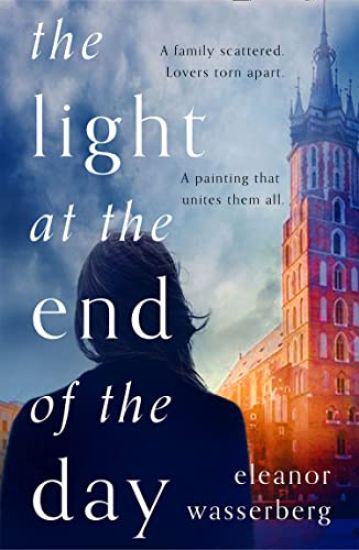
A family scattered. Lovers torn apart. A painting that unites them all. When Jozef is commissioned to paint a portrait of the younger daughter of Kraków’s grand Oderfeldt family, it is only his desperate need for money that drives him to accept. He has no wish to indulge a pampered child-princess or her haughty, condescending parents – and almost doesn’t notice Alicia’s bookish older sister, Karolina. But when he is ushered by a servant into their house on Kraków’s fashionable Bernadynska street in the winter of 1937, he has no inkling of the way his life will become entangled with the Oderfeldts'. Or of the impact that the German invasion will have upon them all. As Poland is engulfed by war, and Jozef’s painting is caught up in the tides of history, Alicia, Karolina and their parents are forced to flee – their Jewish identity transformed into something dangerous, and their comfortable lives overturned … Spanning countries and decades The Light at the End of the Day is a heart-breaking novel of exile, survival and how we remember what is lost.
A family scattered. Lovers torn apart. A painting that unites them all. When Jozef is commissioned to paint a portrait of the younger daughter of Kraków’s grand Oderfeldt family, it is only his desperate need for money that drives him to accept. He has no wish to indulge a pampered child-princess or her haughty, condescending parents – and almost doesn’t notice Alicia’s bookish older sister, Karolina. But when he is ushered by a servant into their house on Kraków’s fashionable Bernadynska street in the winter of 1937, he has no inkling of the way his life will become entangled with the Oderfeldts'. Or of the impact that the German invasion will have upon them all. As Poland is engulfed by war, and Jozef’s painting is caught up in the tides of history, Alicia, Karolina and their parents are forced to flee – their Jewish identity transformed into something dangerous, and their comfortable lives overturned … Spanning countries and decades The Light at the End of the Day is a heart-breaking novel of exile, survival and how we remember what is lost.
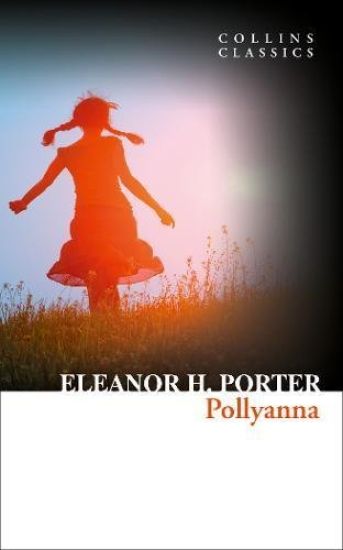
HarperCollins is proud to present its incredible range of best-loved, essential classics. ‘When you look for the bad, expecting it, you will get it. When you know you will find the good—you will get that’ When life feels difficult, Pollyanna has learned to play “The Glad Game”. In any situation, no matter how dire it may seem, she challenges herself to find the silver-lining. However, orphaned at a young age and forced to live with her hard-hearted Aunt Polly, Pollyanna has had a lot of opportunities to practice. With her infectious cheer, she is soon convincing some of the town’s most troubled residents to rediscover the things they’re glad about, until even her sunny disposition is tested. A classic of the Golden Age of Children’s Literature, Pollyanna has become a synonym for optimism, and inspired countless readers to find hope in the hardest of situations.
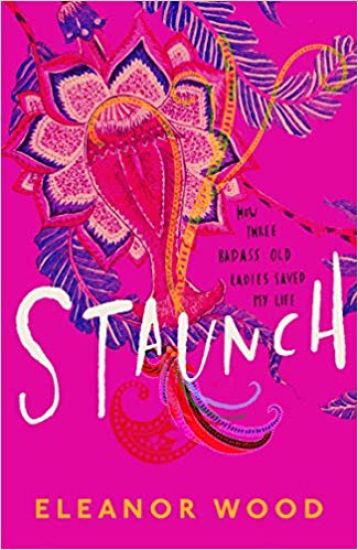
‘A fun and uplifting memoir’ Cosmopolitan Eleanor finds herself in her late 30s on a beach in India with three old ladies, trying to ‘find herself’ and ‘discover her family history’ like some sad middle-class crisis cliché. How did she get here? Truthfully, it could be for any one of the below reasons, if not all combined: Stepmum dying/Stepdad leaving – family falling apart, subsequent psychotic break; both parents now on third marriageBreaking up with K after 12 years – breaking up a whole life, a whole fucking universe – for reasons that may have been… misguided?New boyfriend moving in immediately, me insisting ‘it’s not a rebound!’ even after everyone has stopped listening, then breaking up with meGoing into therapy after dating a threatening narcissist (the most pertinent point of which should be noted: I did not break up with him – he ghosted me) How to address this situation? Take a trip to India with your octogenarian nan and two great aunts of course. The perfect, if somewhat unusual, distraction from Eleanor’s ongoing crisis. But the trip offers so much more than Eleanor could ever have hoped for. Through the vivid and worldly older women in her life, she learns what it means to be staunch in the face of true adversity.
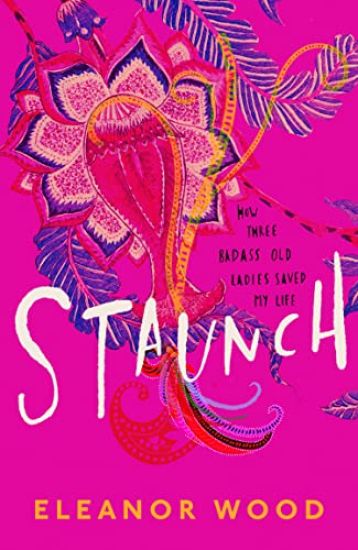
‘A fun and uplifting memoir’ Cosmopolitan Eleanor finds herself in her late 30s on a beach in India with three old ladies, trying to ‘find herself’ and ‘discover her family history’ like some sad middle-class crisis cliché. How did she get here? Truthfully, it could be for any one of the below reasons, if not all combined: Stepmum dying/Stepdad leaving – family falling apart, subsequent psychotic break; both parents now on third marriageBreaking up with K after 12 years – breaking up a whole life, a whole fucking universe – for reasons that may have been… misguided?New boyfriend moving in immediately, me insisting ‘it’s not a rebound!’ even after everyone has stopped listening, then breaking up with meGoing into therapy after dating a threatening narcissist (the most pertinent point of which should be noted: I did not break up with him – he ghosted me) How to address this situation? Take a trip to India with your octogenarian nan and two great aunts of course. The perfect, if somewhat unusual, distraction from Eleanor’s ongoing crisis. But the trip offers so much more than Eleanor could ever have hoped for. Through the vivid and worldly older women in her life, she learns what it means to be staunch in the face of true adversity.
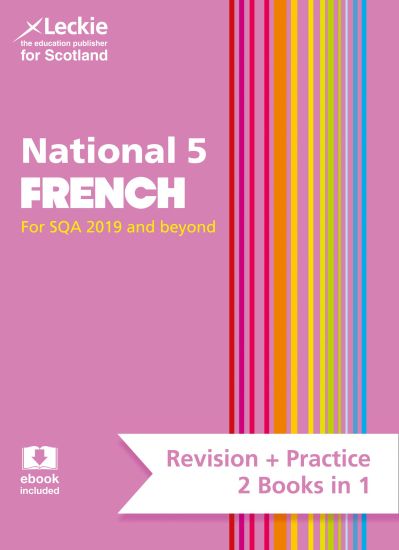
Exam Board: SQA Level: National 5 Subject: French Two books in one! Combining a revision guide and a full set of practice test papers, this fantastic resource is all you need to revise for the exam. The revision guide• Covers all of the topics in the CfE National 5 French curriculum, broken down into manageable chunks for easy revision• Clearly explains key concepts, research evidence and real-life applications• Contains Quick Tests to let students check their knowledge and understanding as they go along The practice test papers• Are in the format and the style of the SQA exam, giving students an opportunity to practice taking the National 5 French exam• Marking instructions and sample answers are provided online, so students can check their progress